Episode 367: The Vulnerability of Music, Freedom of Comedy & Doing It Your Own Way | Jordan Duffy | Singer, Songwriter, Audio Engineer, & Performer
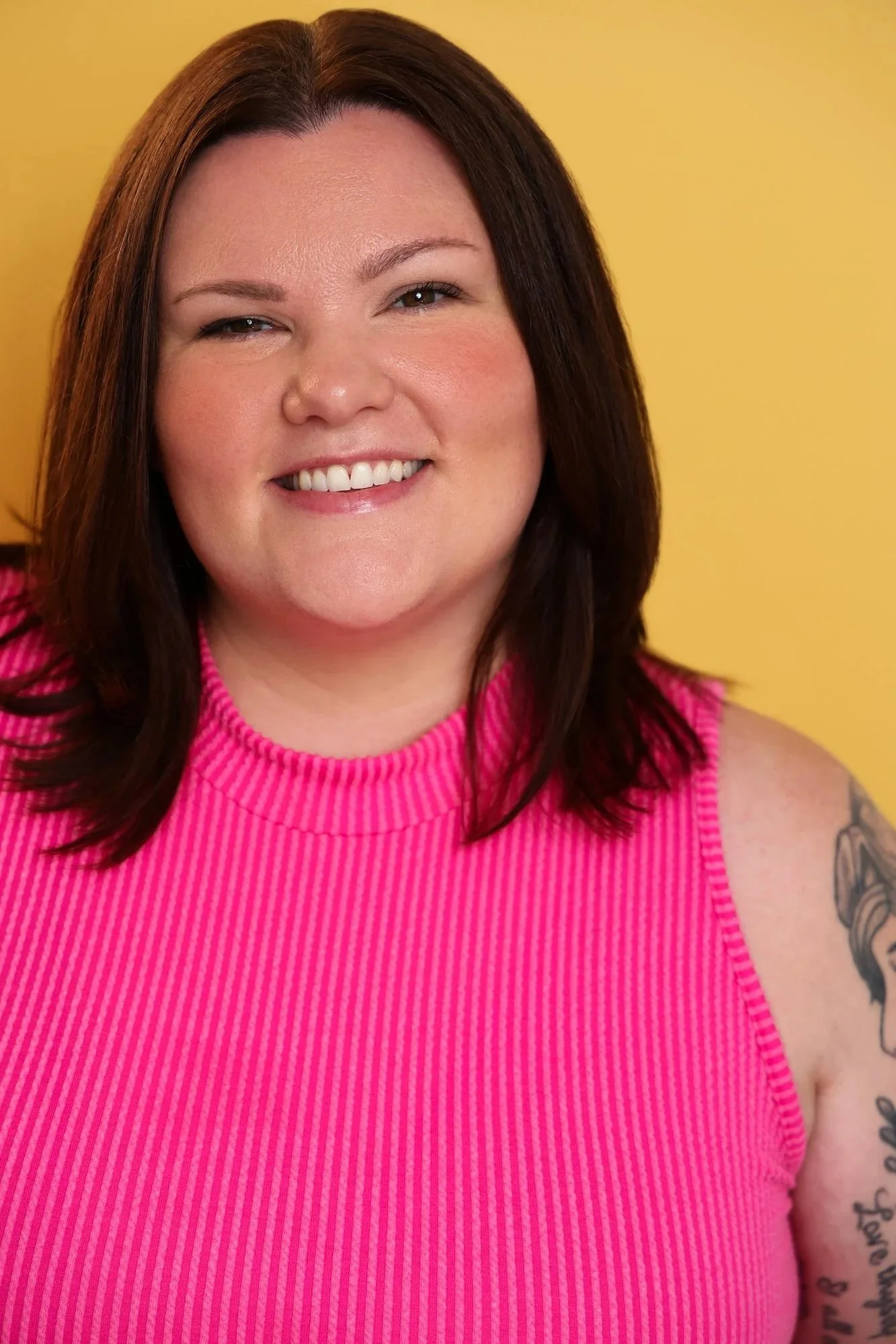
What does it really take to build a creative career independently? Singer-songwriter, performer, and audio engineer Jordan Duffy joins Kara Duffy for a candid conversation about creating music on her own terms, producing her 2025 album Nights Like These, and navigating the realities of the modern music industry.
Together they explore collaboration, creative control, vulnerability in songwriting, the emotional difference between music and comedy performance, and how Jordan built a trusted creative network that continues to expand her opportunities across music, acting, improv, and beyond.
“There is something about the energy in the room when I perform - It’s bigger than me - it’s absolutely beautiful and powerful, but it can also be overwhelming.”
-
-
367_Jordan Duffy
===
[00:00:00]
Kara Duffy: Welcome to the Powerful Ladies podcast. I'm Kara Duffy, and today's guest is Jordan Duffy. Jordan is a singer-songwriter whose latest album, Nights Like These, was released in 2025. She's also a performer, comedian, actor, as well as a podcast producer, audio engineer, and my sister. In this episode, we talk about what it's like to be an independent musician, how collaboration is so important to her process, from songwriting to music videos to album art, and, how her confidence varies between when she's performing as a musician versus performing in comedy or something similar.
And, how she's building a network that's truly transforming how she works, who she works with, and the opportunities that she has.
Kara Duffy: Welcome to the Powerful Ladies [00:01:00] Podcast
Jordan Duffy: Thank you
Kara Duffy: I am very excited today that we are featuring my sister, our senior producer at Powerful Ladies. And today we are talking about neither of those things. But what we are talking about is the fact that you are a singer-songwriter musician who has released your own albums, produced your own work, and you're also an improv actor today as well too
Jordan Duffy: Isn't that so odd?
Kara Duffy: I don't know that it occurs to me as odd because I have memories of you being a kid, like always performing in general. So, oh yeah, like I remember we had to make a video for a class project my junior or senior year of high school, and we were filming it at our parents' house, and we had this whole scene where we were like using a Barbie car, like we had Barbie and Ken as like the characters. [00:02:00] And you were insistent on participating and doing ridiculous things like throwing an orange into the car. And we were like, "Jordan, stop. We have to get this..." But you're like, "No, this is better." I'm like, "I don't know how an orange falling from the sky is telling our story better." But you always wanted to like, be partic- participate and be funny and silly and like you liked making revelry. So I don't know that this surprises me so much.
Jordan Duffy: I think a lot of people that I talk to have been like, "Oh yeah, like I was like the funny one of the family," or "I was like the jokester." And sometimes I think about it and I'm like, "I don't-- Was I that person?" But then I hear stories from you or the rest of our family or even my friends and I'm like, "Oh, I guess, I guess I should have thought of improv or comedy sooner than I expected."
Kara Duffy: Yeah, I mean, I I also think You know, coming from a family that everyone's a wise guy, [00:03:00] and everyone has a comment, and everyone's being a little ridiculous to some extent, I think it's hard to-- It wasn't like you came from a family where like everyone was an accountant and like serious and plain and vanilla and you were out here like being fancy Nancy or something. But yeah. So before we get any further, let's tell everyone your name, where you are in the world, and how you would describe what you were up to.
Jordan Duffy: Hello, I am Jordan Duffy. I am Kara Duffy's sister. I just like you said, I'm a singer-songwriter. I just say performer because I get improv, and I'm now considering acting, and I'm possibly taking an intro to standup class. There's so many realms under that umbrella. I think my Instagram now just says performer which makes sense since I have a performing degree, so I should probably use that degree to my advantage. And I'm in Los [00:04:00] Angeles, California, and I've been here for, which is insane to think, I've been here for eight years now, well thought I would ever live here,
Kara Duffy: I am also shocked at how long I've lived in California now
Jordan Duffy: Wait, how long has it been for you now?
Kara Duffy: I moved here from Germany in 2012
Jordan Duffy: It's a long time.
Kara Duffy: It is
Jordan Duffy: Yeah.
Kara Duffy: You're what, 14 years?
Yeah
I have never lived anywhere that long
Jordan Duffy: I think Massachusetts is the longest I've lived somewhere. And to know that LA is over eight years now, I'm like, "Oh, boy." I'm like, "All right." I guess I am an Angelino, so
Kara Duffy: Ben Affleck was complaining about how he was telling his kids like...
Jordan Duffy: order right?
Kara Duffy: probably. But like he was complaining that he told-- He's like his kids were talking about sports, and he's "No, we're a Red Sox family." And they go, "Dad, you [00:05:00] are a Red Sox person. We live in LA, we are Dodgers." And he was like, "What have I done wrong?" 'Cause you don't think about it. Like when you're from somewhere else and you move here, it's takes a long time to claim it because it doesn't... And I think LA is also a weird place ' cause it's very hard to get your root system in, settled. So I think it makes it you don't feel as connected the same way. It takes longer, et cetera, et cetera. So it is an interesting place to decide. Like I think people claim, people who move to New York City I think claim being New Yorkers faster than somebody would claim to be from Los Angeles.
Jordan Duffy: I would say that. I mean, and we think about the first time I was on here, I was in such a different head space. It was also pre-COVID. It was-- I truly thought "Okay, I'll be here for a little bit." Never thought I would be in improv, never thought I would've had an album out. Like, [00:06:00] Many things have happened that I'm like, "Oh." Sometimes it's nice to not have a plan for the future and just see what happens
Kara Duffy: One of my favorite quotes is that you must be willing to let go of the life you had planned to have the life that is waiting for you
Jordan Duffy: Who said that?
Kara Duffy: That's a really great question. It might be Joseph Campbell. Yeah.
To talk to you today is that there are so many people who want to be performers, they want to be musicians, and the old model of get discovered, get a record deal, become famous doesn't work anymore.
Even if we look at Justin Bieber was discovered on YouTube, and so many people, if you're not being discovered on YouTube or Instagram, you're just doing it your own way and being independent. Some people are independent forever, some [00:07:00] people are independent and then cross over to a major label. There's all these conversations about who owns what. There's a lot of conversation about how the music industry and performers in the music space have evolved and are changing. So I'd love for you to just kind of give some people some realities of why you decided to go the independent route and what it was like to actually create that record on your own.
Jordan Duffy: I went the independent route because it was the only route for me at the time. I so badly wanted to do everything on my own and be independent. I mean, that's why I became an engineer, 'cause I was so tired, I was so tired of producers telling me like, "No, it should be like that. No, it what about this?" And I was like, "No, I don't like anything you're saying, so I'm just gonna do this on my own." And then fast-forward to when it came to my album, which was produced [00:08:00] by a fellow powerful lady, Elana Carroll, AKA Party Nails, and it just made sense. I think when you are an unknown trying to do your own music and, like, this is your... This is the stuff that you wanna put out into the world, it's a lot of... I think what people don't realize is that a lot of people do release stuff on their own, and then they pitch it to labels, or then they pitch it to a manager. I mean, I truly can remember hearing Lizzo's songs five years before she started doing stuff.
So it takes a lot of time. But I just, I wanted to do it on my own because I wanted to prove to myself that I could do it, and Elana was such a helpful piece in that, and she really listened And she was, like, the only producer that I've ever worked with [00:09:00] that When I was like, "I want it to sound like this," or, "I want it to sound like that." And even my craziest ideas, she'd be like, "Yeah, let's do it." And she knew exactly what I was trying to say, where any producer who attempted to help me in the past just gave me some generic bullshit that I was like, "No, I don't wanna sound like Billie Eilish. I don't wanna sound like Taylor Swift.
That's not what I'm aiming for. I'm trying to sound like me." So that's why the independent route made sense for me to do it on my own. That's the only... That's what made sense to me.
Kara Duffy: I think that when I look at the clients that are creatives that I coach, all of them are going the independent route. And part of it is because the math makes more sense. It's, you keep more of your money if you produce your own art shows and create your own galleries and sell directly to the people who want your stuff.
Jordan Duffy: There, there's also [00:10:00] like I have a friend who got offered this amazing deal, and if you do not read the contract correctly, you can royally get screwed over. I had no idea, like when you look at an artist today that's like really big, like take-- let's take Sabrina Carpenter. She's huge. She's cute.
Her music is really fun. But what people don't know behind the scenes is that she has signed a contract with her team, and she has made a deal with the label that says, "If you do not make us X amount of money, then you owe us that money no matter how you get that money." But "You owe us, and then beyond that, then you get the rest of that money."
But like that first, anywhere from a h- it could be like 100K to like a million dollars is first going to the label, and more money depending on the artist, and then you start making money. So you also have to be really careful with what the contract says. One time I was in a, about to do a [00:11:00] contract with a producer, and then you read the full print, and you're like, "Why am I giving you $10,000 for my song? That doesn't make any sense."
Kara Duffy: And I think that knowing the breakdown of where that money goes, right? Of
Jordan Duffy: Yeah, some marketing. It's the,
Kara Duffy: Yeah, they have to pay these people and pay for the spaces and pay for... So it's like either they pay for it and you pay them back, or you have to figure out how to do it out of your own pocket from the get-go. But there is-- I think that there, people don't realize how much money it takes to make a million-dollar business, let alone a 10 or 100 million or a billion-dollar business. The amount of money that you have to spend to get there is really overwhelming for people. I, I think sometimes the same way people think "Oh, I'll make an online course and it'll make a million dollars," it's actually the same exact spending to have a record make a million dollars.
Jordan Duffy: Yeah.
Kara Duffy: And it's usually around $100,000 that you have to [00:12:00] spend at a minimum in marketing to make that outcome happen, because you have to you're building an audience from scratch. And so I think that when independent artists like yourself are able to be building a relationship and be growing in an organic way, yes, it might be slower, b-but hopefully the trade-off is that the people who are following you, who are supporting you, are actual consumers who are happy to give their money to you and will be with you for a longer period of time. I also think it gives you so much more freedom about what you do and don't have to do. Not even just creatively with your music, but do you have to go on tour? Where do you have to go on tour? How intense is it? Do you have to sell merch? How ugly is it versus how much do you like it? but it, there really is an entire business architecture that has to be applied to it. But I remember when you were [00:13:00] producing your album, like, how much fun you were having. Do you wanna share some of that?
Jordan Duffy: Being in a recording studio working on a project is probably my favorite place to be in the world. I mean, I love my friends, I love my family, I love performing , but like, it would get to the point where my producer would be like, "We need to leave the studio so we can see the sun." And I was like, "But why do we need to see the sun? We don't need to see it. We can keep working." I apparently push people to, to the max and like they need a
Kara Duffy: Okay, everyone listening, the reason I am giving Jordan some shit about this right now is because she thinks how I record and produce this podcast is that makes me a psychopath because,
Jordan Duffy: it's insanity
Kara Duffy: yeah. But I will record four, five, six in a row. I will, and I'm, I can just keep going. And weird, Jordan, you can just keep going.
Jordan Duffy: I think you have to think of it [00:14:00] as the reason why I think it's insane is because you are using so much energy to talk with people, and it's like back-to-back things. That's a lot of energy. Where me in a studio, I could just be like sitting on the couch just like listening over and over and be like, "No, let's add a trumpet. No, let's-- Like the drums should sound like this." It's like I think it's such a different mindset of what I like to be using, and it makes me so proud to be like in that space and it's like a conductor position 'cause I'm a co-producer of my own album. But you do eventually need to stop and let your ears rest and take a day to think of something.
I don't know how many times I thought like a song was done, and then the next day I'd be like, " Actually, like that's off," or, "That sounds off," or, "This is, this sounds different." So there is a reason to stop, think on it, go home, rest, and so forth. This is also why I tease you that anyone working in an audio [00:15:00] space or honestly at a performing area, I don't wanna be waking up until 10:00 AM because like I already do late nights, and like my ears need the rest, my body needs the rest.
I was always taught in school that like you never mix anything or record anything until 10:00 AM and on just because of how your body functions, and which is really hard for people who are morning people and who wanna do things really early. And in my head, it doesn't work that way. But yeah, being in a recorded studio it's truly my favorite.
I miss it all the time when I'm not there. Again, it's another reason that like 15 years ago, I like, I remember sitting down being like, "Where am I the happiest?" And I said, "A recording studio." And I said, "Okay, how do I get to be in a recording studio every single day?" And that's why I started doing audio engineering and being able to be in a studio all the time, regardless if it was music or podcasting or whatever it was. And having those [00:16:00] tools is phenomenal. I just, I love being in a studio. Yeah.
Kara Duffy: Take people through some of the process. If they wanna make their own album, obviously you're writing songs, but you found a producer that you loved that let you do it your way and enhanced it. Didn't try to change you or pull you in a way that you didn't wanna go, but was very collaborative with you. You had to rent studio space. You had to pay other musicians to come in to do other parts that you needed. It was a big financial investment to get this record made. It still was relatively inexpensive compared to what it would probably cost if a record studio was doing it. How do you balance-- is it like your baby where, everything's just gonna go into it because that's what I wanna do, and if that means that I am eating cereal for [00:17:00] dinner for a few weeks that's okay? Like, how are you choosing how much money you can put into the music part of your business when you're doing it on your own?
Jordan Duffy: So there's a few different options. One, you can either go the route of finding an amazing producer where you make a deal where once you start putting out the album and touring, that producer starts getting a chunk of money after the fact. I don't like anyone waiting for money on me, so I'm always paying up front. That is not something that I will negotiate with. I don't F around with money, and money doesn't F around with me. So I made the deal with Party Nails that whatever we were working on, I would know the invoice right up front and be like, "Cool, here's the money."
And there would be moments where I would have to delay certain stuff because I didn't have the funds and I would need to wait. I was in a really positive position when I was working at [00:18:00] SiriusXM. I was a senior audio engineer there, and I was in the position that I could pay all of my bills and have funds to help pay that.
I never wanted to go into anything where I didn't have the money. And so I talked, I was very open and honest with Party Nails and being like, "Hey, I want everything in an email. I want any finances in an email. I want the invoices so that..." 'cause we are friends first, and then we're together second. And I always we made the plan that if our friendship was dwindling because of our work ethic, then we would stop.
And we were both smart enough with how this indus-industry works, that everything needs to be in writing but yeah it came down to me and if I could pay it, cool, then we're gonna be in the studio. If I can't, then we're waiting a month or two. And we also broke it down per [00:19:00] song. So, if I knew that it was X amount of money per the song for the studio rental, for her to produce, for whoever I'm working with, 'cause I had amazing musicians for my second album, which by the way, my album is called Nights Like These.
It came out last March. I'm so proud of it. And the drummer for the entire album, his name is Andrew Marshall, and he's Billie Eilish's drummer and band leader, which is incredible. And I had other amazing musicians on, and which by the way, those musicians are the sweetest and refused to get paid.
So I was like, "Please let me take you out to dinner. Please let me do anything." And they were like, "Nope, we've been in your position before." But it's always friends first. I hate that side of networking where it's like you know so and so, so, I'm gonna work with you."
It was never to that extent. These were friends first. I asked them, I told them, "It's not a big deal if you can't do it. I wanna pay you." They refused to let me pay them, and I was like, [00:20:00] "Please," begging them. But I need people to know that this is not a career for the broke. I'm saying that really cautiously.
But th- I think that's why it took me so long to get to what I was doing. One, I clearly needed to wait to meet Elana, for her to be my amazing producer. But also, I never had the funds to really go into a studio. Whomever you're working with might have a crazy different rate per their resume or, yeah, who they've worked with.
But I wanted to work with someone who knew me and who understood and who actually listened.
Kara Duffy: You were creating this album as like a, it was a side hustle. You were doing it nights and weekends, and if you took a day off, and Alana happened to also not be touring 'cause, she's a touring full-time musician. Yeah. when you start having to get into the contracts and the [00:21:00] schedule and the logistics and the budgeting of making music, does that take away your passion for, writing songs and making music, or is it just part of what you signed up for?
Jordan Duffy: I think it's part of what you sign up for. To be really honest, that's I hate that side of the industry. It pained me to know that my album was completed and, but then talking to my PR and be like we need to market this, so we need at least six months." And I'm like, "What do you mean we need six more months until this can come out?"
And it's just that we had to market it for like, we'll put out the music video here, music video there.
Kara Duffy: I think that's an important thing to not step over is that you finished your album. You were like, "Yes, let's release it tomorrow. It's done." And then your marketing team goes, "Love that, but we can't actually release it till we've done six months of build-up, which we couldn't do until we had the final cuts because we have to..." Just like an apparel drop, you have to dr- slowly release things to build up the [00:22:00] excitement. Which mu- it must've been so frustrating to have to wait another six months before you could start telling people,
Jordan Duffy: Yeah
Kara Duffy: and you couldn't have your launch party. You couldn't do other things until they had done all their marketing magic.
Jordan Duffy: Oh yeah, I, and you know me as I've gotten older, my patience has gotten a little bit better, but like I'm really impatient. So if something is done and complete, I just wanna get it over and move on, which is not how it should be when it comes to putting out music. I ended up talking to a couple PR people and one of them was like, "Cool, we wanna market this for a year."
And I was like, "A year? What do you, What do you mean a year? A year it's gonna come out? That's insane. I can't do that. I literally cannot do that." Yeah, they're like, "We're gonna release a song each month." And I was like, "No, I don't like any of it." So that was like one, how one PR said it. And then the PR who I eventually went with, they were like, "Okay, when do you think it's going to be done?" And I was like, I was like, "there's a few more things, so like [00:23:00] maybe this month." And they were like, "Cool. Then we can't release it until this time." And I was like, "Great. I love this
Kara Duffy: And for people in PR for music is also a very specific niche of PR. So did you have to do research on finding people who had released independent artists before, or just any artist? Like how did you narrow down who was the right PR match for you?
Jordan Duffy: I lucked out and I ended up just going with what Elana had gone with, and she had recommended this PR and she said that their specialty are people who are unknown. And let me tell you, it worked because one of my, one of my music videos got over 100,000 views, which is insane. I was shocked. And then I had like articles, and it's so interesting how the music world, music industry does PR, especially for like independent [00:24:00] artists, and there are a ton. It's not like you're one of 20. You're like one of 120 that day. Only that day. Tomorrow will be another 120, and then the next day will be another 120 or more.
But without the PR, I wouldn't have people searching up my stuff. Yes I had-- I'm so grateful for the people, the fans from Earwolf and who have been so supportive and have been following me. But I also needed that like additional push of "I'm a new artist, and I don't really know how to promote myself, and I'm-- it's weird for me to promote myself because this isn't natural." I'm such a like team player, and I want so many people to achieve their dreams and go for their stuff, and then I'm over here "Hi, what's going on? I have music, but like I'm really scared to talk about it even though I'm-- I should be like, 'Oh, I'm really freaking talented,' and no one, a lot of people don't sound like me, or I don't sound like a lot of [00:25:00] people, so
Kara Duffy: and Molly, let's kind of give people a taste of what your sound is. Let's first, how would you describe your voice, and then how would you describe the music that you make?
Jordan Duffy: Oh, how do I wanna say this? I have a, a three to four octave range. When I had to like really sit down and was like, "Who would you compare yourself to?" It's Rachel Price from Lake Street Dive. It's Adele. It's like the people that I listened to, it was like Lauren Hill. It was Jill Scott. It was like women who had really powerful, beautiful voices. That's all I've ever wanted to sound like
Kara Duffy: It really helps from a marketing side, and it also really helps from a consumer who wants to find new artists and new voices. It really helps to know if you like this person, you might also like me.
Human psychology, we wanna group people. It's just like when people ask me like, "Oh what types of clients or industries or businesses do you work with?" I'm like, "That actually doesn't matter at all." But I know that people are asking 'cause they're trying to figure [00:26:00] out, would you work with me?
Would you work with someone I know? If we can, yeah if we can say, "Oh, if you like Adele, you might also really like Jordan Duffy." People are like, "Oh, okay. Like I can start to understand what journey I'm about to go on," versus not be able to ground it in something and then be-- But having that comparison, having that association makes it much more memorable, so they can actually remember to go find you too. What is your songwriting process like? Are you somebody that journals every day? Are you somebody that writes songs all the time? Or it's okay, I need to write a song now let's go write songs. Like how, what's your process look like?
Jordan Duffy: songs are based off of like something through or was like processing through. It's another element of like therapy for me. Um, if I something, I'll like go to the guitar and try to like work it out especially like in moments where [00:27:00] I don't feel the confidence of like, or, talk out with that person, then I'm just gonna use the guitar and like Um, me songwriting. I've, I've helped in like rooms and like helped with other artists, but when it comes to my stuff, it's usually just me in my and kind of ever spent more than 30 minutes on a song. Every single song that I've put out, I've written in five to 10 minutes.
And like maybe I've gone back to it and like with our sister Donna to be like, "This is what I was trying to come up with," but like I know that there's more clever like songwriting that can be h- had here and, and she has immensely with a lot songs. But this album in particular, Nights Like These, are
And Like These. Not only is that one of the songs on the album, but like it's, like reflecting like those late night thoughts of like, like, "Oh man, that person because like they made me feel this way," or like, like, [00:28:00] "Oh, wish I had some like romantic scenario going on in my life and like was a Um, but and I can like, I can think moments or the person that the song is written about and, and yes, there are a that are truly just like from, um, from,
Fiction.
but there's also a good, a good amount no, every time I sing like I remember that moment. I remember that feeling.
Um, there's
Kara Duffy: Is that good or bad?
Jordan Duffy: If I've written the song, it means that I've moved on from the situation and like, I'm good. Like, I don't need to about it anymore. But there are songs when I perform them that like, I do get, like, a little Like, it me of that and, like, that, that time been sad, that time could've been happy.
And like, I'm trying to write songs because Elana really good point of, called a musician's curse of whatever you put into the world is usually [00:29:00] kinda like what you get out of the world. And I'm like, "Okay, cool." Like, I know these songs really moving and vulnerable and really awesome and they rock, but I want happy things my way.
And I think, it shocks a lot of people because I am really happy and, giggly and smiley and and you think like, "Oh, yeah, Jordan has it all together." And they listen to my songs and you're like, "Oh, who hurt you?" And it's like, "Well, that's a long story and a lot of people." Um, but I think that's also just how I deal with negativity, which I, I think is a good thing. But there's also songs that like, I do remember that moment and it gives me power knowing that I wrote this amazing song about it to be like, "F you," and like, "I'm done with this," and like, "You're-- You suck, and I hope you know this song is about you."
Kara Duffy: ' Cause I feel like s- like Taylor Swift is known for making revenge songs all the time, but she's also good at making revenge songs like [00:30:00] sound poppy and happy. So I wonder if it's just like, how can you write a song that's like that but no one knows it
Jordan Duffy: Oh, yeah. Yeah, I mean, o- one of, one of my most popular songs is Not Your Dream Girl, and it sounds so fun. The video is so fun. It's about, the video's about this secret alien who like, takes over this, my crush's body and, , asks me out, and then at the end, I find out that he's actually the alien, not the crush, and we fall in love.
The song has nothing to do with love. The song is actually written about someone who, like, I had a crush on long time, and I was like, "I know for a fact this is never gonna happen. I'm not their dream girl, and I have to be okay with that." And it's actually me grieving the process of like, "Oh, I'm never gonna be with this person, and that's okay.
Like, it's all good." Um, but you would never think it if you were just hearing the song and watching the video. You would think the song's actually called I Am Your Dream [00:31:00] Girl, but the song is I'm Not Your Dream Girl.
Kara Duffy: Also brought up that you also do all your own videos independently. And from how you've talked about it, it seems like making the videos is also so much fun for you. And maybe it's because the performing creative side, it gets to be like another layer in it. But you're produce-- Like, you're going to full producer mode in that sense.
You're hiring the directors and makeup artists and actors, and you're bringing our brother in to do creative direction and props. And it's really wholesome, like how you involved like the whole family into making your albums. But talk to us a little bit about what the video process is like and how it's different than, making the album itself.
Jordan Duffy: I was that kid who would wake up at like 5:00 in the morning and go downstairs and, and watch MTV of reruns of music videos, and my favorites were that had the stories. And so I've made [00:32:00] it my mission, any music video I out, it's a fun story. You're along for the ride. And not that it has to be identical to like what's being sung or the lyrics of the song, but I have always envisioned my music to be paired with almost like a short feature.
Austin has like always been-- He actually did like my first, the only one he hasn't helped me with is Wonder Woman. But to have like your family and friends be a part of your videos , it's even more fun. I loved working with Austin and his um, painfully creative team. They, just like working with Elana in the studio, they listen to the things that I wanna do. We have gone back and forth on, what the storyline could be. We actually, like, changed "not Your Dream Girl" was supposed to be a totally different video.
But because of the space that we had found and the spaces that we could use, we were like, "Okay, like, how can we use this entire set for this [00:33:00] one video and be done at the end of the day?" And so we had to, rework the entire story, to our benefit. And I, I don't think I realized how much I loved being a part of that project.
And I think that's also why it kind of, like, inspired, "Oh, like, let's do improv. Let's, like, try acting." 'Cause it's like, it's similar to this recording studio. I loved being on the sets and being like, "What do we need? What, what can go here? What can do that? What would be funny?" Um, and the, the, the best part about these music videos is that everyone who is featured in the, the videos are people that I've done improv with and who are on their game and who like, know their shit make it so much more enjoyable.
Like, every single person for the "Not Your Dream Girl" music video shoot was like, "This was the most fun I've ever had on a shoot." And the makeup artist is a makeup artist who's done like, "Fallout" for Amazon and other features and she was the sweetest and [00:34:00] had so much fun and was, like, taking pictures of us, it was just a blast
Kara Duffy: I think you should, you know, giving yourself credit for who you bring in and who you trust with your projects. I think that you would be such an addition to any independent film because I think there's performers who have learned to do front of house, back of house, and when people talk about building up their career collateral, and the more that you know how to do the whole process and can do it yourself, it makes you more strategic, smarter, like more budget friendly.
It allows you to be a contributor at such different levels. And when you have a group of people who like know all the different things that can come together that way, it shifts things. Like it does make it fun when everyone's participating on camera, off camera, when everyone's thinking about how do we, again, handle the things that need to be [00:35:00] handled so we can spend more time doing the fun parts.
I think that's really interesting.
Jordan Duffy: I think it's also really helpful because I've worked so much on the back end of stuff, especially with like being an audio engineer in the podcasting world. Like you see what happens on the back end that helps the front end. So knowing both the back and the front, it's like, okay, things can move a lot smoother.
Kara Duffy: You also currently have um, 100% track record with auditioning to getting parts
Jordan Duffy: Yeah. Yeah.
Kara Duffy: You just did new headshots.
Jordan Duffy: I was the Kevin Langue Show
Kara Duffy: what is it
Jordan Duffy: that uh, as playing a 22-year-old in a fake family. And I'll be on Crowd Control, which is on the Dropout Network
Kara Duffy: how does it feel kind of stepping into this acting comedy side when you've been so music sound focused for so long?
Jordan Duffy: This might sound odd, but it feels [00:36:00] more natural. I think with us talking earlier about even me as a kid trying to make people laugh. I recently found books that I was writing in when I was a young teenager, and I was writing SNL sketches, and I had no idea.
I was like writing down what I thought would be funny on SNL, and I was like, "That's so odd. I was so heavily making music, but then the other side was like, "Oh, how can I make someone laugh?" And it's been really natural. If anything, I think our parents are a little annoyed at me because I'm doing more comedy than music. That's why I just keep putting like, "Oh, I'm a performer," 'cause it's all under the same umbrella.
Kara Duffy: some of the best comedians who have been on SNL have lots of musicality also
Jordan Duffy: And it's, an amazing umbrella to be under, but I think like, I will be jumping to go do an improv show [00:37:00] before I jump to do um, a, a music show just because I think with music it is like, my songs are really vulnerable, and it's a different side of me. And it's so normal for me to wanna make someone laugh more than wanting to make you cry.
Like,
Kara Duffy: And I don't think that your music makes people cry, right? Um, I think that there's a difference in it all being make-believe and l- and like you're not attached to it. Like that freedom is very different.
Jordan Duffy: You know, like the person when I'm doing improv, that's not me. Like, yes, it's me, I'm performing that person, but like I'm usually doing a character and I'm having so much fun with it. And then you-- I'm not a,
Kara Duffy: Roxy smoking 100 cigarettes like the last time I saw you perform
Jordan Duffy: I need to bring that character back. Um, but with music, it's not a character and that's, [00:38:00] that's me. But I do think with some musicians, like Lady Gaga, that's her character. Like Lady Gaga is the character and Stephanie is the real person. And I just haven't, I guess, finagled that because Jordan Duffy is assigned to, to comedy and improv, and it's assigned to music, and it's assigned to audio engineering, and it's not like I was like, "Okay, for music I'm gonna be Jordan Woogen."
Like that's not, that's not what I did. I put everything under the same umbrella and was like, "Let's do it all." I remember talking in therapy being like, "Why am I so fine with doing comedy and improv, but then it's such a struggle for me to want to go perform music when I love singing?"
I, I know for a fact that that's what I was born to do. It is something that I've wanted to do since I was five, to be a singer and put out an album. I fucking put out an album and I didn't even take a [00:39:00] moment to be like, "Holy shit! This is what you've wanted to do since you were a kid." But at the same time, I had a lot going on during that timeframe, but like it hit me like a few months ago that I was like, "Oh my God, I did, I did what I wanted to do."
Kara Duffy: five-year-old you is like, "Yes." " Performing for you is also very individual where the comedy and the improv is always in group. So I do think you would be more motivated if you had a band versus it's like you and your guitar. But having been someone who's been lucky enough to see you perform live, like it's so great.
Like the whole room just stops. And I think part of it is like who you are naturally versus who you kind of step into when you have to perform it's like a different person. So at first people are like, "Who is that?" And they're like, "Wait, that's Jordan." And so it's just you have a very commanding stage presence [00:40:00] when you're turn-- when you are a musician.
You do also when you're doing improv, like it's, there's some people who do improv and like you forget they're in the group, like that's never you. But there's a different level of like strength and power that shows up when you're doing your music, which I think is really interesting.
Jordan Duffy: I agree. I think, And like, I know that, hands down. There is something about the energy in the room when I perform. I connect so much to the movie Sinners, especially that, , music scene. If anyone hasn't seen it, there's, this epic, five-minute scene of how music and generations of, people, and it's this energy and this ebb and flow, and I have always felt that
performing. it's
Kara Duffy: than you
Jordan Duffy: bigger than me, and I think sometimes maybe that's what makes me nervous is because it's such a weird command and control to [00:41:00] have. It's absolutely beautiful and powerful, but it can, it can also be over- overwhelming. So overwhelming that I forget my own lyrics to my songs, and I'm like, "Wait, what's happening?"
Like, I'm also by this.
Kara Duffy: I just think it's so fascinating, and I'm, proud of you for listening to yourself and fighting for working with people who will let you do things your way. You are so determined to make sure that your creativity and your music and your work is happening in a very specific way, and it can be so hard to hold that line when there's lots of people volunteering with all of their opinions in this industry.
But I just think who you've become, especially in the past five years, is just a new evolution of you, and I'm very excited for what this fire horse energy is gonna bring you too. But you are. You're just like, you're so much more confident and outgoing and bold and daring, and I see the version of you that I remember when you were like seven, eight, and [00:42:00] nine.
I see more of that coming back out, which I think is really fun 'cause when you were a little kid you had-- there was, like, no fear in what you did and said, and it was just like, "What are we doing today? Let's go." And so I feel more of that coming back out, and it's exciting to see that. So I'm very proud of you. So for people who want to get your album, find your videos, support you, hire you, work with you, where can they do all of those
Jordan Duffy: On Instagram, you can find me @jordankduffy. Um, you can go to my website, jordanduffymusic.com. Honestly, you can, probably just Google Jordan Duffy and I will pop up. and on YouTube, type in Jordan Duffy, my music videos will pop up. And find me on Spotify, Apple Music, wherever you listen to music. My album is out there ready for all the ears to listen to.
Kara Duffy: Amazing. thank you so much for being here to me and Powerful Ladies [00:43:00] and for all the work that you do for us all the time and letting us spotlight you and the incredible work that you're doing
Jordan Duffy: Love you.
Kara Duffy: Love you. I'm
Kara Duffy: Thanks for listening to the Powerful Ladies podcast. If you enjoyed this conversation, please subscribe, leave us a review, or share it with a friend. Head to thepowerfulladies.com where you can find all the links to connect with today's guest, show notes, discover like episodes, enjoy bonus content, and more.
We'll be back next week with a brand-new episode and new amazing guest. Make sure you're following us on Instagram or Substack @powerfulladies to get the first preview of next week's episode. You can find me and all my socials at karaduffy.com. Until then, I hope you're taking on being powerful in your life.
Go be awesome and up to something you love
Related Episodes
Episode 80: From Upstate NY to Indie Pop Stardom | Elana Carroll | Party Nails Musician, Producer & Educator
Episode 277: Creativity Is My Lifeline | Tobey Lynn on Music, Identity, and Breaking the Rules
Episode 361: Saying Yes Before You’re Ready, Building Creative Power & Changing Comedy | Lynn Harris | Journalist & Founder of Gold Comedy
Created and hosted by Kara Duffy
Audio Engineering & Editing by Jordan Duffy
Production by Jordan Duffy
Graphic design by Jordan Duffy
Music by Joakim Karud