Episode 366: Accessibility, Ambition & the Business of Being Funny | Danielle Perez | Comedian, Actor & Writer
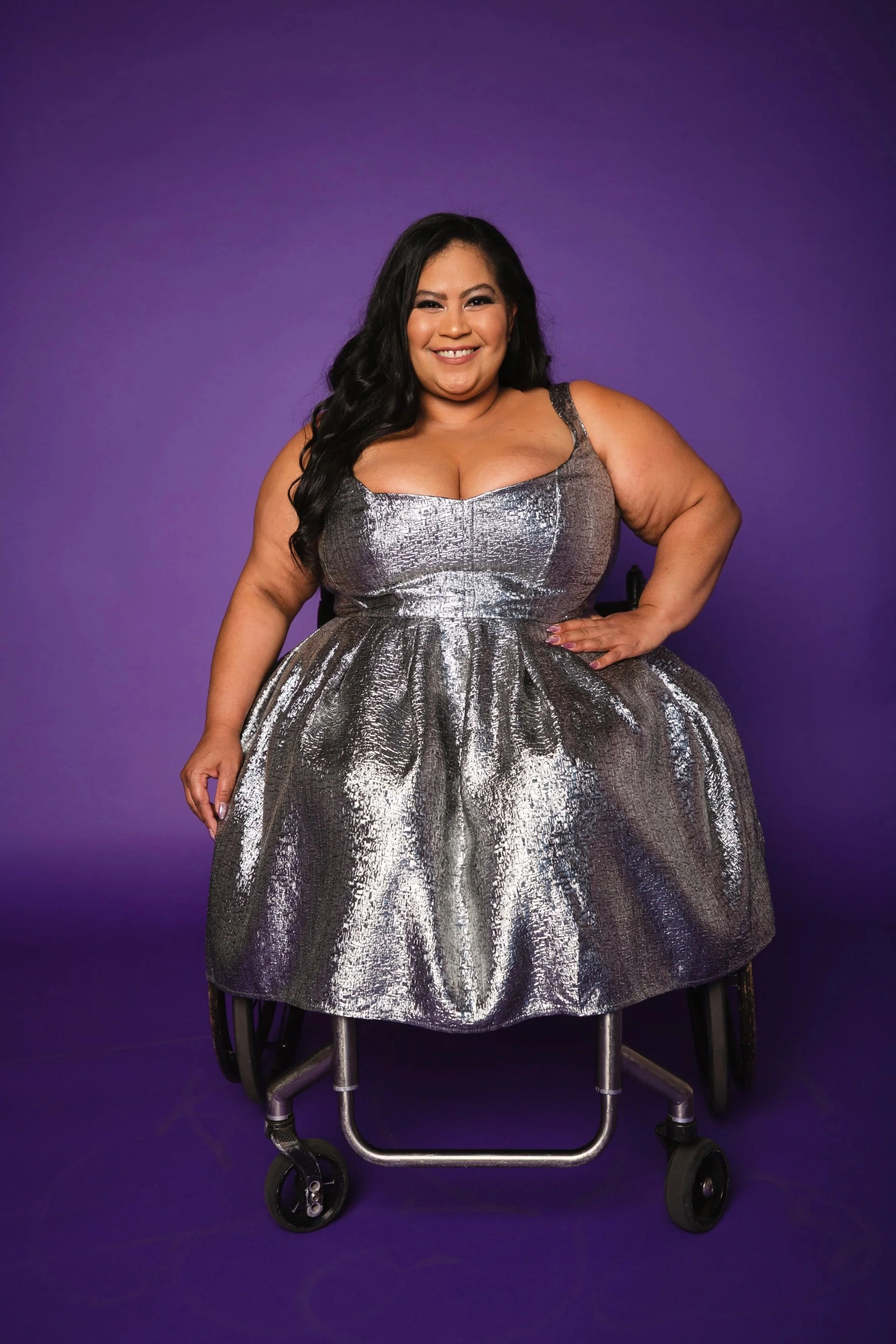
What does it mean to create a life that’s both deeply authentic and unapologetically ambitious? Comedian, actor, and writer Danielle Perez joins Kara Duffy to talk about building a career in entertainment while navigating disability, representation, and the realities of modern creative life.
Together they explore the power of visibility, the importance of accessibility, and why success in creative industries requires far more than talent alone. Danielle shares candid stories about stand-up comedy, acting alongside Larry David on Curb Your Enthusiasm, surviving the chaos of LA entertainment culture, and the spreadsheets, systems, and resilience that keep her moving forward.
“Representation in media matters because people need to see that these are real lives with real interior worlds”
-
-
366_Danielle Perez
===
[00:00:00]
Kara Duffy: Welcome to the Power for Ladies podcast. I'm Kara Duffy, and today's guest is Danielle Perez, comedian, actor, and writer. You've seen her in Curb Your Enthusiasm, on Ballard, and on stages across the US.
In this episode, we discuss her journey into stand-up comedy, her experience with disability, and her point of view on advocating for representation and access, why comedians need spreadsheets, obviously a huge favorite part of this episode for me, and how being funny is just so damn fun.
welcome to the Powerful Ladies Podcast.
Danielle Perez: Thank you for having me.
Kara Duffy: Let's begin by telling everybody your name, where you are in the world, and what you're up to.
Danielle Perez: Sure. My name is Danielle Perez. I'm in Los Angeles, California, and I'm a standup comedian, actor, and writer.
Kara Duffy: You have had some of the funniest clips that I have [00:01:00] laughed out loud on, on Instagram, and there's so much comedy on social media and so many great clips, but there's something about your honesty, your delivery, your timing, where I have had to get a tissue to go and fix my makeup 'cause I've laughed so hard after one of your clips
Danielle Perez: Oh my God, thank you. That's so nice to hear.
Kara Duffy: If we go back to eight-year-old you, would she have imagined that you are living this life you have today?
Danielle Perez: Definitely not. Definitely not the life that it as it is, but at eight years old, I mean, I wanted to be a prima ballerina. I wanted to be, like, the lead in the play. I definitely was like, "I'm an actor, I'm a singer, I'm a dancer, I'm all of it." But it's been a d- yeah, but it's different.
You know what I mean? It just the reality is different than what you kind of imagine.
Kara Duffy: Well, let's dive into that reality a little bit [00:02:00] because you had an accident that has left you in a very different situation than eight-year-old you would have imagined. What are you willing to share with us about that?
Danielle Perez: When I was 20, I was hit by a light rail train in San Francisco, and that's how I acquired my disability. I'm a bilateral below-the-knee amputee, and I use a manual wheelchair. Mm-hmm.
Kara Duffy: yeah, so, obviously the trauma of that and the life adjustment to that, how quickly were you able to find comedy along that way or has that been like a long time coming to come back to the dreams that eight-year-old you had?
Danielle Perez: I mean, when I was eight, I didn't think comedy, like that w- you know what I mean? I grew up watching Comedy Central and Premium Blend, and I knew comedy was a thing, but In doing stand-up, I've come to know a lot of people who was like, "I dreamed and I dreamed, and all I wanted to do was be on a late night."
And I was like, oh, wow, that was never, part of it for me, [00:03:00] right? Performance, yes, but I was thinking of it more in terms of acting, theater, singing, dancing. But so I knew I was funny, and my friends were funny, but, I just thought, well, people are funny. That's normal for me and my friends to laugh.
Kara Duffy: Yeah.
Danielle Perez: And so after the accident in the hospital, I was able to joke and talk about it, but I just, I just thought that was being normal, being me. But it wasn't until 10 years later that my best friend, she was living in Hollywood. Her roommate was an actor, stand-up comedian, and she was, like, an actor, and she's "Let's go check out one of his shows."
And he was so deeply unfunny that I was like, "Girl, he's on stage at The Comedy Store doing a set. I feel like we, you know, like, if this is what passes for funny, we're funny. [00:04:00] We should do stand-up comedy." And so we started doing stand-up comedy.
Kara Duffy: I love that. How-- Well, I mean, that must have been extra special to be convincing your best friend to do it too.
Danielle Perez: yeah. No, that's one thing that's been really great. I mean, Madison Shepherd, my ride or die. I've known her since cycle two of America's Next Top Model. But just, yeah, having a best friend who's so down and so game for it, to encourage you it's been... That I truly would not have survived in stand-up and in entertainment if I didn't have her as a support system, and a cheerleader, and someone to bounce ideas off of, and someone to grow with and push me to keep going.
Kara Duffy: There's a, push today in the DEI scope. Abled bodied versus not able-bodied. And when you look at the landscape of entertainment in [00:05:00] particular, there's not a lot of wheelchair representation. I think like "Wicked" got all this credit because the character was in the wheelchair. What do you think about that entire conversation? What do you think about the inclusivity space, and are you seeing anything change in, how do you actually feel about it?
Danielle Perez: Are we allowed to have DEI anymore? I thought they outlawed it federally.
Kara Duffy: Yes, and.
Danielle Perez: I was like, "Oh, DEI? I thought all of the heads got fired. They don't have jobs anymore."
Kara Duffy: It's true. It's... Yes. I think it's like hanging out with the people and that it's just not-- We're like pretending it doesn't exist in the higher layers. You're like, "Okay." The irony to me is that the people who are getting rid of D&I initiatives are people who qualify, and they don't realize they do because of their age, if nothing else.
Danielle Perez: Yeah, like D-DEIA, like diversity, [00:06:00] equity, inclusion, and accessibility. That's what my understanding of it, like the last time I heard that it was being implemented. But accessibility, right, we're talking about disabled people, non-disabled people. Those are generally, I think, the terms the disabled community prefers when talking about accessibility and things like that. But yeah it's like marginalized groups seniors
Kara Duffy: spectrum, anyone in a different g- like gender identity, sexual... There's so
many
Danielle Perez: Neurodivergence, right? It's li- I think, people are so used to conflating disability with just physical disability, and there's so much more to that. Chronic illness, right? People don't realize that people who have cancer, diabetes, right, like any sort of autoimmune disease, any sort of chronic illness, like that is disability. Neurodivergence, that is disability. ADHD, [00:07:00] autism, right? It's so much more common than people want to accept or see, and I think that's a big part of why representation in media matters
Kara Duffy: Mm-hmm.
Danielle Perez: because I think don't know if this is I guess, like the best comparison, but I started taking antidepressants like a year into the pandemic, and I'm on Lexapro, and it was like, oh, it's not like all of a sudden I feel happier or better, but it's just like a weight is lifted, where I didn't realize that I was kind of, carrying all this extra baggage.
And it's like you're still on this incredibly difficult journey, but it is ... there's an alleviation of this extra weight that was unnecessary to begin with. And I think of the same way with disability and representation. It's, [00:08:00] oh, I'm not just carrying this invisible thing that no one else can see and no one else understands. It's normal. It's actually quite common, right? It's ... And seeing other people experience it, talk about it, live their lives, right, have stories, whether they be comedy, drama, fantasy, romance, like it's ... it can help people accept that within themselves and then also people who don't experience it- those things accept it in large, like in community.
Kara Duffy: How often do you meet someone and they want to introduce you to another person they know in a wheelchair?
Danielle Perez: That doesn't happen so much anymore. I think when I was a pretty young thing, definitely people wanna tell me about their cousin or one thing that would happen a lot is after shows people would tell me, it's " I was in a wheelchair for a [00:09:00] month." I got it. I got it. Oh my G- and I, when I was in middle school and I broke my leg and I was in it was like, "Okay, I'm so happy for you."
Wow. Ally. Ally.
Kara Duffy: my journey. Thank you.
Danielle Perez: My friend, it is really funny. My friend Chris Gressie, he's a great comedian, but he, I don't know if he like shattered or broke something, but it was like an ankle thing. But he, I mean, it was like months and months, and he was like, "Danielle, as soon as I was getting like surgery on my leg, I was like, 'Oh, no, Danielle.'"
He's like, "I thought..." He's like... And also, 'cause of the pandemic and everything, I hadn't seen him, like I'd seen him online, but I hadn't seen him IRL for like years, and we are doing a show together, and he's "Danielle, I've been thinking about you." And I was like, "Oh, Chris, I'm on your mind." And then I like realized what I said to you, and I was like, "Fuck [00:10:00] you."
Kara Duffy: No, it's it's, They were doing that whole series on TikTok of if you're, like, if you're a ginger or a redhead are you secretly Black 'cause of how treat, people treat you? Have you seen this one?
Danielle Perez: I feel I haven't seen that specifically, but I kind of have heard the plight of the oppressed ginger. I was part of a UCB diversity Facebook group. So you know, like UCB, the Upright Citizens Brigade Theater. They have New York and LA locations. It was like started by Amy Poehler, all of that. But they have a group on Facebook back when Facebook groups were popping in like the 2010s, and there was a woman who posts in there dead serious about, "I've applied to the diversity scholarship seven times, and I've never received it, and I'm a redhead, and we are the most marginalized and oppressed.
We are one point, [00:11:00] 0.1111% of the population." Just it was insane. It was unhinged. And I mean, it's a group full of comedians, and people just took her to task. "Lady, you are qui- something is quite wrong with you. This is not the oppression this is not the Oppression Olympics, number one, but this is fully missing the point of the diversity scholarship and program and what representation on stage means."
It was bananas. But an addendum to that is that on like Twitter years later, this post starts going viral because a white redhead woman is like crowdfunding, like GoFunding, Kickstarting, whatever, a film about being a redhead and marginalized- And then someone's "Oh my God, wait. I was in a pilot writing class with her, [00:12:00] and she talked about being bullied in a Facebook group." And I was like, "Oh, she lives. She lives." So anytime I hear anything about redheads being oppressed, I just automatically think of that lady and I'm like, she she's out there. She's out there doing her thing, speaking for her people.
Kara Duffy: It's, there, there are so many of us who are normal that I, I-- we might have to kick her out of the club. We might have to. No, but the, I, the reason I bring up the gingers and African Americans having shared commonalities is the same reason why I asked you if when people meet you, they wanna introduce you to their wheelchair friend.
Because it-- I don't understand how in modern age, people don't understand that just because somebody is in a group that you have just now associated with, it doesn't mean that everyone in that group is either related or should get married.
Danielle Perez: Yeah.
That's just kind of [00:13:00] a strange ... I mean, most humanity has shared commonalities. That's kind of how species work.
Kara Duffy: Yeah. But I feel like there's something about the disabled community where it ha- it's like the, for some people, it occurs as like the final frontier of, in that DE&I scope, where it's still acceptable to be completely rude and ask random things int- to that group. Is that something that you're e-experiencing, or is it just the people I've spoken to,
Danielle Perez: if you have like a person who has a desire, and then they might stalk or it sounds like you want to Yeah. No, I think because our world is not accessible, right? It's just not built in an accessible way, right? Until the oh my gosh. ch-. I'm like, the ADA until that passing, and that was only I think not even 40 years ago, if barely that.
So, right? I know adults who [00:14:00] w- were born disabled or acquired their disabilities, but as children were not allowed to go to public school Like, the schools just were allowed to say, "Actually we can't deal with this. We don't wanna deal with this," and that was perfectly legal. But just truly, the accessibility the fact that federal buildings need to be accessible, right?
I have just as much a right to enter a post office, the courthouse as a non-disabled person. I mean, that didn't get codified into law until, the last 40 years. That's pretty wild. So I think because of that, that bars disabled people from existing in public life, right? If a space isn't accessible, that means you can't get there, right?
You can't go to work. You can't... How, right? How are you gonna go to work? You can't go to work. You can't hang out, go to a bar afterwards or go to a restaurant, [00:15:00] right? You can't just participate in daily life, and so people just don't see that, right? And so they don't consider it. And that's part of why, media matters, right?
I didn't kinda realize that. I was like, oh my God, Will & Grace was the first network television show to have an openly gay character? That's nuts. That's bananas. That was literally the late '90s, early 2000s.
Kara Duffy: Mm-hmm.
Danielle Perez: very long ago. And but for many people, that was the first gay person they knew, even though it's not really the first gay person you know.
But that's the first out gay person you know, right? That's demystifying, oh, they're not this scary thing I've heard about, I've heard tale of. It's, oh, these are real people and they have real interior lives and, they're living and how cool. That's so great. How fun. I hope to meet one one day, you know? [00:16:00] but I think that's why disability people approach it with curiosity, if we're being gracious, or fear or just there's a level of unknown with it because it isn't i- the barriers that access creates keep people from interacting with disabled people. But also then it's like certain disability aids are normalized, right?
Glasses, right? That's an accessibility aid. Hearing devices, right? You can talk to someone and not know they have cochlear implants and things like that. there's just many things that people will have and Oh, I didn't even know. I didn't even realize it. I don't even consider it. But because that allows them to exist, right? And normally [00:17:00] you just assume.
Kara Duffy: also wondering at what point do we realize what's, normal in quotes is 1% of the population? Because all of us are living with something on some spectrum, and just because we can, to your point, function in in an unknown, unseen way doesn't mean that We don't need all the protections that are maybe needed for more obvious examples.
It just seems so silly. Everyone who is discussing mental health concerns they have or what their traumas they're struggling with, there's so many things, right? So, I find it infuriating and confusing why we're not leaning in to normalizing all of it and deciding to, to your point from earlier, like peeling it back out of culture.
Danielle Perez: Yeah, it is wild. I mean, considering that disability is truly the only marginalized community anyone can become [00:18:00] a part of at any moment on any given day. I mean, that's just the reality. And also with, medicines and advances in technology, it's like people are living longer. You will become disabled. That is just the reality. Accessibility is how the elderly are able to still exist or, how you're able to see grandma and grandpa. That's because of accessibility and you will get there too eventually.
Kara Duffy: Yeah. I mean, for, i'm a new mom, and when you're pregnant, you're considered disabled, which, is surprising, I think, to most people who are... Unless you're claiming disability for your maternity or paternity leave, you don't realize that's your n- classification. And then h- being stroller-oriented now, and my whole life is a stroller.
I feel like such a Karen because I want to have an app where I can flag all of the things that [00:19:00] are totally not okay every time the sidewalk
Danielle Perez: lack of curb cutouts, right? The
Kara Duffy: It's shocking.
Danielle Perez: to a ramp or wait, so you're saying this is the entrance but now I gotta go a whole like half a mile around the back by a dumpster. Wait, you need to move the dumpsters like and access the ramp. Yeah. And it's there's so many reasons why,
Kara Duffy: why, to your point, like so many people need them at so many different times, if not all the time. It's infuriating. So I am trying to figure out how I can report every time that there is no more sidewalk, no more curb access. I was at a shopping plaza the other day, and I have no idea how people get up and down. The garage stopped, and there were 12 stairs and the elevator.
Danielle Perez: and how- Mm-hmm.
Kara Duffy: guys, I'm pretty sure this is illegal. Like how is this still going? Okay, so on to more fun and exciting things. You know, you have [00:20:00] developed a career as A writer, an actor, a comedian, and there's so much juicy stuff in those three different kinda career paths that are all intertwined. How do you see them? Are they all one thing? Are they just put in different buckets for a producer's sake? Like, how do you kind of work on your craft on an everyday basis?
Danielle Perez: a lot of people are dealing with. Which of those, like, how many of you see them? Are they all one thing or are they just like in pockets where people just are saying like, "Well, how many of you have dealt with online harassment?" I mean, they're all very different, but I think they all work together, right?
Each of those is a skill that only helps the other skill be stronger, right? Right now I'm really loving acting. I think that it's really challenging in a fun way where I, when I work on an audition or I'm in acting class, I appreciate the opportunity to just play, right? In a character, [00:21:00] in a scene, that is not real, right?
That is not my real life, right? That is, for this moment, I get to, right, be this detective or this crazy woman on the edge, right? And so I really like that. I think that especially with acting, the vulnerability required to, to be authentic in your storytelling and access real emotions, that's hard ' cause especially as a comedian, right?
I feel a big part of my comedic sensibility is looking at a situation and kind of taking the bird's eye view of "This is ridiculous," right? Being able to point out that something is wrong here, something is very askew, which is so the opposite of being sincere, which you have to be when you're acting.
So it's just, it's [00:22:00] challenging and In a different way. And then writing, oh my God, writing is, that's I think the hardest for me personally because it's so vulnerable. Because really it's just you and the page and all your thoughts saying "Everyone's gonna hate this." No, but but writing is, it's definitely fun.
I think the fun thing about writing is that it really, it's like the pure imagination of it, truly. you can make up anything, any crazy situation any horrific event and just put it out there and be like, "Okay, cool." That was an idea, and then tomorrow I can create something completely different.
Kara Duffy: if they haven't written something I don't care even how long it is, but the how alone you can feel when you're staring at a page or the screen, whatever you choose, like the cycle, it's it's almost like a bad meditation example where [00:23:00] every horrible thought you've ever had is showing up, every bully you've ever heard is showing up, and you're like, "I'm just trying to write the word the. Everyone calm down."
Danielle Perez: For a while I used to keep a separate doc where I would write roast jokes. I used to do Roast Battle back in the day, and so I would if I was like, "I need to write, but I'm butting up against what I need to," I was like, "Oh, let me just blast off some roast jokes, and then at least we're in the mode of writing."
Kara Duffy: Mm-hmm. When you look at how your career has transformed and where you're at today, what are you most proud of?
Danielle Perez: Oh, man. It's hard to pick one thing because no, like, one thing has been the thing, right? I was on Curb Your Enthusiasm and then all of a sudden I became a star. Or something like that or I was in Spider-Man and then all of a sudden it all clicked and happened, right? It all [00:24:00] builds on each other. oh, man. What am I most proud of? God, and this is my own mental illness. I have a hard time with, like- Being content in the, "We did that, and we're celebrating, and what a great win." It's always, "Okay, but what's next? Okay, that happened, and? All right, and the next job, and the next production, and the next show." It's hard to
Kara Duffy: it's like such an interesting hard place, right? Because that drive to keep going and to not be satisfied is Just feels a little bit healthy to be successful, but it is not healthy on, like zooming past everything. I do it myself all the time, and there's some benefits. So people will be like, "Remember that horrible thing happened?"
Be like, "No, I totally forgot." But I've also totally forgotten, like the huge win that also happened. It's really hard. Do you think that [00:25:00] it's just a... Is it a personality thing? Is it a generational thing? 'Cause there's also the part for women of the, being humble about what we've achieved and minimizing it. So like how do you think that fits into your experience of it?
Danielle Perez: that's interesting. I think there's the depreciating personality thing where it's... It is just a little wild where I, where it's like I believe enough in myself that I'm going to keep pursuing, keep getting up on stage, right? I've been doing comedy for, oh my God, 12 years this August.
And thank you, but it's like I'm a baby. I'm such a baby in terms of stand-up comedy and acting and writing, right? People who've had these storied careers and people that I look up to, it's that's [00:26:00] nothing. And so it's like this knowing that I have so much more to grow, so much more to learn, being humble because I don't wanna...
no one likes a fucking asshole a pompous "I'm the best, I'm the best." I know enough to know I'm not the best, right? But I can be like, "That was really good and I'm really proud that I did that." But it's but there are also a lot of people doing a lot of really good or amazing stuff, so it's okay, and?
That should be the goal is to keep just doing that. That's not that special. It's hard when you have, I guess, good taste and high standards.
Kara Duffy: Sure, and I think, I heard someone talk about LA and how it's a city where only like the people with grit stick around. Because you can be talented, you could have natural abilities, but can't hang. Like it's,
Danielle Perez: yeah, no, it's not a meritocracy at all.
Kara Duffy: No. [00:27:00] No
Danielle Perez: is not meritocracy. I know so many... and that's one thing, I think, 'cause I'm born and raised in LA, and I didn't start comedy until I was 30. It's I live here, I know this city, I know that it's so much more than the entertainment industry.
My family doesn't come from the entertainment industry. And so it's like I understand that even though that is, right, a big heartbeat and a job creator, but there's just regular people. I have real family, real friends, real people that I... a support system outside of entertainment, so that now, like, when I'm pursuing it, I'm, like, able to kind of take a step back and re- You know what I mean?
To kind of pull my head out of the sand and out of my ass of "Okay, this isn't... We're not doing open heart surgery, guys. We're telling jokes on stage. Let's get real about what this is." But I... Still knowing all [00:28:00] of that and seeing everyone, everyone ends up in LA, right? You're a stand-up comedian, you're an actor, you're a writer, all roads lead to LA.
LA's where the jobs are, where all, everything happens. So I would see very early in doing stand-up these amazing comics from Portland or Denver or Chicago come to LA 'cause they were, like, the top dog in their city and they were like the, "Oh my gosh, they're coming. They're finally moving to LA. It's all gonna happen." And then they're just kinda nothing happens. And it's, they're amazing and they're so talented, and that's the thing. They're so funny. They're so funny, but the business, right? The business of show, the
Kara Duffy: Yeah.
Danielle Perez: all of that, they're not prepared for it or there's, they have no interest in that. Or it just, it's, so much of it is dumb luck,
Kara Duffy: Mm-hmm.
Danielle Perez: But there, a lot... I've just seen a lot of really talented people [00:29:00] not get the success that I believe they deserve, and I think the larger comedy community believes they s- deserve, and it just that's just the reality
Kara Duffy: when I'm not doing this, I'm a business strategist and coach for a lot of people in different areas. Not just traditional business, but also artists and a lot of creatives. And I think that a piece that is often missing in the entertainment space is people forgetting they're a brand, they're a business. You are your own salesperson, and you're the talent at the same time. Are you switching your head to be like, "Ooh, this call I'm doing sales and marketing. Ooh, nope, this time I'm the talent." Like, how are you kind of segmenting all the things you have to do to have the career that you've had?
Danielle Perez: The admin of it all. Ugh. Well, that has... That's been a hard balance. That's been a hard thing to [00:30:00] navigate. I mean, I've definitely lost opportunities because I just did not get it together, return the emails, answer the phone calls do the things you're supposed to do. But I, my dad was an optometrist.
He had his own practice. So I grew up, going to the office, helping out the receptionist doing the administrative tasks. I think that being kind of like an older millennial, understanding how to make a phone call just no, truly I understand how to behave in a professional setting.
Truly my first jobs l- in high school were essentially, just being an assistant at the office or being my aunt's receptionist at her acupuncture practice. So it's like I have these baseline skills. And then in college, I worked retail. I worked at Ann Taylor Loft, [00:31:00] and then my manager brought me over to Banana Republic, and then I was poached and I was at Coach. So, she knows. So fancy. I felt so fancy to be, in 2004, to be working at Coach. Let me tell you, I really thought I was that girl.
Kara Duffy: And I'm sure you were, yes.
Danielle Perez: Yeah, so I think just by nature knowing well, yeah, it's a business. I... Also too, my mom went to Boston Museum School for Ceramics, so she has a fine art degree. She's an artist. We grew up understanding that art is essentially commerce, right?
A respect for it and understanding of it. My sister went to LACHSA for visual arts, and then ArtCenter for photography. We understood that you can be a creative and succeed financially, but that depends on, doing the business of it. So I think there was just, a understanding with growing up.
It's "Well, yeah, you still have [00:32:00] to send out... You have to make a spreadsheet. What are all the shows in town? Who's all the bookers? What's the emails," right? And send out those, and send them out. And then on certain days, this is what I'm doing. On certain days you just, yeah, create a schedule around it.
But I mean, social media has changed it so much with the algorithms, where it's like we used to post on Monday, Wednesday, Friday, and now who knows? And hashtags. Are we not using hashtags? And it's all cuckoo crazy, but it's essentially the same thing, right? Hashtags are SEO, and it's it's all coming from the same place.
Kara Duffy: You made my little spreadsheet-loving heart so happy that you, as a comedian, have a spreadsheet, and that you talked about scheduling, my other favorite thing. Like...
Danielle Perez: to have I used to have a spreadsheet for all the comedy festivals, and then I would track right, the name of the festival, city, like, where application dates open and close, when the festival actually happens, and then I would, keep track of it every year which ones I applied [00:33:00] to, if I was, like, accepted, rejected I forgot to apply to it for whatever reason. But oh my gosh, I had those spreadsheets. I had the ones of all the shows in LA, and then it's oh my gosh, for different cities.
Kara Duffy: Mm-hmm.
Danielle Perez: then also keeping track of how many open mics am I doing or how many shows am I doing. So, I think one thing about stand-up that was a little hard at first was, oh, okay, so do as many open mics as possible.
So it's like I'm going out every night, and I'm doing two and three open mics a night, and it's like wash, rinse, repeat, wash, rinse, repeat. You can feel like a hamster wheel, and you don't really feel like you're gaining any traction or momentum 'cause it's just Groundhog's Day. But then having a document, like a spreadsheet, to track and be like, "Wow, okay, these are the numbers. These are the stats. This is what's actually happening," is helpful
Kara Duffy: And I'm just gonna say for everyone listening, the fact that you're doing all of this is guaranteed to be tied to the success that you have [00:34:00] experienced and will continue to experience. Because I'm just such a believer that our most ridiculous and extraordinary lives, start with lists. Lists. If we don't have a list, like, how do we know to your point, all the comedy festivals or all the interior designers in LA or all the, People are like, "Where do I start?" I'm like, "Just make a list." It's-- The answer's always gonna be did you make a list and did you track it? That's it. That's that, the secret.
Danielle Perez: happy with what you're saying. My dad's always yelling at me to make a list. I'll tell everyone else to make a list, but I won't make a list.
Kara Duffy: Yeah.
Danielle Perez: No, but I mean, with like goals, right? Like at the beginning of the year, it's what are just like the personal goals you want? What are the professional goals?
And truly, like every time I've done that, it's do I get everything on it? No. But honestly, so much of what I accomplish, I like didn't even dream of. You know what I mean? It's so much greater than what-- Because it's like I'm busy working towards these things, I'm making other things happen, right? I'm putting it all into [00:35:00] motion.
Kara Duffy: Well, and the stat that's crazy to me is that if you write something down, you could write it down and throw it away, but because you wrote it down, you have a 40% increased chance of it happening.
Danielle Perez: Whoa.
Kara Duffy: So do you want a 40% boost? I do.
Danielle Perez: I love that. I'm gonna be telling that to everyone. I'm gonna tell the group chat right now.
Kara Duffy: But no it's and then all the neuroscience that supports, we think it's like silly to like write down like, "I am a millionaire. I am a billionaire." But like our brain trusts us so much that it assumes it must be wrong if we keep saying it to ourselves, and it's like, "Hey, I've looked in your bank account. You have $1." What's happening, like that dissonance me-means it's trying so hard to find solutions to make it real that like our subconscious is working in the background being like, "Okay, she can't be crazy. She's saying we're millionaires. We have a dollar in the bank account, so where is it? I [00:36:00] need to find it." And it's just these little hacks that we can do to trick our own little algorithm inside, and I don't know why more people aren't using it. But I'm so happy that I made your dad happy today.
Danielle Perez: Yeah. Well, I think especially with creatives, there's this myth of, right, the like, alcoholic, drug addict, depressed creative that's just a genius. They're just a misunderstood genius, and it's like that's just truly not the reality. The reality is that creative people work hard, and you have to be pretty functional, and you have to be pretty tapped into your feelings and emotions to pull and create art that actively discusses those things and right, speaks to those things. I mean, I started to realize it in stand-up where it's especially now post-pandemic and the internet shifts, [00:37:00] like being a touring stand-up is very different than being an actor or a television writer. To be a touring stand-up where you're on the road,
Kara Duffy: It's so
hard.
Danielle Perez: Exhausting, and that's hard, and I don't want it like that, right? I'm content to do shows in LA. I'll travel to New York. I'll do show... You know what I mean? I can do my little comedy tour where I'm servicing people who are really excited to see me, but it's not this constant grind. But, and also, right, the pay isn't... it's you're really kind of working paycheck to paycheck unless you're doing theaters and stadiums.
And so it's well, who's making money in entertainment? Oh, comedy writers, TV writers. Oh my God, that's like people, "Oh, you wanna be on TV," and the stars and the face. It's yeah, you make money, but the writers, the creators, the producers that's the real money. And I'm seeing okay, so that's where a [00:38:00] lot of the comedians that in the scene that I came up with, like, when they were kind of the big kids in the scene, it's oh, they're starting to do that. They're entering that, and it's like a lot of them don't drink. A lot of them are sober 'cause when you have to bang out pages, turn in a draft, get to meetings, be accountable to people and not just "Eh, I'm just doing shows, and it's just fun," and la-da-da-da it... You see kind of just, like, how false that narrative of this kind of dysfunctional, sloppy... so many creative people are sober, and a lot of them, it's not even, "Oh, I had to hit rock bottom." It's just understanding, like- Yeah, I just don't really drink that much anymore. And then if I do, it's like I had one glass of wine and it's like I feel it the next day. And like, that's just not helpful. That's not conducive to my output.
Kara Duffy: Well, you start to realize anyone who's shooting for that [00:39:00] extraordinary level in whatever career they're up to, you have to put in a whole training regimen for your extraordinary life. So it's like, "Oh, I'm not working out to be a certain size or a certain weight. I'm working out so I have the stamina to do all the stuff I have to do in the day, or to be strong enough to do the things I have to do. And I'm not drinking because I don't have capa- like, it's I don't have capacity." we've had a woman on this show who she launched Cheekbone Beauty, one of the first indigenous beauty brands. And for her to do that, she gave up alcohol and gave up TV for the, a whole year, and be like, "If I can give up those two things, how much time do I get back to make this happen?" And she's never gone back to drinking. We don't realize how- living the life that looks like a normal day is a normal day for having a normal life. It's not like the people who are doing incredible things they're not following it. So whether there's no alcohol or no TV [00:40:00] or I don't leave my house except on weekends 'cause I have to work 25 hours a day. There's... I think it's really interesting the sacrifices people are making that seem like sacrifices to tho- to people who are in the normal path when it's like, "Of course I'd give that. It's not important for what I'm trying to create." There's living into the life you want and the values that you wanna have versus the ordinary option that what people are saying no to I think is really interesting lately.
Danielle Perez: means saying no to things. Yeah. Yeah. And it's, again, like you called it, like a training regimen. I mean, I feel like that's so much what it is. It's like you can say, "Oh, all right. I want to be a series re- regular, and I want a life of being on a multi-city press tour and all that." And it's like you can't just like, wake up one day and then, like, all of a sudden that's your reality. You won't survive that, right? But you're building up to it, right? Being able... a few weeks ago, [00:41:00] I was on set. I'm in the second season of Ballard. They brought me back. I'm the
Kara Duffy: So exciting.
Danielle Perez: We love a woman in STEM. But also that week I was shooting a few short films, and so it was like, it was really fun and really creative and really cool, but it was also like this is a lot of work, right?
Be- knowing all- My lines for all three of those projects. Know- call times and where do I have to go, and making sure I get enough rest, and just, right, being able to keep up with that schedule, and it's like you build up to that, hopefully the more you're given, like you learn and you build that stamina, and then it's okay, then I can take on more and take on more, and yeah.
Kara Duffy: I mean, I think it's such a... i'm frustrated with the people who are online promoting any sort of get rich quick, get
Danielle Perez: Oh, gosh.
Kara Duffy: quick, 'cause,
Danielle Perez: Hustlers University.[00:42:00]
Kara Duffy: yes. It's
Danielle Perez: love MLMs too. It's so funny. Boy, MLMs are so LOL to me.
Kara Duffy: I mean, have you watched Manosphere yet?
Danielle Perez: I did. It's so good. It's so good.
Kara Duffy: I sent a friend of mine two TED Talks of a voice note with my feelings about it 'cause I'm like anyone who has a boy between 12 and 16, I'm like, "You have to watch this," 'cause most of us don't know the depths at which it's happening. But I also see that, and I'm curious your take. Like I see it and I'm like, "Oh, there's so much room for everyone who's doing the right thing the right way to just take over." That was my that was my wholesome takeaway from it.
Danielle Perez: That is very wholesome. That's very positive. No, I think for me, 'cause I'm pretty online, so it's like, all right, I know about the manosphere and stuff like that. But I watched this documentary, like I- the only person I knew, like that they interviewed was like Sneako, like I actually knew who he [00:43:00] was. But I was like, how incredibly sad.
I was like, you guys seem so sad. These men are just so hollow and like you can tell they just don't even believe the bullshit that they're saying. It's to be that young, like I can't imagine being like 25 and s- that's so empty and devoid and tied to creating content. Like it's prisoner vibes, like a prison of your own making, and it's like that's sad.
And it's like you could have ... It's, they're not even having fun.
Kara Duffy: No,
Danielle Perez: the thing. It's like bitches and money and women, and I'm getting my dick suck. It's like you don't even seem like you're having fun. That's sad. That's so lame.
Kara Duffy: It's
Danielle Perez: It's just lame and sad, and it just, and God, yeah.
Kara Duffy: It was bad. I really appreciated, I delighted in a sinister way of [00:44:00] watching them fold so quickly when they were called out in front of women that I think they actually love: moms, wives, girlfriends. They were suddenly like, "Ugh, I didn't mean that." And I'm like, "Oh, that's so strange." When someone you care about hears what you're saying and can actually bring what those words you're saying into reality, the veil is real thin.
Danielle Perez: Yeah.
Kara Duffy: w- but it's crazy. What is something that you wish more people would ask you about yourself?
Danielle Perez: Oh, wow. No, I don't-- no one needs to ask me anything.
Kara Duffy: So not true.
Danielle Perez: No. Oh my gosh. I don't... I'm like, ah.
Kara Duffy: Well, let me m- think about that, and I'll give you another question while you're processing it. Do you, How do you feel about being an advocate for the accessibility and inclusivity, especially in comedy? How do you feel about [00:45:00] that as being part of your journey and story?
Danielle Perez: it's one of those things where by virtue of the fact of the lack of representation, you become a de facto face and voice, and all of a sudden I'm an activist, and it's like I'm really just trying to tell pussy jokes.
Kara Duffy: Yeah.
Danielle Perez: oh, there are actual activists who do the work, that are at a nonprofit, that have the numbers, have the stats, that are doing that work.
I mean, I have pride in the fact that I am Dominican, Afro-Latina, queer, disabled, fat. Like, I have pride in those things and I wanna uplift and support my communities, like the communities that I'm a member of. But I think that it is hard sometimes. like, you know, if I'm doing like a fundraiser show for a really, like we're inclusive and it's [00:46:00] like aggressive and it's like, I'm going to disappoint you. Like I'm not this perfect spokesperson. I
Kara Duffy: Mm-hmm. Yeah. Mm-hmm. You're real. Y- yeah. Mm-hmm. No I think there's a weight that isn't discussed often of, to your point, like when you're, especially when it's a, something people can see, you become the representative of the entire group, and you're like hold on. Nope. And it's hard, right? And so I think it's an interesting balance to talk about, like being proud that you're getting to be an example for so many people, and then be like, "But guys, I should not be the one leading this charge. Please pick somebody else."
Danielle Perez: Right, yeah. I feel like also too, especially with social media, there are so many advocates who are influencers and doing that work, imani, Crutches and Spice, she's [00:47:00] amazing. And yeah, there's just, you're able to reach and be in community with a lot of other people that are a lot more well-qualified to speak to those things and be amplified in those ways, where I can just be an entertainer.
Kara Duffy: You're like, "Just call me for the fun thank you, goodbye." We've had some women on the podcast as well who have fashion brands that are creating clothing lines for people with disabilities. So, what are some of the realities that you have to consider that other people don't? And are you finding these brands? Are they any good? If you had a magic wand, what would you create that's missing?
Danielle Perez: Oh, wow. Okay. So I don't have a ton of experience with accessible fashion design. I mean, I've seen it. I've s- I know that what do you even call it? Tommy Hilfiger has a line. I feel like that one's promoted a lot. But I know that accessible design is [00:48:00] often ... Oh, actually, there was, like, a girl that popped up on my feed that was like pretty cool.
She was reviewing kind of like a loungewear set from an inclusive brand, and that was cool, just the types of technology that it was displaying. But I think because of my disability, I am bilateral below-the-knee amputee, so I just don't have feet. Really a lot of it for me is just finding, is tailoring, is more just right, like
Kara Duffy: Mm-hmm.
Danielle Perez: able to find things and then have to cut them, crop them so they're not catching in the wheels of my wheelchair. When I get my measurements taken, I have to get seated measurements because things will just, pants skirts, they're just going to ... Because I'm always sitting,
Kara Duffy: enough in the back?
Danielle Perez: Right? That kind of idea. It's [00:49:00] so it's really more about tailoring and then, that is a disability tax.
Kara Duffy: Mm-hmm.
Danielle Perez: We love those. But I think just a lot of it is- trial and error, seeing, oh, what do, what has worked? Oh, what can we play with? Oh, these are trends. How do I make that work for me? Like having the space to be creative and fun with it. but I mean, it is definitely something that, because yeah, that's TikTok that I saw.
Ugh, it's killing me that I can't remember who the girl was, but the set was really cute. And so much of it was like, oh yeah, right, she can't do buttons, so it's like a magnetic closure that's hidden, and you just, you really wouldn't notice it otherwise, but it just allows the ease, right, to put on and remove.
And it's these are things that should just [00:50:00] be so normalized. That's something that's truly like helpful for an older, elderly person, someone who just had surgery, right? These are like ... That was so much of what was difficult at first is like everything disabled or everything accessible seemed to be made for like geriatric old people, and it's but I'm young. I'm young and I'm fun. How do we ... Where is the young fun section?
Kara Duffy: Yeah. You don't want beige? So weird.
Danielle Perez: Right? But I think a lot of that is like more, I think my struggle is because I'm fat, I'm plus size, is the lack of options for plus size women. There was kind of that boom and now, honey, we're on Ozempic. We're all skinny minnie now. The 2000s are back. But so it's so many [00:51:00] brands have removed their plus size options, put it back to online only so there isn't that ability to find the cute,
Kara Duffy: Mm-hmm.
Danielle Perez: Fun outfit in the size that you need or it yeah, just the ability to even try it on in stores and think it's more around that. Yeah.
Kara Duffy: And it's so frustrating because they're also, for the plus size community having to buy things online more, they're-- you're also getting pinged. They're like, "No, you can't return everything." You're like, how am I supposed to know if it fits when no- nothing sizes the same way? I need to see what it looks like.
I need to make sure it works. Of course, I'm gonna have a lot of returns 'cause you don't have a store. It's so, so beyond frustrating. And I think also just the simple idea of you can't run out and just go find something and throw it on. You need time.
Danielle Perez: is an idea of like I can't right now and I just don't want- Yeah, I need to plan. I need time to plan and figure out, and then again, it's okay, [00:52:00] especially, right, if I'm gonna be on a red carpet or go to an event, and it's like I wanna look nice, and it's not even that I need a ball gown and it needs to be like this custom couture thing. But it's like the inability to just oh, I can just pick up a nice dress and know that like generally I may need to pin something, but I'll be fine. It's like that's just not my reality, and it's really frustrating.
Kara Duffy: It's really frustrating. Okay. and then You've had such a wide variety of roles. Do you have a favorite?
Danielle Perez: a favorite role that you've played on TV? Oh my gosh. I... let's see. What is my favorite? I think my favorite was being a network TV exec on Curb Your Enthusiasm. It was so surreal in that wait a minute, I'm literally sitting across from Larry David and Jeff Garlin, [00:53:00] and like I am just allowed to say whatever I want.
Like truly they don't write the script. They have kind of beats, motivations. This scene is about X, and you're just allowed to go with it, and it was like, "Oh my gosh, wait." It was one of the first moments where I felt really capable of, okay, I'm here. No one made a mistake. No one feels sorry for me.
"Oh, we're just doing this to do you a f-", no one's doing me a favor. There was a process, a vetting process. You were cast, you were picked because they know that you can do this and show up and deliver. And I delivered, and it was so cool. It was really cool and fun.
Kara Duffy: How does it change how you are approaching a job when you're given that trust and freedom?
Danielle Perez: I think it just it empowers me, it really just empowers me to do my best, and [00:54:00] especially on a set like that. It was late 2021 when we shot, and so s- still a lot of COVID protocols, but the production, I guess, was just... A- and this I've heard from other people, that generally it is a little more pared down because it's people who have been with production for years and years.
I mean, the show was, like, 11 seasons, right? So it's people that have been with them forever, that they all know how to work together. They're dialed in. They're locked in. They have multiple cameras going at the same time. They're not... This is Larry David. He's a old man. He's... he's with it, but he's old, right? And it's not a set where they're trying to waste anyone's time. They trust all the professionals to do their jobs, and everyone's... No one's running around like a chicken with their head cut off. Going on a set and it just being so calm, and everyone just knowing what their role is, knowing what their job is. It's that just puts me at [00:55:00] ease and allows me to like, "Yeah, your job is funny." Okay, I'll be funny.
Kara Duffy: Yeah.
Danielle Perez: mm-hmm.
Kara Duffy: Darn. Make it harder for me, please. What are some upcoming projects that you're excited about?
Danielle Perez: Ooh, well, definitely be on the lookout for Ballard season two. Production they're in the middle of that, so hopefully it'll come out at the end of the year, maybe early next year. Who knows? I don't know. Just speculating. But I am doing the film festival, and then I am making a short in early summer that I'm really excited about.
I'm writing and producing it with Madison Shepherd, my bestie, and Sarah Sibezi, she is producing and directing. But I'm really excited. I think, it's... the industry's really slow right now, frankly. It is. It's very slow, so it's let's take advantage of the time, and also just being in LA and knowing so many amazing, talented people. It's it's gonna be [00:56:00] a stacked cast, and it's gonna be really funny. I'm excited, yeah.
Kara Duffy: Two final questions to wrap up today. Um, what does being powerful mean to you? And when you put powerful and ladies together, does it change any of the definition for you?
Danielle Perez: I feel like being powerful means that you have the ability to create change, right? So, whether that's physical, right? Changing your space, moving a boulder up a mountain or something like that or just being able to put up boundaries, right? That's powerful, right? Saying "I'm gonna remove myself from this situation," right?
Changing your space. But also, like your words, being a politician, being an activist creating laws, creating a company, I think that being able to purposefully create change, I think that's what powerful is. And so with ladies, it's ladies doing the damn thing, ladies [00:57:00] making it happen.
Kara Duffy: And do you feel powerful most of the time, some of the time?
Danielle Perez: Lately, I've been feeling powerful most of the time, and that's good.
Kara Duffy: Good. Good. I would magic wand you some more power if you would like some.
Danielle Perez: thank you.
Kara Duffy: we've been asking everybody, what do you need and how can we help? Whether it's on your to-do list, to manifest list, big, small, business, personal. What do you want to put out to the Powerful Ladies so that we can help make things happen?
Danielle Perez: Oh my gosh. I think support where you can, right? If you see creatives that you enjoy, follow, share, comment. I know that sounds so basic, and it is feeding the algorithm, but it does help. But if you really can, show up, right? With stand-up comedy that is a live art form, and you need an audience to do that, and it is best experienced in [00:58:00] person.
Like, when you go to a comedy show, there's never gonna be another night on that day with those comedians and that artist our audience experiencing that thing together, and that's a really cool and special thing to be part of. So you should do it.
Kara Duffy: it's really nice to laugh in a room with other people.
Danielle Perez: Mm-hmm. It is. It is.
Kara Duffy: Yep.
Danielle Perez: So I think, yeah, showing up to pr- support comedians live art, plays, concerts, all of it, being in community with other people I think we need that now.
Kara Duffy: For everybody who wants to follow you, find you, get tickets, be in front row cheering you on, where can they do all those things?
Danielle Perez: You can follow me @divadelux on Instagram, no E at the end. I'm on Threads too if you like that. But yeah, follow me. I share and post about my shows that are coming up, [00:59:00] cool things that I'm doing in LA. So, yeah, you can see me there.
Kara Duffy: Well, thank you so much for being a yes to me and the Powerful Ladies and sharing your wisdom with us today. It's really been a pleasure to talk to you.
Danielle Perez: Of course. It's been really awesome talking to you too. Thank you.
Kara Duffy: Thanks for listening to the Powerful Ladies podcast. If you enjoyed this conversation, please subscribe, leave us a review, or share it with a friend. Head to thepowerfulladies.com, where you can find all the links to connect with today's guest, show notes, discover like episodes, enjoy bonus content, and more.
We'll be back next week with a brand-new episode and new amazing guest. Make sure you're following us on Instagram or Substack, @powerfulladies, to get the first preview of next week's episode. You can find me on all my socials @karaduffy.com. Until then, I hope you're taking on being powerful in your life.
Go be awesome and up to [01:00:00] something you love.
Related Episodes
Episode 73: Laughing Loud, Leading Proud | Raiza Licea | Actor, Comedian & Podcast Host
Episode 96: How to Be Confident and Create the Life You Want | Tawny Newsome | Actor, Musician, Podcaster
Episode 285: How to Build a Freedom-Focused Life and Remote Business | Michelle Garabito | Founder Lux Nomad
Created and hosted by Kara Duffy
Audio Engineering & Editing by Jordan Duffy
Production by Jordan Duffy
Graphic design by Jordan Duffy
Music by Joakim Karud