Episode 376: Caregiving, Career Reinvention & Building a Creative Life | Anita Flores | Podcast Producer, Host & Storyteller
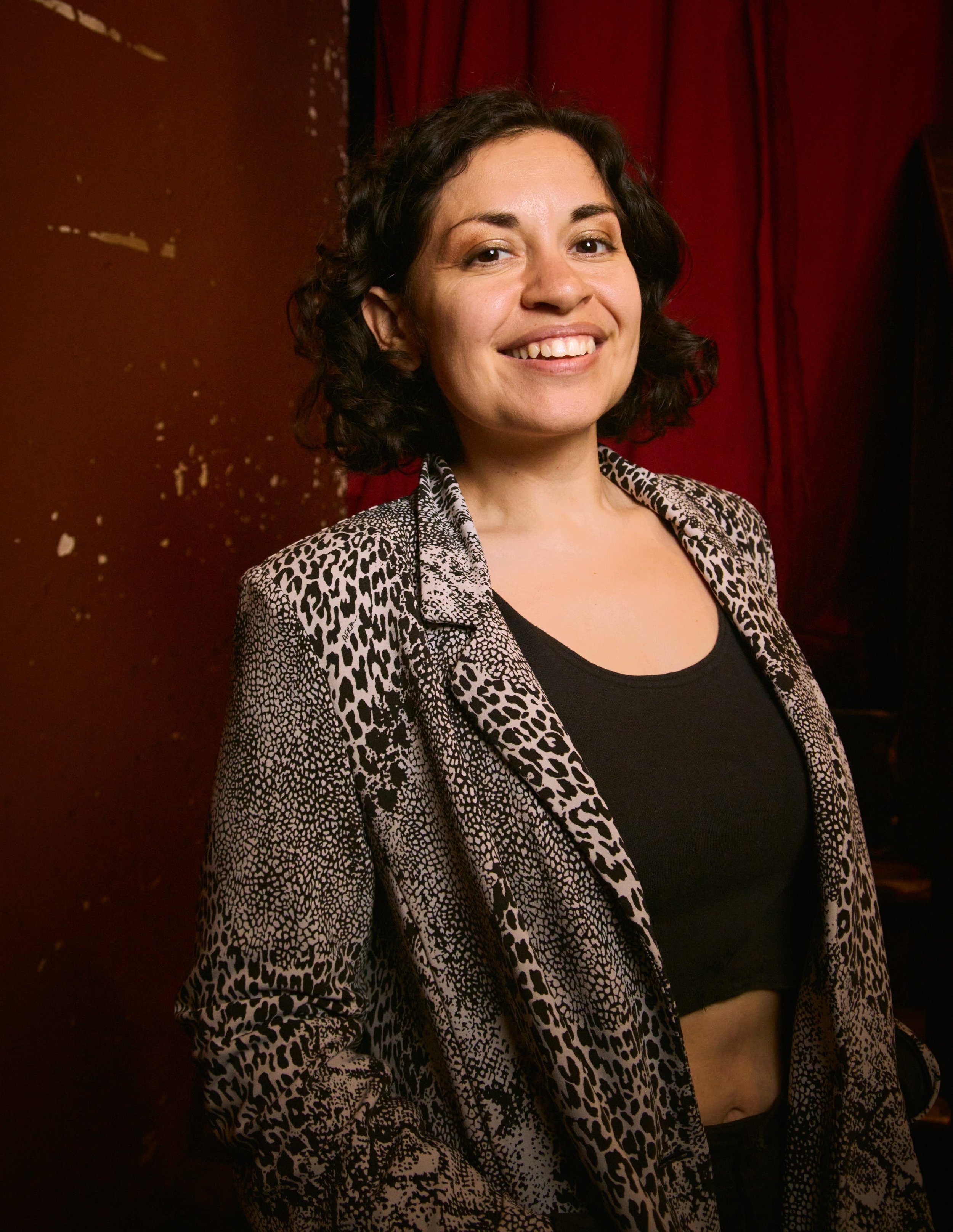
How do you continue pursuing your dreams while caring for the people who once cared for you?
Podcast producer, host, comedian, and storyteller Anita Flores joins Kara Duffy for an honest conversation about building a creative career while navigating the realities of caring for aging parents. From breaking into podcasting with a Frasier fan podcast to producing shows for major networks like SiriusXM, Earwolf, Marvel, Stitcher, and Latino USA, Anita shares the lessons she's learned about taking chances, surviving layoffs, and creating opportunities instead of waiting for them.
Together they explore the hidden emotional and financial realities of caregiving, navigating dementia, advocating for loved ones, balancing ambition with burnout, the future of podcasting in the age of AI, and why community makes every difficult season a little less lonely.
“Why suffer in silence? The moment you share your story, someone else tells you they’ve been through it too.”
-
-
376_Anita Flores_
===
[00:00:00]
Speaker 2: Welcome to the Powerful Ladies podcast. I'm Kara Duffy, and today's guest is Anita Flores. She's a podcast producer for networks such as SiriusXM, Earwolf, Marvel, Stitcher, and Latino USA. She's also the host and creator of three podcasts: I'm Listening, a Frasier podcast, a Frasier fan podcast, Care Talkers, and Dr. Horror. And you may have seen her in videos for BuzzFeed and Univision, or caught her on stage performing stand-up or storytelling across New York City. In this episode, we discuss so many different things: the evolution of podcasting, tips for getting a job that you want, especially in the industry, how she's balancing her dreams in life with being a caretaker for one of her parents since her, late mid-20s, and also, how unprepared so many of us are to someday have to take care of our parents and, the how-to and the costs and what that looks [00:01:00] like.
So full spectrum of different topics today but she is fascinating and lovely, and we could've talked for hours. So I can't wait to hear what you think of this episode.
Kara Duffy: welcome to the Powerful Ladies podcast
Anita Flores: It's a absolute pleasure to be here. Thank you for, for having me
Kara Duffy: Let's jump right in and tell everyone your name, where you are in the world, and the list of things that you are up to, because you are, you know, slashie supreme when I was working on preparing for this episode
Anita Flores: Oh my goodness. Let's see. Well, my name is Anita Flores. I am a native New Yorker. I live in Brooklyn, New York. And as for what I'm up to, I'm a podcast producer. I'm a podcast host. I am a sometimes comedy and storytelling performer in New York, and [00:02:00] sometimes dreaming of going back to a job that I used to have through high school and college, which was I was a cheesemonger.
Kara Duffy: Wow. Okay
Anita Flores: and some people ask me what a cheesemonger is. It's just like a fishmonger, except you talk about cheese, and you sell cheese, and yes, you cut the cheese. And the way, uh, the podcast industry is going maybe it's time for me to get back into cheese.
Kara Duffy: Cheese feels a little bit like a sorta safe AI zone, but I'm sure everything can be, um, tainted with AI if it wants to be. I'd love to just kinda, to jump right in because you ha- are prolific in the podcasting space from having been a producer creating podcasts, hosting podcasts. Like, I think you've touched, uh, I...
trying to add up how many podcasts you've touched at some point, and I was like, it was over 15, I think, when I was counting the things that I could find. [00:03:00] Um, how did you get into the space of podcasting, and what made you wanna start your own podcast too?
Anita Flores: So I would say just interest in what, what podcasts are started in college, which was a while ago. Uh, oh my goodness, back in like 2009, '10, '11. Uh, the-- at, at that point for me, I, I didn't fully know what a podcast was. What I knew was that I was still, um, illegally downloading things from like Limewire and whatever else was around.
Um, and it's honestly hard to remember how, but what I ended up getting into was a podcast called "The Ricky Gervais Show." I am aware of, of what we think of when we think of Ricky Gervais [00:04:00] now. He has a black T-shirt on. He's often sharing his very his opinions, that he has very strong opinions about all kinds of things.
But back when I was listening to "The Ricky Gervais Show" in college, he had a show with Stephen Merchant though, and Ricky and Stephen went on to create "The British Office," which went on to be they made "The American Office" and lots more versions of "The Office." So they hosted a show with someone named Karl Pilkington, and it was just three people talking, and it seemed like a big deal at the time.
It was a lot like radio. But yeah, so I got really into that show. Then I went to school for film and TV. I PA'd. I did a lot of production assistant work. I got into video producing, and then there's plenty of layoffs in, in podcasting now, but I was one of those people that got into the layoffs in [00:05:00] video.
So I got laid off working in video, and at that point I think it came from the fact that, yes, I'm a very creative person. I've taken lots of storytelling classes. I've tried improv. I've tried stand-up, and storytelling was probably my favorite form of performance on the stage. And I know I love to chat.
I love to talk. I will admit, I do enjoy the sound of my own voice. And so I thought, back in 2018, I thought, "Yeah I wanna make my own podcast, but it has to be about something that I actually know a lot about." So I decided to start a podcast about the sitcom "Frasier" in 2018, and I think the first episode I made was in my living room.
One of my friends from college, Andrew, came over and brought over, a Tascam. And from there, I ended up linking up with somebody named Caitlin [00:06:00] Moldenhauer, who ended up becoming my producer for this podcast about "Frasier." So then I started applying for jobs as a podcast producer and this is a, a tip that Caitlin Moldenhauer gave me.
When I was applying for jobs to work as a podcast producer, I was getting feedback like, "You're great, but you don't know Pro Tools," which is a editing software to edit podcasts. And Caitlin was like, " I think you should just put on your resume that you know how to use Pro Tools, and then you can just download a free trial and teach yourself how to use Pro Tools."
And that is what I did. And I think the combination of perhaps a little bit of white lying on my resume leading to the truth and the fact that I made my own podcast in my spare time purely f- for just wanting to do it are what got me my my first job which ended up being at Earwolf. Earwolf at the time was owned by [00:07:00] EW Scripps and then got bought by SiriusXM.
I think that podcast that I made about the show "Frasier" is what I ended up talking about in my final interview more than anything else. That's what my soon-to-be boss's boss that's what he wanted to ask me about, and he was like, "Have you booked your own guests? Have you, you know, edited your own podcasts?
Do you have experience doing this, this, and this?" And the answers were yes. So I'm really glad I started my own podcast about "Frasier."
Kara Duffy: I, I think that's, like, a pretty common story I've heard of, like, people who've gotten into the podcasting space. And it's so frustrating 'cause I think this is coming up quite a bit for people who are trying to go from the, you know, freelance gig world into a corporate opportunity, is that nowadays jobs want you to have already done the thing versus maybe when I was applying in corporate world it was, [00:08:00] were you qualified enough, like, to get to, to learn the rest when you showed up?
And now it's like you have to know everything, otherwise we're not interested. And it's so silly because to your point about fibbing and having a gray area on one area of your resume, you can... Most things are totally learnable in five minutes, and it's... We need your brain more than a technical expertise on something. So critical thinking and creativity matter way more, in my opinion, than half of the nonsense they ask for on a job description
Anita Flores: Yeah. And also, I would say something that I'm learning honestly with each passing year is at a certain point, I did start asking other people about their salaries, and I think it was good that I did that. It was upsetting, to be honest, because [00:09:00] I ended up talking to people, men, who just off the bat asked for more money at jobs than I have historically.
And that is something that I still struggle with, which is this thing that I think some men have, which is some entitlement, some confidence even though they don't have-- they aren't fully qualified for a job, and yet I might not have all the qualifications. Or no, I might have all the qualifications and still feel not completely sure.
Sometimes when I have a half-baked idea for something, I will leave myself a a voice memo. And I have this voice memo, I don't know what to do with it, on my phone, which is "Talk to men that are underqualified or men that have just straight up lied," 'cause I've also heard stories.
I heard about somebody who lied on their resume about a particular kind of experience, and then in-- within two weeks of getting the job did get fired. But this man [00:10:00] lied, and I was, like, honestly kind of impressed, and I was like, if I could just add that in, the entitlement, and maybe even I don't know about the lying, honestly. I just feel like I could really climb that corporate ladder.
Kara Duffy: Mm-hmm. I-- the, the power that people have to fail upwards is fascinating to me, so much of it, I think, is based on... a part of it that I really admire that I think has more to do with being a little bit delulu and believing in yourself and assuming it's all gonna work out. So, like, why wouldn't we go in this direction?
It's like if you wanna sneak into something, act like you belong there and no one questions you. And I think that that show up in the room and just belong is something that was a very corporate, masculine approach to things.
Anita Flores: Mm-hmm.
Kara Duffy: as women, My personal career journey's been really interesting in the sense of growing up [00:11:00] in a time period where, yes, when we're in the workplace, yes, you started seeing people, and it was still, like, very minimal.
And then having female bosses, but I would say a lot of them were bad because they were acting like men in the workplace, and just kinda seeing this whole evolution of things. But yeah. I wish more people knew that you should be getting more from your corporate job than you're giving them, because most people give over 100%, you should be maxing out your vacation days.
You should be asking for as much money as you can. You should be kind of pushing the boundaries a little bit, not to be greedy about time off or responsibilities or titles, but because if you don't ask, you're not gonna get it, and a job will never love you back
Anita Flores: 100%. And this reminds me, I think one of the smartest things I did [00:12:00] in the last year and a half, uh, I took paid leave. And what I learned is that you don't-- I mean, explore the rules at your company, but I just assumed that paid leave was for if you are having a child, which obviously if only we were like Norway, paternity leave, maternity leave, a year off at a time.
That's how it should be. Um, but yeah, in my case I wanted a break, and I do levels of caregiving for my mom and my dad and was able to take off time as a caregiver of a parent. And I am so glad that I did that, and I think if you have the ability to do that where you work, you should absolutely do that. It is... Yeah. It was, like, three months of not working, and I can't recommend it more. I'm really glad I did everything I could [00:13:00] to really take the time to explore the benefits that I had and use all of them.
Kara Duffy: Yeah. No, 'cause if you're gonna be giving 100% or more, and you're showing up because you wanna be a part of what you're doing, I think it's so important to be having this level of dedication and excitement and like wanting to do the thing. And when you're playing kind of in that space of like almost all out, like you're like, "No, I'm going for this.
I'm committed. Let's go." If you're in that head space, yes, take all your, take all the things. I do think it's really interesting. I've had a couple clients recently who were hiring younger people, and Their first question was like, "What does time off look like?" And nothing is more irritating to a hiring manager than asking about the benefits before you ask about the job.
Anita Flores: 100%. That's something in my opinion, you-- that is one of the last things that you ask and past the first interview. These days I'm seeing four interviews and up [00:14:00] to make it to the final round of a job. And yeah that's when you wait, when it actually feels like it might be on the horizon for you, that you might get an offer
Kara Duffy: Yeah. You gotta dazzle them, and once they're a yes, then you can get clarity on, on all the behind-the-scenes things that are gonna help you make your decision. But yeah.
Anita Flores: Dazzling is so accurate
Kara Duffy: yeah, it's one of my favorite words. I try to make sure I try that on every day. Am I dazzling, and who needs to be dazzled today? You mentioned that you are a caregiver for your parents, and this is one of the things I was very excited to talk to you about because we've heard in the past about the sandwich generation, when you get to a certain age in your life when you may be raising ch- children, human or furry your choice, and then you also might be caring for parents, or you have kids in college, and now you have to also pay for your parents to live with you or their medical care or something.
And so you [00:15:00] get to this c- this age where you're sandwiched between taking care of generations on both sides of you. It's often correlates historically with the most money you're ever gonna earn in your lifetime and also the most you might ever spend at one time. But with how things are changing in regards to what people are earning, what money you're keeping, what things cost, I also think that there's...
That sandwich generation ideas is very much a myth because there are people of all ages who need care. There are people taking care of parents, siblings. I know some people who are taking care of friends because they're, no one else is in the local vicinity, or they don't have other people to count on in that way.
And how caregiving occurs to me, and I'm saying this as a parent, like, when you're a parent, it's, you know Any work you do in the caregiving side that's hard and taxing, you know that at some point they're going to gain [00:16:00] independence, and the equilibrium will shift to you having quote-unquote your life back, for lack of a better phrase. When you are caring for someone who is older or has an illness or a disease or something else, we're not looking for that independence to get regained, and it's a completely different mental weight.
Anita Flores: Yeah
Kara Duffy: Um, so I'd love for you to explain your situation and how you chose to be a caregiver.
Anita Flores: Um, yeah, I, there's so much that you just said that, that deeply reson- resonates with me. So First of all, I am an only child. I-- my parents are... All of these things are things that you, that I pay attention to now when I talk to other people because of the fact that I'm a caregiver, I can't help it.
My radar is always on thinking about other people and what's gonna help them when they eventually have to end up [00:17:00] doing some form of caregiving for a parent or another older adult. I'm an only child. My parents are divorced. They're friendly, thankfully but they are divorced and neither one remarried.
And I have been caregiving for my dad, honestly, for a long time. I-- it took me a long time to realize just how long, and really, it really started after he needed a life-saving heart surgery, which was, oh my goodness, probably 11 years ago. So I was in my, like, early 20s. He is from Peru, so you know, his-- my grandparents, his parents, have since passed away.
He has family in Peru, but other than that, it's me. And I suddenly was in this position where I had to figure out his finances and after this heart surgery, his memory started to decline, and that did lead [00:18:00] to a dementia diagnosis. So I have been a long-distance caregiver for over a decade.
It has very much shaped who I am and just how I see the world. My mom, I would say, is at a point where I think we're trying to do all the things that we did for my dad for her to just sort of set her up or set me up for success somewhere along the line. Both my parents are in their 70s now.
But yeah, I've really had to consider yeah, this other person, my dad, since before I even met my husband. And I remember when I met my husband, it was like and bless having... that's also, if you can find that, it was very a great early sort of test of a relationship to very early in dating, I was in a place where I had to move my dad into an assisted living [00:19:00] facility, and I'm glad that I did that.
That is another-- That's, I've attended a lot of Alzheimer's support groups, and I love the Alzheimer's Association. I've gotten so much guidance from the Alzheimer's Association and met such incredible people through them. But yeah, being a caregiver for s- like a live-in caregiver is, is truly another level.
But just to say, when I had to move my dad into assisted living, like my now husband came and helped move him in, and we have brought my dad to Peru to see family, which is not easy traveling with somebody with dementia. And my husband, it-- he has never made me feel like, "Oh, that's your responsibility."
It's very much a, "This is us. We're in this together." And I'm extremely grateful for that. So yeah. At this point, I feel like I have my dad in a good place, and like we can delve into that if you want, just what that means to try and have your parent be [00:20:00] in a place where you feel like they're safe and you have things set up for them for the future.
But it took a long time. I mean, as recently as this past January, I became his conservator, and that is a whole process that involves going to court and all kinds of stuff with finances and So I'm definitely an expert now. I would, I'd call myself an expert. I would say also one of the best things to come out of this experience is that I feel like I'm very good now at talking to other people.
People are catching up to me now, because now I'm 38. And so now especially in the last probably three or four years, people are starting to catch up to me where now they have a parent who needs help, or they can't live alone anymore or they can't manage their finances, or they have chemo and their other parent had a stroke and now they need live-in [00:21:00] help.
I think I've been really great, glad that I'm able to have those conversations with people now, and it's like very comfortable. I just know most of the time What kind of feelings come up as a caregiver and a l- and often it's guilt. It's so strange. Like, it's like often the more you do, the guiltier you feel because it's like it never feels like enough.
And when you're a long-distance caregiver, that's also a thing where you feel kinda guilty that you're not there and you're like, "But I have my own life to live." And it's it's definitely a balance, but I think meeting other caregivers was honest- like in, in support groups was also one of the best things that I did, and really put in perspective that like everyone has their own very particular situation.
I found it really crazy that I actually as lonely as it can sometimes feel, some of [00:22:00] the biggest spats and disagreements I hear are people that have siblings and are dealing with how to care for a parent or an older adult, and just seeing where people drop the ball or where people freeze up.
And you just don't have that option when it's literally just you, but you also... That means you don't have to talk to anyone else and be like, "This is what we're doing." So that's a plus for me. And now I have a pretty dark sense of humor. I've definitely said to my husband like we can't see the future, but it's like I've said to him, I was like, "The last thing I want is for you to have to take care of me and vice versa.
So let's make sure we've got a good financial situation and do all the things that we can possibly do to prepare."
Kara Duffy: I think that brings up, 'cause when I think about this for my own parents, I have siblings, but I'm the oldest. Um, and not that that guarantees that I'm the one who has to solve those things, but [00:23:00] like I know where I stand and like, um, with their trust and other things. Like I know there's a lot of responsibilities coming to me to manage and figure out at some point. And being the business person, operations-minded, I'm like, okay, like whatever happens is one thing, but then it's like all the finances, all the paperwork, all the daily management, who's making choices, who's doing this, how are we deciding? And just the financial impact of like what it costs to take care of an adult
Anita Flores: Yes
Kara Duffy: it's maybe one of the like most hidden, disgusting costs we have in America
Anita Flores: Yes. Uh, I, I think the cost of like having someone who would like live full-time with your loved one I really think that To get to that [00:24:00] place, either there's money or you do have to figure out the system. I mean, it's also not easy because when I started looking into, um, what my f- my dad's Medicare would cover when it came to hiring someone to come in and spend time with him, take him to doctor's appointments I would find places, agencies and I would have a hard time getting people to even show up to meet him.
And come to find out the pay is terrible $15 an hour. In the end, I actually ended up finding a really wonderful person on care.com that is kind of a partially dad pays, partially me paying. It's like there does ev- inevitably, I would say, become a financial responsibility.
Unless you have a situation where you have a parent who does have a really good 401and a [00:25:00] pension, like it does... At some point, you are going to bear some sort of financial responsibility. I'm very glad that when I got my dad qualified for the level of care that he has now, which I think is Medicare/Medicaid it was an insane process that involved getting him down to a very certain small amount of money.
It involved locating his 401money and ooh, money can go real fast. Paying for a prepaid funeral, which is one of the things that an elder care loyal- lawyer will probably recommend to you when you're trying to spend down a parent's money, is do a prepaid funeral. But it was like, it's very strange to think about my experience, which is probably in my late 20s. I think my best friend, she came with me to the funeral home. She's like, "I'm not letting you go alone." And it was just such a strange experience. And I also remember thinking, like, "Well, I'm glad I'm here now and not in mourning," because this is how you get taken advantage of. You're, like, not even present, and they're like, "Here, spend [00:26:00] $400 on these flowers. Here are these special cards that you can hand out at the funeral." Also, my dad's Catholic, so you know, that adds up. Um, I myself,
Kara Duffy: process.
Anita Flores: oh, you betcha. And here's, I haven't had time to host this podcast. I definitely love hosting podcasts and creating them.
For a time, I did host and produce a podcast called Care Talkers with my friend Sandrine Etienne, who is a social worker, and that podcast was about caregiving. She's a caregiver for her mom, for her child. She is doing caregiving for a living. We spoke with a funeral director, and he helped me break down my dad's funeral contract, and I think one of the craziest costs I saw was that if you do a burial, they don't just bury the coffin. You pay for a cement box that the coffin goes into, and that also costs thousands of dollars. And the whole thing was like, wow, this [00:27:00] is really one of these kinds of bus-businesses that will survive AI.
Kara Duffy: Mm-hmm. Mm-hmm
Anita Flores: Sounds really dark, but I'm like, oh, a funeral home that's been around for over 100 years? That makes sense.
Kara Duffy: Yeah. and, and, and if we go back 150 years when it was, like, normal and to just bury your family in the backyard,
Anita Flores: Hmm.
Kara Duffy: of that it's illegal to do. Like, there's all these rules that they've put in place about the death process that didn't have the level of legality and paperwork and things that it does today.
Anita Flores: Yeah
Kara Duffy: It's mind-blowing to me how quickly all the things cost something.
Anita Flores: Mm-hmm. Yeah
Kara Duffy: even, you know, I think parents get it a little bit when you're looking at what health insurance did you have for your kids, and should they go to public school or private school? Or are [00:28:00] we making them lunch? Are they getting lunches? These small decisions we make every day about, like, where to put our money
Anita Flores: Hmm.
Kara Duffy: And I know that here in California we the governor just passed a law that they're putting financial literacy as a high school requirement, I think starting in three years or something. E- everyone can Google fact-check me on that.
I know it passed. But, um, I don't even know if, like, there's, like, financial literacy that people need in general, but then there's the, "Here's what it's actually gonna cost when you're an adult." Because I think that we understand the idea of we earn money, and we should save as much as we can and then spend this other part.
Anita Flores: Yeah
Kara Duffy: But we're not thinking about the long-term needs. Do you have a line item that says, "Someday I might get married. Someday I might have kids. Someday I might wanna go back to school. Someday I might have to take care of parent one, parent two, an- another sibling." Like, we j- so underestimate [00:29:00] how much money we have to save,
Anita Flores: Yes
Kara Duffy: and it's-- it just makes the current financial realities...
And this is not the US. The UK's having crazy things. Australia's having crazy affordability issues. It just makes the squeeze bigger, and I'm very curious how family groups and living situations are gonna start changing. because I remember when I was i- in the '80s, it was really common for a grandparent lived with family, or there was, like, a nurse that came by some days to take care of one of the grandparents while they still lived at home. I feel like it was more normalized that you were pr- like, I think 'cause mothers weren't working at the same level you had your kids and you just took care of all the people. That was your job. You were chief caretaker.
Anita Flores: Mm-hmm
Kara Duffy: And then, like, that f- I feel like it went away and caretaking started getting, like, hidden.
Anita Flores: Hmm.
Kara Duffy: it's coming [00:30:00] back into a really harsh reality where the caregivers have more money than the people caring for them do now. And I'm curious how it's gonna really flip it upside down. I know quite a few people here who have chosen to have their parents live with them sooner than they expected, and that brings up a whole other layer of, like, how the millennial generation and younger have t- been taught about independence and even dumb things. Not that it's dumb, because I do think your space really impacts your wellbeing and, like, how you feel, but just the idea that when you grow up, you're gonna have a house, and you're gonna get to design it any way you want. And then when you-- the more adults you add into that environment, the l- the more that idea goes away.
Anita Flores: And, you bring up something interesting about potentially bringing a parent into your home. It's interesting to see sort of the difference culturally, at least for [00:31:00] me. My mom is a Lithuanian Russian or a descendant of Russian Lithuanian Jewish immigrants, and my who's from the United States.
My dad is a Catholic Peruvian from Peru. And when I visit my family in Peru, and this is just other people I talk to as well from Latin American households, that is definitely more common I see of this idea of like, well, there's no question about it, Mom's gonna live with us, versus I would say it's more common, at least from being here and seeing my grandparents on my mom's side and what they did of you're not gonna live with me.
Go live here. And sometimes its own cost. But I remember my grandpa was a, a postal worker, and I didn't... I was too young to know his finances, and he passed away when I was quite young. But if I were old enough, I would have done the research 'cause he was living in a incredible facility for older [00:32:00] people.
It was great, and I thought, now I think, okay, he must have been set up real nice for compared to like my grandparents on my dad's side who lived in a nursing home that was bad towards the end of their life. That was one of my dad's... He says this to me now, that it's one of his greatest fears, that he doesn't wanna end up in a place like that.
Okay, so I bring all this up just to say speaking for me, what I've learned over the years is if you can have your loved one live somewhere where they're living around people that know how to work with people with dementia it's gonna be easier for them and it less painful for them to get my dad to take a shower.
They're not gonna cry if their dad gets mad at them. Just to say there are things that though I'm very close to my dad and there are things I do for him, there are also things that, you know... As an example, when we were-- The last time we took my dad to Peru his dementia was [00:33:00] worse than the previous time, and he was confused about where he was. He was also this isn't his fault, but it's like you can't drink the tap water in Peru. He didn't remember that. And like the first or second night, he got sick, and I woke up In our Airbnb, he was walking around with no pants on in the living room, and he had an accident in the bathroom. I'd never seen that before with my own eyes.
And I went into the bedroom where my husband was and just burst into tears, and he was like, "Don't worry about it. I'll take care of it." And I was so taken aback by that gesture. I was like, "But you had to clean up s- like stuff that is in the toilet. Wasn't that upsetting?" He was like, "No." He was like, "I did it for my grandma, but also he's not my dad."
So it was just like a reminder of like how complicated and painful and difficult it can be to come into this role that you never thought you would inhabit of parenting your parent. And so for me [00:34:00] personally, I've also seen other people whose lives have just been completely overtaken by ca- caring for someone else to the point that like when that parent or loved one passes away, they're like, "What happened to my life?
This was my life, and now it's gone, and I'm this age and now what?" And it's difficult. I don't think there's a perfect solution. I think-- I wish that we-- I think one of the biggest things that I wish is that we pay- paid healthcare providers and caregivers more money because even where my dad lives, I'm grateful he's there, but like it's understaffed, you know?
It's why I hired somebody to come in and spend time with him, and I give her more money every year, and I try and show my appreciation, you know? But I think often healthcare workers are underpaid and mistreated and they deal also with sort of the uglier parts of caregiving that maybe I know that I don't have to deal with.[00:35:00]
And I think the best thing you can do is show your appreciation. So just to say, when I hear of people taking in a parent, it's a sacrifice. And honestly, like that is not something I think we've already decided that, my husband and I. Like as much as we love all of our parents, like we will I already have some experience giving how I helped my dad, what we're gonna do for my mom, but it's like At a certain point, you're also, when you're younger, your 20s, your 30s, your life is...
There's so much to do and so many things you wanna do, and including maybe have children if you can. So going in this order is also pretty strange. I think I had a moment on two trips ago when my husband and I took my dad to Peru, where even though it was this really difficult trip, it was a beautiful trip.
And my dad had a really incredible time, and I could see that with my own [00:36:00] eyes. And it was a moment where I said to my husband "Wow, is this what it's like to have kids except you get to watch them get better?" You know? So that could be another episode, but I'll just say caregiving and also trying to have a child is its own rollercoaster that hopefully will have a happy ending, and I'll do a story about it for "This American Life."
Kara Duffy: No, I mean, we, um, recently, at the time of this recording, I had just recently recorded a Powerful Ladies podcast episode where a friend was asking me about my motherhood journey and what that took and the choices I made. And it's, yeah, like all of the choices feel c- like more complicated than they maybe need to be because we've stripped away some of the village approach in Western culture.
And if we kinda come into this world and aren't raised knowing that caregiving's gonna be a part of it, [00:37:00] whether it is a full-time job, a part-time job something that we just have to consider and be mindful for, I think we're missing the boat on preparing people for that. And the business strategist in me is like, "Ooh, this is a huge business opportunity for people who, like you, have gone through it, who can coach people and teach them."
And I'm just thinking about, like, how much money you could make off of your checklist that you sell for $29, right? Because People don't know, and I think whatever age you start this process in, it's so overwhelming. And like you've done all the research, you've had these experts on. I think you have a whole business that you could start from this.
Anita Flores: I'll follow up 'cause I, I'm always-- I, I like the way you think, and I'm often trying to monetize things in my head. And interestingly, I haven't thought about what you said, which was the just the i- just coming in with a kind of life experience that I do think is going to [00:38:00] be more common in the next 10 years, if it's not already happening.
But I feel like I came in early. It was definitely very isolating when I was, like, in my 20s. It does not feel that way anymore 'cause now it's... Yeah, people are definitely catching up, and I also think a lot more people are only children now. I remember people saying to me, "Oh, you're an only child?" But now it's like at least in the state of New York, a lot of people have one kid, and I get it.
Kara Duffy: Yeah
Anita Flores: You're like, "Do I have the money to have more than one kid? Maybe not."
Kara Duffy: You're like, "But will we have the money later? And will I need two kids to take care of me?" It's like, no
Anita Flores: oh, listen, I'm gonna, for my future child I gotta write them a book. Hopefully I fill it out for them. They already know what to do so they don't have to figure anything out
Kara Duffy: No, and it's interesting that you bring up... so I have one daughter right now, and I was shocked at how quickly [00:39:00] my, I think it was my hormones taking over my brain, were going, "She needs a sibling." And I was like, "Whoa, whoa, whoa, whoa, whoa." Like I was having shock with the conversation I was having with myself. And it really was c- 'cause I have three siblings, and I was like w- more thinking of like, "No, like who, who's gonna be on her team if I'm not around?"
Anita Flores: Yeah
Kara Duffy: And to me it's so I'm so fascinated right now about like the single child versus kids who have siblings and the different experiences that it, that have been for people.
But yeah, like there's a whole conversation about the fact that m- one middle child is going away
Anita Flores: Oh, that's true
Kara Duffy: And then if-- and with the move towards having only one child for a lot of families, 'cause I think it's 1.6 now in the US aunts and uncles as a concept also start to go away
Anita Flores: [00:40:00] That is, yeah, it-- that is a good point. I honestly, when I hear people have-- are having more than two kids, I'm like, "Whoa." Meanwhile, my mother-in-law has, I think, eight siblings, which is near-- and they ha- have-- makes sense they have massive, like, family reunions and stuff. So yeah I get it.
It's definitely a we'll see what happens with Social Security with not enough people to pay for it. Um, but yeah, I imagine it must feel different if you grew up with siblings. That, that's a very natural thing for you
Kara Duffy: Mm-hmm. Mm-hmm. Yeah. So we could, again, another whole podcast topic that we could discuss. But I would, I would love to pivot the conversation a little bit and come back to the industry of podcasting, how it's evolving, how it's changing. I know lots of people who have been getting laid off across the entertainment industry,
Anita Flores: Oh, yes
Kara Duffy: some of which are, are being [00:41:00] blamed on AI taking jobs over. Get so irritated about everyone calling everything AI because there's actual AI, and then there's just algorithms, because we can make a quick code for repeatable tasks. That is not AI, but everyone's calling it all AI, and it's driving me
Anita Flores: Yeah.
Kara Duffy: So there's also just the more greater efficiencies in technology with some algorithms that can do different things and which is really great sometimes, like make it easier to process and manage the guest pipeline and make it easier to do edits and make clips and posts.
There's some busy work that no one ever enjoyed doing, so having efficiencies can be great. But I think there's an over-exaggeration from the people making financial decisions about team sizes, about what different apps and technology and AI can do to-- And they're like, "We can replace the whole role." And you're like, " that, that tells me that you didn't understand the actual [00:42:00] role that people had."
Anita Flores: Yeah. I definitely chose an industry, the film and TV, the, the entertainment industry not knowing what would happen, which is I have now experienced this in video and audio. That because media is constantly changing, this has been my experience and the metrics for success are constantly changing because we're going by different apps or were, like Facebook and YouTube and RSS feeds, that means job stability is not a real thing. I think it's interesting because in my case, I would say because of the experience I've had being laid off, I think, yeah, I've been laid off by three major companies, and now I can tell you what they are, and now I wonder what big company hasn't laid me off yet, and will, will that be my goal?
I got laid off at Univision, I got laid off at SiriusXM, [00:43:00] and then I got laid off by The Walt Disney Company. I think a lot of these layoffs are often, not always, but some are often tied to new leadership.
Kara Duffy: Mm-hmm.
Anita Flores: Um, you know, acquisitions for sure. Acquisitions. I'm actually currently listening to a podcast called "Shameless Acquisition Podcast," produced, I think, and hosted by Laura Mayer.
It is brilliant. It is so depressing, but it's talking about just why so many people lose their jobs during an acquisition. I feel like I've learned over the years that you work for these huge companies and you think that they have a plan, but often they don't have a plan. They never have a plan. They get starry-eyed and they're like, "Ooh, let me buy this existing IP," even though most likely it's already peaked. But we're not thinking about that, and then they buy that existing IP, and then it's already peaked, and guess [00:44:00] what? They start doing layoffs. At this point, I've kind of been thinking, "Is it even possible to work for a company that hasn't been acquired yet?
And are the companies that haven't been acquired yet, are they all hoping to be acquired?" I don't know. I would say also in my experience and why I'm always honestly never worried that I'm not gonna make it through to whatever comes next is I feel like I've been pretty open to learning new things.
When I moved into full-time work, it was to be like a social media manager And, I got a lucky break, you know after I think a PA job at Nickelodeon. There was somebody I stayed friendly with there who was like, " Univision is looking for up-and-coming producers."
And so that was my first producing job. At the same time, I started my own podcast because I was like, "Podcasting is really cool and fun," and then kind of self-taught [00:45:00] myself something. So just to say, when I was in, in, in college, I was going to school for screenwriting and I had no idea that one day I would end up working in podcasting.
So I guess it gives me hope that it's possible. There is another genre within the, the entertainment industry that may- doesn't exist yet. I don't even know, and who knows where I'll end up next, but I think I've done a pretty good job at keeping an open mind. Am I excited about the prospect of AI? Eh, not so much, to be completely honest.
I'm not necessarily, like... I've done a lot of voiceover work, and I've seen that they're looking for people to train AI, and I'm like, "How is this gonna help me?" Maybe I'll make some money, but then is my voice just gonna be part of the AI that then gets later used for different projects that I won't be a part of?
So I'm wary of AI, but I also am [00:46:00] hopeful that it, the bubble will burst at least enough that the fact that a lot of companies have their own ChatGPT makes me think that these existing companies who are making their own AI aren't gonna have nothing to stand on. And I personally don't think you can, at least not yet make a good podcast that's AI.
Kara Duffy: Yes
Anita Flores: Not yet. And I, I wouldn't say I'm, like, feel like that's happening. It's a scary industry, but I think it's too late for me to become a plumber. that's honestly engineer. Funeral home. I looked up funeral greeter. I don't know if that's a real thing unless you work for the family of the funeral home. But anyway, yeah, everything is not AI, so I, I have hope it's not gonna completely take over.
Kara Duffy: I think that knowing how to create something from nothing and knowing how to be a producer is just bringing that thing to life and continuing not just the startup launch phase, but the [00:47:00] maintenance phase of it as well. Those are very interchangeable skills. The job I had in footwear and apparel for most of my career wasn't called it, but it was being a producer.
It was what's our strategy? What's our price point? Who's our customer? What's the brief plan? How do we get the rest of the team to execute on it? How do we deliver on time? If you have those skills, they're so transferable, and so many people need it. It w- that alone gives you firepower for your caregiving business that we were discussing earlier, 'cause you're like, "I know how to get something out into the market."
Those are really tangible skills that we need across across industries, and I think that... I do think it's very interesting how things are changing, and I was talking to a friend of mine who recently got laid off in Europe, and I was asking "Does it feel as unsteady as it does in the US right now?"
'Cause I heard a, a [00:48:00] stat that if you get laid off in the United States, it's taking an average of nine months to get your next job, next corporate full-time job. And so many people are getting off the corporate train to be, to do a ton of things in the freelance consulting myself as a brand and business and agency space which I honestly am encouraging everyone to come to this dark side, but that's me and my preference.
Because I, it's like you have more control that way. You have more freedom, you have more options, and I'm very curious how we're gonna be shifting the balance of people who have W2 employment versus people who don't. 'Cause I think once people figure out how to earn a living without having a W2 paycheck, you don't really wanna go back.
Anita Flores: Yeah, I'd love making my own schedule. That sounds like a dream.
Kara Duffy: Mm-hmm. Mm-hmm
Anita Flores: That's something that I'll be thinking [00:49:00] about. I would say layoffs and the energy I feel as I get older post-layoffs is definitely different. I would say there's less panic. I also feel like I've learned a lot about being thoughtful about saving money.
And I would say at this moment, post-layoff, the thing that I wanna do more than anything is a class that would bring me joy. So I'm currently thinking about taking a pottery class and letting my mind wander what may come next as compared to I was talking to somebody else that got laid off who's 10 years younger than me, and it reminded me very much of me 10 years ago, which is like, go, go, go, go, go.
But there's also I think that's a scary part of being younger too, which is maybe not necessarily having that knowledge of or even enough time to save money to create a runway for yourself. So yeah, I will definitely... Perhaps we should chat separately. I'd love to hear about that non-W2 life
Kara Duffy: Yeah. I love converting people. We could [00:50:00] continue talking, I think, for hours about all these different things. It's so fun to dive into all the juicy parts with you. And
Anita Flores: And you have a great voice.
Kara Duffy: Thank
Anita Flores: It's very relaxing
Kara Duffy: Um, thank you for that compliment. This is a a pro tip for people who are thinking about doing something with their voice.
I did not like the sound of my own voice before I started a podcast. I did it despite it. And as I have spent the past, I don't even remember how long we do it, seven years having this podcast, and I've heard my voice so much, it's now "Oh, that's my voice. That's
Anita Flores: That's great.
Kara Duffy: just a neutral thing.
Anita Flores: So that's so- that's something really great that came from your podcast if you didn't like it before and now you can appreciate it
Kara Duffy: Now I can appreciate it. And I've been surprised at positive compliments I've gotten about my voice, um, because it was just never anything I focused on or cared about really before. I was self-conscious about it going into it being like, "Ooh, hopefully they let me keep going."
Anita Flores: [00:51:00] Who's gonna stop you? That's what I say.
Kara Duffy: Exactly. For everybody who wants to follow the podcast that, you have hire you, work with you, collaborate with you, get your advice on how they can better take care of or plan to take care of their parents potentially, where can they do all those things?
Anita Flores: Well, I would say you can either follow me on Instagram at my first name, A-N-I-T-A, uh, Jewtina, J-E-W-T-I-N-A, 'cause I'm a Jewish Latina. And you can also check out my website and contact me there at anitajewtina.com. Also, I did wanna share a quote. I didn't know if we were gonna talk about quotes, but I- one that has been on my mind lately that I really like, because life has its ups and downs, as I've learned in my late 30s.
I saw a movie called The Secret Agent. It's a Brazilian film. There's a character in the movie who's giving a toast, and she says, [00:52:00] "Life's got its bad stuff, but it's got good, too." That has really been the mantra lately, I think about that quote a lot. So something to think about
Kara Duffy: How are you balancing all the things you're doing? 'Cause I feel like your energy's going out all the time, right? Out to your parents, out to your jobs. I can only imagine how much you're also giving all that energy to your partner and to friends. What are you doing to fill your own cup? And/or what's your new relationship with boundaries? Because I feel like those two things get really intertwined.
Anita Flores: Goodness. Well, I would say I do love a two-hour-long walk. Walking is my favorite activity in the whole world. So it has often been a great way for me to clear my head. This weather is also the dream, it's sunny which I think is great. I've also tried to be gentler to myself about when I'm doing and how much [00:53:00] creative work that I'm doing. So one of the big things I'd say I've done is do I host three podcasts? Sometimes. Do I have time to put them out on a regular schedule?
No, I don't. And so I think, yeah, I have an episode of my "I'm Listening" podcast coming out next week that actually is talking to somebody who is doing a play in Chicago about bonding with his mom about... over the show " Frasier" while he was caregiving for her. All of my interests at once.
So I try and do creative work when I have the time and not feel bad about how little, if I- am I doing it enough, and just reminding myself that if it fulfills me and it makes me feel good I'm making a genuine connection with another human being, great, fantastic. I would say, yeah, that's honestly just being kind to myself. Harder than I thought. So the, the more I can do that, and I find that if I, yeah, do creative projects at my own pace, [00:54:00] great. Oh, also I have MoviePass from Regal Cinemas, so I pay $25 a month to see as many movies as I want. I get points for popcorn so I don't pay for popcorn.
And yeah, it's incredible. Get MoviePass my, in my opinion. It's great. I g- it's a great, uh, thing just to, to spend your money on
Kara Duffy: And then my last question for you today is what do you need? What do you want? What's on your to manifest or wish list? Like, how can myself, this community help you either check something off your list or make something ridiculous come true?
Anita Flores: I would say, yeah, to be completely transparent, like I'm doing IVF right now. It's one of the hardest things I've ever done in my life. I actually tried my first IVF support group, and it was incredible to meet all of these other people experiencing the rollercoaster that is IVF. And I would say I'm doing a mostly good job, but manifesting continued [00:55:00] hope.
That's like the biggest part of this, is just being hopeful. And I'm trying to bring that into my life as much as humanly possible. So I will take everyone's hope and well wishes as I go through this journey. And hopefully at the end of it, much like I am with caregiving, I can hopefully be somebody that you, anyone out there listening who's been through this or even just struggled with fertility, that hopefully I am somebody that will be able to speak about it eloquently yeah, in the future.
Kara Duffy: Well, we will absolutely be sending you hope from around the world, myself and everyone who's listening. And my daughter was conceived through IVF, so happy to be someone you can call or text with your questions or concerns. And similar to you in the caregiving space, I have a stupid amount of information now.
And I've already kinda [00:56:00] collected some people locally who have found out and who are asking me all these questions. I'm like, "I'm gonna just start building a Substack with all of this stuff," because, it takes so much effort to gain the information and all the stuff that's changing. It's like, how do I keep paying this forward?
Anita Flores: We're coming to the end, but I'll just say similar to caregiving, I would say the fertility journey, I wouldn't say it's something that is always talked about, and I think I'm a very open person, so I- I'm, like, working through being more open about it in, in my work creatively. But amongst my circle, everyone knows everything, and I couldn't be more grateful for that. I've learned that from other friends in my life who have said, "Why suffer in silence?" And then only to discover when I share my own experience, someone else tells me they've been through the same thing, and it's like, "Oh, not lonely anymore." It's not feeling so isolated anymore. The Substack sounds like a great idea
Kara Duffy: Yep. By the time this [00:57:00] comes out, it is live and active, so come, everyone come and hang out there. I'm just so grateful that you were a yes to this conversation, to Powerful Ladies. I'm so grateful that just for like who, the space you're holding for the people in your life and what you care about. And I'm always impressed when people create things because they want them. I forget that people don't know that you can just do that, and in my world it's so normal, and I love getting to talk to somebody else who's just, "Okay, I wanna start this podcast. We're doing it. I'm gonna start two more.
We're doing it." By the way, Jordan's always on my case 'cause she has refused to allow me to start additional podcast ideas that I have. So I'm excited to use this, this episode as leverage. I'm just, I'm thankful for who you are and what you're doing and, um, yeah, just thank you for being there, holding up your little corner of goodness in the world.
Anita Flores: Thank you. And thank you for letting me be on the podcast. This is another thing I love about podcasting as a non-- personally, only speaking for me as a [00:58:00] non-celebrity It's been such a great way to meet new people and connect with some wonderful people such as yourself who just wanna have a conversation.
That is often, like, when I make my podcasts, again, only speaking for me it's a select group. And for me, I'm only doing it because there's something special to come from it. And it's not how much money am I making from this? It's like, what joy will come from this? So and that's, I think, a really special thing about podcasting
Kara Duffy: I agree. Well, again, thank you so much, and hopefully we will get to be in touch soon
Anita Flores: Thank you
Kara Duffy: Thanks for listening to the Powerful Ladies podcast. If you enjoyed this conversation, please subscribe, leave us a review, or share it with a friend. Head to thepowerfulladies.com where you can find all the links to connect with today's guest, show notes, discover like episodes, enjoy bonus content, and more.
We'll [00:59:00] be back next week with a brand-new episode and new amazing guest. Make sure you're following us on Instagram or Substack, @powerfulladies to get the first preview of next week's episode. You can find me on all my socials @karaduffy.com. Until then, I hope you're taking on being powerful in your life.
Go be awesome and up to something you love
Related Episodes
Episode 205: “No” Is Just Feedback | Mindy Scheier | Founder & CEO, Runway of Dreams + Gamut Management
Episode 160: Starting a Podcast That Makes a Real Impact | Bethany Hawkins & Sharoline Galva | Chatting Over Chowder
Episode 138: From Prop 187 to Podcasting for Change | Brenda Gonzalez | Tamarindo Podcast
SUPPORT OUR GUEST:
INSTA: @anitajewtina / @doctorhorrorpod / @cartalkerspod
Created and hosted by Kara Duffy
Audio Engineering & Editing by Jordan Duffy
Production by Jordan Duffy
Graphic design by Jordan Duffy
Music by Joakim Karud