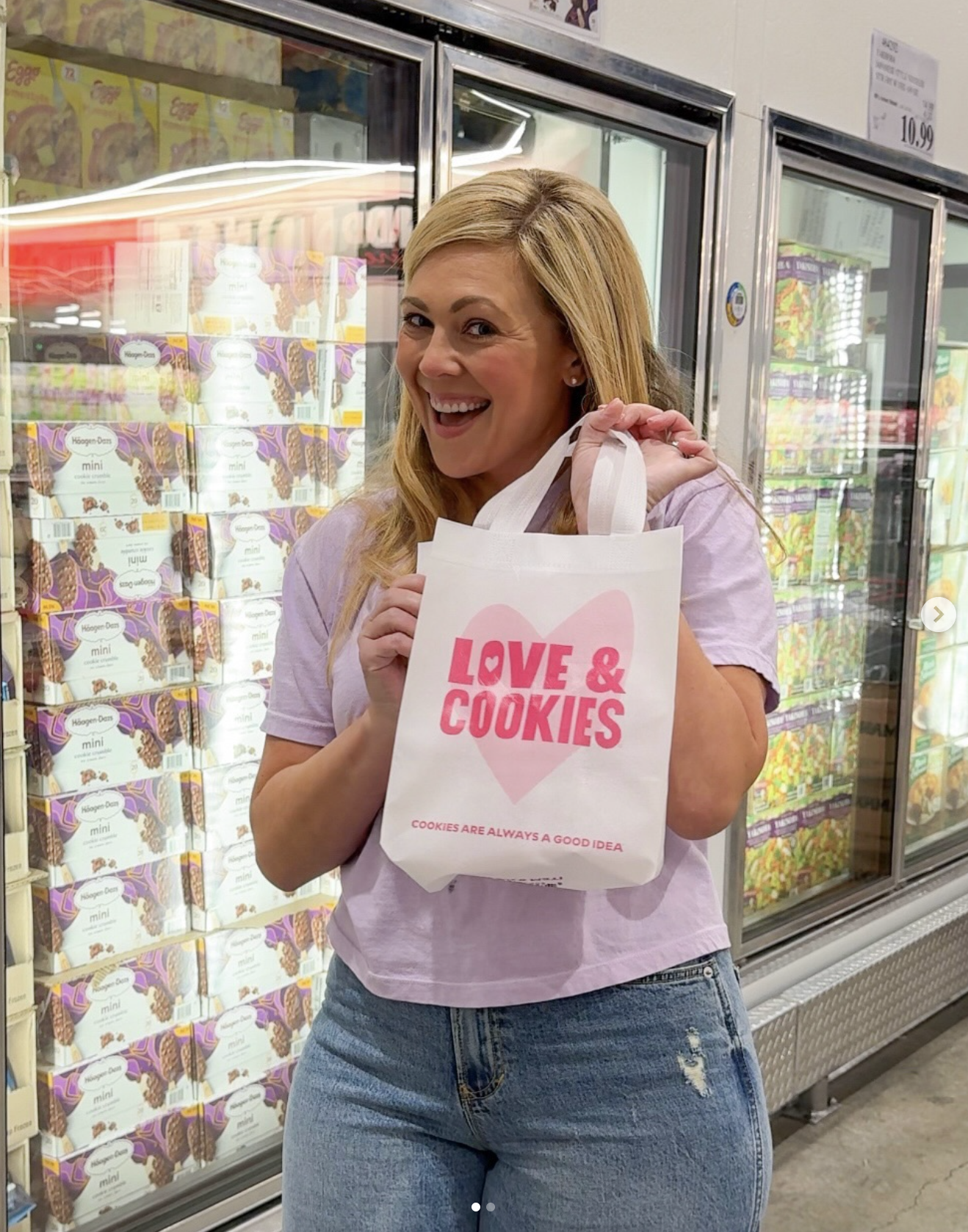
What happens when life completely rewrites your plans? Former labor and delivery nurse Ashley Cameron never expected to become the founder of a nationally distributed frozen cookie dough company, but after her son Charlie was diagnosed with Kawasaki disease, baking together became a source of healing that unexpectedly grew into Love and Cookies.
Ashley joins Kara Duffy to share the remarkable journey from home baker to landing on shelves at H-E-B, Sprouts, and Costco, navigating the complexities of the frozen food industry, and building a business rooted in purpose rather than profit alone.
Together they discuss balancing entrepreneurship with motherhood, the importance of community and mentorship, leading with philanthropy, raising awareness for Kawasaki disease, and why powerful women raise powerful women. Ashley also shares how staying connected to your "why" can carry you through the hardest days of building a business.
“Our goal is to become America’s next favorite cookie while saving hearts one cookie at a time.”
-
-
377_Ashley Cameron_
===
[00:00:00]
Speaker 2: Welcome to the Powerful Ladies Podcast. I'm Kara Duffy, and today's guest is Ashley Cameron, CEO and founder of Love and Cookies, a gourmet frozen cookie dough company based in Austin, Texas. Originally a labor and delivery nurse, Ashley started the business after her young son was diagnosed with Kawasaki's disease.
Baking cookies together started as a way to cope. In this episode, we discuss the skyrocketing expansion of the business, leading with philanthropy, the crazy, insane challenges of working with frozen foods, pivoting from nursing to entrepreneurship, and how the community in Austin is uniquely situated to support small business.
Kara Duffy: Welcome to the Powerful Ladies podcast
Ashley Cameron: Well, thank you for having me. It's a joy to be here
Kara Duffy: Uh, let's begin. Please tell everyone [00:01:00] your name, where you are in the world, and what you're up to
Ashley Cameron: So my name is Ashley Cameron. I'm the founder and owner of Love and Cookies, and we are based here in Austin, Texas. And we are a pre-portioned gourmet frozen cookie dough that you can find on retail shelves
Kara Duffy: I was very excited to talk to you because of the story of how you became an entrepreneur and cookies, and we'll dive into all of that. And I'm also excited to talk to you because you might have the key for one of my clients who is in the frozen food space and we're running into a pick and pack challenge.
They cannot properly, like, make her product. And so when I saw that you're in the pre- the frozen food space, I was like, "Yes, she's gonna understand this struggle," and we can talk about this either on the podcast or offline because it is such a network you have to build when you're gonna work in the food space.
So I'd love to start by [00:02:00] talking about that. Like, when you decided that you were gonna do it, you were gonna expand, how did you start building your network of people who knew how to do this and had the connections to get into Sprouts and Costcos and all these other places?
Ashley Cameron: Yeah. If it's okay, I'd like to kind of back up a minute and give some context to how I got into this and, and I was very blessed with lots of really good mentors, right? I like to say I did not choose CPG, it chose me first of all. And I had a tiny, small brick-and-mortar where we sold this product, and being based in Austin, somebody from H-E-B had come into my store, bought this product, came back the next day and was like, "Hey, you need to apply to this competition."
H-E-B hosts this kind of incubator-esque program called the Quest for Texas Best. So if you are a Texas-based product and you wanna have a shot at retail shelves, you can apply. So I remind you, I knew nothing about CPG. I don't think I even knew anybody in the industry, to be frank. And, I was like, [00:03:00] "Well, let's give it a shot.
What are they gonna say no?" And so we applied, and that year over six hundred items were presented, and we got notification that we made it to the top ten. So the top ten then go and do a live pitch slam in front of judges and audiences, and we ended up winning first place. And thank you. And so it was like, holy butter and sugar.
What am I gonna do? How am I gonna do this? And so through that journey, I will say that through the H-E-B program, I had a couple very good, strong mentors who were like sourcing managers and had been working with the company for a long time, and they basically grabbed me by the hand and were like, "I'm gonna give you all the institutional knowledge that I have."
And lucky for me, they worked a lot in the frozen space, and so I wanna give them a lot of credit, but I will say that the best thing I did was, like, I learn and ask every question in the world, right? You-- Like there are no dumb questions. Everything down to what is the UPC? Like what do you [00:04:00] mean I need a different one for my box?
What do you mean I need a third one for my pallet? Something as basic as that. And so they really helped guide me into that process and teaching me things. But here's the deal what I've learned now, looking back, is that frozen space is tight. It is tight. It is probably one of the smallest sections in the whole grocery store that you can choose to play in.
So things that you have to do need to be very efficient, thoughtful, timely, and all of those things to help meet that successful launch. So starting with them, once we launched into H-E-B, that was our first large retailer. I really spent that next year learning the ins and outs of the warehouse and what does it mean to be on promotion?
What does that look like before we expanded? And because of that program, I was given a lot of grace and a lot of hand-holding and thoughtfulness and time to help me learn those stages. And so when the time came and I'm like, "I think we're ready," we had hired a, a broker and strategic partner to help us kinda [00:05:00] open some doors.
And then we were fortunate enough that Sprouts was our next big step, and they were really excited to bring us on, being a great innovation partner with our holiday lines. And so we had two great back-to-back experiences with buyers and retailers that wanted to bring us in and help us grow.
Kara Duffy: Yeah. No, I love that. And I'm so excited that you're available at my local Sprouts. So that just makes, brings me... Yeah, I'm so excited. Which, let's go back because you never imagined that you would be in CPG. You never imagined that you'd be an entrepreneur either. So if we go back to the beginning, like what was your life like?
What were you doing when- just before the kind of pivot happened?
Ashley Cameron: I went to undergrad at TCU and went through their nursing program. So I was actually a labor and delivery nurse. I worked at Texas Children's Hospital delivering babies. So flash forward to being an entrepreneur in CPG, you wanna talk about a 360 inside out, [00:06:00] upside down career shift, that's exactly what happened.
And I loved that time in my life. I will tell you that I worked with primarily women in that, that sector of nursing, and you wanna talk about some strong, powerful ladies, go hang out on a OB ward and you're gonna meet a handful of them, I promise you that. But those women were incredible.
They were extremely pivotal in helping create who I was today. When my husband and I decided to start a family, he also got transferred to a new city when I was about eight months pregnant with our first child. So I went to a new city and I was like, "Well, I'm needed more at home." So I took a break, stayed home, and we had three wonderful children.
When my oldest son was five though, he got diagnosed with an acquired heart condition and called Kawasaki's disease. And so through his treatment and his journey the first time he was in the hospital, I said, "What's the one thing you wanted to do?" I would've taken him to Disney World same day had he asked.
We had been through so much. But his answer was simple, and he just wanted to make cookies with mommy. We always loved to cook and bake, and so that's what we did. [00:07:00] We tried crazy random flavors and fun things, but the one thing is one day my husband comes home and there's cookies everywhere, just everywhere.
And he's like, "These are so good. You should think about you guys sell them out of the house. This would be like a, a fun little project. You kinda wanted something to go do." So we did. And it was great. Family and friends were buying them, but then COVID hit. And I thought for sure, well, nobody's gonna buy something from a home bakery, but I was wrong.
It actually made our business explode. So within a year, we actually is when we opened our first tiny brick and mortar, which again, then that's where we launched this frozen cookie dough. And we simply created that product because people were asking for it. It wasn't like it was first and foremost in my mind.
So I had to learn not only what it meant to run a home bakery, but then to actually run a brick and mortar with all the rules and different things, and then, then got frosted. All of that happened in 18 months. And so it just... It was... Yeah, it was crazy. And I had three small children, right?
At the time they were [00:08:00] two, four, and five, and you wanna... It was just a crazy time and... But the cool thing was is it just kept feeling like every door just kept getting opened for us, right? It wasn't like we was looking for it. And I'm like, "This is like super fun." And so I kept just like going with it, and I can't believe that to, to present day, I cannot believe that here we are today. And we've only been on retail shelves for two and a half years. So it's been quite a whirlwind.
Kara Duffy: It's just, it's such an example of how so often an entrepreneurial journey is like we're not in control of it. You're holding on as tight as you can, being like, "I don't know where this is going, but I don't have a choice anymore."
Ashley Cameron: Yeah. So true. So true.
Kara Duffy: How have you been either balancing or making choices between spending... You could probably spend 100 hours a week on the business. So how are you kind of regulating what you give to the business versus what you give to the family versus what [00:09:00] you give to yourself and everything else that you're up to?
Ashley Cameron: Ooh, that's a hard question. I'm gonna be super honest with that one. I think that a lot of especially moms that would find themselves in my position I'm really guilty of I come last, right? I come last. And there are times where the business needs to come first because I have to travel or I do different things and deadlines.
I do try really, really hard, like come the evening time when kids are home from school with dinner. Dinner time's an important thing for our family, where phones are down, computers are down, everything, all electronics are off, and I try really hard to be really present, especially wh- when I can and I'm home, right?
A conscious effort. With time, like the kids are also really patient and understanding. If I say, "Hey, Mommy, I need an hour. This is really important. Here's why," and I just talk to them like they're little adults, they seem to respond really well to that. And but I also wanna give a lot of credit to my husband.
He's been a tremendous partner and support, and I could not have done it without him. And he has been awesome. He comes from a [00:10:00] industry where he's been an oil and gas guy his whole life, but he's been on the side of mergers and acquisitions, and so he understands what it takes when you're in that building process, and I'm fortunate that he understands that. And so he's definitely picked up the slack over the last few years
Kara Duffy: That's so ni- I mean, we so undervalue, like, how we're, like, choosing a partner and, like, 'cause you don't know where life's gonna take you, right? And you're like, "Okay," "Who... Is this really gonna be a partner no matter what shows up in all the different ways?" And I can only imagine, how did even the diagnosis, change the partnership that you guys had?
Ashley Cameron: Yeah. When Charlie was diagnosed, I was a nurse, and so when it comes to the kids' healthcare in general, I always just naturally took lead of that. Now, of course, he cares, but, when Charlie first got diagnosed, we were in the cardiologist office, and having been a nurse, the echo was taking way too long.
I, I knew something was wrong, but he was actually on a plane to New York for business, and I couldn't get ahold of him. And so when he finally lands, I'm, like, ugly crying on [00:11:00] the other end of the phone and getting about every third word out, and he's "All right, I'm getting back on a..." Literally gets back on a plane back to Texas and I think he shows up at the hospital at four in the morning.
And , he always has let me navigate and take lead in terms of the communication with the doctors, but he's always been there. And I think our dynamic is really strong in the sense that we know where each other's strengths are, and we also know when it's time for the other one to step up and support in a different way, whether it's just at home with the kids, something meal, or when, when sickness or tragedy strikes, then know our roles for sure.
We've been together since we met freshman year in college, and we've lived a lot of life together, a lot of life together, and so we've had a lot of... It hasn't always been easy either. I won't sugarcoat that. But it's when you're willing to change with each other instead of apart is how it makes us even stronger. So very blessed to have him.
Kara Duffy: I'd love to dive in and kind of explain to everyone listening more about Kawasaki's disease and, like, how it gets discovered how it gets [00:12:00] treated. What has Charlie's journey been like, and how do we just educate more people about it?
Ashley Cameron: Yeah. His journey and treatment was kind of one of the platforms and true legs of how we developed the business. But Kawasaki's is considered an inflammatory process. So a child gets a, a virus, and that virus causes a massive inflammatory response in the coronary arteries in the heart. And outward symptoms during that acute phase, like meaning like when they're actively sick, it's often characterized by a really high fever for seven to 10 days.
They will then get symptom, Now, kids can get all of these symptoms. They can also only have a fever plus two. So I'll name them all, but it doesn't have to be everything. So fever is a classic with what they call cherry eyes. So it would look like almost like as if you're getting pink eye, but there's no drainage.
Then they will get like a strawberry tongue. So what that means is like all the blood vessels in their mouth essentially rupture, and th- their tongue [00:13:00] gets blood red, which looks like a strawberry. Sometimes they'll get a full body rash that starts on the trunk and then expands outwards. Their hands and feet can get swollen, and sometimes the skin will peel on their hands.
In Charlie's case started with a fever, and we had a different symptom that popped up every day, and we were at the pediatrician literally every other day. And unfortunately, Kawasaki's disease, because you don't always have all the symptoms, it can mimic other viruses. It can mimic all of these other things.
And the exact trigger of which virus causes it, it can be caused by lots of different viruses, and we don't really know. And so it is a rare disease. There's a lot of research and studies still going on about it. He unfortunately was not diagnosed during that acute phase. So we-- because he had tested positive for a couple different viruses and he still wasn't...
After that acute phase ended, he was still just not well. And so we finally did an echo about twenty [00:14:00] days later, and that's when it showed abnormalities within his heart. And the cardiologist suggested, "Hey, we can go ahead and do treatment, and then we can at least hopefully stop the progression, and then we'll help manage it from there."
And so that's how him being treated came to be. But as far as raising awareness when we can educate people on Charlie's story and what the symptoms of Kawasaki's disease is, we, um, you know, as, like, a new parent your village is so important, right? By all means, I am not a-- I'm no longer a practicing medical professional, so I wanna caveat that.
But the more that parents and people know about different ailments in kids, it leads you to ask the right questions, and then you can collaborate correctly with your healthcare provider, right? And say, "Can we at least just check this off the list?" Because in Kawasaki's disease specifically, if it goes untreated, like, children can develop extremely large-- Even with treatment, you can develop extremely large aneurysms, and kids can go into heart failure.
Kids can need heart transplants. Kids [00:15:00] can go into kidney failure because of all the medications they have to be on. There's so many terrible things that can be a subsequent fallout from not having that early treatment. So if the one thing we can do is share his story, educate people, and raise awareness, then the more hearts and the more kids that we're able to help at an earlier point in time.
Kara Duffy: And is it something that Charlie's now gonna be managing for his lifetime? Or like how does, When you do the treatment that you were able to with him, 'cause my understanding is that he's thriving today. Is that correct?
Ashley Cameron: thriving. Yes. So happy
Kara Duffy: So like what happens after? Like is it something that you're checking on regularly?
Are you... What does
Ashley Cameron: Yeah. So every case is gonna be different, so I'll say that. I'll caveat that. But for Charlie specifically, so yeah, he was treated. We immediately saw improvement, but it was not one hundred percent. So he went home on some long-term medications that unfortunately had a lot of side effects for him, right?
He really upset tummy all the time to the point where he was [00:16:00] immunocompromised. And so it was also really scary 'cause COVID hit three months later after his diagnosis. And so you wanna talk about, I hate to admit this, but I still think I have a little bit of PTSD from just the, the, the combination of all the things that went on at that time.
And we really couldn't risk him getting sick again because if he had gotten sick again within a certain time period, it could come back, and so we were very worried. Um, but they, um, really u-upset his tummy and to the point where at one point he kinda really started falling off the growth curve.
I had a healthy child who was always, like, the ninetieth percentile for growth, height, and weight, and had fallen way below the growth curve. And, that was, like, challenging as a parent to help navigate that. But with time, persistence, and helping manage his symptoms, we we went from having echoes every three months to getting promoted to we're seeing consistency, let's go to every six months.
So then we... And then now we're promoted to every three years. So he's off all of his medications, [00:17:00] which is the best thing that we could be grateful for. And he will have follow-up his whole life, unfortunately. On the box at the doctor's office, they'll have to check the box history of heart disease, which has a whole cascade of effects every time you wanna sign him up for a sport or anything at this point.
But last summer, he was fully released to go do the things that at that time he was 11-year-old boy should do play baseball, play soccer, and he's growing again. He's bigger than me now, believe it or not. And so, he's doing great. And so it just-- But it's one of those things where time healed, right?
Time and the consistency and the proper treatment, it healed, and so we're very thankful.
Kara Duffy: Did it make you so thankful that you had your, like, medical nursing background to go through this? Because I, it-- I feel like I need to go to nursing school based on just becoming a parent. You're like, "What? I am not prepared for half of these things that need to go on." And my, my daughter was conceived through IVF I now feel like I'm an expert at administering, um, [00:18:00] injections. But, like, that's, that's kinda it. That's where things
Ashley Cameron: life skill. Good life skill.
Kara Duffy: Um, but it is. I feel like we're at a time when, as a parent, you need to be aware of so many things, of asking the right questions to advocate for yourself and your child in the healthcare system, reading every label that we come across, like all the products that you have in the house.
Like there's-- I feel like there's such a... And maybe it's always been this level of responsibility, but it feels so huge right now that kinda the, the protection is at the front door, and we have to control everything kinda coming in and going out for their safety.
Ashley Cameron: Yes. So two things there. It's amazing. I loved being a nurse, right? I loved helping people. I loved, especially loved working with moms. There's very few after having a baby, maybe you can appreciate the sentiment, but there's very few truly momentous occasions in people's lives.
And when a person has a, a child, I would [00:19:00] put that right there at the top of the list. And so being an- the nurse in that moment, and now having known this, when you're in labor, your nurse is your person, right? It's not the doctor that's there all the time, it's your nurse. And so being able to be a part of that with so many women was truly the most, one of my most rewarding experiences I've ever had in my life.
But at the same time, when you're a nurse, as a parent, sometimes you're like, "I have too much knowledge," because I'm like, "Oh, you're gonna be fine." "You'll be fine. Toughen up. You're okay." But then when things go wrong, you're like, "Okay," all that knowledge comes rushing back, it was helpful.
And I did... When the doctors would use these crazy, what would maybe be presumed as a crazy terminology, I understood, and I knew exactly what that meant. I knew when to get really worried. I knew when to say, "This is gonna be okay." Where my husband on the other hand, was like, "What does that mean?" And I'm like, "It's okay.
It's okay." Or, "No, this is now we need to worry." And so it, it do- it did come in handy quite a bit. I will say I've glued my fair share of foreheads at home instead of going to the [00:20:00] emergency room. So that's one benefit.
Kara Duffy: yeah. And like I feel for myself that I'm a pretty relaxed parent. 'Cause I'm like, yeah, like they're just, they're gonna be who they are. Like they're fine. And most like they're fine. They're gonna eat things. They're gonna, they're gonna get scrapes and bumps. There's no way we can't give them some sort of psychological trauma no matter how hard we try.
We never know where it's gonna come from, right? Like everyone is gonna have something that they're mad at their parents about eventually. So it's okay. Like there's a, there's a letting them just be as well. So I think it's an interesting balance of like, all right, we're just gonna let them be and everything will be fine.
At the same time it's wait, like really knowing what the flags are to be like that's not fine. That's next level.
Ashley Cameron: And it's always okay to ask questions. I would love to encourage all moms out there is that like moms have existed since the beginning of time, right? And you need to give yourself more credit, whether you're a nurse or doctor or [00:21:00] not. We've been doing this since the beginning of time, and you know your baby.
You know when something's wrong, you know when something's right. So trust your instincts because you, you got this. You got this 100%, and you're gonna do a great job. it's great
Kara Duffy: and this is also why I think that so many mothers become great entrepreneurs if they choose that path. I also think so much of your nursing background makes you more, have more a- advantages in being an entrepreneur. Because one, you're able to, put things into perspective, right? Is this a crisis?
Is this not? Okay. We're, like, constantly doing that sorting. But there is a lot of triaging that has to happen in a business. What, where are we bleeding out right now? Can we fix this? Okay, then can we pivot now to talking about long-term strategy? Can we pivot now to talking about a creative direction choice?
The way that your head has to be on a swivel some days you can come out of the day and be like, "My brain hurts because we pivoted so often to different [00:22:00] topics today. I really need to turn my brain off until tomorrow."
Ashley Cameron: That is a very fair statement about entrepreneurship and it's all about prioritizing which fire are we gonna put out first. 'Cause some days it feels like everything around you is burning.
Kara Duffy: Yeah.
Ashley Cameron: It's all burning down. And so what's the fire that's gotta be put out first?
100%.
Kara Duffy: Would, if you could go back and talk to yourself at the beginning of your entrepreneurship journey, like what would you tell her?
Ashley Cameron: I would tell her that and not to be cheesy, but that you're gonna be really proud of yourself. Because this whole journey, like I'm always very type A, very s- like strong-willed, like that was a given. But to be able to completely change a mindset and to change the trajectory and the pace of an entire family because it wasn't just the business that changed, right? I went from being a stay-at-home mom, where my husband relied on me day in and day out to manage our home, which I wanna tip hats off to stay-at-home moms. It [00:23:00] is so hard. It is so hard. And, I have immense amount of respect because I did it for a while, and it's hard. But to change a whole family dynamic,
Kara Duffy: Mm-hmm.
Ashley Cameron: And then now go to a working mom, it's hard on the family, it's hard on the kids, that transition period, right? Change is always hard in some fashion, but it always is super fruitful, which it has been for us in the long term, right? But I would tell her like, "It's gonna be super hard, but you you're gonna be really proud of the person that you became." Because I honestly, I look back and I'm like, man, if I could be who I am now, like 20 years ago, like this would've been so awesome. But it takes time and and I'm still growing every day. Have a ton to learn. I'm not done yet. And I hope that's okay to say, but I would be really, I think she would be proud and not perfect by any means, but proud.
Kara Duffy: It's why I started this podcast, because we initially started as a, a community that would do nonprofits around the world on the same day. So we had like a one day of giving where we started. And I would call women I knew who [00:24:00] I thought were powerful and ask them to host, and we would merge all of the money together to support like a women's global cause.
And it's because so many women I knew wanted more social time, wanted more impact just wanted a reason to be together because to, as you said before, we tend to put ourselves last no matter what our life looks like. But when I was talking to women and I would say, "Hey, I think you're powerful.
Will you host this year?" They would say, "I'm not." And I'm like, "What are you talking about? I've already knighted you." Like, "We've decided for you." And it really was this perspective that we weren't powerful unless we were our- we're Oprah. If we'd already climbed the mountain. Until we got to the top, we weren't powerful.
And it's so important for me that women take a beat to acknowledge that we were born this way. We were born powerful, so it's like, how do we acknowledge the journey and the choices we're making? 'Cause to your point you can be powerful and be a stay-at-home [00:25:00] mom. I really think we should change that title to house CEO, please. Just to give
Ashley Cameron: You know what? A- absolutely. I... And every woman deserves it, whether, um, for all women, like you running a household, it is a hard job. Between the schedules, and the dinners, and the, all the things. And so hats off, 'cause it, it really is. I like your title.
Kara Duffy: At a minimum, it's like chief operational officer at a minimum because you're managing all the structures and logistics and, But I, I just, yeah, there's so much when we sit back and look at the... Like, to be enchanted with the life that you're creating in the moment and the business that's happening in the moment there's so many powerful choices that you get to make every day.
And I'm curious, like, how do you feel that doing, having the cookie business, like how does it more align with like yourself and your values and maybe parts of you that you didn't even [00:26:00] know you had?
Ashley Cameron: Yeah. So that actually brings me to something that I've been able to really, reflect on and think on throughout kinda like my whole life. And I would sum it up with one, one sentence, and then I'll explain. But I... And powerful women raise powerful women, right? So strong women raise strong women.
And I have been, I have been raised by some very strong women, some of which are... I grew up on a farm, so you can imagine the women I was surrounded by are strong women for lots of reasons. Stay-at-home moms, working moms. And then met my husband very early with another set of-- His mom was the oldest of six girls, and so you can imagine the strong women in that household, all of which had significant impact on my life.
And so I look at that, and I take that, and I'm like, wow working hard, making these hard decisions is that my children get to see me. [00:27:00] What may to them feel like a, or to me feel like a small decision, but in their minds and what they get to look forward to their future of what hard work looks like and what owning a process looks like.
I think that's something to be proud of on every level, right? And so I think that's a big thing that I like to look forward to in terms of running the business. And it's also a reminder that you can do it on the days that you feel hard, right? And to take a step back and really think I know I can do this. I've seen it done a thousand times by other people, and just keep my head down and keep going.
Kara Duffy: Yeah. I have really good friends of mine who have moved from being here in Southern California to Austin, and they're both entrepreneurs. They run businesses together. They've had their own businesses, but they were really looking for a strong entrepreneurial community that connected and supported each other.
And they had been to a lot of events in Austin, and they were like, "I think it's there." And so they moved their fam- They're originally from Canada. They moved their family to Austin recently, and they [00:28:00] cannot rave about it enough in how they love the street they live on. They love... Like, they're making more friends faster and deeper than they have anywhere else they've lived.
So how would you explain the community you find yourself in, and how is that great for both your personal life as well as your business life?
Ashley Cameron: It's honestly they're 100% right. Austin is amazing. There are so many, like, amazing, strong women in this community who have amazing professional careers, and they have three or four children, and they're on a conference call in carpool, car- carpool line, and it's completely acceptable, right? And you know what?
Like that's a new way of doing things, right? I don't have to be behind a desk to take that conference call, and the fun part is that you get in the car and your kids are like... they see that mom's got her AirPods on, they immediately know, "Be quiet, mom's on a call."
And they got this down too. But as far as, like, the community on days where you might be struggling [00:29:00] personally and you're like, "Man, I've just been gone so much. My kids are acting out because they're mad that I've been gone," which is a, a real thing you can f- you have...
There's somebody in that same group who can be like, "Hey, you've got this. Maybe take a minute, take them to a movie, go to dinner, do something fun, like reset that button." And they're encouraging you to say, "Hey take a step back, take..." It's all about quality, right? It's not so much about quantity, but if you give them that quality time, then it's gonna reset that clock.
Everybody's gonna be on the same page, and they're encouraging you to do that, right? Same thing when you're struggling in your business, and if they can't find the answer for you or have an answer, they're like, "Hey, I have a friend who can do this. Let's connect. Let me send you the right answer.
Let me help find you the right answer." And so your friends are 100% correct. This community has been amazing on all of those fronts.
Kara Duffy: And do you think it's, is like it, why do you think Austin is like in, like basically this amazing hub for people to say yes to ideas, to move their ideas there? What is it about the city or the people that's kind of become this [00:30:00] incubator?
Ashley Cameron: You know, um, and this is just my opinion, but I think that Austin's been like a huge hub of a lot of innovation with a lot of different in-industries, right? So you've got a tremendous amount of tech innovation, AI innovation. I mean, for everything from even like Tesla and Amazon, like they're all moving here, and so it's bringing a lot of people with that, right?
But even that in my industry specifically, there's so many brands that got their start here in Austin. There's been... There's a, a wonderful foundation of founders and investors that have helped grow the CPG community here specifically. And so I think that people like attracts to like, right?
And so I think that over time, it has just created an environment that makes it conducive to helping these brands and innovation grow.
Kara Duffy: I've built all the businesses I have to, for location freedom because I love traveling and I've moved so much that I never wanted to be locked into a [00:31:00] location if something came up where we needed or wanted to move. And it's been really interesting because since I've started the businesses, I haven't moved anywhere.
And now I'm like, okay, like it's... I have regular conversations and my friends Chris and Alex, who just moved to Austin, we would talk about it of we can live anywhere. So are we living in places that make sense from like affordable math? Are we making choices based on the values and the communities that we can find?
And it's such a privilege to be able to choose where I get to live and why. But it is something where when you have to sit there and actively choose it and decide like, are we staying here? Are we building community here? Are we going somewhere else?, It does become something that takes up way more of my brain power than it should.
It's so intriguing. And they were actually saying "We're gonna be traveling for a month in June. Do you wanna come and stay at our house and check it out?" And I'm like, " I'd rather come when you guys are there." But it was-- [00:32:00] I love that they're now advocates and recruiting people from all over the world to
Ashley Cameron: I love that. I think you'll, I think you would love it. It's such a fun city. There's so much to go and do especially like the, the music scene and entertainment. There's just a lot going on. And I think that when it comes to times like moving and like long-term locations for your family, you're in that phase of parenting, right? And I, I firmly believe that you're only as happy as your least happy child,
Kara Duffy: Mm-hmm
Ashley Cameron: right? And so sometimes the move may not necessarily be for jobs. It can also be because of the happiness and wellbeing of your family because there's a lot of opportunities out there in all places, right?
And it can even be a small decision as like a school. Like one of my kids was really struggling in school, and so we had to make the decision to move him to a school that was way better for him, and had the opportunity to go ahead and move all three. But I have different kids from a simple transition like that, right?
And it's, the school's been a complete blessing for them, too. Change, like I said, is it can be hard, but it's also good. And we'd love to have you in Austin. It'd [00:33:00] be super fun
Kara Duffy: Now that I'm getting back into traveling, Austin's definitely on the list for doing some workshops and events, so I will be there soon. I'll let you know once it's all,
Ashley Cameron: Please do. I would love that.
Kara Duffy: Yeah. When we come back to you and your business, how have either you gotten clarity on your values or how are you living into more alignment with yourself and what matters to you at this stage in your life versus maybe before?
Ashley Cameron: we definitely have priorities, right? We, my husband and I both, he's got a full-time job, I have a full-time job, like we obviously have to execute those. Like we have to provide for our family basic necessities, right? But then the next big priority for us is gonna be prioritizing the wellbeing of our children.
Because like we- they will not be children forever, and our job is to make sure that they grow up to be good humans in the world that, show kindness, compassion, and love. And some days that's hard. I won't lie, some days it's really hard. [00:34:00] And so like that's just our perspective that like our kids and ensuring that that's what we're creating in them is definitely a priority for our values. And so that's how we wanna realign our days. And by all means I've admitted this already, but, I fail a lot before we get it right. But definitely efforts. And I think that this applies in, in business as well, is that it's okay to admit when you're wrong and saying, "I'm sorry," right?
You lose your temper with your kids and you say, "Hey, mommy was already upset and stressed because of something else, and then when this happened, it made me feel that I, I got really upset. I'm sorry, and this is what happened." And same thing in business. If you're like, "You know what, guys? I-- we didn't make the right decision here, and I'm sorry," or, " we did something wrong.
Here's what happened. Here's the thought process. Now how are we gonna pivot?" And so I think having that self-awareness and ability to help in... Again, those are just creating like core values and pillars on how you grow as a family and how you grow as a business
Kara Duffy: I am constantly telling people that I don't think that there are differences. Like, how we do life [00:35:00] is how we do business. And so often I think when a client comes to me with a challenge, it's 'cause we're forgetting what would you do if your e- employees or your vendor were family or a friend?
What would you do if this was a personal situation and not a business? I think sometimes we've been taught to separate it, right? And create this divide between how things happen. But the truth is it's all humans showing up to these places. And, so much of it comes back to those core components.
When I'm looking at clients that I would love to work with, I'm looking for people who wanna make more money, have more fun, kind of align with their purpose, but most importantly maybe is do this great business to make an impact. And I understand that's also very important for you. Let's tell everyone a little bit about how impact comes into your business
Ashley Cameron: Yeah. We started baking cookies as a passion project that led to this Full Fudge business. But [00:36:00] through that time and journey Kawasaki disease was a very rare disease in the sense that not a lot of people knew about it. People were like, "Wait, what is that?" Like, "What happened to him?"
They just didn't know. And so we found a village within the Kawasaki Kids Foundation, which is a national foundation that supports kids and families, because the founders of that foundation, their own son was diagnosed as well. And people who understood you, understood what you were going through.
So as the business was developing and we're developing this relationship over here, I, I was like, "Yeah, these cookies are great, but, like, there's no, there's no why to this without the story." And so I'm like, the story matters, right? And so we were like, "You know what? If we're gonna do this, let's do it with the intent that we want to be able to help other people."
Because us serving others in the big scheme of life in lots of different fashions i- is the end game, right? And by putting Charlie's story on the back of all of our packaging and on our website being like a, a theme, so we we're able to help raise [00:37:00] awareness so people know what questions to ask for.
And I will tell you one of the coolest things that's happened. Every year, I get four to five random emails, and doesn't seem like a whole lot, but to me it's everything where people were like, " Hey, we read your story. We've been following your brand for a couple years. And lo and behold, my, my granddaughter or my grandson or my child ended up with Kawasaki's disease, and we knew what to ask because we had read the story and we learned something."
And it's that right there, like that's the head fake, right? That you're like, "This is why we keep doing that. This is why we keep giving." And every year we donate part of our proceeds back to the Kawasaki Kids Foundation so that we can continue to support other kids and families. 'Cause our reach is limited.
They have it very dialed in with other families that are gonna get diagnosed. And it's an honor to be able to continue to support them. And then when there's families who are going through an extra hard time, we like to be able to support in extra ways as well. And I love that and being able to give back and create something bigger than just a darn good cookie.
Kara Duffy: [00:38:00] No, it is. The, the going back to why matters so much. I have a document, right, where we all split whys up into what are your holy whys? The mission statement, feel-good whys. What are your practical selfish whys? And then what are your hidden whys? And making this list of all the whys that we're doing our business, it matters so much because there are days when we think the best choice is to burn it to the ground. And so we have to have that
Ashley Cameron: there's days where I'm like, "What happens if I light it all on fire? What happens right now?" And then I quickly-- My husband goes, "No, no, no, no, no. We've spent way too much time, effort, and money for you to do that. You need to get it together."
Kara Duffy: And then the, all these why's turn into such powerful marketing tools because it is, it's like there's so much competition in your space, right? It's like every- there's cookies up the wazoo. We could make a probably path to the moon with like different cookies if we wanted to. But when [00:39:00] there is a why that people relate to and a story, like this is how you start to find your people, right?
Like I'm sure every time you share your story, everyone you become like this lighthouse where people can find you in a sea of cookies they wouldn't have before. And I know for myself, whenever I'm feeling lost in one of the businesses or not feeling connected to it, if I take some time and come back to that why and spend some time with it or the people who are related to that why, it builds up my energy again to be like, "Yep, let's keep going."
' Cause it is, es- especially when you have other things you could be doing. Like every day you're choosing to run this business and not be a stay-at-home mom, not go on vacation with your kids. Like there's a lot of other things you could do instead of run this. Mm-hmm
Ashley Cameron: on that note, I wanna share with you a funny story. So we just came off of a Costco road show in LA, and we spent six weeks, six weeks in a [00:40:00] row out there selling our cookies at Costco, and it was so fun. And just this last weekend I was talking to this couple, and the lady was so e-engaged with the product, and she started talking to me. And I don't know if you've ever been to a Costco on a Saturday. It's
Kara Duffy: a zoo. Mm-hmm
Ashley Cameron: a zoo. So you're challenged with I don't get to just share my story with just anybody because you're, like, just focused on getting out samples and selling the product. And this lady Starts asking me all these really good questions, and her husband turns around and goes, "Why are you bothering her with this?
She's just a sales girl. How would she know?" And sh- and he meant it, like, "Hey, leave her alone. Let her go sell her product." But she was like, "Well, I'm genuinely interested. Can you tell me where this brand came from?" And so her husband... She flips over the back of the bag, and my face is on the back of the bag with Charlie.
And she looks at it and looks at me with these big... She's like, "Oh my God, you're her." And I was like, "I'm her. It's, like, nice to meet you." [00:41:00] And he looks at that and I said, but I s- and I looked at him, and he just looks at me like, "Sorry." I said, "But today I'm just a sales girl and Charlie's mom." And he, and he, like, started laughing.
But it, it was definitely one of those encouraging moments of, like, keep going because it actually, you could see how much it resonated. And then they felt so e-engaged and excited, they turned around and bought, like, eight bags. And I was like, "This is so fun." So just kind of a fun moment of, of that going full circle.
Kara Duffy: It's so true because we forget that it doesn't matter how big your company gets or how fast it's growing, the founders are the ones who are, like, still doing 800 things. Even when you have a team, you still don't get to just sit in a tower and be CEO and conduct it from up there.
That's not how it works. There's so much power in getting to, actually be with the people who are buying your product. It's a different experience than sitting around a table talking about who the potential customer [00:42:00] is. But when you get that experience with people in real life, it shifts things, and they're gonna remember your story now forever.
Especially, I mean, you can't not remember something when you put your foot in the, in your mouth, so that husband is gonna remember it forever, for sure.
Ashley Cameron: He was charming and totally made it right, but it was funny. I'm like, "What would she know? She's just a sales girl." I'm like, it was gonna forever like ring out. I'm like, "Yes, today I am just a sales girl, but I also get to be Charlie's mom, and somehow I get to still pay all these bills," but that's great.
Kara Duffy: Yeah. Meanwhile, he's like, "I'm hungry. Let's get out of Costco."
Ashley Cameron: So true
Kara Duffy: well, for everyone who wants to buy cookies, support you, maybe have you, um, in their retail stores, how can they find support and follow you?
Ashley Cameron: Awesome. You can go to our website at getloveandcookies.com. And everybody should get Love and Cookies because they're amazing to keep in your freezer. We have a finder [00:43:00] page. You can type in your ZIP code, and there's a retailer near you that you can find our product. Of course, you can also buy directly from our website, and we can drop drop ship them to you.
It's a great treat to keep in your freezer, and our goal is to become America's next favorite cookie while sharing Charlie's story and sha- saving hearts one cookie at a time
Kara Duffy: Well, thank you so much for being a yes to Powerful Ladies and sharing your story today. I love what you're up to. I love that you're, what you're doing and just taking it on at full speed. Super impressed with the growth and progress you guys have had. It is no joke to get into these retailers and to be working in frozen and just CPD in general. So hats off to you. It is you should be so proud. It is such a big deal, the progress that you have made and where you're at today
Ashley Cameron: Well, thank you. We're encouraged by where we are now and excited to see, where it's gonna go. I wanna give a lot of credit, though, to my team. One talk-- I got a powerful team of ladies who each own their previews and they're amazing, and I [00:44:00] certainly couldn't do it without them either.
Kara Duffy: Thanks for listening to the Powerful Ladies Podcast. If you enjoyed this conversation, please subscribe, leave us a review, or share it with a friend. Head to thepowerfulladies.com where you can find all the links to connect with today's guest, show notes, discover like episodes, enjoy bonus content, and more.
We'll be back next week with a brand-new episode and new amazing guest. Make sure you're following us on Instagram or Substack @powerfulladies to get the first preview of next week's episode. You can find me on all my socials @karaduffy.com. Until then, I hope you're taking on being powerful in your life.
Go be awesome and up to something you love
Related Episodes
Episode 201: From Sobriety To Sephora | Jenn Harper | Founder & CEO, Cheekbone Beauty
Episode 192: Building a Product Empire Without a Team or Ads | Abby Michaelsen | Founder & CEO of Statement Home
Episode 162: An Accidental Journey Into Sustainable Entrepreneurship | Kelly Murphy | Founder of Refillery LA
SUPPORT OUR GUEST:
INSTA: @getloveandcookies
Created and hosted by Kara Duffy
Audio Engineering & Editing by Jordan Duffy
Production by Jordan Duffy
Graphic design by Jordan Duffy
Music by Joakim Karud