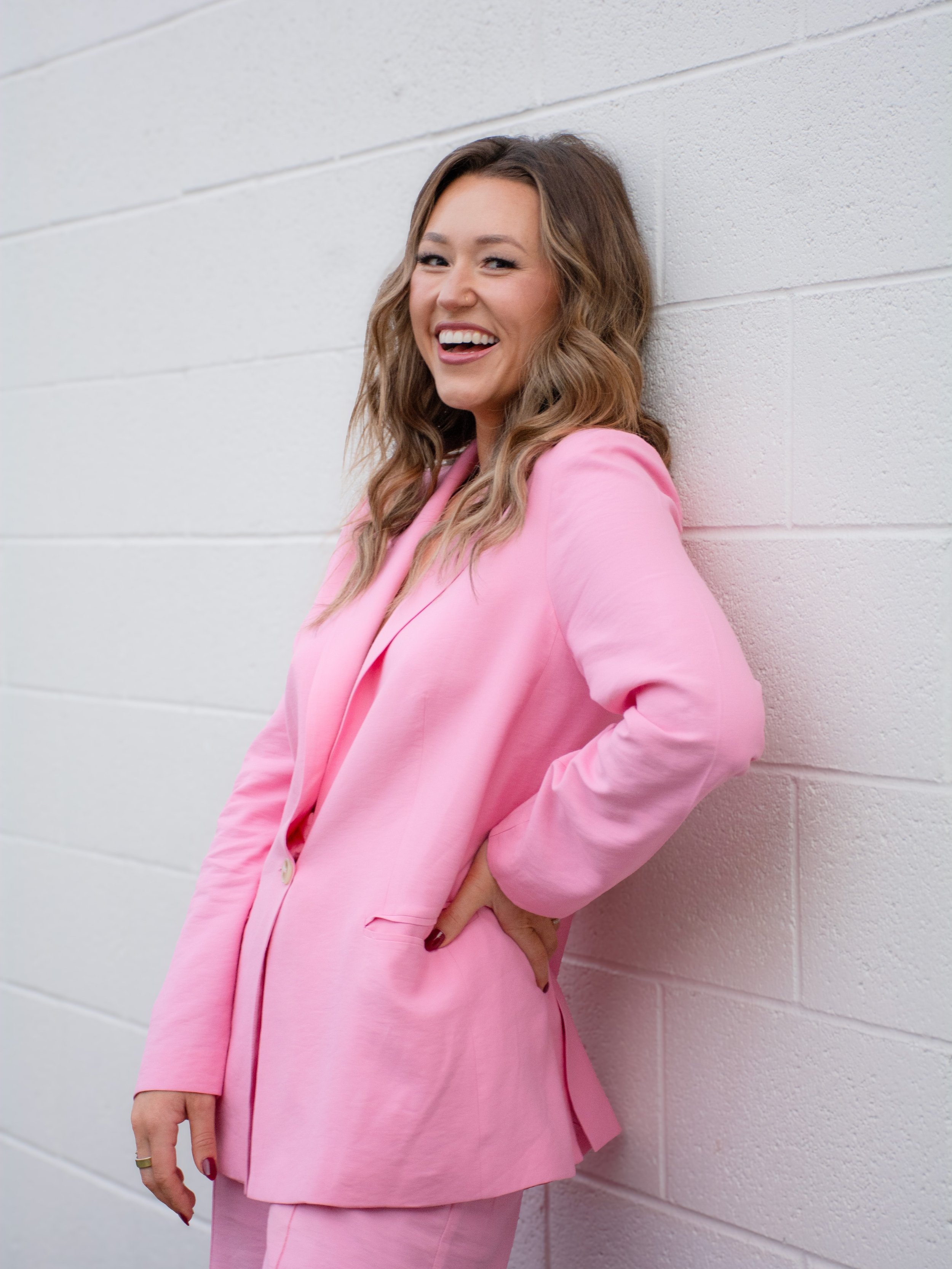
What if the secret to growing your business isn't doing more, but finding the right people to grow alongside you? Entrepreneur, marketing strategist, and community builder Kelci Borges joins Kara Duffy to explore the power of intentional community, meaningful networking, and creating spaces where women entrepreneurs can thrive.
Together, they dive into how to build a community from the ground up, why genuine relationships can generate extraordinary business opportunities, and how being in the right room can create a 27X return on investment. Kelci shares her journey from running a marketing agency to founding The Breakfast Club, the lessons she's learned about membership value, pricing, and retention, and why building something meaningful sometimes means doing less, not more. They also explore creating safe spaces for women, knowing when to say no, and expanding a community into new cities without losing what makes it special.
“Just because somebody’s different than me doesn’t mean that that excludes them from the group. It means that they have value that’s unique to them to bring over into our community, because the diversity of the group is really where the power lies.”
-
-
389_Kelci Borges
===
[00:00:00]
Kara Duffy: Welcome to the Powerful Ladies podcast. I'm Kara Duffy, and today's guest is Kelsey Borges. She's an entrepreneur, marketing strategist, community builder, and founder and CEO of SheRose and The Breakfast Club based in Boise, Idaho. In this episode, we dive into all things community building, how to start, what members really care about, what tech platform to use, why entrepreneurs need a community, and how networking can 27X your business, and so much more.
Kara Duffy: I'm excited that you're here today, and we share, it seems, a passion for bringing incredible women together
Kelci Borges: Yes.
I am so happy to be here. Thank you for having me
Kara Duffy: Let's begin by telling everyone your name, where you are in the world, and what you're up to
Kelci Borges: I am Kelci Borges. I live in Boise, Idaho, and I'm [00:01:00] actually from the great state of Washington in the San Juan Islands and moved over here. What I do and what I'm most passionate about is bringing women entrepreneurs together to lift them up, to teach them the tools and the resources that they need to grow their
businesses and live their best life
Kara Duffy: We are clearly on the same life path, which I really appreciate. What made you relate to entrepreneurial women?
Kelci Borges: Oh my goodness. So I grew up not really knowing where I was going to fit in into the world. I always felt very creative, and my family had, or has a fireworks stand that we sell fireworks at for the 4th of July every single year. And it was when I was probably like a junior or senior, my parents asked me to rebrand the stand.
At the time, I had no idea that that was what it was called that I was doing. But, they had asked me to kinda change up the name, and so that's [00:02:00] really the start of where I figured out that I really am creative, and I like to do these things. Then I have always had a heart for women, but I was bullied and put down as a young kid.
And so when I melded my creativity in college, I became a marketer. Then I launched my own marketing agency, and then I saw how hard it is to be an entrepreneur and to be a woman in business. And it kind of felt like that high school scenario all over again, where I would see women ripping each other apart, and it broke my heart.
I was like, "Man, I thought we grew out of this, years ago." And so that's what led me to starting The Club and building this community for female founders
Kara Duffy: I also don't wanna step over that when you remarketed your fireworks stand, you had a crazy increase in revenue, and you gave it a great name. Now, I have in my notes that it was called Titty Titty Bang Bang.
Kelci Borges: We love it. My grandma is a breast cancer survivor, is also [00:03:00] now a breast cancer survivor. And so the meaning is near and dear to our hearts, and that year that my parents had asked me to rebrand the s- the fireworks stand was the same year that my grandma had dedicated her Susan G.
Komen three-day walk where they walk 60 miles in three days, and she dedicated that to me and my generation of women. And so I was like, "Let's do something nice for grandma," and painted the stand hot pink, and now we have two Titty Titty Bang Bangs.
Kara Duffy: there's so many layers to that story about making it personal and why you created your own niche in making choices that were just what you thought were right at the time. It speaks to how you can be ridiculous and grow revenue.
And yeah I think that people g- forget to be brave and bold when they're in business, and I don't know how you can be an entrepreneur if you're not going to be. Like, it- entrepreneurship is such a exercise in personal development every day, and I really think that's what [00:04:00] separates the entrepreneurs who are thriving versus the entrepreneurs who are, calling me, talking to you, being like, "Maybe I should just get a real job." And that breaks my heart
Kelci Borges: Yeah. Oh, I couldn't agree with you more. Making those bold decisions sets you apart from the rest of the crowd, everybody else is stand paint red, white, and blue, and we're out there with hot pink, and everyone's staring at us. back to your original point, we Increased revenue 14%, and like, we only sell for three weeks, which is crazy.
So you have to be willing to stick your head out, and you might... your head might get chopped off along the way a few times. There are definitely gonna be people out there that try to bring you down. But it is resilience and grit and tenacity from within that continue to push you forward to withstand all of that
Kara Duffy: If you would go back to eight-year-old me, I would never guess that I had a company, let alone a podcast called Powerful Ladies, because I was punk rock about the things that [00:05:00] we were supposed to like as a girl. I was like, "Ew, horses. Ew, pink. Ew, ballerinas." I was just so over being told what it meant to be a girl or what girls had to like, and I just...
I think I moved a lot growing up, so I was like, I'm just not that, I just wasn't that type of girl. And, I'm saying this, doing this recording in a dress today, which is not, what I'm normally wearing, but I had a meeting earlier. And so to, to make that pivot kind of like you did, to to embrace a group.
I always had more guy friends. I had a lot of male mentors. I got really comfortable at being the only female in a room. And the there just seemed to be, like, less pushback about me getting to be just who I was naturally, more independent, more direct than maybe girls are supposed to be.
I got to this point because I had finally met some women who I just knew were so badass and this magic that we could create together, I'm like, we need this at scale. And I wanna start collecting more of these badass women that are out there because together we can do so much good in the world when we need so much [00:06:00] good right now.
How do you kind of see your journey going from getting bullied and picked on, especially by women, to now being like, " I love hanging out with women all the time."
Kelci Borges: Yeah, I can relate. It's funny that you say that you were, like, rebelling against horses because I grew up riding horses. But that kind of made me an outcast because all of the other girls in school were playing sports. They were playing volleyball, they were cheerleading, and I was out there with dirt under my fingernails and scooping horse poop in the morning before driving to school.
And so I did feel a little bit like an outcast, and I did have quite a wide variety of friends when I middle school, high school, even college, because I was smart, and so I was in the challenge classes. I was an athlete. I wanted to be, like, friends with everybody. And so I feel like that kind of made me not have a particular place at any, in any given, clique, if you wanna call it.
And so because [00:07:00] I feel like now I'm able to welcome everybody. I'm able to know that just because somebody's different than me doesn't mean that that excludes them from the group. It means that they have of value that's unique to them to bring over into our community, because the diversity of the group is really where the power lies and having all these different opinions.
And so I think that that really helped me in creating what is the, this amazing community of women here in Boise and beyond, and I love it.
Kara Duffy: Yeah. And it started with the Boise Breakfast Club, which you still are doing, correct?
Kelci Borges: Yep
Kara Duffy: So most people have the idea of "Ooh, I'd love to spend more time with said group of people," and many people are not taking any action on it. So what spurred you to finally be like, "You know what? I'm just gonna go for it. I need this. Let's start it"?
Kelci Borges: Oh my goodness. back to November, December of 2022. I had been in business since [00:08:00] 2018 or 2017. I built a social media marketing agency, and that had been our best and biggest year to date. I was incredibly burnt out. I feel like as a woman in business, like sometimes we just push past our limits, and then we're like, "I hate everything that I've built, and I'm gonna burn it to the ground."
And that's kind of the point at where I was, where I was like, "I don't wanna do this anymore." back to that year of what brought me the most joy and excitement, it was being in a room helping other people. And the room actually was filled with men and women, and I was teaching them social media, so I still had a conversation about, what I was wanting to leave behind.
But I think what it boiled down to was the fact that I feel joy and happiness and so much excitement when I'm bringing together a room and helping them grow. And so I had had this lingering idea of the Breakfast Club probably a couple of
years, and I was like, "You know what? Screw it. [00:09:00] This is the moment. This is my time. If I don't do it now, like, when am I going to do it? Now is the perfect time. I don't wanna do what I've been doing." And so I took the last two months of that year and put everything together. I created branding all by myself, website, all of the things that I needed, and had our first event in January of 2023.
And after we had that first event, I had women in my DMs being like, "How did I miss this? Oh my gosh, what are you doing?" And it was an invite only, so I hadn't publicized it at all, and we launched tickets and sold out in
two days
Kara Duffy: Wow
Kelci Borges: that. Yeah, it was crazy
Kara Duffy: You just know immediately that there's a vacuum in that scenario.
We're aligned in that I wanna be helping women. I want women to be making more money than they ever thought possible doing things they love. And I want them to know how to do that and still take a vacation and still be parents if they wanna be, and, like, all the things.
And one thing that comes up quite a bit is how much [00:10:00] networking you need to do as a business owner, and strategic, smart networking, not just showing up at some random everyone's wearing suits and holding a cocktail napkin type of networking. And so I think it's, I'm curious your perspective on what you're seeing with your community of like, using it for networking versus a place of belonging.
Like, how are, is being connected to this specific group, how is it magnifying what everyone else is up to?
Kelci Borges: Hmm. That's such a great question and I'm, this is why we're here together. so aligned on empowering women as well. So I am a huge believer we connect with one another on a human-to-human level, instead of just passing out business cards like you would get at, your traditional networking event, like a BNI or what have you. There's a time and a place for that, but I believe real relationships with the person that's standing right in front of you is what is going to be most beneficial to your business. Whether that person becomes a client or not, that [00:11:00] person, when they get to know and trust you, just like what we're trying to build on the internet, it happens much faster in person.
And you never know what that person that you're talking to, the trust that you built will lead to, what doors that that person's going to open for you, who they're going to talk to you about, and tell other people what you're up to because they're just, like, fascinated by you as a human. It's just a ripple effect, and there's indirect and direct ROI that comes from being in the room.
And I think by putting yourself in the room, you're giving yourself to amplify your voice and your message and share about the greatness that you're up to. And yes, it's community, And you're also getting tons of value whether that's the direct or indirect ROI from it
Kara Duffy: One of the taglines that we've used in, our group coaching program is that you shouldn't do life or business alone. And I really think you can't. Yes, you can be the only [00:12:00] employee in your business, but you're gonna have vendors and contractors and lawyers and bookkeepers. And why I don't believe in the term work-life balance, like work is part of the circle of life that we're doing.
A- and I think that women are currently, in the way culture is set up, women are much better at integrating their work into all facets of their life, I think kind of because we have to. Like for me, I'm like, "Okay, cool, how can I network with these people, and can we go on a walk before work to do it, and can we bring strollers if we have kids?"
Like, how do we just mash it all together? Because I have a lot I wanna get done, and I've asked, and I can't get more hours in a day or a week. So I feel like there's these layers of like We talk about a village, and to me, a village is when it feels like I'm doing life with people. And it has to be business plus. It's like, are we business and we're friends? I'm pro hiring only people that you know and not strangers if you don't need to. But it's like I want this like all-in approach to life. How [00:13:00] do you kind of look at the community and how much you let it consume you and your business, how much you're letting, like separating space from it?
Like, how are you doing boundaries between business and life if they're separate categories?
Kelci Borges: I am right on board with you as well. I like to say work-life integration because I truly don't think that they can be put in a box, and I personally don't want it to be put in a box either/or because I'm so passionate about what I do. And the women within my community have become my really close friends.
They're amazing humans. And I still have friends that don't have businesses, but they just don't get it like an entrepreneurial friend does. And so one of my friends that I've met through this, building this community, she calls them real deal friends. And those are the friends that know about your life, but they also know about your business.
There are the friends and then there are the real deal friends, [00:14:00] and they're the ones who really, really get it and understand the full scope of everything that you're doing as a owner, as a mom, as a wife, as a all the things. And so I, I don't have hard boundaries, I will say. I, will work into the night sometimes depending on the workload. some of my best creative work happens on the weekends, because like there's not the noise from the outside. And, I do mesh... business and personal life. Feel like you're not supposed to do that. I totally do. I totally do
Kara Duffy: Yeah I just-- It's almost like an efficiency thing for me. Like I, I love optimizing things, not just to be efficient, but to be more enjoyable. And like one of the rules I implemented a while ago for my own business, and it's not a hard and fast rule, it's like a can we get 90%, is I only want clients I would wanna go on vacation with.
And people hear that and they're like, "How do you make any money? It's impossible." I'm like, "No, but like it's are they good creative people? " It's like it's easier to find someone that you could tolerate for like an hour if you're like, "Oh, let's go to dinner or have a drink or a coffee."
But for, to be with someone for a [00:15:00] long weekend or a week, like it's at a different level. And I think probably what both of you and I have in our DNA is just like this collaboration component. I want to be building things with people. And it can be the fun activity, it can be a business activity, it can be dinner. I'm like, how do we just do it collectively? Because that sounds more fun.
Kelci Borges: I couldn't agree more. Especially when you're building something that's gonna be longstanding or when you're working with a client for an extended period of time, you wanna like that person. You don't wanna be like, "Oh my gosh, I am like dreading getting on a client call," because you don't like the person on the other end of the screen.
That sounds painful. And we probably have all been in that situation where we're like, "Oh, no, not this person again." And that's how you learn. That's how you, be like, " I'm gonna set some boundaries about the people that I'm working with because I don't wanna be dreading going to work." That's why we became entrepreneurs in the first place.
Kara Duffy: I hope so. I-- There's some people who choose it for freedom and to design their own kinda life and path in the world, and there's some who are just really [00:16:00] replacing their job. And yeah, I'm trying to convert people into the full life design process. Building communities can be really challenging.
In my own experience building communities, I've launched them and offered like, way too much. I think people underestimate retention and what that needs to look like. I think people underestimate how to get a community self-fulfilling, self-propelling a bit more. What are some challenges that you faced in building and some lessons that you've learned?
Kelci Borges: So when I first launched the business, the Breakfast Club, I had no idea what shape or form that it was going to take, truly. I was doing it selfishly out of my own desire and need to create this thing. And as we grew and as we created this thing, I was like, "Oh, wow, I think that this could become its own business.
I think that this could be something that, I just, I only do." And in that evolution, I've launched a variety of different perks, or [00:17:00] inclusions in our membership, trying to figure out, number one, what the gals wanted the most, and number two, what makes sense for me. And so I will say last year I did a lot.
I hosted a ton of additional events, and it just felt very time-intensive from, from me. And I was like, "Okay, I need to pull it g- give them, exactly what want and nothing more." Because I feel when you something full to the brim, they don't always feel like they're getting the most value out of it, because they're like, "Oh, I'm paying for this, but I can't even go to X, Y, Z thing," if you are doing too much.
And so it's honestly one of the funniest and most fascinating lessons that I've learned is you don't have to add more in order to increase the price. It is kind of almost like the luxury brands do. they have a set price, and you value that because of what being a part of that brand looks like on the outside.
[00:18:00] And not to say I'm building a luxury brand, because it's $150 a month, but, I want to establish that kind of credibility with my brand, and that doesn't mean adding more to the membership. And the women who get that just being in the room is the value and not necessarily the speakers that I bring in, even though those are incredible women, it's just being in the room that I have curated and handpicked. and so the women that get that and will pay to be in that room will, and I don't have to add more and more and more and more just to make sure that they're getting value out of it
Kara Duffy: I think it's one of the biggest misconceptions. We get this fraud feeling, I think, of like, oh, it's, it's just a meeting, or it's just this. And you're like, no like, that's what people want. Even in my coaching programs, I've stripped out so many of the bonuses because I'm like, people just want a one-on-one conversation.
They just wanna talk to me. They don't care about the other things. I'll still give them the other things if it makes sense for their personal journey. But they really do. They just, they want the core [00:19:00] MVP thing. And, when you look at the data of like what people are clicking on and what they're showing up to, you're like, oh, they showed up to the live event again.
That's weird. And I think we get down on ourselves like, "Oh, no one's posting in the community." You're like, yeah, 'cause no one's logging in. They just went to the thing in real life. It's
Kelci Borges: Yes.
Kara Duffy: It is a, it's an interesting
thing to look at how we scale back, and it also makes your... it more profitable and simple and easy for you to scale because you're not having to do 5,000 layers of programming.
Kelci Borges: Exactly. Yeah. We've, we've scaled that back. We've added a digital component, so they're able to tap in, but that's an easier lift for me, obviously, because I can do it at home. I'm not having to pay for event expenses. And so yeah, I think the next adventure, is, inviting in more sponsors, more high-level sponsors into the mix and seeing what kind of value that we can add there.
I've done low-level offering of it this year to members and a chance for them to get [00:20:00] up in front of the community at our event and talk for five minutes, and the ROI, the tangible results that we've seen happen from that has been mind-blowing. Somebody got 27 times return on their investment.
Kara Duffy: Love that
Kelci Borges: we have, like, those things, and I needed that in order to believe that it was, like, truly valuable. And so now I feel confident going to these higher level sponsors and being like, "We have a captive audience to get your company in front of. Do you want it?"
Kara Duffy: Yeah. We underestimate how powerful our local geographic pool can be. So often I think it's like, "Ooh, I need to get MasterCard as a sponsor," and it's like, sure, you could. They're gonna be much harder to close, in theory. But there's so many people in your community who have these funds and share values that they want to be a part of.
When I say community, I'm not talking about just Boise, right? For everyone listening, okay, what if we look at Greater Boise or [00:21:00] Idaho or the Pacific Northwest? We jump, I think, sometimes to the, what it looks like 10 years down the road versus just what's one year.
What's the one, the next year, the next geographical location, the next level. And we could get into a whole thing about scaling speed and other stuff. But when I look at where we're seeing progress with across clients, like sponsorships and influencer marketing it is in finding the right match way more than it is the big name. And I want everyone to have a 27x on participating
Kelci Borges: Same. It's so true. I don't anticipate going after the big sponsors because I know that there are so many businesses here locally that could benefit from being a part of our community, and that will see the ROI because they're local and because they can build that trust. I eventually will go after national brands and integrate them into the Breakfast Club, but that's probably when we have way more chapters and when they could be, like, a [00:22:00] headlining sponsor for, all the chapters because their brand has access to specific locations
Kara Duffy: Yeah. I think another thing that comes up when you're building community is when you are available to everyone and versus being exclusive and the pros and cons and kind of what qualifications people have to do to get in the door. And then secondarily, it's what happens when there's a bad egg in the group.
And so I'm curious, like, where you are in requirements and expectations and, like, how you're making sure that everyone in the group is not... You want, don't wanna deal with the biggest losers of the group, right? It's like, how do we keep everybody at a certain tier so that the value they're getting is who they're sitting next to? But then also how are you dealing with maybe someone that doesn't fit? Could be personality-wise, could be something else.
Kelci Borges: That is, yeah, that is a challenge, So we are very clear, I think, in our messaging on our website of who we are and who we are not for. And so I [00:23:00] think that kind of helps the women self-select. And potentially, we have some people on the cusp who are not there yet within our ICA profile, but they're on the cusp, and they identify or they want to be that woman.
And so getting in the room will help them because they'll be able to see examples of how that person operates, how that person moves through life, how that person thinks and visualizes business and life. And so I don't want to be like, "You're not allowed because you're not making $250,000. You're not making a million dollars in revenue."
That's not the exclusivity that I want to create. I want to create exclusivity for we are great women. This is a powerhouse community and group to be a part of. And you will stick out like a sore thumb if you keep coming and you're not doing the things that you've been talking about doing for [00:24:00] months.
Because we keep coming back, we keep talking about "Oh yeah, I have this goal to do X, Y, Z thing." If you are not taking action towards that thing, somebody's gonna call you out. Somebody will call you out in our group. Just the other day, there has been this gal who, she kind of comes and does that exact same thing.
She comes, really insert herself or participate, and then has talked to another member and " I'm not really seeing the value. I don't know why, like, all these other people are talking about how much value they get out of it, but I'm not seeing that." And s- she told me, one of my friends told me, she's "Yeah, I told her that she shouldn't join next year."
I was like, " Great. I takes the, takes the burden off of me." So I think you create such a community that is rooted in the values of the type of women that come into that group, they will self-select, and they will call each other out on their bullshit. And really helps me as the overseer. All of the members and all of the women are like moderators, and [00:25:00] they are doing all the work. They're doing it.
Kara Duffy: What is next for you in what you're creating?
Kelci Borges: We are going to be launching in some additional cities next year, and I'm excited because I feel like we've created a really good blueprint here in Boise. And so now me and my employee, Haley, we will be going to Seattle and potentially Scottsdale. And then the third city is TBD, but I wanna one per quarter in these other cities and just have them on... we have ours here in Boise on the third Tuesday of every month, and so I would just kind of have to stagger them, of course, throughout the month. But yeah, that's what's next, and I couldn't be more excited.
Kara Duffy: I think it's such an exciting point when you're going to do that second test market. I've worked with a couple clients in very different industries that have expanded in that way, and it's so interesting to me what challenges come up, 'cause you can have the same [00:26:00] blueprint in a different city, like, why is it not working?
Why is this piece not working in this city? And it's fascinating to me just the tiny nuances of, like, how people attend events or what time they attend and what they expect to get out of it. One thing we've noticed, again, in a completely different industry, was which cities wanted cocktails at meetings versus which ones were offended by cocktails at a professional
Kelci Borges: no
Kara Duffy: All we had to
do was change what we were drinking at the meeting, and now it works in both of these cities. So
Kelci Borges: That's crazy
crazy
Kara Duffy: It is. It's really crazy. Yeah.
Kelci Borges: That's gonna be a fun adventure for me to test out.
Kara Duffy: Yes. Yes. When you think about people who are listening that would love to start a run club or they'd love to start a book club or maybe even a getting together just with other women that are in their industry, how would you encourage them to start?
Kelci Borges: I would put your idea on paper, whether that's a journal or a Google Doc, and get it out. What are you trying to create? What are you trying to build? What do you want to be [00:27:00] known for? That's one of the things that I feel like really helped is we are known for X, Y, Z thing, because then when you start talking about it to people, it's very easy for you to communicate what you stand for and what you're creating.
From there, I would literally scour the internet, scour Instagram, and find people that you would want to be a part of it, whether that's a book club, whether that's a run club. You can tell by somebody's Instagram what they like to do and what their interests are. And so I would just go and privately invite them. like, "I know this is super weird, but I found you, kind of like stalked you, on the internet, and I am super obsessed with everything that I'm seeing, and I would love to invite you to be a part of this. I'm doing like a trial thing, and I'm seeing what comes of it, and I would love to invite you to be there." and you know the real deal people are gonna show up even though you're just starting. It- all it takes is a couple people to [00:28:00] start a movement
Kara Duffy: And I think that's what scares people, right? It's like, "Oh, if there's only four, is it a real thing?" Or, " Do I charge from day one, or do I wait?" We put so many questions that could be important someday but maybe aren't right now in our way to just starting
Kelci Borges: Yep. It's true. We make all of these obstacles for ourselves when really just putting something out there start building momentum and so that you can start getting feedback and gathering information about the thing that you're trying to build is the first step, even if it feels hard, even if it feels, like, uncomfortable. It is going to feel that way, and you kinda just gotta get over it and rip off the Band-Aid.
Kara Duffy: Yeah. And are you doing this full-time now, or are you still also doing your marketing agency?
Kelci Borges: We have one client that we have left for the marketing agency, and then everything else is the Breakfast Club
Kara Duffy: Yeah. it's inspiring for people to see that you can make that pivot 'cause the next lay- Like, people get so nervous about what to charge and [00:29:00] what's enough, and is this sustainable? How do we make it profitable? And I find myself often coaching people through the space where they're like, "But I love doing this. Why would I charge for it?" And I'm like, "Why wouldn't you charge for your zone of genius?"
Kelci Borges: Yeah, I have gone, so many different directions with pricing and trying to figure out what makes sense for this and what we're creating. And I started out charging $50 for a ticket, maybe even 40 actually, and then I increased it to $50 for a ticket. And at $50 a ticket, with 60 women in the room, it's barely, profitable and breaking even. with increased tenure of doing the thing, I'm like, " They're getting so much value out of this from the speaker, from the conversations that they're having, from the people that they're getting access to in this room." And the caliber of woman that I want to be calling into the room is a higher caliber woman.
$150 is not [00:30:00] gonna be like a, a ... It's a no-brainer for her to get access. And I kinda had to go through that because I'm like, "I want this to be accessible, and I want it to be a no-brainer for people." And for some, some people in this area, it, $150 is not a no-brainer, and that's okay.
They're not there at that business at that point in their business yet. And I've had to just be okay with getting no, because it leads me to the yes of the right person. And I hate, I hate being told no. I hate being told no. So it was a, it's been a journey to, like, release those people and know that when they're ready to come, I know that they want to be in the room. I know that they at least want to be there
Kara Duffy: it's been hard for me to also choose exclusivity in what I've been doing. But every time I do, I appreciate the event more. I feel like everyone who's there appreciates it more. [00:31:00] And even what conversations I've been having with my coach too are like, okay, do I feel a need to create a stepping stone for people to be able to have that make sense? Or is that somebody else's customer? And that, that's also how like, I've even been evol- evolving the things I'm doing in the past two years
Kelci Borges: I love that. I mean, that's such a good question because you could fill that role for them because you have value to offer, and you could do that. But does it make sense for what you're building adding another thing? Because the thing that I always ask myself "Is this gonna distract me from building the thing because I'm gonna be splitting my time?" And that was what I kept going back and forth with on building the agency and then building the Breakfast Club, like constantly having two my feet in different places. And it's challenging, but it could be that ascension model where they start here, and then they graduate into the next thing. So it could be really beneficial for you
Kara Duffy: In, in two of my businesses that often overlap is Powerful Ladies and the Kara Duffy [00:32:00] Coaching Consulting side. And the KDCC side is gender neutral, we work with everybody, and then Powerful Ladies is, of course, women specific. And I often get asked are we gonna turn Powerful Ladies into Powerful Humans?
I have so many incredible men in my life that are clients, that have the same value system or are doing the same work, And sometimes they come to Powerful Ladies events because I don't limit anyone. If you buy a ticket, you can come. You know what you're getting, walking
Kelci Borges: Yeah
Kara Duffy: And it's been interesting to hear the push and pull from the audience.
There are some women who are like, " I don't want a women's only event anymore. I wanna be around all the best minds or like-minded people." And then I have other women who say, "Oh my God, thank you for keeping this women specific because we're dealing with all of these things and we need a space where we can dive into these layers of it."
What responsibility do you feel having a women specific group? And is there tension ever to change that it's a gender specific community?
Kelci Borges: That's so funny that you're bringing this [00:33:00] up because I just had a conversation with one of my friends last night, and we were talking about this exact thing. Like, she was expressing to me that she feels like we were in a room, and she was like, "I feel like I need to be in bigger rooms with bigger thinkers."
And she was like, " The Breakfast Club is, tier. It- I love it, And I also want to be in rooms with like, men, and because they think so differently than we do." And I totally agree. complete opposite side of the spectrum than you of growing up in a man's world and being, thrown into men working, and I had complete opposite experience where I was working with men, and they were just like, discrediting me and undervaluing me.
And I wasn't seen as a person And what I could bring to the table, maybe I was, but they didn't show it monetarily or with [00:34:00] any respect. And so that's actually what led me to start my company in the first place. And so I, even with clients that I have worked with in my agency, they have been really disrespectful.
And so I know that that is a blanket statement for... I know that all men are not like that, and it had just scarred me from inviting them into the room, and I know that other women have had similar experiences. I know that I'm not an isolated case. And so that's one of the reasons why I made the decision to have just a women's community. I will say, with the caveat, though, that I know having them in the room, men that are in touch with their emotions, and they're not afraid to be wrong, and their ego doesn't take them, And I know that there's power in that because I've seen it. I hosted a room in June that had men and women, and I was like, Oh my gosh, this is healing a part of [00:35:00] me that I didn't know was still very wounded." So I don't know. I don't know if that's my role in the world to bring together a mixed room. But I could see myself joining one
Kara Duffy: It's a big discussion and there's a friend of mine who's female who thinks it's really discriminatory when it's like a women's only circle. And her perspective is kind of if we're gonna be fighting for equality, then we just need to do it. But I think that doesn't leave room always for the sensitivity that needs to be considered.
I'm yoga teacher trained in like a psychotherapeutic yoga, and we had a whole conversation in one class about the trauma of sound. And, for someone who's fought in the Middle East, it could be the call to prayer is triggering. For someone who was abused by the Catholic Church, it could be the sound of, hymns and other, Catholic traditional music.
And it doesn't have to be a song, it could be dripping water. There's all these things, and I think that when we're creating spaces for people to thrive, we do [00:36:00] need to consider how are we making everyone there feel safe as a starting point. I don't think we use the Maslow's hierarchy of need enough, and right now women's plates are so full and so stretched.
We don't have a lot of resources to make our life easier. That's not how America is designed right now. I think anything we can do to allow women to exhale and worry about one less thing, I think is a positive.
Kelci Borges: Yes, I think so too. I think that it's obviously a huge conversation what your friend has a good point of if we're wanting equality, then we need to be in rooms together. And I also think that women deserve a safe space where they're seen and heard by other women who are experiencing the same exact things that they are. When you try and talk to a man about those experiences, he might not fully understand because he has never been in those shoes before. And I [00:37:00] will say men have their old boys clubs at the golf courses, at the country clubs, wherever they're going, they've got their men only groups as well
Kara Duffy: If, if anyone doesn't want a gender-specific group, there's other groups to find, right? So again it's, it's speaking to building for the audience that you want, and we can't be a yes to everybody. Otherwise, The work gets diluted.
Another thing that comes up quite a bit when you're kind of, or running a group is like, what are you putting in place to make sure people are taking action? Like you mentioned that other members like are good moderating each other, and there's probably a little competitiveness that happens when people are sharing like what action they've taken and the wins they've gotten as a result. But are you intentionally building anything in to encourage action taking versus getting stuck and overwhelmed?
Kelci Borges: We could probably be doing more in this area. So what we do is my employee Haley, she will [00:38:00] go and connect with our on social and check in with them, see what they're working on. And then We have our in-person, and then we have two online events, if you will.
One is a networking session, and one is a mastermind session. And so from the networking session, we'll have a guest speaker come and educate them. And then the mastermind, depending on what the talk is about, will usually focus specifically on the topic so that they can problem solve, they can brainstorm, and figure out what action to take and move forward with.
And so from there, we have a online portal where they're telling us, we're putting in a prompt, and they're telling us what they're doing, what they're going home and taking action on from the call. And the more engagement that happens within the community, whoever is the most engaged gets a award or gets a gift at the end of the month. And so very competitive. We just started this leaderboard, [00:39:00] and they are, number one seat to get whatever the thing is that we're giving away that month. It's been really fun to see
Kara Duffy: And on the technical side, something that I think a lot of people find overwhelming as well is what platform to use. There are so many, they can all be very confusing, and I think like there's some that offer, like you can do other courses and coaching, like they offer more things, and there's some that have like really awful feed walls and some that make it too complicated.
So what has your journey been on the tech side, and do you mind sharing where you've landed from a platform perspective?
Kelci Borges: the, ugh, I hate this. So when I first launched The Breakfast Club I think maybe year two I an online component, It was just like an extra space for them to connect in between our meetups, which were only monthly at that point. And so I created a Circle community, and obviously put all this effort into branding it, making it look [00:40:00] beautiful.
Nobody barely anybody used it, and it was lame. I was like, "This is stupid." And so then I ditched that. I created a Slack area, because that's free and I'm not paying for it. again, like it was like crickets in there. People would occasionally tap in, but it was just meh. And so I was like, "Oh my gosh, I really hope when we launch this online component this time that it will be well-received." I just put more intention behind it too, and like building it out and creating it, and then like prompting them on a regular basis has changed the game, which obviously. So we built it on GoHighLevel, and the reason being was because I could essentially, knowing that I wanted to chapterize The Breakfast Club in these locations, I can create a master account with our branding, with our marketing assets, with like all of these resources, [00:41:00] and create sub-accounts for the people who eventually run other chapters when it's not just me.
And so that's why I went with GoHighLevel.
Kara Duffy: I've used and changed so many platforms across different businesses because they evolve they can't keep up as fast. I even went, like Squarespace has been my coaching and Powerful Ladies website forever, but for a long time they were just like the front door.
I had to use something else on the back end, but now they offer all this other stuff. I'm like, "Guys, finally." But now Like I've been cleaning up my tech stack and trying to delete as many things as I can to simplify all of it, and save money of course. But it's very overwhelming of finally finding a place, people are using it, and now you can't do what you need to do with it.
In this tech clean out space, I'm just was like, "Guys, we're gonna do everything over email. I'm gonna send you Google Meet invites for our live calls that are in person. We're just gonna do it so, basic
Kelci Borges: Yeah, but I think the people appreciate that.
[00:42:00] They do. Speaking back to what we were simplifying and not stuffing your offers with stuff that they're even using being simple is because the people are like, "Oh, thank God I don't have to log into another portal. I don't have to figure out go for XYZ thing." And so for anybody that's starting out and wanting to launch something, is your benefit and leg up is simple, is so easy for the people who are paying to have access to it. Because there's a bunch of people out here that we've been taught and we've been conditioned to complicate it.
Kara Duffy: Yes.
Kelci Borges: And we have all these things in all these different places, and now, now we're finally like, dialing it back and streamlining it and making it for everybody
Kara Duffy: Yes, and our own sanity is maybe the most important piece. So for everybody who wants to join, participate, get into the new chapters, where can they find, follow, connect, and support you?
Kelci Borges: You can find me @ kelseydouglas on Instagram. [00:43:00] That will link to all of the different things that we're doing in my bio. Specifically if you're wanting to learn more about The Breakfast Club, and if you're not in Boise, you can join as just a online member at jointhebreakfastclub.com. Super easy and straightforward there.
And then I do have a guide that is like my go-to way of networking and making my way around the room and making really great connections. It's called Win the Room, and you can find that guide in either of the bios or on our website as well
Kara Duffy: Well, We ask everyone as well what is on your to-do list or your to-manifest list that myself or this community can help, cause or create for you?
Kelci Borges: Ooh. If you have connections in any of the areas that I'm wanting to explore or go into, or if you're like, " I love what you've talked about and I want the Breakfast Club in this specific location," please just reach [00:44:00] out and we can start that conversation, because I want the Breakfast Club all across the country and world, and I just know that it's going to impact so many amazing women and help uplift them and help them reach their goals. And so yeah, I would love that
Kara Duffy: Thank you so much for the work you're doing. It just makes my heart a couple sizes bigger knowing that you are doing that work, and we have so many shared values. Just thank you. Thank you for how hard you work for these women, what you go through to make these events happen. Holding space for a community is such a big responsibility and takes so much work. So I see you, and thank you
Kelci Borges: Oh, Kara, thank you so much for having me. It means the world to be here, and also everything that you're doing and bringing these amazing guests to your community and empowering them and sharing stories that is really, really meaningful work, so I appreciate it
Kara Duffy: Thanks for listening to the Powerful Ladies Podcast. If you enjoyed this [00:45:00] conversation, please subscribe, leave us a review, or share it with a friend. Head to thepowerfulladies.com where you can find all the links to connect with today's guest, show notes, discover like episodes, enjoy bonus content, and more.
We'll be back next week with a brand-new episode and new amazing guest. Make sure you're following us on Instagram or Substack @powerfulladies to get the first preview of next week's episode. You can find me on all my socials @karaduffy.com. Until then, I hope you're taking on being powerful in your life.
Go be awesome and up to something you love
Related Episodes
Episode 14: Turning ADD into a Superpower | Kendra Eaton | Entrepreneur & Community Leader
Episode 95: From Concert Pianist to Visionary Entrepreneur | Melanie Wells | Founder of Lifeologie, LISPY, and YogaZama
Episode 310: How to Have Faith Your Art Business Will Be Successful | Cicely Carew | Artist, Visionary, and Creator
SUPPORT OUR GUEST:
Website: https://theboisebreakfastclub.com/
Instagram: https://www.instagram.com/theboisebreakfastclub/
Instagram: https://www.instagram.com/kelcidouglas/
Created and hosted by Kara Duffy
Senior Producer: Jordan Duffy
Music by Joakim Karud