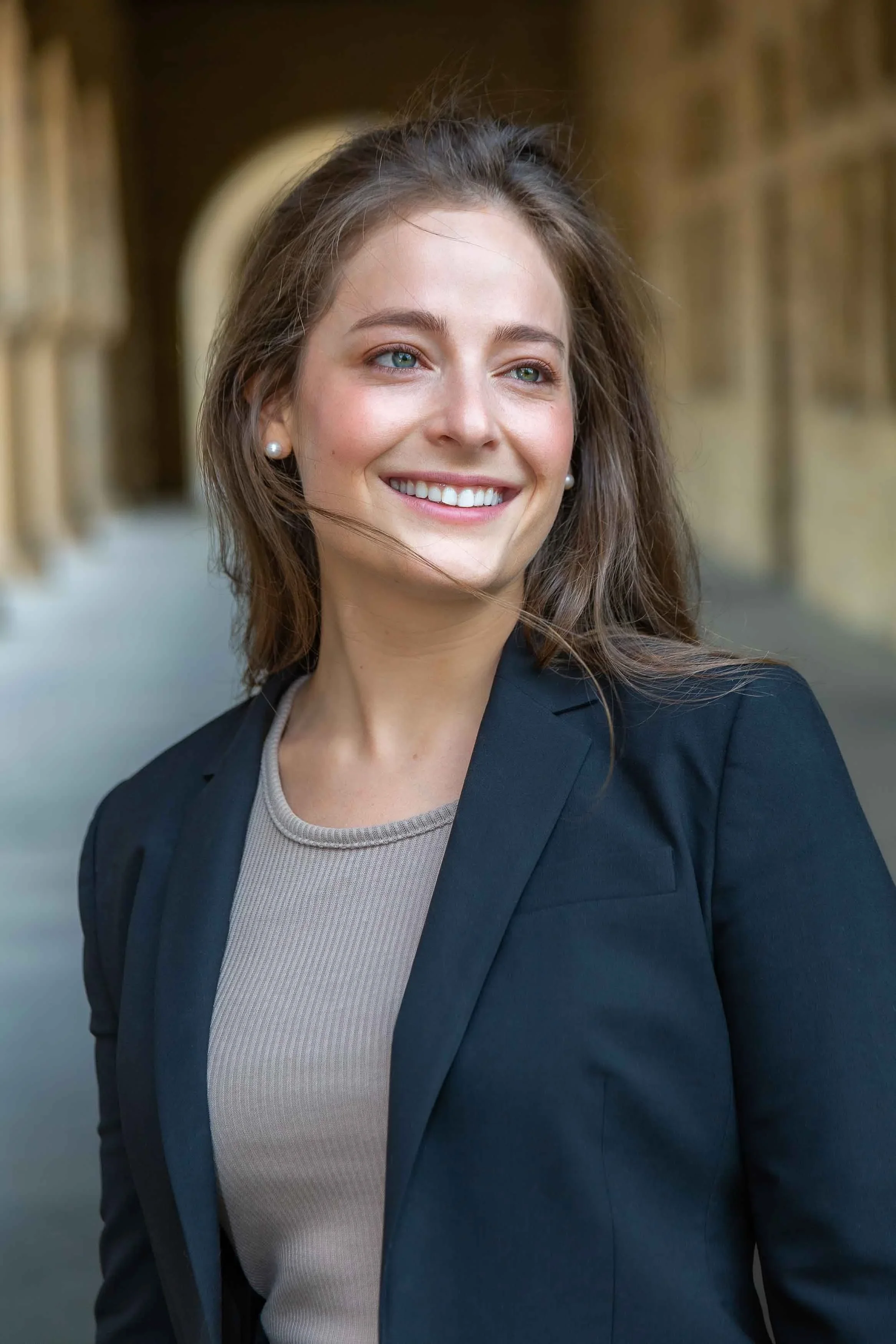
What if the future of healthcare isn't about finding what's normal, but understanding what's right for you? Ariel Ganz, founder and managing partner of Arben Ventures, joins Kara Duffy to explore how precision medicine, artificial intelligence, and breakthrough health technologies are transforming the way we understand and treat the human body.
Together, they dive into the gaps in traditional healthcare, why women's health and chronic conditions have historically been overlooked, and how personalized medicine can help identify what standard testing often misses. Ariel shares her journey from nutritional science and genetic research to venture capital, the power of using individual health data to uncover earlier insights, and why funding the right innovations could change millions of lives.
“At Arben Ventures, we’re investing in mission-driven, purpose-driven founders who are creating massive breakthroughs that could change health for millions of people. And all we want, in some small way, is to empower science to be translated into impact for patients as quickly as possible”
-
-
390_Ariel Ganz_
===
[00:00:00]
Speaker 2: Welcome to the Powerful Ladies Podcast. I'm Kara Duffy, and today's guest is the founder and managing partner of Arben Ventures, a pre-seed health venture fund investing in precision medicine, longevity, and the deep technologies reshaping healthcare. She is a Cornell-trained nutritional scientist and Stanford geneticist-trained post-doctoral researcher, whose career sits at the rare intersection of rigorous academic science and real-world impact.
With 20 peer-reviewed publications and over 1,900 citations, She has raised over $15 million for Arben and invests not just with expertise, but with a deep personal conviction. In this episode, we discuss why health tech is so vital, why personalized health matters, how we can protect our healthcare and AI while keeping things easier and in simple places, and balancing raising funds while preferring [00:01:00] to nerd out on data.
Kara Duffy: Let's jump in by telling everyone your name, where you are in the world, and how you describe what you're up to.
Ariel Ganz: My name is Ariel Ganz. I'm currently in New York City. I'm also based in Palo Alto in California. And what I'm up to is investing in the future of health with a goal to eliminate human suffering and end disease. And I'm doing that through our venture fund that I started with Ben Rolnick, Arvin Ventures
Kara Duffy: So you're just taking on, small, easy day things. No big deal
Ariel Ganz: I would say it is small, easy to... I think small, like little s- I think especially, our fund does write small checks from our fund on, and I do think small choices can create bigger waves of magnitude of impact
Kara Duffy: I think so too, and, and this has been such an important topic for me personally based on where myself and so many women I know are struggling to find solutions to what [00:02:00] they're dealing with. And I think as more women are being empowered to know that we shouldn't be suffering, there shouldn't be low-level things that we're just ignoring and going back through our day with the rage that we're feeling about how little funding goes towards just women's health in general, let alone exploring things like menopause, perimenopause what actually h- happens to people postpartum.
There's so many women I know who are beyond frustrated at the, the health systems they find themselves in, both for preventative and acute care that they need. How, how, where did you decide "This is the place that I have to make a change"?
Ariel Ganz: Yeah. I'd say for women's health specifically, I was lucky enough to experience a women's health cancer, which was breast cancer. So that definitely had me I guess it opened my eyes a little bit to the idea that you could go to the doctor feeling amazing, and then they could suggest things that might make you feel worse.
And so I think when I was younger, I just-- My mom's a doctor. Every time you were sick, she provided a solution. It was perfect. [00:03:00] Great. And then I think getting older and just realizing, especially as people age, like women, also men, there's not solutions that really work. And like you said, I think there's just so much suffering that unfortunately is normalized because we don't have a solution.
Which, personally, I'm very pro, like everything that the medical system is doing and evidence-based care and all of that, of course. But I also think there's a big opportunity now that we have AI and big data and technology that are only like for the first tiny little drip drops coming into medicine to empower solutions that are like really eliminating more of that unseen suffering.
Because I think, like you said, it's just For things we haven't had problems to historically, which especially have focused on like women's health and stuff like that, which have been under-researched, our solution has been to normalize it.
Kara Duffy: Yeah.
Ariel Ganz: Yeah.
Kara Duffy: I'm in the unique position at the time of this recording where I'm technically still in a postpartum period. My daughter's 11 months, and I'm old enough to be in the perimenopause [00:04:00] window. And so whenever I've gone to a doctor in the past couple months complaining about things that I'm-- They're like, "Oh it could be one of those things, so maybe just go home."
And you're like, " N- what? No." Like, why? That's not the answer. Just because it might be because of postpartum body changes and hormone changes or perimenopause-related things, me, that's not an acceptable answer for me to be able to make it through my day and be thriving as best I can when there's so many solutions for things that don't limit someone's ability to function throughout a day. Does that make sense?
Ariel Ganz: That does make sense. I definitely empathize with you on that. I think, Yeah. I think our current medical system, our doctors have tremendous knowledge and expertise. Obviously, they don't have the same abundance of time that maybe AI has to dig into all... Like, I think there's the medical system where we have rigor, standards, knowledge.
We know that things work. And then we have the wellness industry where people are giving a lot of care, time, attention. And so personally, I think it would be ideal if we could have a way that we [00:05:00] can move to both, have- having both
Kara Duffy: And do you see that being the biggest bridge that AI can, can-- Is that the gap it can span between those two worlds or do you see it going in a different direction?
Ariel Ganz: I hope, I hope so. To give more clinicians more of their time back. Hope so. And I also think, like at least for me personally, AI is really powerful because like you said, like sometimes you wait like months and then you see a specialist, and then they're like, " Okay, this is nice. See you in three more months," or "You need a different specialist."
So it's nice to have someone to talk to, about your problems in the, in the meantime
Kara Duffy: Yeah, that's the role my functional doctor has played in, again, my personal journey these past couple of months. And she's out of pocket 'cause she's not covered by insurance with her role as a, at least my insurance, as a naturopath. But she was able to listen and give me a list of try, check all these other people, try these different things.
We have to start getting the blood work and going down the different avenues. I would love it if there was ways for technology to speed that up, because at least I'm a pain in the butt for my doctors, and I'm [00:06:00] demanding that I move things forward and make things happen. But I know so many people who are just waiting 'cause they were told to wait, and that breaks my heart for them. It's just more suffering One of the things that were mentioned in your bio is that you're focused on personalized care and personalized medicine. For people who don't know, like what does that mean and what would it look like in reality?
Ariel Ganz: Absolutely. So my background is I have a PhD in molecular nutrition, and that was at Cornell. I worked with Marie Caudill, who was focused on choline metabolism, and Patrick Stouffer, who was focused on folate metabolism. And so in my PhD work, I was looking at how genetic variants in these like common like folate, choline, vitamin D pathways influence nutrient needs or metabolism.
So like basically the high level being like two people could be getting a different outcome from the dietary guidelines based on their genetics. If you have a like variant, let's say, where you like break down folate more, like you don't convert it like in a certain step of the pathway as much, like you're getting a [00:07:00] different metabolic outcome from the same dose.
Where like ideally I imagine we would want people to have the same outcomes. So that was interesting research looking at how nutrition and is personal, and then interestingly, we also saw it in that study, so we were looking at pregnant, non-pregnant, lactating women. They ate the same identical diets for three months, and they also had an isotope tracer version of choline, so we could see exactly where it went metabolically in their bodies.
And so there was a group of women with these genetic variants that had Basically, they needed to almost double. We had two groups, normal choline intake or almost double. And people who had like genetic, let's call them risk variants in those pathways they needed almost double the choline intake to show the same metabolic patterns as like the so-called normal people.
So it's just interesting that like someone might need double the dose to have the dose impact the body in the same way. So that's one example. Interestingly, my fund partner, Ben, he actually started a company called N of [00:08:00] One that operationalizes this as like a health AI that looks at your genetics and helps you to work through like your labs, your-- you take all your data, you give it...
I actually spent five hours last night until four AM trying to prepare a report about it for my endocrinologist. I'm still not sure if it makes sense for her, but because I have a lot of thoughts. But it has a little automated button where you can prepare a report for your doctor. And anyway, so it takes all your data, and then it's valuable because like I believe that I'm lucky enough to be treated at Stanford Medicine, like my doctors are best in the world.
But there's certain tasks that are really good for computers, like going through huge amounts of data and, and then just can summarize it for my doctor because it's hard, if you're-- it's hard to even just go that deep on noticing small patterns in the labs. Like you'd have to spend a lot of time to do that.
So it's been fundamentally helpful for me. I think it's also Similar to, I was also then lucky enough to do postdoctoral research at Stanford with Michael Snyder, who was the chair of genetics for 15 years [00:09:00] there, and he's also a professor there, and he has been a pioneer in using big data about health over time.
He calls it longitudinal multi-omic profiling, and so he collects massive amounts of data about your health. So like genomics, metabolomics, transcriptomics your exposures in the air. You can look at proteins, metabolites, lipids immune mark-- You can look at anything. Full body imaging. He was the first to use wearables to track and monitor health and predict disease like viral infections, COVID.
And so the idea is that if you have a huge amount of data about your health, you can find more insights earlier. And that's based on two things. Number one is that you're creating a healthy baseline for an individual, and then number two is that you just have more information. So for number one, creating a healthy baseline for an individual if I'm comparing myself to you, we're very different. So like myself sick is more similar to myself than you sick is like similar to [00:10:00] you.
And so it takes a bigger magnitude to see the difference. But if you compare you to yourself, you can see like smaller changes because like it's You sick is more different from like you not sick. And from that, he took over a hundred people, profiled them for, at this point, some over a decade.
And actually half of them had major and actionable health findings, which this like kinda goes against the standard of care because the standard of care is you just measure a few things, and you measure things with like a clinically actionable idea in mind. So you measure something that would change a clinical action, and if it doesn't change a clinical action, you might not measure it.
And so in this idea, you wanna have as much data as possible, monitor people over time. Of those over a hundred people, around half of them had this like major and actionable finding. And interestingly, it wasn't, showing that one thing or another, like it wasn't all in proteomics, it wasn't all in genomics, it wasn't all in wearables.
It was just like having more information is more [00:11:00] valuable because for one person, it was like they were taking the wrong medication for their diabetes based on their genetics or like for another person, You would see like a spike of like an inflammatory marker prior to getting cancer. For someone else, it's the wearables, et cetera.
So for someone else, of course, like full body imaging. So I thought that's a very like interesting way to think about personalized something. Anyway, I learned a lot being in the lab. Yeah. And I guess it just changed my view on this idea that medicine's about averages versus about individuals, because when you really dive into it, you understand, like specifically my advisor, Mike Snyder, he kept asking this question like, "What's a normal, healthy temperature?"
And the answer is ninety-eight point six. And I was like, "Why do you always use this example about, temperature?" 'Cause the end of the example is that ninety-eight point six is like d- comes from a study over a hundred years ago in German men. It's not average, but it's also not your average, and so you have your own personal healthy baseline, and from there you can see deviations.
I heard this for five years before I fully understood, though, why [00:12:00] he kept bringing this up, and it's because it's just an example. That's just one number. But every single number at the doctor is ultimately like that, where it's to some extent made up. It's made up within a range of accuracy, let's say.
Every clinic around the world uses ninety-eight point six without thinking about it, or thirty-seven degrees Celsius as if it's a ground truth number, right? But it's not a ground truth number. And of course, there have leeway because of that. Like also when you look at like labs like here within, this ninety-seven point five percent range.
Okay, who else was in that range? Do I wanna be like them? Is that optimal? Is that optimal for me? I think a lot of n- in the past, I think that was the very best way that we could make decisions just based on the tools that we had. But as we're getting massive amounts of data, technology, and AI, I think we can move forward to having more information and more data informing our decisions.
Yeah
Kara Duffy: I think this parallels quite a bit to when I'm working with businesses and they're asking me about the numbers that they should be chasing, and I'm like, "We tend to use [00:13:00] percentages because they're averages for a reason, and it allows us to see things at a high level quickly." But I always say it's just a starting point.
It's like, it's just an, an average that is generic for your industry or for your product type, because just like people, every business is so different, and there's so many different factors that have to be considered. It's like getting... To me, getting into the details and be able to make things more aligned to people, whether it's, health a bed that you sleep in, like how you wanna run your business, I think more we can make it aligned to the individual, the more interesting it gets for me.
Because I do think those minor details make such a difference. And I see it in myself. I see it in even like how it works with money. Some people having $50,000 in their bank account makes them feel safe. Other people it's 5,000. And it might not seem like a big range when we're asking for millions of dollars in funding, but that scale tells us like, are they nervous?
Are they not? Are they sleeping or are they not? Are they focused to come into work and [00:14:00] give their best and take maybe the braver risk, or are we gonna be in a scarcity perspective? And again, using myself as the example on the, in the medical world, every lab I'm doing right now, I get the automatic report like, "Everything looks fine."
And then I have to go... My doctor calls me and they're like, "Hey, I know that it said fine, but because of where you're at and like this range, we have to actually move it a little bit. Like we're not playing in the averages right now." And so everything has to be a conversation. Like that one's fine in the averages, this one maybe not.
Knowing as well that so much of the research hasn't been done like on women or hasn't been done for women who are in minorities. Like there's so many reasons why the average might not be you. I love this idea of the precision personalized medicine.
Ariel Ganz: And I can give you an example if helpful, like from my fund partner's platform 'cause I, I agree with what you're saying about the average might not be you. So him and his wife were both taking tryptophan to fall asleep every night, and for her, it was making her drowsy in the morning, and she had to take more each night for it to work.
And so essentially the [00:15:00] system said for Ben, tryptophan fine. For Kiki, she's metabolizing it more down this other particular pathway to this other endpoint that is not favorable for her and told her to stop taking it. And then it worked. And so what's interesting is, like you said, the research maybe isn't there or conclusive for so many things, but interestingly, this AI system seems to be able to guess at it, and then you can do an N of one.
That's why it's called N of one. N of one experiment on yourself over time using the scientific method to see what works and to improve your health. And interestingly, it seems to be right quite a lot just by putting together the evidence that's there. And you can tell, like there are some things that are very black and white.
For example, his daughter had warts. She was very young, so I think it's okay to share that for eight months. And then they used N of one for a few minutes, and a- after I think seven days they did what it recommended. After seven days, the war- warts never came back. And to a certain extent, you can tell if it's working for you because you feel better.
[00:16:00] Obviously, I think the quantifying the effectiveness piece can improve over time for all of us. It's quite interesting. Or like another black and white example would be he Ben, my fund partner, had said that he hasn't dreamed in twenty years. He wants to dream. So he'd already spent, time diving on Reddit and looking at forums and trying to take different supplements for dreaming, et cetera.
But basically what the AI came up with is it said, "For you, I think you have like low glutathione or something is why you're not dreaming." And so it recommended to him to take N-acetylcysteine, and I forget what the sup- second supplement was, but two supplements for him. Immediately he started dreaming.
He's-- or remembering his dreams. He's been, dreaming and remembering his dreams ever since that day. And so it's like very black and white
Where it's like first he couldn't remember his dreams, now he can remember his dreams. And then interestingly, this isn't like the universal dreaming supplement, right? This is what worked for him to be able to remember his dreams. For someone else, it could be something quite different
Kara Duffy: Even with endocrinology, right? Thyroid [00:17:00] cancer survivor. My sister's a thyroid cancer survivor. My other sister and dad have Hashimoto's. I found out after giving birth that my thyroid wasn't working. I don't have Hashimoto's, but I'm now having to take a prescription every day for it.
And the... me, that's been such an ex- an experience in the fine amount. And some of my friends can't take the generic, they have to take the name brand. And just the fact that name brand to generic can change dramatically for somebody because of the different chemistry that's happening.
There's so many levels, like what it impacts and how it shows up that just in that one spectrum, 'cause it impacts everything. Like the endocrinology space, just dialing that in takes so much trial and error. It'd be great to be able to fast-track more of this too.
Ariel Ganz: Saying, "Wait, did you say that you had thyroid cancer?"
Kara Duffy: My sister. So my, my sister had thyroid cancer. It's not something that runs in our family. But then my father and my other sister had, she first had Hashimoto's, then got the cancer, and then my father and my other sister both have Hashimoto's. And what I think is [00:18:00] really interesting doing, s- research on our own family, three of them have the same blood type, and then my mother, my brother, and I have the same blood type, and it's been really interesting to see who gets what, and if there's a pattern just in the blood type version of what's showing up for people. We've been just kinda making note of like who's getting what and what side are things falling on. And there's, not a ton of us, but more than, more than, there's six of us to sort, which isn't a, a very good statistical scale. But even our, in our family, it's interesting to see who's reacting to what, who has allergies to what, and who's getting kinda what conditions, too.
Ariel Ganz: sample set.
Kara Duffy: Yeah.
Ariel Ganz: it be cool, cool if you could combine all the data across families and just look at questions of interest?
Kara Duffy: I think so, 'cause there, like then you can, we could layer in like the environmental factors. Part of what I was excited about in our conversation today was that, like I am such a nerd for access to data because I like having the power to choose, like how deep do we wanna nerd out on this?
Or like where, where is good enough? And even looking at the six members of [00:19:00] my family, we've lived in different places at different times in our lives had children at different ages in different locations. There's so many environmental social health factors that could all be combined to look at things in such interesting ways just to see cause and effect or correlation.
Yeah, imagine the data. We could look at it the same way that we're getting... People are happy to give a swab for figuring out their ancestry. Like, how do we, how do we get more? Which brings me up to the privacy space with technology and health. If I was voting, I would love to have a wearable that was like the implanted chip that just recorded everything all the time, so someone, it could go somewhere.
Like what, when you're thinking about the collecting the data versus the privacy risks, like where do you find yourself falling personally, and like what are you looking at when it comes to the portfolio?
Ariel Ganz: When it comes to portfolio, we, absolutely want our companies and the founders that we're backing to be using, HIPAA-compliant databases and to have strong security and privacy and to [00:20:00] be looking out for their patients first. It's very important to me. I'd say personally, I, I'm not super jazzed for someone to be reading my medical record, and I do think it's important to weigh the relative risks here because
Yeah. I feel like I'm on a sinking ship and I don't think I'm the only person on it. What's the point of privacy if you're not here? So I don't know. It's, it's definitely something I guess I'm not sure what my personal answer is, but I would lean towards wanting to have... I guess it's easy to want more access to data but then want privacy for yourself. I would lean towards wanting to share data and having data be open, but I would never expect another person to choose that.
Kara Duffy: The, the focus that you guys are looking at, right? The precision medicine, women's health, brain behavior, and cancer. they're all big, and they're important, but I, but what I also see with that list is to me, they are on the list of things that I hear more women talking about than men, and that might just be anecdotal in my world. But where did you guys choose your focus? And those [00:21:00] four are still all huge, like on their own.
Ariel Ganz: I think we chose those four. So precision medicine, of course, comes from the lab. Ben and I were both in Mike Snyder's lab at Stanford. And then I think the other three were just personal interest out of personal pain and suffering. We're investing in mission-driven, purpose-driven founders who are creating like massive breakthroughs that could change health for millions of people and like really make a meaningful impact and who have the commitment, the integrity, the willpower, and the skill to be able to bring it into the world.
For example, our, like, top-performing company in our fund is North Star Care,
Or one of the top performers, and she is doing at-home alcohol use disorder care. That's not an area that I had any knowledge, any expertise, any interest, frankly, before meeting her. But from her own passion and conviction Amanda, the founder she's a board-certified addiction medicine specialist, Dr. Amanda Wilson, and she started this [00:22:00] company after working with opioid patients and being in the addiction space and just seeing that there were not adequate solutions for addiction and behavioral health. And so she first started two other companies. She started CleanSlate and Boulder Care.
She was one of the first to use medication-assisted therapy for opioid use disorder. And now she's bringing a similar approach to alcohol use disorder care, where she's treating it as a medical disease, not as a disease of willpower. So right now, if you're alcoholic, you essentially are doing AA, whether that's in AA or in rehab centers.
And she's looking at your genetics. She's doing at-home care. Her program is not cold turkey based. You don't have to quit completely. They have like cognitive behavioral therapy-based aspects, and they have peer therapy. They prescribe medications. They prescribe supplements.
They're supporting the medical and metabolic disease that it is, and to me, that is I'm just blown away by her, but I'm also blown away by the idea that anyone would still get the old standard of [00:23:00] care and be told that this is their fault and blamed and if you take someone who has been sober, let's say for 20, 30 years, and then they're still struggling to stay sober, that indicates to me that we don't have a cure.
The treatment's not working.
Like whatever approach we're using, it's not working if they're struggling that much 20, 30 years later. And yeah, it's just like her program is like 86% effective versus rehab is 13% effective. And
Kara Duffy: that's crazy.
Ariel Ganz: yeah. So to me, like that is gonna powerfully change the world for millions and millions and millions and millions of people. So 3 million people a year go to rehab in the United States just in the United States. And that's the impact is those 3 million people plus their families, plus their kids. So now we're gonna have a way to actually help people, like a whole category of illness that we had basically no way to help or very limited way to support.
Kara Duffy: And I'm so curious, right? Like with all the parallels of other addictions, right? Like starting there, like how else can it expand to like this 360 approach to a gambling addict or, name the [00:24:00] next addiction that someone's struggling with. Because I would imagine there must be so many it's looking at all these different parts and how does it just need to shift th- to support another one?
Fascinating.
Ariel Ganz: she does support almost all of the addictions, but not gambling currently, yeah,
Kara Duffy: Okay.
Ariel Ganz: my knowledge. Yeah.
Kara Duffy: quite the rage right now.
Ariel Ganz: Oh, really?
Kara Duffy: Yeah, it's been the fastest growing addictions I read recently in the US, mostly because of all the apps that are now existing, and it's really impacting young men in particular because, whether they should be or not, like from 16 onward. There's a guy they profiled on Sunday Morning a couple weeks ago who is spending his entire paycheck, he's in his late 20s, on gambling a year right now, and it's just betting on football and whatever sport is in season through an app. I don't understand it, but it's mind-blowing to me, like the how much money they're making and maybe what havoc is being caused along the way. You seem to have a theme in your life of bringing people together to change the world through connecting people in medicine and maybe people who haven't been in [00:25:00] medicine. You were a part of the Stanford Mental Health Innovations Summit, who brought together celebrities politicians, people in the medical field. Where did this passion for you come from? If you... Were you eight and being like, " I wanna bring people together and change the world," or when did this click in that you had the ability to cause this and to help other people see the connections that you did?
Ariel Ganz: Good question. I think like for the Stanford Mental Health Care Innovation Summit specifically, I co-founded that with two women from the Tony Blair Institute for Global Change, and they advise 30-plus countries on health policy, which is really cool. And We had co-authored some articles together, and then we were trying to think of what we could do that would be cool for an event for a summit because for me, I was just really blown away by some of the results from the research that we were doing at Stanford, and also frustrated that no one really cared about them.
So as while I was at Stanford, I was focused on mental health and specifically the mind-body [00:26:00] connection, as well as looking at immersive psychosocial interventions for mental health. And I think it's so interesting for example, we did a randomized clinical trial of Tony Robbins' Date With Destiny, which is a six-day immersive retreat.
We also did a, like deep multi-omic profiling trial of Byron Katie's nine-day retreat that's called The School for The Work of Byron Katie. And we were planning several more but didn't have the budgets, which is part of why I would like to be able to bring more funding into science.
But yeah, in both of those cases, these are things that millions of people are saying, "This changed my life," and I think very powerful and empowering options for mental health especially, the one with Byron Katie's work, it's called The Work, and it's just four questions. So it's very similar to cognitive behavioral therapy, with the exception that you could do it alone at two AM.
It's very simple. You could do it with a practitioner. You could do it without a practitioner. I think therapy is an amazing thing, and I have a therapist, and I've gotten a lot of [00:27:00] out of therapy as well as like coaching. But you're still coming down to a lot of things about like the skill of the practitioner, the availability of the practitioner.
Is this a top one percent person? Are they bringing their own problems? Are they bringing their own like fears and perspectives and judgments and anger, and what happened to them when they were in second grade or whatever? And
what I love about Byron Katie's work is that it directs you back to your own truth in a very simple structure.
So you bring up a stressful thought, and then the question is are-- is it true? Can I absolutely know this is true? How do I react when I believe that thought? I project this whole reality, and then I start taking actions from my negative reality. And then from that, I'm like creating outcomes in the world, right?
So I might think someone doesn't like me. From that, I treat them differently. Either I'm shy and I pull away, or I yell at them, or whatever that action is, it then has this whole cascade where I'm creating something negative in my life. So I just gotta really witness, okay, what was the reality, and then what came from my belief about the reality?
How did I react? How did I feel? Did [00:28:00] that sadness come from so and so doesn't like me, or did that sadness come from the meaning that I'm creating from so and so doesn't like me? And so you gotta really see it. And then the fourth question is, who would I be in that same situation without that thought?
And so it's just returning back to Like nothing. And like what's there when you're not projecting that negative reality and you just get to see for yourself. Okay, like even if so and First of all, we have no idea frankly if so and so likes me or not, doesn't like me, because that's like their business.
My business is who I am, how I'm reacting, how I get to be, in that moment. Am I being a kind person? Am I treating them, in a kind way? Am I treating myself in a kind way? So these kind of all come up in that simple structure of just these four questions, and then you do what's called the turnaround.
So they do like me, how could that be true? They're talking to me. Like maybe they like me, but they're busy , stuff like that. Maybe they like me, but their toe hurts and they're cranky today, I don't like them. Then you see where am I projecting, the same thing onto them.
Like I, I say they, they don't [00:29:00] like me, and the moment I say that I'm not liking them because I'm seeing them as bad. So I'm like doing the same thing that I believe that they're doing. And then they do like me, I don't like them. I don't like myself would be the other one, so you turn it to the opposite, the self and the other.
So I don't like myself when I'm believing that thought, and you get to witness when I'm believing that they don't like me, I'm seeing myself as unlikable. I'm grasping to try and be more likable in the moment, I'm performing, and so I'm just coming from a place where ultimately I'm not like connected to and liking myself.
That's kind of the practice. Anyway, so what we saw was that it was incredibly powerful and effective for depressive symptom improvement. I'm saying that because you can't call it depression because we used a survey to measure it. But essentially, people went from like scores that were consistent with like being scored as like mild, moderate, and severe depression to not depressed.
And then that lasted in our study for a long time. And so from there, like then I went and I was trying to understand, like how do [00:30:00] you like get something like that covered by insurance, or what's the next step to bring that out of the lab?
And then I had spoken to, there was someone in our lab who had been like an insurance executive and then was also in the lab, and so I was asking him about it. And basically what he said is the way that we designed the study was to look at these outcomes, but we didn't look at the dollar savings for insurance companies, for example and other things.
There's many ways I'm sure our study could have been improved. But that just really got me thinking that I wish I'd had that conversation with him way sooner. And so I think it's very important for people across policy insurance, academia, science, et cetera, to all be like, know each other and have to talk...
be able to talk to each other. Because do you want to create something for a project to put your name at the end? Or do you wanna create something because you really wanna do it right, and you really, really, really want to get the outcome right? Those are two different things.
From there I was just like, "Okay, how do we bring people together so that number one, that that doesn't happen again, and then number two, I would like to share this work with [00:31:00] these powerful people across the field of mental health so that they can view it adjacent with the other innovations that are being presented."
Not sure that part worked, but I, I do think it's incredibly important to be talking to lots of different kinds of people and yeah, to have... ' Cause even if, you just meet at that event and then maybe you never talk again, but then you have an idea and you kinda need help and then you remember that person you met, it could be helpful. That was part of the goal.
Kara Duffy: Yeah. Any- anytime ideas are not kept in a silo, they're able to get bigger and wider and deeper and whatever needs to happen to them. And-
Ariel Ganz: just im- like I think it's good to share stuff imperfect, which can be really hard for academics especially, 'cause I think the structure of like having a paper and then like never being able to change it again once it's published, that's really hard.
Kara Duffy: Yeah.
Ariel Ganz: It's
definitely
Kara Duffy: have you read the book "Big Magic"?
Ariel Ganz: No, I haven't
Kara Duffy: it's by the same woman who wrote, "Eat Pray Love," Elizabeth Gilbert. But the "Big Magic" is more of her personal story of her relationship with writing and creating. But I bring it up [00:32:00] because to, to go back to the imperfect sharing, she had written a story and couldn't get it past the middle point, and then put the story down.
And then years later met someone who had written the back half of the story. And they were like... She's like, "Oh of course I couldn't have written the, the other half. You'd already done it. We just needed to meet in the middle." And I think that we don't realize how often in all different disciplines that we're-- different people are starting at different points and working on their sections.
And like there's so many connections like that that can be made to actually finish work, level it up to make it bigger. Yeah, I would love more people to be less afraid to share things in the messy phase than assuming it has to be perfect for it to make sense. I also wish that more data didn't always have to have financial component to it to be listened.
Ariel Ganz: We had, like you need multiple studies. You need it to be a randomized clinical trial. You need a control group that's... It's just, it's hard and it takes a lot of time and a lot of capital to get those things, but I'm sure [00:33:00] they're incredibly important.
Kara Duffy: And you have to start somewhere too.
Ariel Ganz: Yeah.
Kara Duffy: Yeah. How has bringing people together changed you and how you look at the world or maybe even, something for you personally?
Ariel Ganz: to like not feel like I have to be on the hook, to create outcomes. And instead just do my best and then I just like that you can help people in massive ways with in small ways, if that makes sense. Sometimes, and sometimes maybe I'm sure it's not useful. Yeah
Kara Duffy: Going from scientist and doing research and working in labs to, moving into venture capital, to me different personalities almost need to be applied. How have you managed that shift and what are the pros and cons of kind of going between those two worlds?
Ariel Ganz: Yeah, it's kinda like being a person that's doing a first draft, like writing, especially in our area, like in pre-seed investing. You're doing like the first draft messy, like versus trying to make it perfect and like edit and be the person like final editing check. I do think in science it can be scary just trying to you have to [00:34:00] get it correct versus in venture investing at pre-seed, you don't have to get it right.
You just have to be a little bit right, if that makes sense. I have no idea. Most venture funds, I hope we can be a top performer. But I would say our, our companies so far are doing incredibly well, and our Fund I portfolio is positioned in a very good place. You win by being in what's right. You don't lose that much by doing a couple things that are not right, and I love that. I'm sure that's true on a high level in science too,
Kara Duffy: When I, I think that people underestimate in the business world how every business ul- is ultimately starts as a project, where we think we know where it's gonna go and we don't know where it's gonna go, similar to any theory that's being tested or hypothesis that's being tested. and we need to leave room for seeing what gets discovered along the way and what shifts.
And I think so often that people can get so attached to the initial outcome that they were hoping for that they miss all this other opportunity that's staring them [00:35:00] in the face. An example that I experienced in my corporate life was, like, how many incredible inventions and patents come out of NASA that they never end up sending to space. And at the time they had a team that was going around the world, like, trying to sell these things to companies that could actually use them. But the amount of other things that come out of the investment, I think is also really interesting. And where do we leave room to have a dance with research and discovery and how the world is responding to our ideas and what's being created versus just, putting on the blinders and saying "It will make this happen."
We're missing too much then, I think, that way. When you look at the companies that you are working with and supporting, do you see any similarities between them. You mentioned earlier that they're good people who wanna change the world, but do you see other parallels that you weren't expecting?
Ariel Ganz: So Ben and I started Urban Ventures out of a shared realization that more capital would benefit earlier stage [00:36:00] science and feeling that venture was a good path for that in terms of giving founders very early capital in order to create, their most creative ideas with a little bit more freedom and speed.
Ultimately what I want to do is to, in some small way, empower science to be translated into impact for patients as quickly as possible. And I think it's good for scientists to be able to have more alignment with impact versus like with getting like a first author paper, but it can also be the opposite as well.
I think in research, there's areas where research can be the most aligned with like being able to do impact that doesn't translate to dollars. It just depends on the project and also the funder maybe and the founder. But yeah, in our portfolios, sixty-five percent of our founders are PhDs and MDs, and so we're finding a very similar set of people and hoping to empower them to create their most creative ideas.
Yeah.
Kara Duffy: And is it the same in, in research funding that, like [00:37:00] in general VC funding, it's 2% to 3% end up going to female founders. Is there the same skew happening in research investing in regards to like a gender split, or is it more based on the topic?
Ariel Ganz: I will say in general, I was a bit surprised going from science and academia into VC and business and just seeing a gender split more in a way that I never saw in my entire life, and I would say I don't see it, but obviously the numbers do show it quite dramatically.
I would say I don't personally see that, but it is interesting, like, how dramatic the, the numbers are. In our portfolio, we invested 34% of our capital to all female-led teams, which is around 34 times the average. And then we had additional companies that had at least one female founder as well
Kara Duffy: One of the biggest things that women founders are talking about because it's so hard to get access to funds or grants or investors right now. But it depends on what category you're in. If we look at [00:38:00] the ratio, most of the funding today is going into tech, and then it breaks down from there.
So I don't have the percentages in front of me, so I can't quote them, but it's shocking that if you're a man with a tech company, the chances of you getting funding are astronomical compared to almost any other industry. And then if you're a female doing anything else that's not in tech and probably not in AI focused tech.
And it makes me nervous that we're not funding great ideas that we don't even know can change the world yet. So it's such a breath of fresh air that you guys exist and that you're giving resources to people with great ideas who you believe in. So we can start to balance out, where innovation's coming from in the world a bit 'cause we need it.
I'm such a believer, going back to the data thing, right? That all, all areas will connect back to each other eventually as they're, doing their own thing. And just like a world that didn't have any art would be a very strange world to be in. we need it. We need the investing and the ideas, to spread out across [00:39:00] modalities as well too.
Ariel Ganz: I do think technology and AI are very important though, and like in some ways maybe more impactful for health than any health company, right?
Kara Duffy: Just because of the, the ability to do the data collecting and that it takes so much time from, or
Ariel Ganz: Just as the AI gets better, our health will get better. For example, you can spend your whole PhD, first six years doing something or you can, have an AI scientist in robotics, we also put 5% of our fund into autonomous science and AI robotics. And, you could have creative ideas and then these AIs, like executing each one, that would take you six years in the past and just like either five minutes or maybe it takes a year still.
But like they do that, and then you can focus your efforts on other things. And so I think they're both very important. Yeah. Getting like high quality data obviously is important, but even that like, hopefully we'll have easier routes to both get and then share and like use data.
Kara Duffy: What is Arben looking for? What do you guys need? [00:40:00] Who are you hoping you're a lighthouse for?
Ariel Ganz: Yeah. Our fund one, we invested in 83 companies. We have within the portfolio companies that have incredible traction. So some of them have raised mark-- like 30X, 25X, 12X et cetera, markups on safe notes. Our company has raised over $200 million in follow-on capital, and we see that, as evidence that we're investing in great deals.
They're receiving additional funding to get, to the impact that they want to create. And we also see that as an opportunity for us in terms of wanting to be able to write more meaningful life-changing checks. So we're currently raising fund two, and we're definitely looking to connect with LPs and investors who care about their personal health or care about health in general and be able to write bigger checks to to these founders early. And we see that 200 million as capital that other investors got to, you know, have meaningful ownership in these companies, and we wanna be a part of that as well. In terms of [00:41:00] founders, I'd say I always want to see someone who's just gonna create a generational company that is coming from a place of purpose and changes the world and makes health better.
Kara Duffy: Are you finding most of your companies or are they coming to you? Or how many are you evaluating per quarter or per year?
Ariel Ganz: We're getting just thousands sent to us which I think we're doing a good job. The companies that we've invested in are primarily through our network, through introductions from people in academic labs, from our founders.
Some of them I've met at events and I meet a founder who's working on a big problem referred by our advisors. That's mostly the channels. There's two founders that we invested in who did cold outreach, and one of those companies is one of our top performers now. And the other one I'm very, very grateful for as well
Kara Duffy: Yeah. I feel like you are someone who has lived like nine lives already or just multiple lives and multiple versions of it, whether it is before cancer, after cancer, [00:42:00] like in academia, in this funding space you're in now. Do you feel like it has all been, part of the same linear path, or do you really feel like you've seen, like you've different chapters of your life that are distinct from each other?
Ariel Ganz: Probably different chapters and trying to become a kinder person.
Kara Duffy: And then what do you think is next for you in, in going into 2027 or this next chapter of your career and, and your life personally?
Ariel Ganz: I wanna raise a much bigger fund too.
Kara Duffy: Anything that you haven't mentioned that we can help you get there?
Ariel Ganz: I just really resonate with what you said about the, at the beginning about suffering that goes unseen or is seen and is somewhat ignored. I guess that's like the kind of problems I hope that we get to put like dollars towards solving. Yeah.
Kara Duffy: I have a kind of a life philosophy that we shouldn't be living a life that is tolerated. We should be living a life that feels expansive and joyful and if we can shoot for thriving, like, why wouldn't we? And I just find it so shocking whether it is tolerating things at work [00:43:00] or tolerating, Any element of our life could be tolerated, like the house we live in, the job we have, our health. And I think when we really look at do an integrity checklist of all the parts of our life and are they great or extraordinary and what's between where we are now and what could be there's a lot of things that we can change ourselves, right?
Because we have authority over what job we have or what house we're in or, however we want our parts of our life to come together. And the one area where we don't have that control is usually in our health completely, ' cause we can do this part, but then we need people to match us on the other side who have technology, have the understanding, have the education 'cause I certainly don't wanna have to be an expert in all these places, and it would be impossible to even if somebody was a complete genius.
So I, again I'm just, I'm thankful that you are committing your time, at least right now in this chapter, to getting things funded and to just wanting to make things easier and better for people so we can focus on the next thing that we have to tackle. Someone has said we have answers [00:44:00] to so many of the problems today.
We're just not connecting the dots or being willing to fund the solution, that's, to me, that's so frustrating because I would love a slightly shorter problems list that we had to, work on on the moment.
Ariel Ganz: We can give you a link to put for anyone that wants to try this HealthAI out of one for me has helped me, and it's helped my dad and my mom and so many different people on the team. And it's not perfect, but it is incredibly powerful at creating breakthroughs for people who have medical mysteries or things that fall a little outside what we're able to do well.
Interestingly, a lot of it honestly is just identifying things that were missed. Like even I had an appointment with the OBGYN yesterday and then, I'm sharing my experience with her. She asked me, it's like a two-minute window that you answer how you're gonna give all the information, right?
And so she doesn't even have all the information of symptoms that I'm having or like things that might be connect, right? Like there's just so much that could be connected. I don't know because I'm a [00:45:00] patient, not a doctor, so I don't know exactly what's the most important to say. So like with the AI you can just give it so much information and then it can identify things that actually are already just like in the current clinical paradigm, just being missed in many cases.
Kara Duffy: And I think as well this kind of steps into, the medical privilege conversation as well. There's so many options, for people to pay out of pocket if they choose to for full body scans, extra blood work, see the extra doctor.
There's capacity for that. I think New York as well. I'm not sure where they're trending in the biohacking things, but I feel like California's like everybody wants to be biohacking something. Are you seeing trends that more of this personalized medicine will be available to the broader public sooner than later? When do you think it'll become general generally available to people?
Ariel Ganz: maybe two to five years, there's already things that are available. The goal is not to make it expensive. We're very lucky that now that we have more data, we have more incentive [00:46:00] for payers to cover things that actually work.
And so that aligns payers with patients because I think there just wasn't necessarily data in the past to support that certain things were helpful for patients. So I think that can also just help the most effective solutions rise to the top because ultimately payers and patients want the same thing.
They want to find the thing that works and pay for that once. I think having more data around what the actual effect of each thing on a specific individual patient is will or patients like you, et cetera, will be helpful as we accumulate more data in health.
So we've invested in companies that are trying to bring the top one percent of medicine to everyone. For example, NF1, that was the point. Like it's trained with these very top doctors who've had, these insights and have great success with their patients, and the goal is to try and bring their knowledge and expertise to more people.
And then a second one that we invested in that I absolutely love, we backed Dr. Karla Pugh, who is a Stanford general surgeon, and she is using [00:47:00] continuous monitoring in the operating room for surgical performance so that you can see how surgeons are performing on a given procedure. You can help them optimize on each procedure.
You can use it for training and assessment. I was surprised to learn that there actually is no practical exam for surgeons
Kara Duffy: Really?
Ariel Ganz: well, They're doing training, but there's no practical exam, to
Kara Duffy: that's surprising to me as well.
Ariel Ganz: I was surprised, especially because it's in the area where, the top 1% can be very much better, let's say, than the bottom 1%.
And I personally think everyone deserves to have the top 1% care, and I'm incredibly grateful that I had cancer while I was at Stanford as a postdoc and got to be at Stanford Medicine and got to have some of the best doctors in the world. I had a scarless surgery for my thyroid cancer by Dr. Robin Cisco. She did it through my lip. Like-- And I had... Yeah. And like that, I, I think that the cosmetic aspect makes a meaningful difference for patients as well. Yeah, I think technology like Dr. Pugh's [00:48:00] technology like N-of-One, technology like Alia Health that we backed, which is an AI-native EHR for behavioral health providers.
They have already one in 50 behavioral health providers in the United States are using Alia Health to manage their practice. They've also launched a medical group and they're providing care, and they have the data structured in a way that they can create more insight into what's actually going on into care.
They can help patients more. They can have more interconnectedness between mental health, physical health. They can reduce time spent on billing and, stuff that is really not at the expertise of the clinician and move the clinician's time back to seeing a clear summary and then making clinical judgments, spending time with the patient, et cetera.
Kara Duffy: There's busy work in every role that we do. So I think using technology to find the connections, reduce the busy work, make it more consistent, safer, like what it should be being used for. I don't know that we need another meme generator right now. I'm excited to see the healthcare breakthroughs because of AI. I would love to [00:49:00] see that being a bigger conversation. This is me and my own two cents about it.
Ariel Ganz: People just don't understand, like, how bad suffering is. Yeah
Kara Duffy: When you say people don't understand how bad suffering is, is there an example that you have? Or is it that people don't understand the degree to which most people are suffering?
Ariel Ganz: When I was going through what I was going through with having like breast and then thyroid cancer and then especially I didn't, I wasn't apparently I'm not a good converter of thyroid to the active form so I was like really suffering for a while after my surgery because it's very hard to have low thyroid and then you know all these other things and so I don't know.
I saw the world as there's like this unseen group of people who are, like, suffering, which is like older people, people with chronic disease people who have pain, whatever. And then you could even put people who have acne, like smaller problems that are, like, very also, like, debilitating as well, mental health.
So you have this group of people who are just suffering, some so much that it's just really impairing your performance and ability to connect with others. And then you just have the normal happy healthy people who are [00:50:00] like, just like going around Yeah. So that's how I was seeing the world during that dark time.
But I think yeah, like an example would be I had this bad experience with pain at the Stanford ER where they wouldn't give me pain medication. This actually happened twice. So one of the time it happened right after my thyroid surgery, and my grandmother is a redhead, and I think I'm just a very bad responder to pain medication.
I was in pain, but then secondly the agony that I was in was just not being recognized and appreciated.
But just going to that depth of suffering, I think just made me really understand a small sliver into how people who have chronic pain feel and people who are dealing with these incredibly debilitating diseases, right? That we don't have a lot of insight to. That like you said, we do just send people home and say "Oh, just take this."
And the this is not a full solution, and that's not anyone's fault. But the outcome is that patients are just number one, experiencing suffering beyond what we can possibly imagine, and then number two [00:51:00] feeling unheard, unseen, overlooked, unrecognized.
The wellness industry, like does a great job at like seeing people, hearing people, supporting people. Medicine does a great job at being evidence-based, having clear outcomes. And so I hope that we can get to a world where medicine is more kind and more effective
Kara Duffy: I agree. For everybody who wants to support all the places that you're supporting, invest in your funds where can they find, follow, and do those things?
Ariel Ganz: www.arben.ventures and they can also follow us on LinkedIn where we re-share as much as possible the milestones and achievements from our companies
Kara Duffy: Thank you so much for your time today. This has been a fascinating conversation, and I can't wait to see how you continue to change the world. So thank you for everything you're doing.
Ariel Ganz: Thank you.
Kara Duffy: Thanks for listening to the Powerful Ladies podcast. If you enjoyed this conversation, please subscribe, leave us a review, or share it with a friend. Head to [00:52:00] thepowerfulladies.com where you can find all the links to connect with today's guest, show notes, discover like episodes, enjoy bonus content, and more.
We'll be back next week with a brand-new episode and new amazing guest. Make sure you're following us on Instagram or Substack @powerfulladies to get the first preview of next week's episode. You can find me on all my socials at karaduffy.com. Until then, I hope you're taking on being powerful in your life.
Go be awesome and up to something you love.
Related Episodes
Episode 350: Data, Creativity & Being More Than One Thing | Andrea Jones-Rooy | Data Scientist, Comedian & Host of Behind the Data Podcast

Episode 349: The Future of Work, Fractional Leadership & the Power of Community | April Uchitel | Founder & CEO of The Board
Episode 354: Pink Zones, Menopause & the Midlife Power Shift | Dr. Heidi Lescanec | Naturopathic Doctor & Women’s Health Advocate
SUPPORT OUR GUEST:
LinkedIn: Ariel Ganz
Website: Arben.Ventures
Instagram: ArbenVentures
Instagram: Ariel Ganz
Created and hosted by Kara Duffy
Senior Producer: Jordan Duffy
Music by Joakim Karud