Episode 349: The Future of Work, Fractional Leadership & the Power of Community | April Uchitel | Founder & CEO of The Board
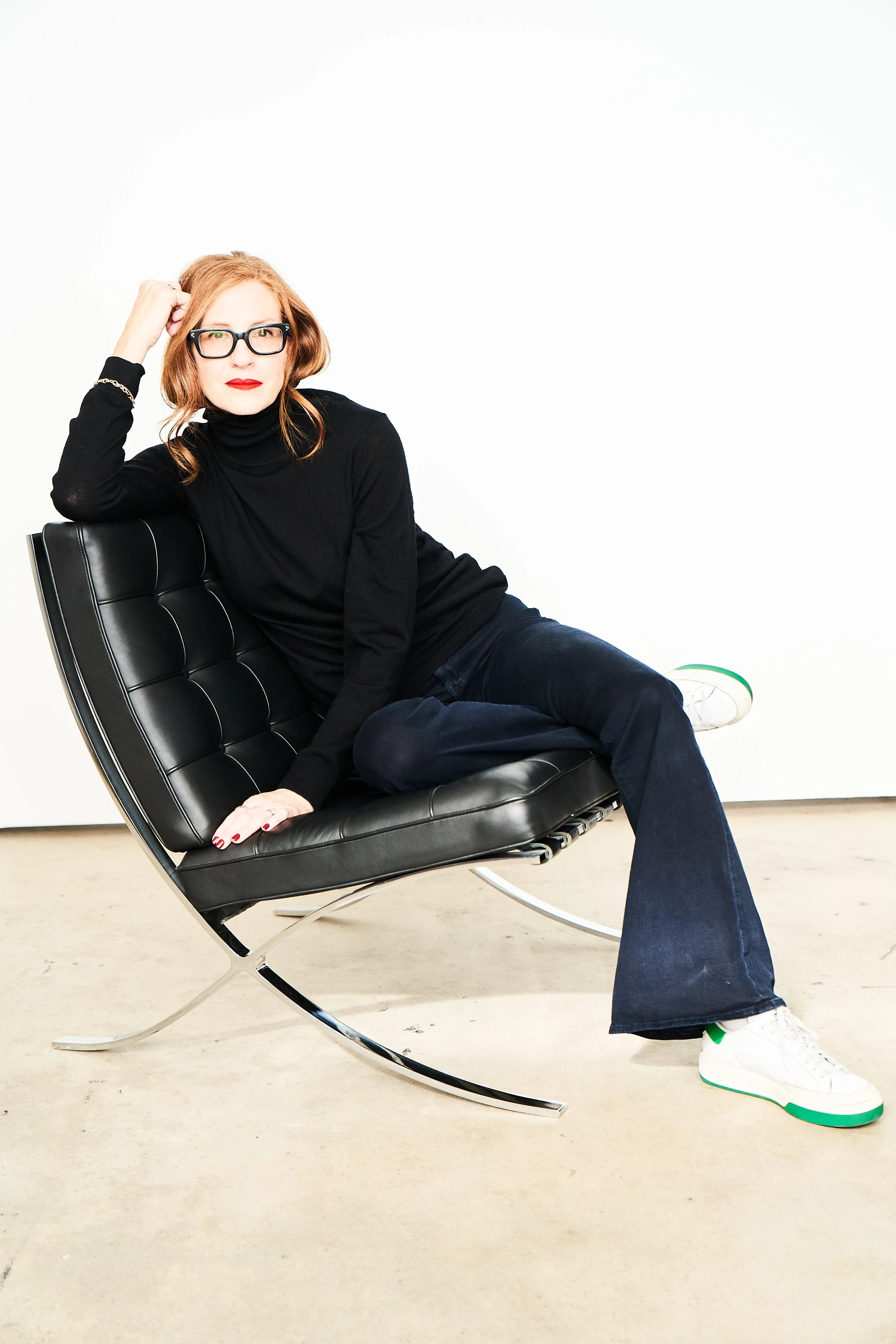
The future of work is changing fast as longer job searches, rising costs, AI and automation, and remote work reshape today’s economy. In this episode, Kara Duffy sits down with April Uchitel, Founder and CEO of The Board, to discuss how professionals and businesses can adapt by creating income streams they control and embracing fractional leadership. April shares why more roles are shifting from traditional employment to consulting and contract work, how building a strong personal brand drives career sustainability, and why community, relationships, and who knows you matter more than ever in today’s evolving work culture.
“The landscape of work is changing rapidly… and it’s not just an opportunity, it’s a demand to create income streams you can control.”
-
-
Chapters:
00:00 Introduction and Networking Connections
01:02 Building a Hybrid Agency Community
02:04 The Shift in Corporate Environments
06:20 The Rise of Fractional Work and Hustle Culture
07:59 Burnout and the Unique Challenges for Women
10:40 Navigating Modern Career Paths and Job Security
11:39 Identifying Superpowers and Specialization
14:01 The Importance of Personal Branding
18:13 Community Support and Collective Intelligence
21:20 Reflections on Career Journey and Future Outlook
30:24 Navigating Time Management and Resourcefulness
31:24 Identifying Core Values for Success
32:39 Embracing Innovation and Adaptability
34:48 The Importance of Experimentation
35:59 Understanding the Role of AI in Business
37:49 Personal Well-being and Daily Rituals
40:30 Community and Connection in a Digital Age
42:56 Redefining Success Beyond Exit Strategies
46:32 Legacy, Impact, and Human Connection
349 - April Uchitel
===
[00:00:00]
Speaker 2: Welcome to The Powerful Ladies Podcast. I'm Kara Duffy, and today's guest is CEO of The Board. April Uchitel, we know that the landscape of work is changing rapidly. We can feel it as business owners, as employees, as those looking for work and how hard it is to find both great employment and great clients right now.
Speaker 2: A stat I heard recently is that unemployment is lasting longer than ever, taking on average nine months to find a new job. Especially for people who are highly qualified. As someone who loves converting people to having their own business, I hear this not only as an opportunity, but a demand to create income streams that you can control Rising costs. The impact of automations and ai, reduce access to funding the need for greater efficiencies and sustainability. And also the pull to remote work where experts are now in locations all across the globe. It's all impacting how we do [00:01:00] business and work with each other today.
Speaker 2: April created The Board based on her super connector abilities she saw for herself and her peers. This gap between the support businesses needed to go to the next level and the talented experts that were hanging out in the consultancy spaces. The Board is here to connect experts with brands and make great growth and change happen.
Speaker 2: In this episode, we dive into it all and discuss the depth and breadth at which work culture is changing, why more roles are moving from employees to fractional contractors. Why you must build a brand and business around your image to when in this environment
Speaker 2: and why, who knows you? Makes all the difference.
Kara: Welcome to the Powerful Ladies Podcast.
April: Hi. Great to be here.
Kara: we had worked with, uh, Jhara Valentini a couple weeks ago and you guys share a PR person. She's like, you have to meet April. And I'm so glad that she [00:02:00] sent you through because there are so many parallels that we have in life. And I was shocked doing research that we have something crazy, like 52 LinkedIn connections, that I'm not someone who like accepts people for, no reason.
April: Mm-hmm.
Kara: And so I'm like, who? And then the people we have in common, I'm like, oh, that's a great person. That's a great person. So I already knew. I'm like, this is gonna be a great call.
April: love it. The network effect is legit.
Kara: It's so real. Yeah. So let's tell everyone your name, where you are in the world, and what you're up to.
April: April Uchitel, I am in Laurel Canyon in Los Angeles, California. I have been in, I think four different industries over the course of my career. And it's all accumulated into what I've built over the last four years, which is a business called The Board, which is, in all intents and purposes, a hybrid agency community model that is geared towards supporting C-suite executives, having left big corporate companies and moving into independent practices and equally supporting brands, helping them get to the [00:03:00] talent that they're looking for to build their businesses.
Kara: Well, and when I was reading that about you as a business coach, consultant, myself, who come, came from those big worlds where some of those people that we have in common are from, I was like, oh my, this is such a great idea. Like I have so many questions about it. Because what I'm so present to with the, the brands and business I'm working with now is how radically the corporate environment is shifting.
April: Seismic. It's beyond.
Kara: So what are you seeing? Like what, how are things evolving? I.
April: it's, it really for me, the, the seeds of this were planted back in about 2013, 14 when I was in New York and I worked in tech, had been spent 25 years in fashion and my role was a Chief brand officer at a marketplace called Shop Springing, and I onboarded about 1600 brands. In the course of three years in each meeting I would have, they would unload all their other problems to me because I had been in their shoes.
April: And so I started back then just kind of connecting designers to designers and [00:04:00] brands to brands and people who had already been through that and just realized how gated and siloed everybody was building and I started to bring community in. I'd host fireside chats. I'd bring in Rebecca Minkoff and Ula Johnson to hear from Jeff Rader from Harry's about D two C.
April: And then when I got to LA I was the CEO of Viole Gray and it was another 135 brands hitting me up for a president or a formulator or introduction here and there. And so slowly started to realize kind of my superpower, but was really trying to figure like, how do I build Angie's List, meets Tinder for brands was my first kind of thesis.
April: And COVID was really the unlock, when that pushed people to really reconsider, am I happy in this situation? Life is short and all those things. And so it was really that first flood of talent into this pool. I call it fractional people, are confused by that. To me, what I really mean is like a fraction of the time for a fraction of the cost, and whether that comes in from an hourly advisory all the way to, multiple months or even year long projects.
April: And so the idea of really then took, kind of fire because I now could [00:05:00] connect people. Geography no longer mattered. Technology had changed everything and really opened the door for a new way of thinking and working. And so my initial thesis was like, we'll be like stronger together. Let's just get 30 of us.
April: And it kind of took on a life of its own and all of a sudden I had like 70 people and I'm just like, what is this? What am I building? Wasn't really looking to set out to build an agency in the traditional sense. And my husband's a photographer. I, I know the agent talent relationship for years and it's fraught.
April: And so that wasn't what I really wanted to build, but the real power was in the community and the idea of it's really, it's so hard to do it alone and when you've been in a big group kind of thing. Corporate teams, and now it's you in your home office and you're hustling for opportunities. It's just a completely different mindset.
April: And so helping people make that shift, but then equally collaborating and leaning into what we're seeing sharing resources and opportunities just became. It's just so obvious to me. That's just the only way forward and so I call it The Board 'cause it's, representing your [00:06:00] board of experts, meaning also when I was in that decision making seat and all of a sudden I needed help that I didn't have inside on my team.
April: When you do look outside, you tend to call your friends and say, Hey, do you know a good product developer? Do you know a good. X, Y, Z and I really wanted The Board to be that trusted first phone call as if you call a friend. And which is like going back to your initial how many solid connections we have.
April: It just all started to build from like a great network and then that, that network effect. So I think about us like a, like a dynamic ecosystem and it's everyone we know, everything we know, where we're trying to get to all being kind of dumped into the same pot. And then what can we recreate?
April: From that space, which is very different than how you are kind of raised to fight for your way in a corporate environment and having peaced out of that myself, the exhaustion of the politics. Also the, the industries are changing so quickly and it's no longer so static. And, those hierarchy org teams, multiple layers, just, they don't serve the modern world.
April: And so everyone, right now, we're all kind of caught in that, like where it's, where it's been and [00:07:00] where it's going. And so the more you're seeing. In hearing from each other as well as brands and what their pain points are and where founders are struggling or CEOs are struggling. And being able to kind of be the dot connector is really where I see my role and have just, again, I kind of just did that organically and then decided can I build a business around this?
Kara: And the answer is yes. Yeah.
April: Yes.
Kara: No, but I, I, I see it happening the same way in, in every industry. I was just interviewed a client who's also launching a beauty brand right now, who's also an actress. And even in the entertainment industry, the same thing is happening. This fractionalization of all the roles and
April: I, I call it like we're inside hustle culture to a level that we've never been. And, and so you're either, I'm on a board over here, I'm advising over here, I'm on a, starting a nonprofit. I'm consulting over here. I'm on my kids, whatever. And it's, all of it's coming together. And I worked with, I was this interim CEO at On Beauty, which was owned at the time by Naomi Watts.
April: And we [00:08:00] had this conversation all the time, and she's like, you no longer can just be an Academy Award-winning actress.
Kara: No.
April: you need to have a production company and a brand and and it's just, it's exhausting. But yet that's kind of the world where you're diversifying, and it's also, I think, a, we have a lot of interests.
April: There's, we're not, we're not so one note in the way that we were raised to think of ourselves. And so that's what's been really amazing to kind of crack open in a great way, but also kind of layers of exhaustion come with that too.
Kara: Yes. It's, it gets so easy to say yes when the things are exciting as well. Like most people I know who are feeling burnt out, aren't burnt out from jobs they hate anymore. It's too many things they said yes to that were exciting.
April: Yeah. I mean, boundaries are really becoming, I think one of the things that. Especially when you don't have, kind of the nine to five ish hours of a corporate job and now it's your job and it's your company. The weekends kind of no longer our weekends, and I think that's the thing that most people I know that have moved into these kind of independent, or, or starting boutique agencies or [00:09:00] smaller companies from the big parent companies they were born and raised at, is really understanding.
April: At some point you have to walk away and reset and recalibrate to be able to function. But it is a lot. And then, you add the world on top of that and it's a lot. A lot.
Kara: And then I think for uniquely, for women now more than ever the levels of burnout, because of all the things we're holding space for, we women always had a lot of things that we had, like all the projects if we really looked at how we were spending our time. And so add all the slashies in our corporate environment and add the weight of the world that
April: yeah, the invisible labor that still comes with, parenting and everything else. And but you know, it's, it's amazing and we've always said we're multitaskers and men aren't as much. And then people are like, there's no such thing as multitasking. And we've had all those conversations, but there is something about keeping a lot of balls in the air that I think is unique to majority women in the sense that.
April: You know, we kind of had no choice. You know, there's the nurturing way that [00:10:00] we're, we're wired. And then there's the, I I got it sense of like, I gotta have it. And I have a 19-year-old who I'm watching. You know, just become an incredible human, but with the same kind of fire. And I'm like, oh, but there, there's a, you know, there's a burnout factor to that.
April: And so trying to build that into kind of the new way of thinking and working where we give ourselves grace and, you know, we think more like Europeans, to be honest, you know? And we can break outta that culture. But it's, it's all of us. My generation is really programmed in that way, and you look at this next generation who just, they want nothing to do with it.
April: And so I think both sides of the spectrum have a lot to learn from each other and the choices they're making. And you know, then you look back on leadership who is trying to navigate. All of these shifts with, you know, who do I need fully loaded inside on the p and l operating day to day? What should I outsource in terms of specialized skills?
April: And then technology is constantly changing that and then also adapt for the way people wanna work. And it's, it's a lot to kind of rewrap your head around. And so I've been talking to a lot of our members who have come from hr. [00:11:00] Gone into executive coaching or even recruiting and what they're seeing on all sides.
April: And what does a modern org look like in the, in today's economy and environment. And then obviously you add, lean teams because AI can definitely pick up a lot of admin roles and add, and more and more efficiencies. And that's just definitely impacting job opportunities. You know, and I've watched, you know, 7,000 people that go of Estee Lauder and.
April: All, a lot of friends have been let go at senior levels because they're expensive and you know, budgets are getting tighter and tighter. And so coming on the other side of now bringing that expertise to more companies is really what they also, we're kind of done sitting and idling. It's, it's just a long road and so cut to also, we're living longer, so you have a longevity play now.
April: And so, okay. How does career fall into this? When, no, when no one's retiring at 65? So it's a lot of us, a lot for us all to figure out.
Kara: Well, and I know for a lot of people like myself and a lot of the clients I have who have gone off on their own to consult and have agencies, [00:12:00] there's an interesting gap because if I just use myself as an example, I spent 20 years talking about billion dollar projects, a hundred million dollar projects.
Kara: And being good at it. And for, the first half of my, full-time entrepreneurship in this space, we were talking about a hundred thousand dollars projects, maybe a million. And at some point I'm like, guys, I love helping you. I love this client base, but if I don't talk about something more significant, I'm going to lose my mind. And I, and I feel that gap with so many people who have been trained in these. Global organizations and aren't intimidated by those big numbers 'cause it, it's the same question, it's just a different number of zeros often. And so like finding, I think those matches as well for these people who have extraordinary CV's or resumes and it doesn't need to be again.
Kara: People are okay. Like, okay, if I [00:13:00] have like two clients that were having those conversations, I'm happy to do small, medium, large type things
April: Right, right. The,
Kara: the power of helping so many people. But it's like, I think my brain is not being fully maximized with the questions I'm being asked by clients,
April: Well, and I think that's what people go off and they start to create other ways to show up. And so, one of the things we, a lot of people have a hard time with, especially if you've held a big C level role, is you kind of become a generalist by design, right? You've climbed from here to here to here where you came in through marketing and ended up on the executive team, running the whole company or however you've shifted.
April: All of a sudden you look back and like, I can do all these things, but then you've been out of the weeds for a while and then you also have the stuff you don't wanna do. And so really understanding. What are those superpowers like really where's your zone of genius? And what I have definitely seen as generalists are much harder to place in kinda these fractional spaces because they really want what we call painkiller statements to come in and be like, this is a problem I solve.
April: This is what I'm gonna do for you. And if it's too general, [00:14:00] people are, it just kind of feels a little ambiguous and it's, it's really hard to go from like, I can do all these things to what is, what are the two or three things I'm gonna stand for? And we actually have members of the, of The Board that coach in this exact space and we do masterclasses with across our community so that we can all level up and, you know, and constantly tweaking our bios and our bylines.
April: And, you know, it's, I've watched members completely go from CPG to AI in a year of like insane expertise. Where it's not about like what it says from 10 years ago, from five years ago. You know? And that's been the, for me, like I was that generation, like, you stick for five years, you do the, you know, you climb, you climb.
April: And again, this generation gets what they need and move on and takes time in between. And so bringing all of these kind of ideologies together and the way people wanna factor work into our daily lives, you know, and, it's, there's, there's so many factors that it's not even funny. And yet we're all literally walking, you know, on a moving carpet right now, and there's no static place [00:15:00] anywhere.
April: And look at what you know, what's happening in the podcast space and look at how you can gain visibility in the thought leadership space. And so, a lot of our members are podcasting. , Substack, TED Talks, whatever that is. ' cause now it's your personal brand, right? You're no longer representing a company or representing yourself.
April: Which is hard to get used to if you're not used to it. And then if self-promotion and marketing yourself, you can be an amazing marketer for years and all of a sudden you have to market yourself and you suck. You
Kara: different world.
April: it's a completely different world. And you know, leaning into each other about, Hey, is anyone, you know, seeing success here and here?
April: And our networks are, you know, our biggest tool. And so the idea of, to your point of like quality networks and people within that ecosystem, it's less about all of us, you know, doing paid. Marketing ads for our practices, but it's really the people who know us and have worked with us. And that's generally where the pipeline starts when you move into consulting or any kind of fractional work.
April: And then from there, it's word of mouth and it's kind of all those things, but it is the people connection. At the end of the day, you know it's the people that are gonna [00:16:00] refer you because of. Your relationships and your reputation over decades. And you can't fake that. You know, you either have that strong sense and people see you a certain way.
April: And for me it was always kind of disrupting the agency model. You know, I used to say we're not, we're an inter-agency, but we are an agency. We have an agency component, but it's, we operate in, in such a completely different way, and it's really. You know, not to get too woo woo, but in this divine feminine space of like nurture and the we and the collective, Albert buddy wins moment where there's just no ego anymore and I, it comes with age.
April: It just does, it's one of these things you have to kind of pay your dues in other ways and realize that got me here, but that's not gonna, fulfill me for the next 20.
Kara: Well, and I, you know, in the network a sense, I've heard that most people today who have had professional careers, uh, bigger than 10 years, longer than 10 years, have about 3000 contacts. And we're totally underusing them. We're not using, like I tell [00:17:00] clients, when you launch a business, parents are so good at marketing mean a birth announcement for your business. Tell us one month, like every month, give us the update. And we get so nervous to tell everyone we know. And I'm like, you never know who has that missing key, who has the next step? And to your point, it's not who you know, it's who knows you and what you're up to and what you need.
April: Yep. And being really like humble and vulnerable to ask for help. I think this is a thing that we think we don't have to, we shouldn. Need, but it's, again, we, we all know that the the pendulum is swinging quickly back and forth, and we're trying, we're all riding it in different ways, and so.
April: Being, it just nobody can navigate this alone and all of us and which is what I love about the community side of the model, is it's really like has is anyone else seeing what I'm seeing? So we had a call today, we called a collective exhale and it's exactly that. 'cause there's this moment and one of our members was like, I've been angry all week.
April: And we're like, I'm like, break that down. And she's like, client's [00:18:00] doing this. This is happening. The world is doing this. We're all human and if we can't acknowledge the fact that there's a rollercoaster that we're on, with great days and big, leaps forward and then the fallback but it's, I think, more fulfilling than just a treadmill, and I'd been on that treadmill for a while at different companies where I was just too scared to leave because of security.
April: And just kind of suffered through, some politics and bad behavior of, of leaders that I was like, oh, it's a steady paycheck, you know? And then again, I think with age you realize like life is short and if you're not constantly like learning and growing you're missing out. And, and who knows what's around the corner.
April: I mean, the industries are changing in front of our faces and the types of jobs and the types of companies. And so if you're not actively out there connecting and talking and hearing, and listening and sharing what you're seeing it's, it's just gonna move really fast. By you. And so that's daunting, but at the same time, everyone is, I'm seeing such generosity and especially in this community, and you, you can find [00:19:00] it.
April: And so I keep saying to everybody, like, if you're, if you're not in a community, join a community, start a community. It's just the thing that makes all the difference and, and how we can share intelligence and, and, and networks.
Kara: Yeah. Well, the other things that are, of course, rigging havoc across all industries have been the tariffs and also financial constraints of like not being able to get access to the funding that's needed when we need it at different points. How are you navigating this community through those two markers in particular?
April: Yeah, I mean, a lot of our members had lost projects, overnight. Like one of our members, like three were gone in one week, because of the budgets and the impact on the supply chain, they couldn't afford to do the marketing campaigns that they were gearing up. Or another member I was talking to last week walked all the shows during Fashion week at Cory and whatnot and, and talked to a lot of brands and heard how much they're struggling.
April: Especially now with what's happening in Canada and some of that, those businesses are just gonna disappear or [00:20:00] drastically reduce overnight. And so. We did grab one of our members who is A CFO, and he did a quick masterclass on, you know, navigating the tariffs. And we did that live and just shared that information out and about being nimble and not making any huge decisions in the short term because we just.
April: Don't know when the flight, the switch is the other direction, but it's, it's completely daunting. And so I see these are all reasons why teams are getting leaner and leaner. And then you realize like, what do I need to outsource? Generally you now have talent that you could never have afforded before, and you're, they're coming in with so much expertise and experience, but also networks.
April: And that's what I keep trying to remind people when they look at things by price. And there's something called values-based pricing, which is not about like how many hours it took you to do the work, right? You know this very well. Um, what is it worth? And so that's really the conversation that we have on both sides.
April: You know, what is it worth it for you to do that project? What is it worth it for you to have that project done and really try and, and match that where again, people are at because. Having [00:21:00] someone fully loaded on the p and l with expenses and benefits and not knowing what's gonna happen tomorrow is so terrifying and you don't wanna be, you know, letting people go all the time and then hiring people back.
April: And so it's, it's an alternative solution for sure. But it allows you to be more nimble, which is where I think most people are trying to navigate. And then we, we kind of kumbaya like what are we seeing? Like what's happening with supply chain, what's happening here? And then share resources across The Board, which to me, the way I've always looked at working with someone on The Board means you get them plus, you know, 250 people they can tap at any time for an introduction, you know, to workshop a challenge.
April: And that's where we can bring kind of exponential impact than just, kinda the one person's perspective. Especially when it's changing in front of us. I was, when I was at Violet Gray, I was part of this group of women who all joined forces under Moj who had beautycon, and we all had a weekly call and just like, what are you doing?
April: Are you letting people go? Are you closing stores? Like, what's happening? And you know, unless you have those resources to talk to, which I, again, go back to [00:22:00] community, it's really, it's hard to make some of these decisions on the fly by yourself in a vacuum. And so we hope to be a resource in all those ways.
Kara: Mm-hmm. If we go back to 8-year-old, you would, she have imagined that this is your life today?
April: Oh my gosh, no. 8-year-old me was in Longmont, Colorado. And, thinking I was definitely for sure gonna work in, some sort of fashion, I think. But I just didn't even have a sense of any of these industries in any of these places. It would've never occurred to me. I'd live in Los Angeles and New York and do all this stuff.
April: But I always knew that I had drive. Like I knew I could figure something out and so didn't know what it was. I do remember literally, like I could always kinda see the next year what I was gonna do, what sports I was gonna play, what teams I was gonna be on, and um, whatever, yearbook, drama, blah, blah, blah.
April: And then when I started to get closer to high school graduation, I was like, oh my God, I'm just not seeing it anymore. It's just black. It's like a black screen. Like I just thought I would have this inner compass that would send me on my way. And, and it was [00:23:00] really kind of terrifying, you know, like, I kind of wanted to know what's coming next.
April: And I think I, I talk to so many people now that are really terrified of like, what is coming next? Like, what do, what's around the corner and what's, you know, no longer ever gonna come back. And so, it is the scary part in, in, but, fear-based decision making is never the way to go, but yet we're all kind of in that space.
April: And I go back to the 8-year-old person who. Just was, again, small town. Not a lot of big dreams in the sense of like, I see myself in New York and running fashion, but I just kind of knew that I would figure it out.
Kara: Mm-hmm. Is that, do you think you were born that way, or did someone impress that upon you?
April: I, it's so funny 'cause when I like, I'll send my parents a podcast, they're like, who are you? How did we this? We didn't, didn't do any of this. And I think it was just. It's funny 'cause I've definitely also gotten a lot of shit from being from Colorado where I had a boss say, you can take the Colorado, the girl, but you can't take the girl outta the Colorado.
April: Whatever. One of those statements that was a put down and I was like, wait, what? This was like, fancy New York, we're in London for [00:24:00] fashion week and someone, shot me down. And I had that a few times in my career where I didn't come from a certain place of, exposure or, experience or, you know, luxury and high education, Ivy League, blah, blah, blah. And so we definitely carried a bit of a chip on my shoulder. And so maybe that pushes you to go, push a little harder to prove yourself. And there's a little bit of that in there and, and then it's just really when you start to kind of understand it, I hate to say superpowers, but there is something about understanding.
April: What makes you, you, we can all do a lot of things. You know, we can all do the same things. And so there's something to say, like, this kind of feels unique to me. Like this is where. I get excited. I get, animated and you, you feel it, and then the stuff you're like phoning it in and it's just like, okay, get this over with.
April: And so throughout life I feel like you, you know, you start to learn to pull yourself towards the, that which kind of lights you up. And if you can turn that into, something that you can win at economically, it's amazing. Or it becomes, you know, a passion [00:25:00] project that fills your soul and, uh, balances out the other side. But it, I just think it, it's rare to know that super early on in my experience and having made those kind of four industry pivots, it was really not about the industry. Like I loved fashion, but then I was done with fashion and then I moved into tech and I was like, great, but also this kind of sucks in tech and the new to beauty.
April: And I was like, great. And, you know, and so each one had, its really like amazing pros and, and then its cons. And so looking back now. It's really just this 360 view that I can kind of pick the best of things that I loved in those industries and build them into my business and the people that are coming in, you know, on both sides in terms of clients, but also members.
April: And there's just, you just start to be like, click, we're, you're my people. And it just, it comes from understanding who's not your people and what's not the path. And uh, and just, I have to say, it takes time.
Kara: It does. It does. And, but, and there's, so once you know what makes you a unicorn, it, it shifts [00:26:00] things for you. Because even if you have, we all have overlap, right? And like things that are a zone of genius or superpowers, but it's the combination of all those layers of who you are that really give it a different perspective.
Kara: And it brings me so much joy when I can show someone. How to turn that into how they make money. 'cause you, it's, it's an alignment positioning at that point. And it's easier to sell, it's easier to network because you're just being, you like you're doing things you would've done anyway. Like you, your business is a great example.
Kara: You were already connecting people. They were already calling you. You're like, oh, I would you pay me for this? 'cause I would love to
April: totally. Well, and that's literally when I was funny when I was back at spring and I was like, my angel says me tindra. How do I do it? And I was talking to someone in the company and she's like, okay, so it's really just don't judge me, but I'm part of a brewer, a brewer's group.
April: I'm like, you brew beer? And she's like, yes. Me and my husband, we brew beer on the side and we're all on [00:27:00] a, I don't even think this is even before Slack, but maybe it was a Slack channel. And everyone's like, what temperature do you keep this at? And she's like, and we're all just helping each other figure it out and sharing.
April: And I was like. That's what brands need. Like brands need to be able to go in somewhere and say like, Hey, this distributor versus this distributor. Hey, has anybody just, ever done this? And and everyone is kind of figuring out as they go, making very expensive mistakes, going down the wrong path next door to someone who just did that.
April: And that's what I saw from that 360. And I'm like, this, this seems so. Uh, stupid that we can't fix this. And but it requires buy-in and that's what I really learned. So just saying we're all gonna help each other. Everyone's like, sure, great call if you need me, but there's not a lot of intention. And so moving, we're a paid membership model.
April: And that happened after a year and a half because like anything in life, you don't really value it unless you've paid for it. It's an unfortunate human condition, and I've done it too, where it's like, oh, it's free. I'm not really gonna go. I don't have to, there's no nothing to lose if I miss it.
April: But yet all of a sudden I've invested and I'm, and I'm gonna show up and I'm gonna show up in a [00:28:00] way that really supports that other person. So I always joke that we're the black Amex of LinkedIn on one side, but we're really a food co-op, you know? And I think if you can marry those two together and realize that means someone needs help and you can help you do and vice versa.
April: And it really just changes the game. And one of our members today was just. S saying on the call that she's never, she's been part of a community that is so generous and to me it was where can generosity and, ambition live collectively and not be mutually exclusive, which comes back to the corporate infrastructure of climbing.
April: That is not about generosity. And there's a lot of people that are not, you know, there's a lot of people that's like, that's my contact. Why would I give it to you? That's my relationship and to me that kind of scarcity mindset is, is so 2000 or whatever that now the only way forward is to like, again, pool resources, pool knowledge, and support each other.
April: In that process, it comes back tenfold and so. The shortsightedness of not seeing that I feel bad for those people to be [00:29:00] honest. I think they're missing out.
Kara: Well just, and the energy that goes into the gatekeeping and the politics and the wasted time. It's like I look at so many businesses about they having too many people, to your point before, having too many operational steps, having too many things that are focused on that have nothing to do with their mission or their customer, or making incredible things.
April: yep.
Kara: I think that's also the freedom so many of us who have left the corporate spaces feel of how can you run multiple businesses in like the same timeframe. Like, 'cause we don't have any bs, like,
April: no com. Yeah, completely. You streamline yeah, I know. It's like filler and, we're living in this land of just so much content and information. You can't even, you can't even get through it. And yet everyone's writing another substack and everyone's like, there's just so much noise. And so again, you're like, okay, I have to self curate.
April: My, my network, my content, the people I wanna spend my time with. And so those relationships become more and more powerful, which is [00:30:00] why over the course of a career and what I'd say to every, like, you cannot burn any bridges. You never know where that person comes back around. And I'm always amazed when I reconnect with someone and they tell me, you know, how I impacted their life at some point and vice versa.
April: And those are, we're really molding each other, right? And each conversation you're like, oh my God, that was so smart. I'm gonna start doing that now. You know? And each one is just like EA little bit over and and there's something you're sharing clearly and generously, but a lot of times you're just listening and there's like, you know, like an unlock happens and it shifts the way you think about.
April: Your day potentially. Like I talk to people about boundaries all the time and they're like, I don't answer emails after this time. I don't get to my desk until this time. And I'm still learning that. Like I have, I'm really, my husband's like, you have no ability to regulate yourself like this is a problem.
April: And so. I'm still learning how to regulate my time and to say I can't take every phone call of anyone who wants everyone who wants to talk to me. And people DM me all the time on LinkedIn saying, Hey, I'm thinking about going to consulting. Do you have you wanna hop on a call? [00:31:00] I'm like, I could just do that for a full-time job, but yet I also really want to like be a resource. And so finding the right ways to do that is, is the, that's where you can get creative and that's where you can kind of think like, maybe there is an opportunity here. You know, that keeps coming up that I'm not recognizing could be a thing. And so we've had members build workshops and courses into their practices 'cause they're getting hit with the same thing over and over. And you start to realize, okay, this is a, this is a problem across, you know, majority of companies at this stage, at this size, whether it's. On the consulting and exec coaching side, people have moved in in ways that are just guiding them, around, again, their superpowers, but also it's what lights you up, right?
April: I think if you're gonna do it a lot and you're gonna carve out time to do it, it has to, you have to feel the impact of it. And that's what I do love is realizing like, okay, that's a win, win, win. Like, everybody wins here, let's do it.
Kara: The, the four values that are critical to everyone I'm working with is more fun, more freedom, more money, more [00:32:00] impact. If we're not doing those four things, why,
April: Why are you doing it?
Kara: Yes.
April: I, I think that's so genius. I'm gonna steal that.
Kara: Perfect. Uh, but it's, it's true. It's like there's there's room for all of us and the world actually needs all of us to be in that and giving our light, being in the zone of genius, we have never, the most frustrating thing I think about living today is that. Majority, if not all of the problems and challenges we are facing.
Kara: We have multiple solutions for. So it's not a matter of we don't know, we don't have options or we don't, we don't have the think tank, we don't have the experience intelligence we do and like tenfold in most situations. We're just not having the ability or freedom to bring the right people together to your point, or to implement it for whatever policy reasons, but we have plenty of solutions and the the noise part boundaries and what to pay [00:33:00] attention to come up all the time with the different businesses I'm working with because.
Kara: If you're on Instagram or TikTok for five minutes, you start having a panic attack that you're doing your business wrong. And I'm like, most of it, you don't need either your size, your face, it doesn't align with you. Like
April: Yeah, yeah, yeah.
Kara: people to delete social media all the time.
April: Yeah, well it's, I mean, we're even having that conversation right now with The Board where we put out a lot of content and one of our members just is coming on as my COO and she was at Apple and, and she's like, we do way too much content. Like, what are we doing here? And I'm like, to me I've had my way of thinking about it and she's reframing things for me.
April: And so, and that's how we evolve. And I tell every member, we're gonna be probably different in six months than we are now. It's just this, the new world. And we tried TikTok for a minute, everyone, I'm like, well, it's hard to say be on TikTok and we're not on TikTok. So we created this whole thought leadership program through TikTok, which then, I'm just like, this is exhausting.
April: And our people even there and , we tried it and we've been doing LinkedIn and different. Now we have a [00:34:00] substack. And I think you do have to try things. You have to see like, is this where we can really kind of get some growth in terms of our community and our impact and where we are showing up and at the same time learning from each other.
April: And what that did was put seven of our members into like heavy TikTok rotation, and they use it dramatically in their thought leadership. It wasn't for us as a, entity more than a year. A lot of our members was like, thank you so much. That put me on this path. I would've never gone on if The Board didn't help me learn and, and kind of take that, that channel over.
April: So there's, there's always an upside for trying, but I think being okay to say we tried it didn't work. And so my new thing that I love is just, everything's a pilot and once you like, take the pressure off of having to nail it and kill it, like day one pilot makes it be like, we're trying, it's gonna evolve.
April: We're not sure it's gonna work. We think it's got, you know, this kind of opportunity. But now everyone's in it to learn and they're not in it to judge, you know, we were wrong or we did it [00:35:00] wrong. Or We should have, and we could have. And, and it's taking that stuff off the the conversation that adds the pressure that makes you maybe not try it.
April: And so at this point. Life is changing minute over minute from Monday to Friday, we do an all things AI call and he's literally changing his deck two days before the call. He's like, the stuff I wrote about three weeks ago is it's, I, I'm over. It's not working and I'm over it. It's not a thing I'm gonna talk about.
April: And that's the pace that we're at right now around innovation. And so you can imagine head spinning and these leadership seats. About, especially new technologies and where to replace efficiencies and how to upskill their teams. And it's, it's completely overwhelming. And now so many companies are hiring head of a head of AI and, you know, implementing that across the entire org.
April: So the CTO role is changing. The Ct o role is changing. You know, CMOs are changing, some CMOs are becoming c It's, it's so wild to watch and I've kind of had this front row seat. With all of the, thousands of people I've talked to over the last couple years, as well as recruiters, as well as head of [00:36:00] Talent at Gap and well at people that are just really, really rethinking, the teams and goes back to how we want to work.
April: And if we can marry those things where it's a great fit for each side, then that's the win.
Kara: I've been having a lot of controversial conversations, I think, with people about AI recently. 'cause being someone who came from the product world, like if you don't know how to brief, you're not gonna get a great product back. And everyone, again, these very businesses I would call micro businesses, are freaking out about all these things.
Kara: And I'm like, guys, if you need. Less than a hundred clients a year. You don't need 95% of this stuff. And they're so worried about being left behind and it's this, we've created this illusion, this like business fomo, and I'm like, we have to act like a rock. Bands like Aerosmith used to go and hide in the woods to make their new album.
Kara: We kind of have to do that as business owners because there's so much great [00:37:00] knowledge that we can get. But what do you actually need for where you are now? What phase you're in, and what you actually want to do. But to your point, if you hate making tiktoks, it's not working. It's not. There's no ROI like, let it go.
Kara: You're not gonna be missing something.
April: Yeah, I've had people like community, other communities who just like, what am I doing on Instagram? What the fuck am I doing? Like, can I just like, they just stop. They're like, this is bringing me no joy. It's bringing me like, yeah, some goodwill, but at the same time, and equally someone's saying like, you should be doing conferences.
April: Why aren't you doing conferences? And they're like, Ugh. Like, that is not where I wanna spend my time. I could, I could probably monetize, big conferences, but that to me is not something that I'm drawn to do. Right. And there's people that are like Ali, that love production and love getting, these.
April: Inner this, that energy together. So it has to feel a little true to you too as a leader and a founder for sure.
Kara: What are some things that you're doing for yourself? Rituals, habits, to do your best to find some of that balance that [00:38:00] at least your husband thinks is maybe missing.
April: Right, right. Well, I, we, so I'm in Laurel Canyon and I get, I have the, the, the luxury of walking three minutes outside my front door across Mulholland to this amazing hike. Um, that feels like my backyard. So I try and do that like five, six times a week. It's my morning ritual and, um, with a podcast or not, and just kind of try not to text and take phone calls while I'm out there.
April: But I did start to, not book any calls before nine 30 so that I can have that morning. Not racing to my desk, not taking 8:00 AM calls right when I wake up. And so being able to know that my first bit is gonna be just me in nature and, the stories I wanna listen to. I love smartless, , where can I disappear into someone else's funny conversation?
April: And and then, , the daily, and I just need to know what's happening in the world. But I, I really try hard not to go too dark. Too early ' cause it sets up the whole day. And then I'll do classes. I have a yoga mat on my floor. I open up all the windows and. I've really, really created this kind of oasis [00:39:00] for myself, having spent so many years commuting and so many years in Manhattan, running all over, carrying heavy laptops and bags of stuff.
April: And I have the luxury of kind of setting up a little mini bubble world. And then I go to New York a lot and I get to kind of get my fix, but I'm so happy to come back to this, this magical spot. So I would say, you know, moving every physical something every single day. Like, just have to, and you'll unfortunately, as you get older, it's just a non-negotiable.
April: And especially for women and all the things. And so when you go through menopause and your hair starts to fall out and you start to realize, oh shit, I'm mortal. And then you start to realize I gotta recalibrate. And so the best they are all the health hacks, like everybody I talk to is like, okay, so Brazil that's in the morning, I do two.
April: I'm like, really? And then what? And so it's just like everybody has been figuring shit out. And what's working product shares, electrolytes. Anything that has to do with our, our bodies and how they're changing and that's been. A journey that we're all going on together. And I love that the [00:40:00] industries, have done obviously a lot more to, to bring light to those things, but there's no joke.
April: And so you have to change, you have to evolve your routines. You start to realize like, certain things I could do, no problem. Other things I need to pick up that I haven't been doing that are gonna have an impact on my health and wellbeing. But I think it's about having really good friends, really great girlfriends that you can call at any time.
April: Um, some sort of. Creative outlet, something, like my daughter does like the adult coloring books and she's just like, I just need to go color for a bit. And I'm like, do I need to start coloring? Maybe I need to start coloring. Like, where can you just turn your brain off puzzles? Like something that makes you feel like, okay, I just can block everything out and just have a moment of zen.
April: That's not just more noise, I'm gonna read more about this and, and that's where I'm starting to kind of fine tune what is that thing I can do on a weekend? Paint by numbers. I don't know what it is, but something that makes me feel like I just got to escape and potentially create.
April: And so I, I love [00:41:00] everyone sharing their, their games and their hacks and, , you look at all these incredibly. Interesting groups that are happening, these micro communities, it's the running club, it's the Mahjong Club. It's more and more it's all these people that are doing game night and that are finding each other.
April: I, I was talking to a guy who has a company that really helps market to Gen Z. So he helps brands really go to these niche communities. And he's like, you know, there's a lesbian birder community in Los Angeles. I'm like, there's a what? And he's like, when you start to break down, I said, so it's almost like Reddit groups coming IRL and he is like a thousand percent.
April: And so you look at technology and I was at, so by Southwest. This year, and the topics were obviously ai, everything, but it was creativity, community and IRL. And that was the resounding like this is, we're dying to connect. We miss the serendipity of run-ins. We, we really need to be with each other and we're in this digital world.
April: And so the power of creating opportunities is so interesting. And then going to those things like [00:42:00] checking out, the, the DJ at the coffee shop in the morning or, there's so many. Uh, so many attempts to kind of bring us back to humanity. And so I, I think it goes, I guess back to community again at the end of the day.
April: But it is, it is just putting yourself out there and trying, being okay to be cringe. All the stuff we're all hearing,
Kara: Yes.
April: ' cause you gotta just try stuff and you never know. And you might be like, you know what? I am now a birder. I never thought I was, but maybe I'm wanna be a birder. Who knows?
Kara: There is a community and a niche for everyone if you choose to look for it, and I tend to collect 'cause to, partly to prove my clients that anything is possible. When people launch a business in these niche com areas, there's someone who's making, I think it's like early seven figure business doing dog birthday parties in LA
April: Oh yeah. Oh my God. Completely.
Kara: You can, anything is possible like we need to throw away the, all the limitations. If nothing this year is confirming that the more ulu you [00:43:00] are, the more things go the way you want them to. So
April: Well, and also to stop thinking like, what's the exit strategy? I'm like, why is there a fucking exit strategy to everything? How about just like enjoying what I'm doing and being able to pay for my life? Like, I think that's a good exit strategy, but it's, it's really, and I watched it for sure, you know, in fashion, beauty, and then I was in tech and everything is about How much are you raising?
April: It's our series B, it's our series. Like we're exiting, we're like a blah, blah, multiple. I'm like, what about people that just have like a solid business that they love that is, feeding their soul and they're paying their mortgage and, bringing them joy. And somehow we got away from that as a, as a goal.
April: And I don't know how that happened, but when you do look at these companies that are just like, I'm good. Like, I got it. This is, I'm good. I don't have this. Like, I gotta get 200 million by this date. And, and I think that's the. You know, the, the stress that come that came from, the technology boom and the startup world and that, move fast and break shit mentality.
April: The WeWork world, and I was in it in startups. So when we were at Spring, we raised [00:44:00] 157 million. It was a crazy ride. And we went from like four of us in a WeWork to like multiple offices and the whole, . Beer and ping pong tables and , like you name it, and then watched it kind of implode on the other side and you start to realize that, there's a reason these things aren't sustainable and scalable and there's a lot of smoke and mirrors that go to, , just looking at buying customers and selling companies.
April: And as we're getting more back to profitability and things are kind of normalizing and making that space much more challenging, you know, you're forced to bootstrap, you're forced to like friends and family, you're forced to think about like, how do I, I have this idea. I have this thing. And so. Kind of going back to what we were saying is like these, these ability for this level of talent to have enough of those like, Hey, this is the one I support.
April: This is the one I advise, this is the where I'm, getting paid really as a contractor. This is the thing I'm building. , We have people that have left big jobs. They're starting whole new companies in different other areas. And, , they need to come to the other members and be like, okay guys, like has anyone done this [00:45:00] exact thing I'm about to do?
April: And so, but it goes back to what's driving you. What, what motivates you? What's the legacy you wanna have? And, and again, I keep going back to mortality because it comes bound to legacy and impact. And you start to really look back, not just like, what companies have I worked at and what titles have I had?
April: But where have I really shown up? You know, and, and where have I really affected, outcomes, whether it's someone's personal outcome, a company's financial outcome, whatever that is. And I think we all probably judge ourselves differently, but for me it's just like, I, , funny enough, when I was in, I mean it was probably kindergarten.
April: I remember we had to do this exercise where you had to draw your headstone, like a full sized headstone. And then you wrote like, here lies April. She was, and you had to fill in the blank. And I wrote Nice. And so to me it was just like, and weirdly like, that's still what motivates me. Like, I kind of want that headstone, I want that headstone when I died, like she was nice.
April: Like she, she was great. We loved April. I mean, versus like, oh my God, she built the [00:46:00] biggest blah, blah, blah. It's like, what's that human connection that. Aid draws people to you, right? And that you wanna spend time with and you wanna learn from and you wanna, collaborate with and we're just getting further away from it in this really divided world.
April: And so you start to prioritize your people and your focus, and hopefully, if you can monetize that impact, great. If that's your side hustle, great. If it's a nonprofit that you dedicate your time to. But there is something to me where. If you didn't come from a family that was like, we are in service, like service is a part of our, our upbringing.
April: Like we, we give time back, we do community service. We realize that this is how communities succeed. You kind of carve it out for yourself later when you watch, , your community in in trouble. When we see the things going around us. And so my hope is the worse it gets, the more people step up is what I have to hope because otherwise we're really screwed.
April: But I think we have to lean into the humanity now more than ever and, and really where we can support each other on this journey and the companies that are building really cool things [00:47:00] for the world. Where do you want, who do you wanna give your talent to? I think we, the idea of having choice, um, where I don't really need to help another celebrity sell skincare, you know what I mean?
April: Like, there's plenty someone else can do that. But I think, where we can have impact is the people that we see, kind of moving the needle. So, whatever your personal values are, if you can carry that into business, it's amazing.
Kara: Agree. Um, as we are wrapping up today, I have a few kind of rapid fire questions.
April: Okay.
Kara: The first we ask everyone, where do you put yourself on the powerful lady scale? If zero is average everyday human and 10 is the most powerful lady you can imagine, where would you rate yourself today and on an average day?
April: Hmm, I, I think I'm a solid eight. It's also kinda my lucky number, my birthday, so I feel like I feel sold on that number. Definitely trying, to move the needle up. But I think an average day, I think I bring it, I think I'm kind of a solid eight all the time. I think I, when I go for the 10, it's, it's, there's a big [00:48:00] depletion that happens and so I'm trying to, I'm, I'm here for the long game and so I look at how, where and how do I ramp up and can I stay, maintain this, kind of intensity.
April: And like I feel like eight is a good number, to be able to like be at the top of the scale, but not on the burnout scale
Kara: More days at eight is better than a rollercoaster between one and 10. Yes. Uh, when you hear the words powerful and ladies, do their definitions change when those words are put next to each other, and how would you define a powerful lady?
April: I think the, the powerful part is, is really, what you're driving towards and who you're bringing along with you. And then the lady part to me is like, can you do it with grace and can you do it with humility and can you do it with integrity? And to me, that's a, that powerful lady, that mode to me is, is very desirable, right?
April: Someone who is a dragon, , in a way of like, I got you, let's go and can, have the fire to get there, but [00:49:00] also do it in the space that is, is very accessible and approachable and kind. And I think that's a great combination.
Kara: Mm-hmm. This is a very, connected powerful, likes to pay it forward and help community. What is something on your to-do list? Wishlist, manifest list that.
April: Mm-hmm.
Kara: either are asking for someone to kind of give a solution to and help make happen, or even just hold space for you.
April: , I think about. What I've kind of built single handedly, for the most part for the last couple years, and now I've inviting amazing people to come and take pieces and help me take it further. And so that's been a gift and I didn't see that. I, I'm just so proud that I attracted these type of people that are like, I'm in, how can I help?
April: And so doing that on a, , on a larger scale and, and having that impact, I, the other day I was like, okay, I can't change the lives of everybody, but maybe for two 50 people I can have an impact. And so it's like, where can we go with that in terms of our philosophy and [00:50:00] really doing this in a new way and scale, but not scale in the traditional sense, but have, have greater reach and without like, let's productize everything and we'll, , it's finding the right balance between those two things where.
April: The spirit of what we're building and the human connection, and it's really kind of a white glove business, and so how can I get that out to more people and in a way that has, it doesn't lose its impact, is my goal. Goal, goal and where does technology come in for what I'm building? And so we've been playing in that space too.
April: And we're fortunate to work and talk to a lot of emerging tech companies and have some really interesting conversations going with how that can manifest. And so I'm super excited to. To see what comes of that. That just helps with some of the, the day-to-day stuff. As we all know, it takes time and allows me and us to get into the places that we really want to.
April: But I also think partnerships, I think strategic partnerships. I would love to partner with a lot of VC private equity, to really help them help their portfolio companies. And so that would be my big [00:51:00] ask is on the strategic partnership side. And it generally comes from our networks, really, it's, it's really these warm relationships that already know us or know some of us and understand where we come from and how we've worked, and just kind of putting the, the the structure around that. But I, I really see this complete, like, symbiotic relationship and kind of moving into that space.
Kara: Love it for
April: if you know anybody, let me know.
Kara: always. I think, I think like you, one of my superpowers is connector, so, I spend, it's, we started having lists of, okay, here's graphic designers and websites and marketing and CPAs, and now I'm referring therapists and PT people and nannies. Like, it just
April: completely. It's, it is, it's really, it's like I need a, a Wikipedia writer. Does anyone have a divorce lawyer? I'm like, yes, yes. Yeah.
Kara: Thanks. Exactly. Exactly. Uh, so we'll definitely pass that around. And I know some people in VC spaces in general who I'll happily introduce you to.
April: Love. Yeah.
Kara: so for everybody who wants [00:52:00] to work with you, support you join The Board, where can they find, follow, and do all those things?
April: Amazing. So our website is, we are The Board.co. There's a Join our Community button, there's a Work with Us button, and both of those kind of get back to me. So that's the easiest way. And then, it'd be great to follow along. We're on Instagram, LinkedIn, a substack, and. Really encourage conversation.
April: So, if anything strikes you, we have a lot of incredible humans sharing very, of the moment, thoughts and experiences that I think there's a lot we can be unpacking even more. And so really wanna start more three, two way conversations And never wanna be the talking heads that are just like, look how great, look how smart, look what we think.
April: It's just like, holy shit, this is happening, this is what we're seeing. What are you guys seeing? And taking that outside of The Board where. I, you see so much more vulnerability on LinkedIn now than you ever did. You still see a ton of chat GPT thought leadership,
Kara: Yes.
April: kind of how, where are those people when someone does tell a [00:53:00] story.
April: Like those are the ones on our side that get so much engagement when someone is willing to basically say, this is hard, or this happened to me, or I'm coming back from this experience. And it's just more of that and normalizing. We just did a Piping hot, which is our, uh, live series we do on LinkedIn with two of our members who were coaches.
April: And it was, the topic was, no longer having shame around those career gaps. And it was such an amazing conversation. And some of those gaps, are forced on you, other ones you choose and all those things end up. Somehow telling your story and we, especially in America, come from a place of that's a massive negative, and yet it's not in so many ways.
April: And so it was a really great conversation and it opened up a lot of, a lot of feedback in terms of the minute people wanted to quickly tell the story of what happened to them and to me, that's everything is that, that dialogue.
Kara: Well, as a guest doing my research about you, this has been such an inspiring conversation for me. I am lit up and excited to go into the [00:54:00] rest of my Friday and weekend, and I am, I'm thinking of so many things, I'm like, oh, well, like I, I should, you know, email connect, April and blah, blah, blah. So, prepare your inbox for the onslaught for me.
April: love it. And same whatever, whatever I can do for you, I think that this is the world order as it should
Kara: Yes.
April: So I'm grateful and thank you for the air time.
Kara: Of course.
Speaker: Thanks for listening to The Powerful Ladies Podcast. If you enjoyed this conversation, please subscribe. Leave us a review or share it with a friend. Head to the powerful ladies.com. We can find all the links To connect with today's guest show notes, discover like episodes, enjoy bonus content and more.
Speaker: We'll be back next week with a brand new episode and new amazing guest. Make sure you're following us on Instagram or Substack at Powerful ladies. To get the first preview of next week's episode, you can find me and all my socials@karaduffy.com. This is a Powerful Ladies production produced by Jordan Duffy and Amanda [00:55:00] Kass.
Speaker: Until then, I hope you're taking on being powerful in your life. Go be awesome and up to something you love.
Related Episodes
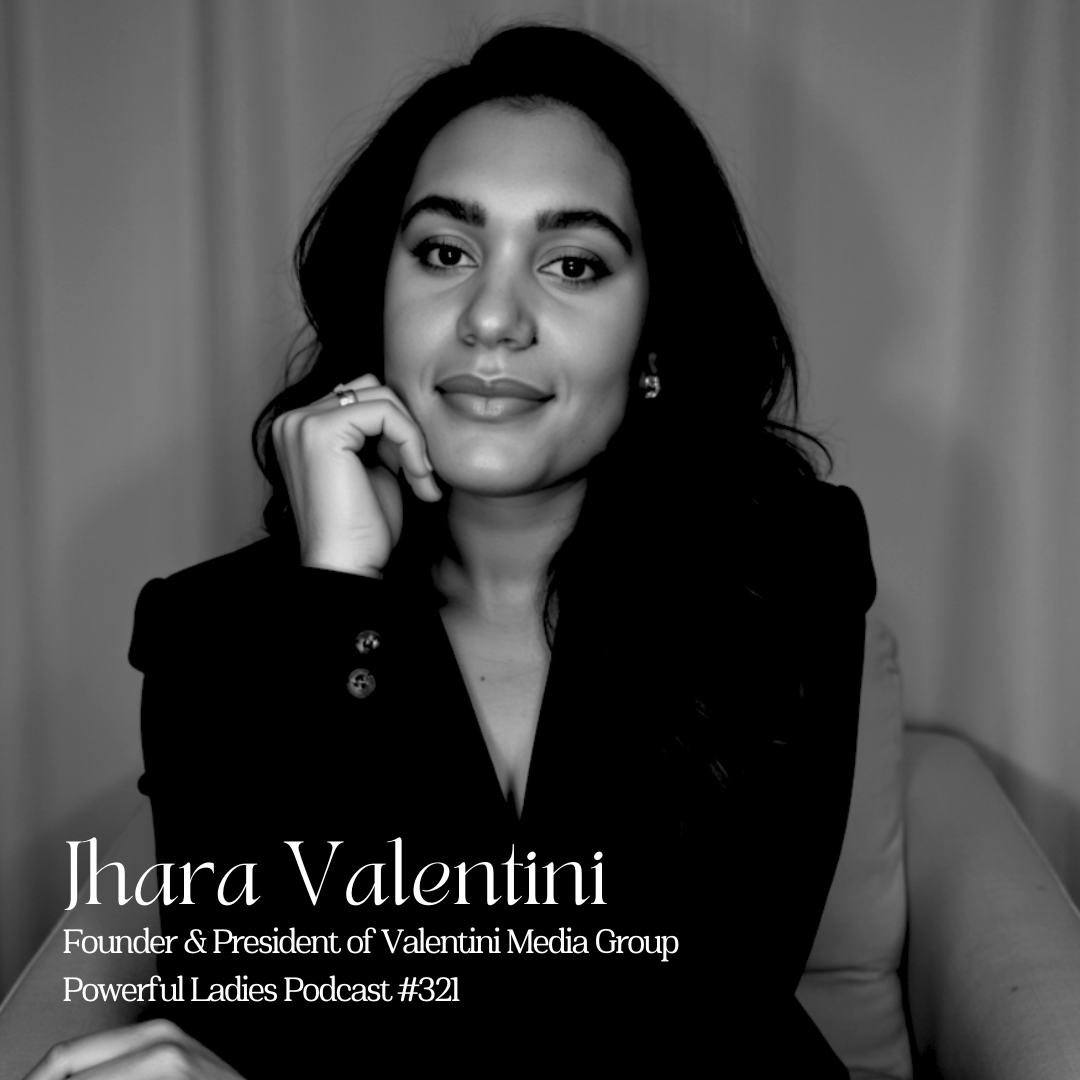
Episode 321: Rethinking Media Strategy with Intention and Impact | Jhara Valentini | Founder & President of Valentini Media Group

Episode 337: Start Living Audaciously | Marty McDonald | CEO and Founder of Boss Women Media & Elle Olivia

Episode 317: From Idea to Impact: Building a SaaS Platform for Women Tech Founders | Nomiki Petrolla | Founder & CEO of Theanna, a Female Founder Network for Tech Entrepreneurs
Instagram: apriluchitel
Website: wearetheboard.co
LinkedIn: april-uchitel
TikTok: @_theboard
YouTube: @WEARETHEBOARD
Email: april@theboard.community
Created and hosted by Kara Duffy
Audio Engineering & Editing by Jordan Duffy
Production by Amanda Kass
Graphic design by Anna Olinova
Music by Joakim Karud