Episode 363: Designing for Peace, Nervous System Wellness & the Power of Home | Anita Yokota | Interior Designer & Author of “Grounded Living”
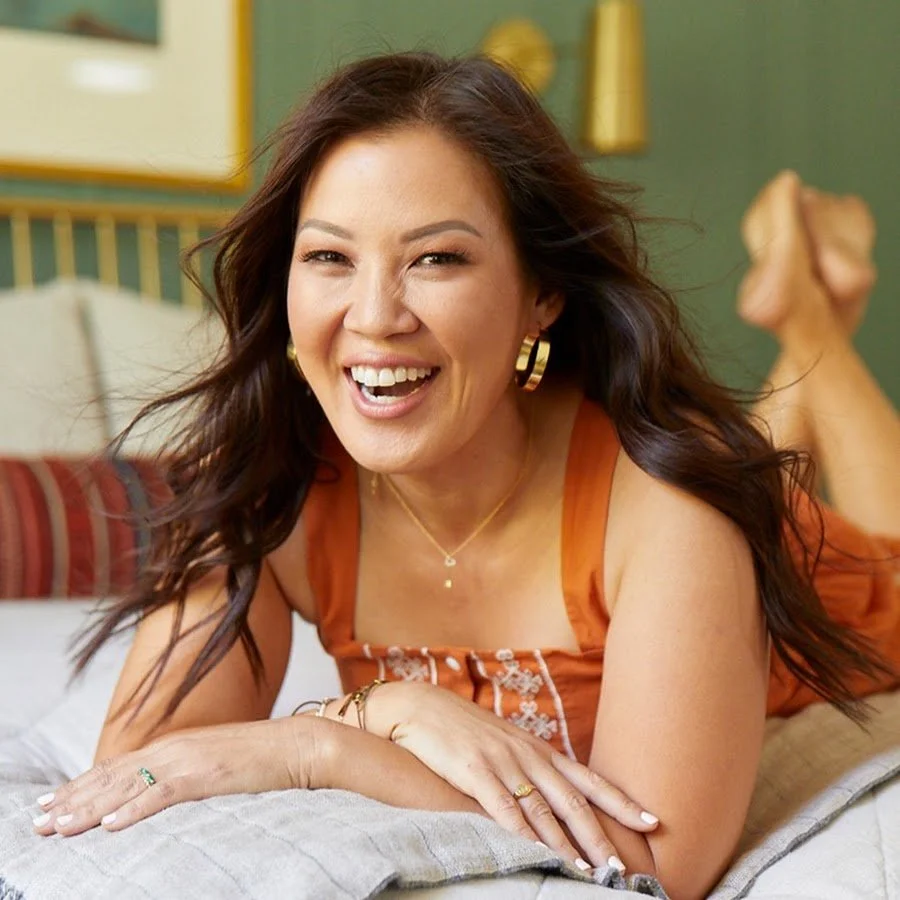
What if your home could actively support your mental health, relationships, and nervous system? Therapist turned interior designer Anita Yokota joins Kara Duffy to explore how our spaces impact the way we feel, function, and connect with ourselves and others.
Together they dive into clutter and cognitive load, designing for multiple personalities under one roof, nature-inspired interiors, and why “perfect homes” often disconnect us from authenticity. Anita also shares her personal journey from private practice therapist to interior designer, the emotional process of redefining power and identity, and how creating a grounded home can help us create a grounded life.
“Our homes can either create friction or become an opportunity to harmonize and empower us.”
-
-
363_Anita Yokota
===
[00:00:00]
Kara Duffy: Welcome to The Powerful Ladies Podcast. I'm Kara Duffy, and today's guest is Anita Yokota. She's a marriage and family therapist turned interior designer, who you may have seen on Good Morning America and the Drew Barrymore Show, as well as recently on the TEDx stage. Her newest book, grounded Home, and our conversation in this episode dives deeper into philosophy that our home influences our mental health and how we can use interior design to find peace and harmony or as much of it as possible when sharing it with our families, as well as leading our design choices from place of feeling, empathy and inclusion.
Kara Duffy: Welcome to the Powerful Ladies Podcast.
Anita Yokota: Thank you, Kara. I'm so happy to be here with you and the listeners.
Kara Duffy: Let's quickly tell everyone your name, where you are in the world, and what it is here that you wanna talk about today.
Anita Yokota: [00:01:00] My name is Anita Yokota and I am a licensed marriage and family therapist, turned interior designer. I live in Southern California with my three girls and just really happy to be here.
Kara Duffy: And you have your, is it your second book coming out?
Anita Yokota: Yes, I'm very excited to share that with Penguin Random House. I am launching my second book, it's called Grounded Living. What I really love and what my passion is to share using my psychology background and then infusing it with interior design and having that method i've developed over 25 years of home therapy where we use our homes as a tool for our nervous system, for our mental health and wellness.
Kara Duffy: I was so excited to see that you were a yes to coming on the podcast because the philosophy that you bring to how we. Decorate, organize, infuse [00:02:00] life into our homes. Rings so true to me. I have some clients who are home organizers. They're in the same kind of philosophy mindset as you of our spaces impact us so much.
We do not need to be on a neurodivergent spectrum to be influenced by them every day. And one of the questions that I have is there are some people who love the maximalist look. Who love lots of color, who love like eccentric mixing of different styles. I personally, get excited by some of those visuals when I see 'em on Pinterest or Instagram, but they don't work for me. So can you have a maximalist very colorful, a lot going on space and still be in harmony with your nervous system? Mm-hmm.
Anita Yokota: I love this question. It's really interesting because when I meet with my clients, instead of focusing on the aesthetics first, I really try to get to know their core desire, their why of their [00:03:00] renovation project or their styling project, and a lot of it comes from, internal struggles about.
Feeling calm or feeling harmony in their home so they can be pursuing bigger dreams and goals. Right? And so when it comes to choosing colors and textures and maximalist versus minimalist, it really comes down to, well, what do I wanna achieve in this space for me and the relationships that live in this space?
So, it's not just about. Updating cabinets or lighting, it's really thinking about, well, who's living here? Is it just me? Is it me and my kids, my partner? How do I want to thrive in this space? And then once you identify that core desire, everything I promise you falls into place. So for you, it sounds like calmer colors, more neutrals or things that.
Even just like tactile [00:04:00] wise makes you feel more calm is the way to go in probably majority of your home. And for other people who love colors and textures, maybe the majority is bringing in more colors and things. But my biggest trick as far as design and our neuroscience and how we interpret that design into our body is.
Muted colors. So I like kind of combining the two of finding colors that are maybe more pinks and oranges and corals or yellows, purples and adding a gray undertone so those muted bright colors can add more. Punch to your room that you may want more productivity in, or you want that energized feeling because this is your family room, that you want more conversation and connection with your family.
So that's my little design trick in, in finding that balance. But [00:05:00] also nature is our best example and our best friend in that kind of design stimulation. So in my second book we talk about biophilic design, which is bringing not just plants, but wonderful colors and textures that we already see outside.
And as there's different landscapes. Some are so bright and lush, like the tropicals, like in Costa Rica, it's really stand out. And then there's palm desert or the ocean where it's very like. Monotone like the sand and then the blue sky and the blue water. So there's so many examples that I feel like we can extract and put into place in our home in a way that feels like us.
Kara Duffy: I you recently did an Instagram post where you said nature is never cluttered.
Anita Yokota: Yes.
Kara Duffy: I heard that and I was like, yes. Yes. [00:06:00] And there's so much science coming out today about. Forest bathing and how we can basically hack our nervous system by leaning in on nature. But this idea that nature is not cluttered, there's so many people who are dealing with mental, spiritual trauma, let alone physical clutter in their lives.
What have you learned in putting this book together about the clutter component specifically and how it impacts us?
Anita Yokota: So my biggest takeaway, because I'm also a busy mom of three my biggest takeaway of organization is us tackling the clutter versus what needs to stay in the room and sustainability and managing that. There's so much cognitive load in managing the clutter day to day that I think we subconsciously just absorb in our homes and don't realize how heavy it can [00:07:00] become for us.
And so with nature, if you kind of notice the, again, going back to how the landscape and the, there's a foreground, there's a background, there's a mid-ground in how they just organize the spaces of, like deep in the forest is where the deer and, I always think of Bambi where like it's deep forest and they're, that's their sanctuary, that's their home.
And then they venture out into where the creeks are, where the lakes are to gather the water. And and then the middle is maybe where the gathering of the food and like, so there's zones is basically what I'm trying to say. So at our home, I think it's really important to have zones. Organize the spaces into zones of intentionality and what you again have that you have a symbiotic relationship with the home.
What you wanna get out of it is what you put into it. So, organizing zones of, entryway for busy families, at [00:08:00] least for me, is always. The bane of my existence, shoes, backpacks. We have a hoverboard that I can't seem to get rid of. They just love this hoverboard, and it's like, my oldest is 20, but they love, this is like a core memory for them.
So juggling all these like high traffic areas and creating zones is a good way to start.
Kara Duffy: you touched on something also about there being multiple beings in the home, and when you're trying to service multiple nervous systems, I imagine it can get complex. We've had a past guess. KJ Atlas is a location based astrologer. And I think her work is so fascinating and I'm like, great, like this city works for me, but it doesn't work for everyone else in my family.
So I feel like there's often conflict between the people you love that you wanna share a home with, and either the aesthetic or the vibe or hoverboard, no hoverboard conversation. How do we marry [00:09:00] that so there can be harmony for as many people as possible, as often as possible.
Anita Yokota: I have a very poignant story to share with you. So, when I first started out into this whole interior design shifting from. Licensed therapist to interior design. I just started an Instagram account, my sister was like, just start an account and share with people how you manage your own home and your life.
And my oldest is more of an introvert and. Her style was ne, not necessarily my style. Thankfully the other family members were a little bit more flexible and fluid, but as she grew older into her tweens and teens, I had to be very mindful of this is still our home. And so I may be giving people interior design ideas and home therapy ideas, but switching things out to often really jacked up her nervous system she found.
Home to mean something as [00:10:00] far as stability and consistency, and I'm the opposite. I love changing things up and that gives me stimulation in a positive way, whereas that gave a negative stimulation for her. So we really had to learn to communicate. And me as the mother who's the adult, had to really.
To find my zones in the home of boundaries, like, okay, for sure. I'm never gonna go into her domain, which is her bedroom. My other two were loved it when I revamped their home, their little home, right, their room, and put up a blog post about it. They were thrilled. She was not. And so for many years, and maybe a lot of my followers even now don't know, I have three daughters because one was never in the mix.
So yeah, I'll meet some followers in person. They're like, you have three kids? I'm like, yeah. But that was our journey together of honoring. The pace of changing things [00:11:00] up or whose room is not to be just boundaries.
Kara Duffy: Yeah. Mm-hmm.
Anita Yokota: but we did create little reading areas in the family room where that would always stay the same in her little corner with her favorite West Elm reading chair.
So even though we were busy bees doing things, that was her way of connecting with us by sitting there and reading a book quietly. It's really understanding each other's style and what we're receptive to as, as human beings. One thing I kind of remembered as a therapist and then turned it into like a interior design mindset with different, family members is, there's tactile learners, there's visual learners, there're auditory learners, there's many different types of learners.
Well, in our home we absorb our interior decorating at home or how we [00:12:00] perceive. Clutter. Some people have a higher tolerance, some people have a lower tolerance. All of these things. We lean towards something, right? And I realized, okay, my oldest daughter leaned towards more boundaries. And so for.
Someone who's struggling with the same 'cause. It could just be a partner who just leaves piles of laundry or dirty clothes on the floor in their bedroom. It's really understanding what makes them tick, what makes their nervous system work, and then extracting the strengths of each other and then minimizing.
The negatives and coming into the middle. So in a way it's like couples and family therapy where your conflict resolution skills need to come in and your positive communication skills need to come in. And last but not least, just empathy for each other.
Kara Duffy: and that's what I was really hearing is so often there's a one domineering [00:13:00] decor aesthetic. There's one person who maybe cares more about it or, wants it to be their way or the highway. And I really hear you giving people space to be contributing to what the house looks like, feels like, sounds like.
And remembering that we need to be honoring each of those people versus whomever decides to take the project on. 'Cause usually who's doing the project is the one who decides all the things.
Anita Yokota: Yes, and I think for the person who's more in the passive state in a way, because it's not their thing. It's easier to let the more dominant person take over the design, but at the same time, we don't wanna kitchen sink, and throw away everything and throw away your power. So it's finding that give and take balance of communication and empathy and style to find that design.[00:14:00]
Utopia, that, that balance that both or more people in the home can tolerate and actually over time appreciate.
Kara Duffy: Mm-hmm. I know. 'cause there's so many stories that I've heard where when a couple moves in together. The interior design aspect is almost like a prequel to all the other problems that will come up. I, it's almost like maybe, your philosophy on living together or not before people, commit to a long-term relationship.
Maybe you should, just to see the interior design, how that goes down. It's not just about building a piece of furniture together, but, or hanging wallpaper or painting. It's really, if you can't feel heard in that process, will you be heard anywhere?
Anita Yokota: It's, I you bring up such a interesting point because I deal with, couples and, siblings when we're redoing the teen shared bathroom, there's always, brother or sister, there's always these like push and pull conversations. But I [00:15:00] think you're right in the fact that it just, it's, there's just very big nodal points in our lives that draw. The good and bad out of us and the ugly. With renovations it's high stakes because sometimes it's like hundreds of thousands of dollars involved and so for the couple money issues come up.
And there can be power struggles about that. So yeah, interior design can seem very easy, breezy at first, but it can unearth a lot of things as well. Which is interesting to me because I like helping to solve it.
Kara Duffy: Oh yeah, I know. I mean, it's digging into the real things that are holding people back or giving them energy and letting them tick. I also think is fascinating. It comes up quite often. In my coaching and consulting practice because you can't run a business without running the person. So all the things come up and I'll joke, be like, it doesn't matter if it's related to business, if it's in your space right [00:16:00] now, we should mention it in a session because it'll tell me something else about how you're going to be a leader or how you're gonna delegate, or how you're gonna handle different conflict or money issues or something. We're the same person everywhere.
Anita Yokota: Yes, I get that.
Kara Duffy: when you think about how mental health has become such a topic, especially in the US in the past couple of years, and we are hearing over and over again that people are more lonely, more people are getting diagnosed with things like ADHD being on the spectrum, and our homes are these places that. We have some authority over depending if we're owning, renting, et cetera. Why do you think that there are some lifts in our conversation about mental health and more people being diagnosed with something, and then how can our homes, can they treat things? Can they resolve things? Do they minimize them? Like how does that fit in the bigger equation of our mental [00:17:00] health?
Anita Yokota: That's a wonderful question. This is mentioned a lot, but I really do think the COVID period , it was like a flashlight. It showed all of us collectively how much our homes can be for us or against us, right? It could create more friction or it could be an opportunity to.
Harmonize what we have and empower us. And so from there, I think I remember even social media, there was so much more talk about ADHD even. But even, the word gaslighting, that, that was a word that was not common to say, But now everybody knows that word. Everybody knows the word narcissism, and that's so helpful to. I just, I'm for it because even for the younger generations, gen z, gen Alpha to have words is so powerful. And with you as being a business coach, [00:18:00] you know, you're a speaker. Words are so powerful and to shine our light through our voice. And so to find words that define how we feel from the inside out is.
Something that I was elated about. And so that's where I think it kind of started trickling into the mainstream. And now, and then at the same time, DIYs, I don't know if you've remember social media. We were all just staring at our house, looking at all the things that were wrong with it. I had the best years of my interior design practice in those years, which is crazy. But people wanted to work on their house even through that. Un uncertain period. In Southern California, my landscape designer, she was the architect for all the outside stuff. We had more pools put in during that time in Southern California than ever. 'cause everybody wanted outdoor space. And so I think with the mental health the [00:19:00] verbiage and the awareness, that has been such a plus. But now it's, we're kind of moving beyond the terminology and I think we're all craving, like what do we do with that now in our homes? Again, to me it goes back to nature because we are organic beings. We are made of water and the cells in our heart and our lungs, like everything is organic. And so we crave outdoors, we crave natural light, we crave plants, we crave life. And so the, now, I think the next level is to. Maximize our homes into a space that can empower us to be the best version of ourselves through authenticity by using natural elements.
Kara Duffy: I think a lot of people, when they think of a calming home, they [00:20:00] imagine something like a Scandi Japi mix. A lot of neutrals, a lot of nothing. And I think for most people, that feels maybe too stark sometimes. So for somebody who's maybe feels like the pendulum swinging how can they start to look at their space and either remove things or add things to kind of find more of that groundedness?
Anita Yokota: That's another great question. I love your questions, Kara.
Kara Duffy: you.
Anita Yokota: one way that I think is. Almost foolproof is again, we are drawn to different landscapes and I, in my book, I've divided into four landscapes. So it's ocean, mountain, meadow, and desert. And depending on your space, that evokes different energy, right?
Because we all bring energy into our home. Our home gives us energy. And so when, my advice is to start small. [00:21:00] Find a space that really has been giving you a headache, like where you just, even when every time you walk in that space, you're like, Ugh. Find that pain point space and start small and really experience it in the way of like, how do I want to be in this space?
How do I want to function and thrive in here with either myself or other family members? And start with those four landscapes. Does it feel like an ocean vibe? Does it feel like a mountain more moody and dark and layered vibe? Or is it a desert which is more minimalistic, monotone and meadow is very fresh and spring-like and summer like and it's a different kind of energy.
So I think start with starting the idea with. One of the landscapes, and then that landscape is kind of built in, right? Because with meadow, there's already certain color palettes with the mountain or with the ocean, with the desert, and you start getting into the [00:22:00] momentum and your design because you're combining your core desire of how you wanna thrive in that space. With the landscape of that nature palette, it's gonna, it's all gonna fall into place.
Kara Duffy: And I know for a lot of people, they think of changing their home environment, doing some interior design work, and they just see like the bills starting to pile up. And I think that being able to feel safe and grounded in your home should be something kind of democratized. Like no matter where you are in the economic spectrum, you should have access to this. For someone who thinks, I can't afford to take an action in my space to feel grounded, how do we disprove that to them?
Anita Yokota: Again, another amazing question. I really, when I wrote the book, the first book, and now the second book. I write to the readers, not only that have homes or own homes, [00:23:00] but in my mind, I think of the graduate student who's in a 800 square foot Brooklyn studio, in New York. I think of first time homeowners, a young family who's starting out.
So what I love to do is empowering anybody who has four walls and a roof. Finding ways that not necessarily break the bank, but finding ways that kind of. Breaks through your heart, into what your soul really desires. So if it's adding more natural light but your bathroom doesn't have natural light and you wanna get ready in the morning with natural light, there's happy lights that help you regulate your circadian rhythm.
Or there's all kinds of different lighting, warmth, right, that you can, different bulbs that you can pick for different rooms. We. Amazon is pretty amazing these days. Online has so many different affordable budgeting lighting that just have those [00:24:00] 3M sticker things. And it's LED like, we no longer have to add wall scones through our electrician anymore.
It's pretty crazy.
Kara Duffy: There's so much renter friendly stuff.
Anita Yokota: so many and, that's why I think it's really not thinking about all or nothing thinking, like in cognitive behavioral thinking, there's all or nothing, which is, it has to be a big renovation or bust. What I really encourage people to do is just start small and go with your intention.
Kara Duffy: And I think even so much of the nature and the not having clutter and being grounded can be a flow conversation, and that just is rearranging what you already have.
Anita Yokota: Absolutely. It's again, editing out things. 'Cause when you think about nature, it's very sustainable, right? It only uses what is workable in that environment. So a mountain is not gonna, a mountain environment's not gonna have. Necessarily a desert [00:25:00] plant or things like it naturally edits out things that don't work for them.
So really from that mindset, think the same of your room or that pain point space that just drives you nuts and think, okay, in a very natural, organic, functional state, does this item or does this furniture plan flow with what naturally happens in our home? So instead of thinking them design rules.
Instead of thinking what a Arch digest living room would look like, think about, oh, our living room is a dead space. No one uses it. Is there anything else in this space we could actually use it for instead of a formal living room? And that will naturally evolve into something maybe that will be useful for you.
Kara Duffy: I love that you bring up the creative use of different rooms, because that's something I've been working on in my own home. I have what's like, probably considered like a beach cottage type house. It's a two bedroom, one [00:26:00] bath, relatively small house and, but it's much bigger than apartments in New York City.
And I've been watching videos on YouTube where a family of five lives in a one bedroom and. It's good space. There's not like silly wasted space, which drives me crazy in homes, but I am looking at it going, okay, how do I break the rules of what each of these spaces are supposed to be? To have the spaces that the family needs, like I've been thinking about different zones. We need, the kind of entry zone, drop off, entry zone we need. I need an office zone. It doesn't have to be big. It needs to be able to fit my monitor and a chair. We need sleeping zones when we only need them at night. Like I've really been looking into things like Murphy beds to create some space. 'cause it's so silly to me that like the bedroom has this huge bed in it all day long. Meanwhile, 500 people are hanging out in one living room on top of each other. And I'm like, okay, so how do we start breaking some of the [00:27:00] traditional rules?
What's your take on. When to break those rules and how to, how do we break free ourselves of what we think a space is supposed to be, to have what we actually need?
Anita Yokota: It's funny you mention the Murphy bed because I was probably one of the earliest adopters of turning the DIY Murphy bed into, I customized it into something more modern looking and it was really fun to do and it was very popular on Pinterest and I spawned a lot of creative ideas. It was very exciting to see. And this was again, during COVID where the kids were on Zoom for school, and yet the guest bedroom just had this queen-sized bed. What were we doing? And so I built that DIY Murphy bed. And then we created in that room, which again is just a regular bedroom into four different zones.
We had the sleeping area that would come up and down if when needed. And then we had a little snack area because the kids. [00:28:00] Wanted a separate area to just watch tv. We had a TV in there. And so I had a little beverage fridge, like I made a little bistro area for them. And then that also became my Zoom office. It, it became a multipurpose room in our home. I transformed it in from the guest bedroom. So I agree with you how it started first for me at least, and I've noticed that all my ideas from my clients. It always started from some kind of friction or pain point.
Kara Duffy: Mm-hmm.
Anita Yokota: So I think when you have a room that you're just like, Ugh I have no idea what to do with this, instead of thinking of it as a problem I think of like, okay, but what would be really cool? Like, what would I really want this room to be? We've put a pool table in front of a formal living room because the family wanted their home to be there. It placed for the teenagers to come to, they had three boys and they wanted to kind of keep an eye out, like what are the boys up to? [00:29:00] So a pool table was very popular among their kids' friends, and they put one in the front living room and there you have, it became a playroom for teenager.
Kara Duffy: I'm also very excited lately about being able to move things into different rooms. In particular, I like working in natural light. It also helps when we're on video calls. And I actually found this. Small, stand up, sit down on wheels, little mini desk that I could at least move my monitor and like the foundational items around. 'Cause my laptop I can throw anywhere. That wasn't the issue. There's lots of places to find chairs, but finding this little tiny on wheels sit or stand desk at Ikea meant that I could now work outside. I could work in one bedroom, the guest, the kitchen. I could have it next to my island if I wanted to work there. It completely removed my idea that my office needed a permanent space. And it honestly was like the, it's like [00:30:00] $129. I'll link it in our show notes. It gave me so much freedom to not feel trapped in a place when I didn't wanna work in, 'cause the lighting was bad that day or that time of day. And it gave this all this freedom to think differently about permanent versus temporary. How does that fit into the nature and the grounding of when we think about spaces as well too?
Anita Yokota: I think that's, to me the word when you were describing your journey, the word evolution. Just kept coming up in my brain and as you and I experience outdoors even the weather lately has just been so crazy. It's like 103 degrees, then it's like 65, then it's another we can see how nature evolves.
And I, so I, I think there's such a connection between. Our journey in our homes and how nature, again, has that ebb and flow of like the seasons, right? Even [00:31:00] if you were to pick a palette or a landscape there, the four seasons impacts that palette and, the landscape. So in our homes, why are we boxing ourselves up to be one design only or one style only?
As we evolve as people and individuals, and surely as families evolve because I know my style or my priorities as far as functional space changed drastically when the kids were babies. To toddlers, to preschoolers, to all the way to tweens and teens. And now I have a college student who comes back to visit when on the, during spring breaks, summer breaks, long weekends, and our family has had to shift greatly to meet everybody's needs.
And so when we think about how nature's the weather, the colors, the seasons evolve and change constantly. It's never perfect. And [00:32:00] so why are we putting perfectionistic standards in our homes and expecting us who are imperfect beings to live in? That's a standard that's not realistic. So what I like to encourage people to think about is, wow, nature is imperfectly perfect and aren't we imperfectly perfect? Like, isn't it awesome that we get to be imperfect, but at the same time. It's so awesome just to, to be. So a lot of evolution in our home is a good thing and not letting design rules or ideas of magazines or other things impede on our journey in our home and finding that peaceful balance of design and wellness.
Kara Duffy: I wanna go back to your career pivot. What made you feel brave enough to make such a radical shift in your career journey?
Anita Yokota: I at the time I was [00:33:00] nearing almost two decades of doing counseling in a office. And I have always been a creative person and what prompted me to pivot from a licensed therapist to an interior designer was honor honoring that creative itch.
I had to help people in a way that was much more dynamic, being outside the four walls of an office. For me I needed to be outside. And even though we're renovating the inside of a house. I'm still driving and being outside and taking inspiration from nature for my designs for my clients. That was much more stimulating in a positive way. For me. That was something longevity wise as a career, I could see my dad's an architect and so I grew up with a lot of design infused into our everyday living. I think that probably, was already inside of me, that little itch. [00:34:00] But I still wanted to help people. 'Cause I'm a highly empathic person. I'm a highly sensitive person. I didn't wanna let go of that. And so over time I was doing so many home visits for therapy clients, but yet found myself arranging their pantry or arranging their front entryway. And I'm like, what? My home therapy method, definitely naturally. Started coming to shape and form without even me knowing yet. And so after some time of doing therapy in private practice in a, office, I decided it's time for a change and let's just see what sticks. I had no clue, Kara, I would end up here. I feel so blessed and I hope the women who listen the women and men who listen to your podcast can see this as an example of following your intention and your heart, of course, me being a creative, the financial side, which I'm sure you appreciate 'cause that's [00:35:00] your this is your lane is, being responsible and realistic about pursuing, a second career. That part was a little bit more of a struggle for me and I continue to like having to learn about the financial side of.
Being, having a creative business. So I'm learning, I'm growing. But yeah, so it was just really going with my heart fulfilling that creative itch. And for sure I wanted to keep that idea of helping people as my mission as, like I didn't wanna lose that part of pivoting, so that's kind of how it happened.
Kara Duffy: I think there's so many people who are wanting to serve people in the way that they know that they serve. Like I, you didn't change how you help people, you just changed the box that it was in. Right? And the fact that you were able to cross over so many of the things that you were seeing. I've had many people call me who were therapists and say, I [00:36:00] wanna love on people in a little bit different way that I'm not allowed to in this licensing box.
Can you help me build this other side of my journey and the way I serve these people I care about. ' cause I really hear in your share that you would go into people's home. It's like different ways you're hugging them. Here's your pantry hug, here's your house hug, because when you see the whole world that people live in that they can't see themselves.
You can't help but be like, maybe blue nut red, and like, how do we help people in all those ways? So when you can see it for someone, it's so frustrating when you can't tell them all the things you're seeing or help them implement it. So I really get that pull to just be in service at a more 360 level perhaps.
Anita Yokota: Yes. And you intuitively know yourself the best, right? You may not listen to it at all the time, but you intuitively know who you are. At least we're always searching for that. After. A certain age. I, and developmental phase, [00:37:00] right? Like after kids, you start thinking about what else you wanna do.
And so that's where I was at, was like, okay. I'm done having kids. I love them. I'm still gonna be the hands-on mom. But I'm also entrepreneur at heart. My grandma was an entrepreneur. My mom, we have a very female, strong lineage of entrepreneurs on my mom's side. And I just was never a nine to five girl.
I was just never. And private practice was not nine to five, so that was already a step up. But being in a office just wasn't me. I finally just took a leap of faith out of, again, not necessarily like, Joan of Arc bravery, it was more of like, this is just too much. I just, I'm not happy.
I'm not happy. And then I felt guilty, like, well, but I'm supposed to be helping people, so why am I feeling guilty that I don't not wanna help people, but just not in this modality.
Kara Duffy: Yeah.
Anita Yokota: So that's kind of where it spawned.
Kara Duffy: and [00:38:00] I think part of all the things that I do is in a space of often giving people permission. To do things the way that they know, to your point, they're supposed to be doing them. I'm Entrepreneurship is such an incredible avenue for women who want to have their all like, because so often the corporate life or a nine to five life doesn't fit all the other things that you want to do and be, it doesn't fit with wanting to be outside during daylight hours.
It doesn't fit, being a parent most of the time it doesn't fit. Getting to work and travel the world, if that's your thing. So, I think that there's a lot of craving that women have to be all the things that are in our wheelhouse. When we have the authority to decide how are we generating income?
How are we interacting with our community? How are we giving our gifts to other people and following someone else's set path is never gonna allow us to be fully lit up [00:39:00] in that way. Are there people who the corporate experience is for fits? Yes, but like it's, can we choose which path that is? There's even days when I am, even if I go and work at a shared workspace and even if I'm there nine to four. I suddenly feel so fancy, like, oh, we're leaving the house. People are gonna see what I'm wearing. I'm gonna interact with strangers. Maybe there's someone cute to flirt with there. This is so exciting. So I think we need to find what that rhythm is for ourselves. How do you define a powerful lady?
Anita Yokota: a powerful lady is allowing yourself to find, sorry, may even cry. Allowing yourself to find that powerful lady inside. I think so many times we don't allow ourselves to find it because there's other roles that we have or, and I think, as female, roles we're always in that caretaker position, that management position. It's always managing others, managing [00:40:00] this, managing that. And I've come to a place in my life where I finally through trials and tribulations, which someday I'll be able to share more is it's really forced me to go, oh I own my day. I own my, choices and and, but what I really want to share with the women who are listening and men is it's okay to not know. The who you are as a powerful lady, yet, if you like. That's the messy middle is where I always try to kind of skirt away from, because again, we're kind of used to being in control, right? Or we think we gotta be the fixers. So, and so really giving ourselves that room to, to be messy.
Because it's through that messiness that we can find our internal strength to be that powerful lady. So I know I [00:41:00] kind of went roundabout, but that's been my own personal journey of of being a powerful lady, is really owning that internal strength. And once you own that strength, the expansion is to infinity. Right? But it's going through that messy middle to, to finding it, to owning it. And it's always a journey, right? Each phase and season we're at can change. But I think once you really truly find your internal strength and your voice I'd like to think, 'cause I'm just about to reach that expansion point, is everything else on the outside falls into place. So external validation. Career success, financial success, love everything. Successful parenting, all of that is reflected in your clarity from the inside first.
Kara Duffy: what was it about that had you so moved?
Anita Yokota: So I'm going through a life transformation, a change in my life that's [00:42:00] really forced me in a good way to look at. Well, what is it that I want to get out of the rest of my time here on this earth? What are my priorities? What are my intentions and my focus? And is loss really a bad thing? No, it forces you to look at what you can gain within your power, because so many years I had lost power in different categories of my life. And from that loss, now I'm able to see I actually had a lot more power than I thought.
Kara Duffy: Well, and that's what I wanted to ask about because in that emotional moment, I really heard it wasn't it wasn't a sad, emotional moment. It was a, I heard a gratitude, emotional moment. I know for myself, I am 10 times more likely to cry from a happy, appreciative moment, like people winning Olympics. Forget about it. Like I will be in a puddle crying, watching a sad [00:43:00] story. Maybe not right. But I really sense in you that there's this gratitude achieving kind of reached a milestone for you to yourself.
Anita Yokota: yes. Yeah. So it's messy, it's painful, but man, does it feel good when you finally get to know yourself.
Kara Duffy: Yeah, it's crazy. It's the level at which women in particular are told to sacrifice everything for a greater good or for an other. I'm really grateful to be living in a time when women are being asked to choose themselves, being asked to be ill, selfish being asked to, Lead with themselves first so that they can be of the best service of other people. And I feel very grateful to be in a generation that has seen it in different ways. Like I was told I could be anything I wanted, but let's do it in this very masculine way. [00:44:00] And we all gone there and be like, Nope. Right idea doesn't feel right, it's still not the right solution.
So I feel really grateful to have both sides of it. And there's an interesting conversation, a few podcast episodes back where we were talking about how Gen Z or Gen Alpha has a very different perspective than maybe a millennial or Gen X view on what it means to be this kind of empowered, balanced women, or men as well. Like, there's this balance that we're all kind of coming into, which I think is such a beautiful thing to be seen happen in humanity when there's so much d divisive things and horrible things happening elsewhere. Yeah, I'm, I feel lucky to be alive right now.
Anita Yokota: Yes. For me, as a mom of three daughters, I do everything for them. Whatever I do I, my hope is that it's a legacy for them. And [00:45:00] even through this life trans transforming event in my life, in my season, I'm hoping that they can see this, oh, mom, set some boundaries. Like this is, it's okay to say no
Kara Duffy: Yeah.
Anita Yokota: To things that don't serve us, that are not safe or healthy. And if someone else gets mad, so be it. But if we have a safe and secure, stable environment and this is what we need to do to get to there, then this is what we need to do.
Kara Duffy: And I mean, I, one of my coaching modalities is a ridiculous and extraordinary life. And I remember leading all men's actually mastermind through this topic and talking about it and giving them advice and coaching them through it. And I went, oh, you're showing me all the things that aren't extraordinary in my life. And you know when your whole world is helping people find that in their homes, you're like, oh man, I gotta fix my house now [00:46:00] too.
Anita Yokota: I think about it all the time there. When people come visit my home a lot of times, and it's a very benign comment. It's like, oh, so it's not so perfect. I'm like, yeah, 'cause Instagram's just like the front of the screen. Okay guys, you don't see the sides in the back and the. but, and we have a good laugh, but at the same time I'm like, oh, wow.
People like, you forget sometimes people's perception versus like how you really live. And but it's also a nice challenge for me too. 'cause I see like, oh, well, I've lived this method through my clients. I've lived it in through my own, angst of lack of organizational space, everything or even just colors and textures that, you know, again, back to my oldest daughter who didn't like my style.
And but it's a fun challenge at this point to level up in your home, but not by aesthetic standards per se, but by your. Very distinct living standards, and that's a question I think everyone can ask themselves is what are my living standards in my [00:47:00] home? And start from there.
Kara Duffy: I love this idea of getting back into. do we wanna feel for ourselves? How do we want other people to feel? I'm even, my personally myself, we're swapping out a couch right now because it wasn't allowing conversation. Like no one ever sat on it. Like I was, like when we were, if there was me and two other people were watching a show or something, we would sit on it, but when guests would come over, they would never sit down. And I'm like, that doesn't feel comfortable.
Anita Yokota: Yeah that's a clue.
Kara Duffy: Yeah, I'm like that couch has to go. We're redoing the whole arrangement. Because I want people to be able to sit and be in conversation and actually take a without a sigh when they come in the house. That's what I want people to feel. So I'm gonna be taking your advice, putting it into my own home for everybody who wants to find you, follow you, get your books, where can they do all of those things?
Anita Yokota: So on Instagram, my handle is Anita Yokota. [00:48:00] It's very easy. My website is anita yokota.com and that's where you can find all my resources, my blog posts. You can find the links for my new book and I'll be in the next month sharing a lot about why I wrote the book. And, the highlights of the book that you can, glean from and then where to purchase my second book, grounded Living will be available wherever books are sold online and in stores. So I'm very excited about that. Yeah, so thank you so much.
Kara Duffy: Of course. Well, our final question for today is how can we help you? What do you need? What do you want? What's on your, to manifest your wishlist, big or small? What can myself or the community help either make happen or fulfill for you?
Anita Yokota: Oh, thank you Kara. I'm so grateful for this question. I actually, spoke at a, my first TEDx talk in November, and it was such a personal milestone and career milestone. I would love it if [00:49:00] everybody would go listen to it and be encouraged by it. But I talk about how our home is our therapist and I talk about how my relationship with my grandmother impacted how I design now as an interior designer today.
So my manifestation is, being, my next step would be being on the Ted, stage for a second talk and for this book and of course for this book to be shared. And for people to really love nature in a way they never thought they would at home, that would be amazing.
Kara Duffy: Well, this has been fantastic. Thank you so much for the work you're doing. Thank you for the way that you're loving on the people and the clients in your life, and you're truly changing people's lives by starting in their home. So thank you for the work you do and for being a powerful lady in your own home too.
Anita Yokota: Thanks, Kara.
Kara Duffy: Thanks for listening to The Powerful Ladies [00:50:00] Podcast. If you enjoyed this conversation, please subscribe. Leave us a review or share it with a friend. Head to the powerful ladies.com. We can find all the links to connect with today's guest show notes, discover like episodes, enjoy bonus content and more.
We'll be back next week with a brand new episode and new amazing guest. Make sure you're following us on Instagram or substack at powerful ladies to get the first preview of next week's episode. You can find me and all my socials@karaduffy.com. Until then, I hope you're taking on being powerful in your life.
Go be awesome and up to something you love.
Related Episodes
Episode 179: What’s Lurking In Your Furniture? | Erica Reiner | Eco Interior Designer & Founder, Eco Method Interiors
Episode 290: Honoring Legacy Through Interior Design | Anne Michaelsen Yahn | Interior Designer
Episode 312: How Can Female Entrepreneurs In Interior Design Build Lasting Success | Laura Umansky | Laura U Design Collective & Design Dash Community
Created and hosted by Kara Duffy
Audio Engineering & Editing by Jordan Duffy
Production by Jordan Duffy
Graphic design by Jordan Duffy
Music by Joakim Karud