Episode 369: Workplace Equity & the Cost of Ignoring Humanity | Stacey Gordon | DEI Strategist & Founder of Rework Work
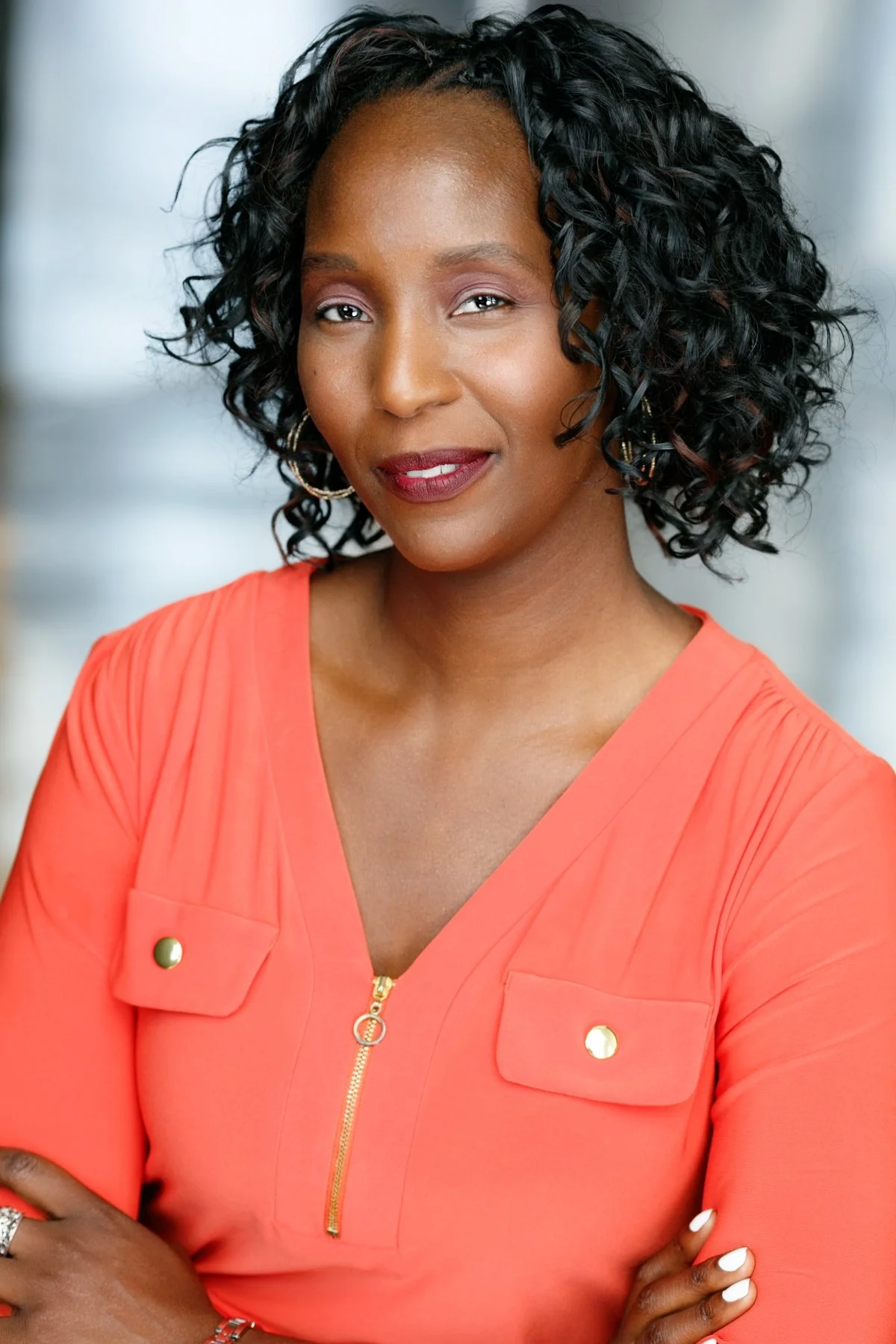
What happens when leaders stop seeing employees as resources and start seeing them as human beings?
Leadership advisor, workplace culture strategist, and founder of Rework Work, Stacey Gordon joins Kara Duffy for a candid conversation about the current state of diversity, equity, and inclusion, the widening gap between executives and workers, and why leadership accountability has never mattered more.
Together, they explore the future of work, the rise of entrepreneurship among marginalized communities, workplace humanity, pay inequity, and the critical leadership skills needed to create organizations where people can truly thrive.
“Inclusion is not guaranteed, and in many places it’s not even expected anymore.”
-
-
369_Stacey Gordon_
===
[00:00:00]
Kara Duffy: Welcome to the Powerful Ladies podcast. I'm Kara Duffy, and today's guest is Stacey Gordon. Stacey is a globally recognized speaker, leadership advisor, and workplace culture strategist, as well as the founder of Rework Work, where she helps organizations reimagine and redesign corporate systems with a people-first point of view. In this episode, we dive into the current state of diversity, equity, and inclusion, how to evaluate your own leadership, consider if corporations should be dismantled, and lots of other juicy topics around workplace equality and having systems that work for everyone.
Kara Duffy: Welcome to the Powerful Ladies Podcast
Stacey Gordon: hello, and thank you for the invitation.
Kara Duffy: I'm very excited to speak with you today. Let's begin by telling everyone your name, where you are in the world, and how you would describe what you're up to.
Stacey Gordon: [00:01:00] So my name is Stacey Gordon. Where I am in the world is actually in the UK right now. And what am I up to? Well, I I guess the most recent is, uh, working on some leader reality checks.
Kara Duffy: You know, I feel like there might be a need for that in the world right now. Mm-hmm ... I can only imagine how it's, uh, you know, dissipating throughout cultures around the world right now.
Stacey Gordon: Absolutely
Kara Duffy: Mm-hmm. Well, you are known as being someone who is an expert in DEI and helping workforces remove unconscious bias, you know, to create great leadership, to have just safe, empowering, impactful work environments.
And I wanna kinda begin with how would you describe the state of inclusion and safety and maybe ethics-based leadership in the corporate world today?
Stacey Gordon: I mean, [00:02:00] unfortunately, it's not in a good place, right?
Kara Duffy: Mm-hmm.
Stacey Gordon: it is probably more transparent, right? So I would say it's not so much that it has ch- uh, that the place it's in has changed, it's that our view of it, uh, we have become more aware. We've become more, uh, more open, uh, to what is actually happening.
I think before we were able to make excuses. Before we thought, "Oh, you know, it's not this, it's that." But we're at a place where we have to say, " No, we really have to look at the cold, hard truth and see the facts that are staring us in the face." And that is that we are in a place where inclusion is not guaranteed and in many places it's not even expected, uh, anymore.
And that is, I think, a really unfortunate place because what that does is it affects, uh, [00:03:00] productivity and profitability for organizations in ways that I don't really think they fully understand.
Kara Duffy: Well, you know, all things in the business world can end up circling back to how does this affect the top or bottom line? And I think that there is a huge disconnect between how much having an inclusive and diverse workplace adds to the top line and saves your bottom line when we look at the bigger picture.
Do you have any stats on so people can wrap their head around the financial impact if they do or don't look at their workplace in this way?
Stacey Gordon: You know, I used to rattle off a ton of stats and I've stopped doing that mainly because when we look at the financial picture only not that it's not important, it obviously is important. We come to work to make money, right? But I think when we focus only on the stats we end up in, in an issue.
So yes, there are lots of statistics that [00:04:00] show we-- I mean, you can Google and see all the statistics from Deloitte, from PWC, from Harvard University. You name it, every company out there has a study on it. So the productivity increases when you have a more diverse workplace. You also have retention that increases when you have a more inclusive workplace.
And you have better retention, you don't have to recruit as much. You're spending less money on recruiting. There's just so many benefits, right, from a financial aspect. I think what's important though is you have to treat this like a three-legged stool. And so I've always talked about the fact that it's not just the business case, right?
The financial implications that are important. And some people like to talk about, well, it's the g- right thing to do. We have to do good in the world. Yeah, sure we do. But you know what? If you think back to, and I'm gonna get the year wrong, so I'm not gonna guess the year at this time. But if you think about when construction companies were first forced, and I say forced because [00:05:00] they were, to ensure that construction workers wore hard hats, right? Why did that happen? Not because they cared about the people. They didn't care about the deaths. It was easier to replace a person than to have to worry about all the safety precautions, right? Why did that happen? Because somebody somewhere finally put a, rule, a law in place that said, "You must put hard hats on these individuals."
So was it the right thing to do? Absolutely. Did they do it? No. Right? They didn't do it until they were forced to do it. So that actually brings in the third aspect, which is the legal implications. You do need to have legal force behind something in order to make it happen, because we continue to show that as humans, we are awful, people, and we are not going to do anything that we don't have to do unless we are being forced to do it, and that is the sad state of affairs. So yes, you need the financial implication. Yes, it is the right thing to do, but you also need to have [00:06:00] some legal, uh, power behind it to make it happen.
Kara Duffy: And I think we can see this in our daily lives. There's so many things that good humans are procrastinating on all the time because there's something else they're focused on. They're, you know... big to small, I think we can see that human psychology says that we need reinforcements for the habits that we want to adopt.
What-- And if we don't wanna adopt them, we definitely need reinforcements because we will always default to the easiest, the cheapest, the fastest option. Especially when we look at the level of decision fatigue that everyone is under. It's not surprising to me that, you know, there are people who really don't care about these issues and will do everything in their power to not do them, and in to in fact go against them.
And then there are people who support these issues and would vote for them and are still not gonna do things because they either don't realize they're doing it from, uh, unconscious bias or because they [00:07:00] have 5,000 other things on their to-do list, and it's just harder to do than not do. I'm holding my judgment on humanity about having to be forced to do it because, I mean, it's why people were forced to put their kids in car seats, too.
And most, parents care about their kids, but it just becomes another thing, like another cost, another thing to do. And we're so... The human psychology amazes me about how we're so, biased to imagine the things aren't happening to us or we're not the problem when the data says the opposite
Stacey Gordon: Absolutely. Absolutely. And I think, you know, that is a really big piece is thinking about the awareness of that. It is so easy to point and say, "You're the problem. This is the issue. If this thing didn't happen, then that wouldn't have happened." But it-- we don't want to ever really look at what our part might have been and how we might have contributed to the situation at hand. And I think if we did that a little bit [00:08:00] more we would find that it's not about blaming and shaming and saying what an awful person you are. It's just like you said, you are not aware. Somebody pointed out. You should say thank you.
Kara Duffy: Yeah.
Stacey Gordon: Instead of saying, "How dare you? I wouldn't. I would never. That's not me." Well, but it is, because you're the person that did it.
Kara Duffy: Yeah
Stacey Gordon: So we actually have to acknowledge that. And because people do not want to acknowledge that, people are tap dancing around, right? Doing all kinds of things rather than actually admit their culpability in some of the behaviors that are happening. Then those behaviors continue around us because rather than address what's happening, we wanna m- find all the excuses for them.
Kara Duffy: And we're also not getting any support from, um, algorithms today. Uh, they're making it worse. I haven't been in the corporate environment, I- as a consultant, yes, but as an employee, no, for a [00:09:00] while now. And I was very lucky to work in corporate jobs that were tr- you know, doing their best to be at the, you know, in doing all the things that were, you know, quote unquote, "supposed to do".
I've worked in very global teams. They were trying to do the environmental things. Like, a lot of them were doing things. When I left, we were moving in a positive direction. Since I've left the corporate world, I feel like things have gone to hell in a handbasket in different places. And I think it's part of why so many people are moving into, freelance work, consulting work, starting their own thing because the corporate environment is not welcoming to so many types of people.
And I, I see a parallel, I'm curious if you do as well, of many people grew up thinking that they were, middle class, maybe even upper class, or going to be in that class when they were adults, and the whole socioeconomic system has shifted. And similarly, I think a lot of people didn't realize [00:10:00] that they're in a class that needs to be included because they never saw themselves as not.
And, I see that there's this whole shift of reality where many people are realizing, "Oh, I'm not in the economic position I thought I was going to be. Oh, I'm actually a type of person who needs to be protected." Um, whether it's, parental leave, maternal leave, having a neurodivergent, , situation going on.
Like, there's so many things today that I think people don't realize that all of these things we're working to put into place are actually for you. Is the disconnect happening that same way? Are people realizing that m- the majority of people on the planet are the ones that DEI is for versus not? And maybe that goes back to the other conversation again as well.
Stacey Gordon: I, I don't think people recognize that mainly because we are, again I hate to say I, I don't wanna talk politics, right? But it's like everything is related, right? We are in a global [00:11:00] society now. I was-- this is just an aside, but I wanted to buy some, uh, skincare from a, uh... I noticed that, uh, Alicia Keys has a skincare line, and I thought, "Oh, great.
I'm gonna buy that 'cause I need it." And I go to order it, and as I said, I'm in the UK now, and they don't ship to the UK. And I thought, "Are you not a global brand? What do you mean you only ship to the United States?" You know? And had that thought like, "Huh, did you not recognize that you ha-" You know? So anyway, my point is that we are in a global economy.
We live in a place where, or in a time, I should say, where what happens in one place is going to affect people in another place. And so the people that are being affected by various actions, various activities, is on a global scale. I say all that to say because from your, your question around, what am I seeing? I hate to sound so defeatist [00:12:00] but they don't see past the end of their own nose, right? So I m-I mentioned the global because it's like you don't recognize that when you wake up in the morning, something that you are doing today is going to affect somebody, three countries away, or it's going to have this impact on somebody in, in this particular way.
And so if you can't see that, you also, you're not seeing, as you said, the fact that, yeah, you have a child that is neurodivergent. They need special, uh, attention in school. They need additional help. In fact, and I, I'm, again, I don't remember all 'cause it's been so many things that have happened. But I remember probably about a year ago or so, right, we started taking certain protections out of the education system, right?
For children that needed extra time, for children that had any kind of special needs. We took away, and I say we really generously,
right? But we took away those protections because it was DEI in schools. Okay, fine. You took it [00:13:00] away. Now your child has a disability. Your child is neurodivergent. Your child is autistic. Your child has a special need. How are you supposed to get them the help that they, that they need? Oh, oh, oh, you know what?
You can't.
Kara Duffy: Mm-hmm.
Stacey Gordon: You can't because you took away something thinking it was going to impact other people, not thinking it was going to impact you, right? And this is what I'm saying about the global... Everything that's happening right now, everyone keeps saying, "Oh, in three years, four years, whatever, things are gonna be different."
No, they're not. No, they're not. We are still e- dealing with the impact of what Reagan did, right? What you just said about the, the people not being in the social situation they thought they were going to be in is a direct result of things that happened when Reagan was in office. And so here we are today, right, many, many, many years later, dealing with things that are gonna have an impact on our grandchildren and our grandchildren's children.
And so [00:14:00] I will get off my soapbox, but I just... I think we, we... I, I know I boil it down and it makes it, I s- it sound really simple, but we have got to stop being selfish and be more collaborative and more team-oriented.
Kara Duffy: Well, and just curious, right? Like Growing up outside of New York City for part of my life and then Boston, like I'm an East Coast gal despite where I'm living today. And it felt like we were making progress in the '80s and early '90s of we were talk- like celebrate different cultures in schools. We were excited to have diversity. It was like they were doing work to celebrate it, at least the school systems that I was in, of all the celebrated, all the holidays are celebrated. Look at how great it is to have all these people who are coming from different countries and cultures in. Look at this incredible food and like how great is it?
There seemed to be celebration that we were stronger when we were coming together and, you know, looking at our [00:15:00] commonalities, but also celebrating like all of this rich flavors and colors and textures that were coming in by having this really global diverse community. And I think where you were kind of going just before is I don't remember when...
I feel like I woke up one day and we went from being focused on how do we take care of each other and make things better collectively to it doesn't really matter. Let's just, we need to go-- We went into this scarcity mindset at level like 5,000. And I, I'm, I'm I have to do a talk once a month at this group.
I'm on, uh, a committee that was called DEI, and now it's just called D and I, 'cause apparently we don't need equity, just diversity and inclusion now. I don't know why it changed. But we, I was bringing up the statistics of how many people are s- moving from corporate life to entrepreneurship life. When you look at the people who are in triple digits, [00:16:00] it is African American women, it is Hispanic women, it is, are people with disabilities.
Everyone who should have been protected in a corporate environment that now isn't, I feel like they're being like, "Screw it. We gotta go and move on because this is not working for us and we have to build it ourselves." And I'm worried about the drain on our, our workplace and our innovation because not everyone's meant to be an entrepreneur, and so we have to protect these bigger corporate spaces.
'Cause if everyone's just going out on their own, sure, it's a m- it's a survival tactic right now for some but that's not the world that I want to live in.
Stacey Gordon: But do we have to protect these big corporate spaces?
Kara Duffy: I mean, maybe we don't, but tell me more about that. Let's, tell me
Stacey Gordon: I was gonna say, you tell me what, what's, what's the good, right, in protecting the big corporate spaces? What does that do for us as a society? What are you expecting that is going to be better [00:17:00] than individuals going out and perhaps doing the grassroots groundwork, foundational work that needs to be done?
Kara Duffy: What I really think is an ideal scenario for us collectively is a balance between them. There are certain personality types who are much better being on teams and being in collaborative spaces and working in that environment. They're, they're not... Entrepreneurship is not a match for everyone.
And knowing that small businesses, the d- the definition in the US goes up to $40 million in revenue a year. And so there's, there is huge gaps in, I think, in understanding small to medium to large to mega businesses. I don't think we need to protect the mega business side of things, and I'm...
This is where the monopoly laws, I think, are, are very effective. But there's a space between... most small businesses in the US never [00:18:00] even hit 5 million, let alone 40. And so h- what do we need to do for true small businesses, true medium-sized businesses that are where a lot of the commerce is actually happening on a day-to-day from a busyness perspective?
Even if for individual people, if the majority of money is hanging out in the top 1%, I still think we need to have... If all companies went away and everyone was a solopreneur, I don't really know how that would work systematically, and I'm open. I'm open to being changed. But I don't think we need to protect the huge, ginormous companies that have more meetings than they know what to do with, and there's actually a lot of waste in them.
Let alone not wanting to follow rules and not pay taxes.
Stacey Gordon: All companies, regardless of size, are made up of people.
Kara Duffy: Mm-hmm.
Stacey Gordon: So the people still [00:19:00] need to talk about diversity, equity, inclusion, right? They still need from a leadership perspective to understand why inclusion is important.
And so regardless of size, if you don't understand that, we're gonna have an issue. So for, as an example, last year, and the number fluctuates because depending upon how you look at it, but somewhere between 316,000 and 389,000 Black women lost their jobs, right, And where did all those women go? The interesting thing about that though is if you look at the statistics prior to that, every year for I don't know how many years, I wanna say at least five years, maybe even 10, the fastest growing demographic of small business owners was Black women.
Kara Duffy: Mm-hmm.
Stacey Gordon: So they were starting businesses at a rate faster than any other demographic. All of those women, no one's actually talking about what's happened to them because those women have lost [00:20:00] clients, have lost business, have lost contracts, right? And so you have an even bigger number, right? And I'm just talking about Black women. Now someone's gonna listen and say, "Well, Stacy, why are you only talking about Black people?
What about the Latinos, and what about the gays, and what about..." And let me just tell you,
Kara Duffy: data.
Stacey Gordon: have those statistics, right? I'm not the one that wrote the articles that was talking about Black women. Somebody did. It wasn't me, right? I'm just quoting that statistic. If you'd like to go and look at the statistics, I'm sure they're just as abysmal for Native American women, for Latina women, for Black men, for, you know, like gay men, you name it.
My point though is that it's always going to look bad regardless of company size if the people leading those companies don't care about inclusion and equity.
Kara Duffy: Yes. And I wanna clarify that when I-- and for our conversation, but also everyone listening, when I say protect the corporate spaces, I'm not talking about protecting bad [00:21:00] behavior. I'm talking about fighting for an environment where going to work in a corporate life is, is enriching for everyone involved.
Like the... It'd be like, should all schools go away and we only do homeschooling? I'd be like, "No, no." Right? So it's like, how, what are we doing to make, uh, a business work in, in all the ways it can work? Like, how do we have it all in that environment? A big thing I've been talking about to people is if we really wanna be pro-business, how do we move both healthcare and pensions out of a corporate environment?
Because so many people are trapped in a corporate life because they're afraid if they go into freelancing or entrepreneurship, I'm gonna lose my healthcare for myself, my whole family. I'm gonna lose a 401. H- I'm stuck on my own. And we don't realize the layers of entrapment that things like that are providing.
So [00:22:00] if we wanna dismantle, like, all corporate spaces, we can. We didn't have corporations until, you know, the recent 100 years, the level we have today. So we can go back to, you know, everyone being a little bit more independent. I wanna shake people and be like, "Just do it right. It can work." You know, not that, not that it's not broken, but when we look at what like Artemis II, when you see people coming together and doing good work, like we can do incredible things, and it looks like they're having fun. I'm sure there's moments they weren't. And I, I wanna come back to you opened it up talking about leadership I feel like we need to redefine leadership for humanity right now what do you think are the critical components of leadership that people are overlooking right now that we could be applying at the top and also in our own lives?
Stacey Gordon: I think if we look at leadership, corporate leadership for a moment, right? What we're missing is humanity. I write a newsletter, [00:23:00] I'd say every other week. I'm at the point where I write when I feel like I have something to say. So sometimes it's three times a month, sometimes it's, it's been a while since you've heard from me. It just depends
Kara Duffy: Sometimes just rage typing at 2:00 AM based on the day.
Stacey Gordon: Yes. And my last newsletter that I just dropped this week we talk about pay, the pay gap, right? Is your pay gap defensible? So news cycles, we had Kimberly-Clark warehouse fire that happened, right? We had, Goodness, what else happened? There was a few other things that happened. And we think about is there is a huge, huge gap between what your frontline worker gets paid, what the CEO gets paid. And not only is there a huge gap in pay, there's a huge gap in accountability. So if I'm a McDonald's worker, and yes, I'm picking on McDonald's because of that awful CEO video of him trying to eat a burger recently, right?[00:24:00]
Can't even eat his own product, which is ridiculous. But let's just say if I work at McDonald's, and let's generously say that I make $15 an hour in a McDonald's and I steal $5 out of the, uh, the ca- the t- the till, right? I'm immediately fired. It's a big problem. And now I'm not condoning theft, okay?
Let's just-- I'm not condoning theft. But my-- maybe I'm not go with stealing. Let's go with make a mistake, right? You do something that's-- maybe you yell at a customer. You somehow did, you know, miscalculate, and you gave somebody back too much money in their change, and now your drawer is sho- short, right? You're gonna be fired. You are out the door. The, the, the oppo- the, the chance of you getting second, third, fourth chances are like this. You're making 13 bucks an hour, 15 bucks an hour, right? Meanwhile, the CEO is making gobs and gobs and gobs [00:25:00] of money. Oh, it was Oracle, right? Oracle that decided that they were going to pay their new CFO $29 million.
That is $29 million, right? After laying off 30,000 people and saying, " We don't have any money." I'm sorry, do you not have any money because you gave it to this one person? Or can you explain to me why you don't have any money? Anyway, my point being, the CEO of McDonald's makes a ton of money, and gets to make mistakes all the time, mistakes that affect thousands of employees, that affects thousands of families and thousands of lives. And they continue to make those mistakes, and they get, you know, second, third, fourth chances. Why is it that you get more and more chances the higher up that you go in an organization, and even you're getting paid more? Meanwhile, down the bottom, the accountability, it's like you do something, [00:26:00] immediately it's a problem. Up, up at the top, you have 1,008 excuses for why that happened, what they could have done, or why they might have to try this other thing, why it's not their fault, right?
Kara Duffy: Yep
Stacey Gordon: So that, to me, is the biggest thing that we actually need to deal with when we talk about leadership, is leadership accountability and leadership pay.
There is absolutely no reason there should be such a huge pay gap between the top person in an organization and the bottom person in an organization, and there definitely shouldn't be that big of an accountability gap either
Kara Duffy: And it comes down to so many other basic human things. Number of bathroom breaks. No one's counting how many times executives are using the bathroom. If you're making $13 an hour, you're getting counted every time you go. Every break you want, like every time you need... there's no flexibility no humanity that allows people to exist.
[00:27:00] And something that com- enrages me is the, when people talk about the excuse of people aren't working hard, and this is where we're justifying these differences and/or people don't wanna work hard. And I'm like, I don't know anyone that's not working hard below the 1% group. I, I don't know anyone.
Everybody wants to work, everybody wants to be a contribution, everybody wants to have a purpose. Most people are working their tails off, and this idea that, any of the diversity, equity, inclusion concepts we're talking about is to help people who aren't doing that is my eyeballs will set some people on fire if we continue to talk about that.
Stacey Gordon: Yeah. I mean, it's, it's, it's really flabbergasting. It's, I don't understand, and I've said this in, in a room full of CEOs, you know. I said, "You know [00:28:00] If you were coming to work every day and you were not actually ensuring that your organization is inclusive and is doing, you know, and, and in terms of your role, you're not doing what you're supposed to be doing, right? To me, that's wage theft, right? You're showing up and you're making millions of dollars. I'm sorry, your responsibility, it should be so much higher than everybody else because you're getting paid so much more.
Kara Duffy: Mm-hmm.
Stacey Gordon: you get paid more because you look pretty and we like you. You get paid more because of the risk, because of the responsibility, and if you are not rising to the equation-- I mean, to the occasion, then quit because you don't belong there.
The board of directors should fire you. Shareholders should riot. There's no reason that they should continue to, uh, stay in these roles. And I think that we're at a point where we are seeing, and again, I, [00:29:00] I, I hate to use these examples, but I think we're seeing these types of examples because people are at their breaking point, right? If you look at Luigi Mangione, right? Why did that happen? He was at his breaking point. Again, the Kimberly-Clark fire. Why'd that happen? Frustrated. I saw another clip of somebody else doing something w-with their warehouse. We're gonna keep seeing that
Kara Duffy: Mm-hmm.
Stacey Gordon: because people feel like they have no choice.
They feel like they've been backed into a corner because we're literally saying, "Pay us a living wage," right? "See, see our humanity. Pay attention to us."
Kara Duffy: Mm-hmm.
Stacey Gordon: And they're going, "Eh, just keep working harder 'cause you're not working hard enough."
Kara Duffy: It's also interesting when we look at different tiers within organizational structures. Once people get into a salary-type position, a lot of clients I'll work with will talk about how they feel like their team members just [00:30:00] always want more money. And these are people who are in kind of that range where, based on what state you're in, you're making much more than a livable wage, and it's you know, people in this segment we're talking about are fine, and of course, we could all want more money, right? The both things can be true. And I feel like there's still this gap of, to your point of treating people humanely, goes beyond what we're paying them. Where's the flexibility? Where's the understanding?
Do they feel like they're actually contributing? Are... Do they feel safe in the workplace? The... And it might be, it might be different than what it is today, but about 10 years ago, I remember looking at some data that was talking about why people love their job, and how much they got paid was actually quite low.
So it's there's this really interesting tipping point of if we can get people to a place where they can take care of themselves and feel respected financially there's all these other things that go back to being [00:31:00] humans and being included and part of a village and making a difference that I think a lot of people are also today...
I don't know where this gap happened. We don't need to be Google and doing... No one gives a, a shit, forgive me, about the pool tables and the snacks you're providing. But there's this huge gap between do you get time off to take care of a sick family member or go to a kid's event or take care of yourself to pool tables.
There, again there's this humanity spectrum that is about compensation and not necessarily hourly or salary pay that I think is also... I don't know why people feel so confused about how do we take care of each other, because it's well, what would you want?
Stacey Gordon: I mean, there's an example, uh, one of my clients and I've seen this in, in a couple of other clients as well, but this, this particular example stuck with me, and it was that managers were looking at leave requests, right? So, [00:32:00] and where it was a, a-- it was like a huge deal. So if somebody wants to take time off, they've gotta submit a form to their manager.
The manager gets to take their time and decide whether or not they're going to approve the time off, and then they can either say yes or no. And a lot of times they were saying no. And I, I love the fact that some people call PTO, you know, prepare the others because it's I'm just preparing you that I'm gonna be out.
I'm not asking. And I think in an environment, so maybe this is one, a good tip for a leader. I think if you are in an environment where your direct reports cannot come in and say, "I am going to be off in two weeks. I picked that week because I already know it's gonna be a little bit slower. I've already talked to so and so, and they're gonna cover my whatever.
There's nothing else that needs to be done. You don't need to worry about it. I'm gonna be gone for that time." It's not a question of can I, it's just I'm letting you know I've taken care of it because [00:33:00] I'm a goddamn adult and you hired me to do a job, and so I'm gonna make sure that that job is done. And so if you don't have that kind of environment, you have a problem.
If the, if the, if the environment is, "Please, sir, can I please take time off on such and such a day?" And then somebody else gets to sit around and make a decision about whether or not they can go That is nowhere that I would wanna work.
Kara Duffy: Mm-mm, me neither
Stacey Gordon: I ha- I've been there. I have been there, and let me just tell you, I got my ass out of there quick, fast, and in a hurry, right?
And I also understand that it is not easy for, for people to just up and leave, right? People go, "Well, Stacy, you can say that, but you can't just up and leave." I'm not saying that. That's a whole different conversation. We can, we can talk about how you exit and when you exit and why you exit, but I'm just talking about from a leadership perspective right now, if you can look at the way just leave requests are handled,
Kara Duffy: Mm-hmm.
Stacey Gordon: that's one very easy way to find out what is it l- what is it like [00:34:00] working in, for me, in my organization.
I think a second thing is, and this is why I talked about the l- leader reality check. I
Kara Duffy: Mm-hmm.
Stacey Gordon: actually created this leadership... I'm calling it the leadership reality check. It's actually a, a awareness profile, but I started calling it a reality check, and it just stuck. And so that's what I call it. But the idea behind that is to really have, uh, some tough, you know, questions and ask yourself, " Is how I am leading landing with my team?" So, for example, you as a leader will say, "I'm absolutely a great communicator. I provide all the resources that they need, and I'm absolutely clear in my direction," right? "Yeah, I'm great. I l- I'm a wonderful leader." And your team says, "We get no resources, we have no direction, and we are completely unclear about what's happening."
Who's lying? The answer is nobody, right? No one. But it, there's a very different perspective [00:35:00] happening, and if you aren't speaking to people in the language that they need in order to understand what's happening, then you're going to continue to have these miscommunications, and the people are gonna continue to look at you like you are a lackluster leader, regardless of what you think.
Kara Duffy: Yeah, especially if you've been a leader who's always had independent go-getters around you up until that point. You don't realize how much people have been covering for you 'cause they were able to just figure it out on their own. The, uh, yeah, and, and I'm always amazed, this is just another personal peeve of mine, of like how little training we give people when they go from individual contributor to manager, let alone leading companies.
I'd be very curious to know, like, how many executives have ever had communication training, have ever had a leadership class, have had any of that before. 'Cause I'm, I'm, I'm gonna guess just based on the realities of the world that it's, it's minimal or they like didn't really participate in [00:36:00] it.
Stacey Gordon: I was gonna say, not only is it minimal, but when it is provided, they don't participate as well because they think, "I've got this. It's not me. I'm not the problem. I don't need this. This is for everybody else that's here," right? And it's no, this includes you too, right? We all need a, you know, professional development.
We all need to continue to grow. We all need feedback. We all need to see areas in which we are not doing anywhere near as well as we think we are
Kara Duffy: Well, and to your point, like I, I'm often telling clients like, "If something's not working in your business, it's your fault." Taylor Swift has the right language of "I'm the problem. It's me." If it's not, like they'll complain about, "Oh, I can't delegate this task," or, "I can't find anyone to do this."
I'm like, that's such a bunch of baloney. Like you as the leader should be the most replaceable person on your team. And if you can't figure out how to delegate it, it comes back to [00:37:00] what you were saying. Do I even know what I want? Did I communicate it? Did I actually give anyone coaching or training on it?
It's, it's, it's baffling to me. And I, and I don't know if it's, Is it hard for you to relate sometimes to the leadership groups that you're speaking in front of or working with because you feel like you're on just such a different planet?
Stacey Gordon: Some days, yes. I just-- I mean, I, I literally, and I tell this story all the time because it, it still just boggles my mind. I'm sitting in a boardroom with the entire you know, leadership team, and I can't remember what the thing was that we brought up that was an issue, and the CEO said, "Well, you know, we really can't do anything about that." And I said I'm sorry. Is o- o- on, on the wall, CEO? That's, that's you, right? If you can't change it, then who can?
Kara Duffy: Yeah.[00:38:00]
Stacey Gordon: And it was like this light bulb went off, but it's like I, I, I don't understand what goes through some of the leaders' heads. I don't... I, I'm, I, I really am baffled
Kara Duffy: Yeah
Stacey Gordon: ' cause I'm just like, "Uh, are we is common sense in the room with us?"
Kara Duffy: Mm-hmm.
Stacey Gordon: Because what, what is happening right now, right? And I, I mean, I joke. I mean, listen, I've worked with a lot of leaders who are really good, right? They are. And they, they're interested and they're leaning in, but they're still struggling. And I think the struggles come down to this lack of the, or this, this, this disconnect that's happening, right?
Kara Duffy: Mm-hmm.
Stacey Gordon: Because there is... even if you do, if you get communication training, okay, that's great. So now I'm gonna take this training and I'm gonna use it for everybody across the board. Well, [00:39:00] I have a team of 40 people, and they're all different.
Kara Duffy: Mm-hmm.
Stacey Gordon: So now what? I got this training that told me to do it this way, and that only works for 50% of the people on my teams.
What do I do with the other 50%, right? I think that the key to being a really good leader is being agile, being flexible, listening to what people want. They tell you what they want. They tell you how the job can get done, 'cause guess what? It's literally their job to do it.
Kara Duffy: Yeah
Stacey Gordon: Let them do it. They will sit and tell you exactly what the issues are.
They will sit and tell you what the pain points are, where the chokeholds are, where the bottlenecks are, who the issues are. Like, what you need to do. If you just get rid of this person, change this policy, and, you know, move this around this way, it'll be fixed, right? But we don't listen to them. A good leader listens to those people.
A good leader takes all of that and then says, "Great. Go [00:40:00] do it," right? Gets out of their way. And I think too many leaders think that they're supposed to have the answers. They're supposed to step in and say something, do something. It's no, your job as a leader is to provide the resources. When they come to you and say, "I actually have this roadblock, and I can see that if I had this and this, I could fix it," go get them this and this, right?
That's your job.
Kara Duffy: And I think a lot of leaders also feel stuck between some of the constraints they have, whether it's, uh, time or, or financial resources, and they often don't know how to find a balance between being the leader and giving direction and making hard choices and including the brain power and, and the perspective of everyone on their teams. What advice would you give to a leader who feels stuck between those two places?
Stacey Gordon: I, I mean, again, I think it's about listening and prioritizing, so it goes back to the teamwork. If [00:41:00] you're feeling stuck between two different things, like both of those things need to be in the room with you, right? Like you shouldn't be having a conversation with A and B over here, and then having a conversation with C and D over here, and then back and forth.
Get everybody in the room together. "This is the issue that we're having. This is what we're trying to solve. This is the challenge that I see. What, and what suggestions do you all have?" They will give you the suggestions, right? Now you, from that, you can pick, you can decide what might be a good way to go, narrow it down, come back and say, "Okay, look, based on what everybody said, these are the three things that we can actually do 'cause I have this resource, I have this access and this one actually hits our target."
But speaking of targets, that's another thing that actually needs to change because again, let's pick on Oracle again, right? You are somehow giving one person $29 million. Is this person actually going to generate $29 million for you? I need them to show how they're-- Look, how are they gonna generate [00:42:00] a million dollars for you?
Let's start there, right? How are they generating money to, to help pay themselves? Because that's what they're supposed to do. And if they're, what they're doing is not doing-- there's no reason on this God's green earth they should make that much money. Anyway, my point is that if they have... if we're looking at the, uh, the, the gap again, right?
And so that is based upon shareholder greed. Shareholder expectations, board of directors need to stop setting these ridiculous targets. Why are we asking for a billion dollars in profit?
Kara Duffy: What are you gonna do with it?
Stacey Gordon: how about 500 million? How about we cut that in half? Do you know what that would do? You could pay everybody more money.
You could give everybody a little bit more leeway. They could have a little bit more vacation time. Everyone still makes a ton of money, right? You don't actually have to pull every last penny out of the stone, right? You don't have to do [00:43:00] that. And the perfect example of that is, is this example I saw of this comedian recently who talked about when he first got started, right?
Uh, he would go to the Laugh Factory, different, uh, places, and they would... And I did not know this, right? They would only pay comedians 50 bucks to be on stage.
Kara Duffy: Mm-hmm.
Stacey Gordon: I think I had no clue that that's all they would get paid because they thought, oh, they're getting paid in exposure because agents come, right?
Right, and practice. So when he started up his own, you know, comedy, whatever it was that he got going on, company, and had other comedians coming to work for him, he started paying them more money. He started paying them $500, which is still nothing, right? But it's still 10 times, and in some case, 20 times what they were being paid in these other venues.
And he said people would say to him, "Well, why are you giving them this much money? Don't you know you could be, you could be keeping more of that?" And he was like, "Yes, I could, but I don't need to." He was like, "I'm making enough [00:44:00] money. I am doing well. I am making money. I don't need to make it off the backs of other comedians."
And I think that is something that leaders need to understand. Stop making money off the backs of your employees and start making money with them, with their collaboration
Kara Duffy: going back to the different size of businesses that we talked about before, most of the small businesses are, like, hoping to break even, right? The, the c- conversation about profit becomes a privilege component based on where these businesses are. Like, there's a tipping point of what it costs to kinda exist even as a solopreneur in the world at a monthly amount that you need to...
For taxes, for overhead, for having your Google account for crying out loud, right? And everyone gets all wrapped up in this idea of "I don't know. I, I need help. I can't hire another person. I need to be making this much profit each year." And I'm like, again, but why? Where's it going? [00:45:00] You don't have shareholders.
You don't have these other things. This programming we have of chasing this profit for profit's sake and not for purpose sake is, is infiltrated in so many places where there's not even a board of directors that can mess things up. I think on the, on the flip side as well, so many business owners are afraid to be transparent about the financials to their teams and employees because they're gonna go, "Well, we make millions of dollars," but they make, you know, depending on the state, $12 an hour.
And I go, "Okay." I'm like, "But show them the math. Show them what a- how it actually all separates. Don't be afraid to show everything. If you are, that might be one of the warning signs that you might reco- be hear about from Stacy."
Stacey Gordon: Absolutely. Absolutely. Your pay gap is indefensible if you [00:46:00] can't show... and it's not that we have to, you shouldn't be hiring people at th- at 13, 14, 15 bucks an hour. Now granted, I mean, when I started, I had an assistant. I was paying her 30, 35 bucks an hour, right? And then that was low to me, and there were people paying less than that. I just thought, "I can't be that person," right? I can't in good conscience, even though I wasn't making much money. But I was like, in order for us to come together and create something and work together, I can't sit across from somebody and know that I am paying them an amount of money that doesn't allow them to actually live.
And in fact, I remember working, not working with, but this was, this happened to be shopping. I was in a Ross and the, a lady helped me employee, and my daughter was looking for a prom dress. She helped us a lot, and we were there quite a while. A little bit later [00:47:00] we're checking out and I see her and she's leaving as well, and she had all of these bags.
And so we walk outside and I said, "Oh, you did a lot of shopping." And she said, "Oh, no, these are, this is, this is my stuff." And I said, "What do you mean?" And she said, "Well, I live in my car." And so she's "My manager lets me keep the stuff here while I work, and then at the end of my shift, I have to take it all back to my car." And I was like
Kara Duffy: Mm-hmm. the affordability gap to exist in so many countries today, 'cause this is not a US only problem. Uh, Australia has the problem, the UK has the problem. I heard recently, I don't know if this is true, I have not validated this, but I was watching a documentary and they said that if London economic power would come out of England, it would have a GDP equivalent to Mississippi as a country.
And, It is not a US only problem [00:48:00] where it is becoming people who have money and people who don't. We can justify that any of the socioeconomic tiers we've had have been, have now collapsed into working or poverty. That's, that, that or the elite is all that exists. There's... We're collapsing at a rapid pace even when people, some people are making salaries and making things that look like living wages, but they're not. I live in Orange County, California now, and the poverty line is at $120,000 a year of revenue or income
Stacey Gordon: Yes. Yeah. I mean, Orange County is, I mean, and it's funny you mentioned New York. So I, I grew up in New York and moved to LA, so I was living in Los Angeles. And you know, I used to always joke and say, "There's no way. You can't get me to live in Orange County. Not gonna happen."
Kara Duffy: Yeah. Yeah, it's cr- it's, it's, it's such an interesting case study, I think, 'cause it has the greatest income disparity [00:49:00] of any county in the US, and I'm, I might argue can this also go global at this point? Because the extremes are so tangible, and if 120,000 is also top percent of m- money in the world, if you earn $120,000 or more, you're making, you're earning in the top 10% of global earning power. And then for that to also be the poverty line, it's guys, what, what is happening?
Stacey Gordon: That is very scary, right? And, and I think the people who should be concerned with that are not
Kara Duffy: Well, y- I mean, yes, and, and I-- this is with the history gap that's happening as well, right? I don't know. If I'm someone who's getting to live in my nice bubble right now, I'm a little concerned about, like, when is, when is the revolution coming? When is our head getting on the chopping block? And I also don't understand, like, when you're going to that level, who are you hanging out with?
Stacey Gordon: But that's what I'm saying about [00:50:00] these, these incidents that I brought up, right? That is the revolution, right? That is the beginning of these kinds of things that is ha- is starting to happen. And so I bring them up because they are warning signs, right? They are literal, like we're waving the red flag and it's being ignored.
Kara Duffy: Yeah. it comes back to the realities that I think have shifted in the past five years in particular. I was having a conversation with another podcast guest who she's "I've been doing everything right. You know, I'm an executive producer." Like, all the things or she'd be moving in the right direction.
She goes, "But suddenly I don't, I can't afford things anymore." She's "What's happening in the world?" She's... what ha- everything shifted around, and the rules have changed so much that I think, again, this kinda wake-up call that the majority of, of the population is in [00:51:00] this situation, and everyone's kinda trying to get out of it because they're like, "Oh, wait, what happened?
What, like how did all my bills go up double suddenly? How did all this stuff change?" And w- I don't... I think people are just starting to be more honest about where they're at because it's a new reality for, for people who weren't in it before, and the people who have been struggling and living in their cars and in a, a poverty tier thus far, it's just getting 10 times worse than it was.
Stacey Gordon: Right. To kinda come back full circle, right? When you think about DEI, for a lot of the people who are n- not wanting to look at themselves, right? To say, "Well, how did this happen? What is going on?" They're looking for someone to blame. And so it's easier to say, "Well, the immigrants took your job."
It's easier to say, "Well, Black people were getting promoted and they weren't you know, uh, as qualified, and that's why you didn't get the promotion." It's easier to, you know, to say those [00:52:00] things than to actually look at the underlying capitalist society that is squeezing people, and i- i- you don't wanna have to look at that because that's gonna make us have to really look in the mirror and have to do something about it. It's easier to, to blame others that have nothing to do with it.
Kara Duffy: Well, and there's so many parallels between what we need to-- the canary in the coal mine that DEI can be just the same as environmental components to, to capitalism because all of them are getting pushed to the extremes of there's no more room to flex this anymore. We're running out of runway to fix these things.
There's no more countries to send our garbage to. Nope. Like, when, when are we gonna realize that, that we're beyond the tipping point of how much money we can get from the stone that we're crushing, which happens to be people and our environment and, like, all the other things that go [00:53:00] with it.
I'm really curious how, how you got to where you are today. Would eight-year-old you have imagined that this is your life?
Stacey Gordon: You know, eight-year-old me probably would not have imagined this in particular, but eight-year-old me has always been a mouthy little thing, so you know, I, I my grandmother used to tell a story. She actually passed away a couple years ago. But she used to tell a story that when I was about six or so, we're on a bus and actually she was in, in the UK, in London. And I guess somebody was trying to get her to get up and give them her seat.
And I yelled at this little lady and told her that my grandmother works really hard and she's not giving up her seat, and there's no reason that she should have to
Kara Duffy: I love this
Stacey Gordon: And I think that's just always been the attitude that I have always had, is just that, I look at things [00:54:00] and I try to be objective, you know?
Not all the time, but I, I do try. And I, I just, I think to be able to look around and see that the world that we are living in is not equitable, never has been but could be if we tried a little harder, right? If we actually worked towards it. We have all of the components to do it. We're just choosing not to
Kara Duffy: How do you stay hopeful? How do you fill your own cup so that you can do this work and not lose your mind every day?
Stacey Gordon: That is a hard question. And if you'd asked it a year ago, I would not have an answer. Because honestly, about, hmm, maybe a year and a half ago, I was really going through it. I was really, really ready to just throw in the towel and just say, "Fuck this shit." Excuse my French, but I was just like, "I'm done."
This is-- I was like, I, I'm tired of getting up and trying to talk to people and make them [00:55:00] see me and my humanity, right? Because I'm Black, in case you hadn't noticed. I'm Black. I'm also a woman. And a lot of the things that are happening around the world right now are race-based, are gender-based.
And I was really ready to just, you know... But I did take some time. I did do some traveling. I love to travel a lot, and it is the thing that does keep me going. I continue to travel. And I had to remind myself that, that the work is the work. Yes, the work will somewhat affect me at some point, but it's not me, right?
It's not a, a, a reflection of me, of who I am. And once I was able to kind of reorient myself and remind myself of that it's been a, it's been a lot better.
Kara Duffy: Where, where do you love to travel? Where are some favorite places?
Stacey Gordon: Oh my goodness. I, I love actually traveling by cruise ship, so, just because I feel like it's a [00:56:00] great way to get to a lot of different places, uh, in a short amount of time without having to keep packing and unpacking, but one of my favorite places gosh It's hard to say. It's not even so much a place as it's more, a- anytime I can go to a new place and there's good weather and I'm with good friends, it's good.
So I've just, last year I went to Turkey for the first time. Uh, this year I'm going to the Amalfi Coast. Last year I went to, uh, to Greece as well. So been to a lot of different countries.
Kara Duffy: No, I mean, traveling's one of my favorite things, and it's, I always am looking at, 'cause this is also how I break down businesses and sales pipelines. I'm like, what, what is the first thing we need people to do to get to the other place, right? And even I'm often looking at some of the policies we're doing like the Affordable Care Act, right?
Obamacare that got passed. People were in an uproar about it when it happened, and I'm like, [00:57:00] I'm like, do we need to like... I hate this idea, but, like, how do we make things digestible for people sometimes? Do we need to like, all right, we're gonna just give it to kids, and then we're gonna just give it to the elderly and just give it to...
can we back our way into everyone getting it because people have to digest it differently? But when I think about travel and passports, I'm like, if I just go on a mission to get more people passports and actually leave the country, is that, is that the secret sauce to getting these bigger things to change?
Because I love travel for so many reasons, but there is a distinct difference of how you see humanity when you leave your bubble. For crying out loud, you could leave... You go to a different state to start, right? But I wonder sometimes if that's, if, if the effort goes there, is that, does that start to move the pipeline in the direction that we need for a collective human approach?
Stacey Gordon: Yeah. You know, I did [00:58:00] used to think that. I used to think that as-- And I think we also, again, we think about globally, right? So what's interesting is that the United States of America is such a huge landmass that it is almost isol- uh, isolationist, right? So people are like, "Oh, I went to Vegas. I went to Miami," and they think they're doing something.
And it's yeah, you actually need to get out of the country because once you do that, you start to recognize that you're not as important as you think you are. The United States does not have the cachet that it thinks it does, and people see you very, very differently. And if you can go to a country where you don't speak the language and try to get around, it is very humbling, and I feel like every person needs to experience that a little bit, right?
And but the thing is, outside of the United States of America, even just the fact that, and I'm gonna say, you know, Americans go [00:59:00] around saying, "We're American. This is America." It's yeah, outside of the United States, people recognize that there's North America and South America. And so when people ask you where you're from and you say America, they look at you and go, "Okay, but where?"
Right? And there are so many Americans who don't even understand that concept, that, yeah, there are all these other countries that make up America. And so I just think even that is such an important thing for people to understand, that in the global landscape, how you are seen, what you say, how you show up, how you treat other people changes so drastically.
But outside of the United States, if you don't have a passport, most people laugh at you. I've talked to so many people and, and then they're like, "Well, why wouldn't I have a passport? I don't understand." Everyone has a passport. It's just a thing. So it's only people in the United States who don't have [01:00:00] passports and think that that's okay, and are like, "Oh, yeah, I don't have a passport." Yeah. That's,
Kara Duffy: It's also our access to leave. My daughter isn't even six months yet. She already has a passport 'cause I'm like, "We need the privilege to leave if we need to leave." I don't
Stacey Gordon: And I mean, and not to cut you off, but I'm just gonna say, but it's a privilege because in the United States it's so expensive to get a
Kara Duffy: Yes.
Stacey Gordon: And let's not talk about all the laws that have just changed or the rules or the policies or whatever's going on that are making it difficult for people to get passports.
So I am well aware that I am a privileged person 'cause I've got not one, but two passports.
Kara Duffy: Yeah
Stacey Gordon: And so I am well aware of that privilege and people remind me of it all the time. They're like, "Oh, well of course you could just get up and move." You are correct. But it's also why I do counsel people to not only get your US passport, but if you do have an avenue to getting other types of passports, you should.
Not because I'm advocating for people to leave the United States, [01:01:00] but because it's just access. It is privilege. It provides you with options and that's something we should want
Kara Duffy: This is all kind of in this, in the same theme, right? Of like options and humanity and equal treatment. Like it's, it's all the same things. And, and there's so much about how we do life is how we do business, is how we do everything. And for me, and maybe we, we share this value in common, like freedom of choice is so important to me.
I was talking to a friend last night, and they're like, "Well, if someone tells you you can't do something, that's when I realize that you have a very stubborn streak." I'm like, "Yeah." Because, I follow most rules. I'm not trying to be rebellious for the sake of being rebellious.
But if something is dumb, and if something limits people, then no, I'm, I'm... we're gonna change it. And it's what made me excited to speak to you because [01:02:00] you're doing this work, and continue to talk about it, and continue to, uh, preach the gospel of what's possible when we, uh, have great leadership and we treat people with humanity despite what's happening.
And it, it's inspiring to me that you're doing the work even when people say "We don't need this anymore." And you're like, " On my planet we do, so I'm gonna keep doing it." For a lot of women in particular right now, our to-do list feels so massive because things that we thought were being handled aren't.
And now it's like the... we have to be asking about everything. Is our water clean? I don't know anymore. We gotta go ask somebody. We gotta fight for it. Uh-huh.
Stacey Gordon: Let me just-- this, this water is direct from the tap in Scotland, okay? I could never, when I was in California, [01:03:00] never, ever, ever drink the water like this. I used to open the faucet and the smell sometimes I'd be like, "Ugh, I don't even wanna brush my teeth." It was gross. Meanwhile, I come here to Scotland and I get spring water from my faucet.
Kara Duffy: Yeah. They, they-- I mean, I'm a big fan of Scotland for a lot of reasons, but I mean, even the baby boxes they do, even like the, like setting people up to win, like it, it just, it's a great place to be coming from for everything that we're doing. I, yeah, I'm just thank you for what you're doing. What can, what can people listening do to support you, to support this work in whatever corporate spaces they're in or their own business?
I feel like we need some action items. What can we do?
Stacey Gordon: Well, you know, I think, as I said, I, I would say, uh, if you're a leader, I, I want you to, to do this little test and just look at your leave policies, leave request policies. And if you find that your [01:04:00] leave request policy is arduous, if you find that it requires someone to sign off and, and say yay or nay, if it requires someone to send in a doctor's note, if it's-- you know, whatever it is, if it's arduous, uh, call me.
You know? Because that is a, it, it is a symptom of so many other things. It is a huge, big red flag. And so, no, we probably can't fix every organization everywhere all at once. But what you can fix is your team, what you have influence and control over. And you're gonna say, "Oh, but the policies and the..." Yeah, yeah, yeah, yeah.
We'll w- we'll work on that, right? But you have some level of influence and control. And again, if you don't feel that you do, then why are you in that job? What, what, w- what, what is the purpose? You're supposed to be a leader. So if you don't have influence and control, then we are, are again, red flag. Right?
We just [01:05:00] keep going up the chain with the red flags, like what's happening there? So I would say that's probably a big thing. And, you know, check out leaderrealitycheck.com. That is something that I set up. It's just a quick little 15-question awareness builder just to make you start thinking about some of the things, you know, around psychological safety, around inclusion, around leadership in general just the, in the communication styles, because I think those are things that your team is looking to you for.
Kara Duffy: And for everybody who wants to hire you, work with you support you personally, where are all the ways that they can find, connect, and, uh, reach out to you?
Stacey Gordon: So I have a Substack reworkwork.substack.com. I've moved most of my content in there. LinkedIn newsletter that I post, I post it into Substack as well. So usually that's a one-stop shop, but obviously connect with me on LinkedIn as well. I think I'm at like 96,000 followers, so trying to get to that 100,000 [01:06:00] number.
Kara Duffy: And I've also read that you have the number one course on LinkedIn which is incredible. And we could do an entire episode just about how you pulled that feat off because that's, that's no joke. That is a very... You should be very proud of that success.
Stacey Gordon: I mean, I'd like to say that it was, it, it has a lot to do with me, but honestly, you know, I have to, you know, I have to think about George Floyd, right? And what happened and the, the, his murder and the awareness, the collective awareness that that brought to unconscious bias and to the ways that we were treating people in our workplaces.
And that kicked off a lot of people actually paying attention when they should've been doing it before. But what we also see, of course, is that, yes, that kicked off people doing it, but we're real- realizing, well, they were doing it 'cause they felt forced to do it, right? So now here we are with all of those people are backtracking.[01:07:00]
And so, you know, if you watched my course and you utilized it and then you backtracked, I've got words for you.
Kara Duffy: Mm-hmm. This is when you need to call right now and book some time, and yeah. Mm-hmm.
Stacey Gordon: course my book in the background, you probably can't see it there, but "Unbiased: Addressing Unconscious Bias at Work," really talks about the, the f- the framework that I do everything out of, which is just looking at awareness, alignment, action, and advocacy. Awareness is big. Uh, action is key, but you will not get there without alignment.
Kara Duffy: Well, I just, I'm so thankful for this conversation today. I'm just, I'm really thankful that you're doing the work that you're doing, that you're holding space for this.
It gives me peace of mind that you are still out there doing this work and just being a great human as, you know, as best you can in your little way. So thank you for that. Thank you for being a yes to Powerful Ladies and to this conversation today. And I can't wait to hear [01:08:00] people's reaction to this episode.
Stacey Gordon: Awesome. Thank you so much
Kara Duffy: Thanks for listening to the Powerful Ladies Podcast. If you enjoyed this conversation, please subscribe, leave us a review, or share it with a friend. Head to thepowerfulladies.com where you can find all the links to connect with today's guest, show notes, discover like episodes, enjoy bonus content, and more.
We'll be back next week with a brand-new episode and new amazing guest. Make sure you're following us on Instagram or Substack @powerfulladies to get the first preview of next week's episode. You can find me on all my socials @karaduffy.com. Until then, I hope you're taking on being powerful in your life.
Go be awesome and up to something you love
Related Episodes
Episode 188: What It Means To Live Deliberately | Jasmine Carey | Writer & Editor-in-Chief of LiT Magazine

Episode 276: How to Actually Be a Better Communicator | Tara Joseph | Founder of Tara Joseph Consulting

Episode 311: Thinking of Starting a Podcast? | Judith Kargbo | Writer & Senior Producer at Sirius XM
SUPPORT OUR GUEST:
WEBSITE: reworkwork.com
LINKEDIN: linkedin.com/in/staceygordon
SUBSTACK: linkedin.com/in/staceygordon
INSTA: @reworkwork
Created and hosted by Kara Duffy
Audio Engineering & Editing by Jordan Duffy
Production by Jordan Duffy
Graphic design by Jordan Duffy
Music by Joakim Karud