Episode 370: Motherhood, Ministry & The Radical Act of Loving Your Neighbor | Rev. Jes Kast | Writer, Pastor, & Community Advocate
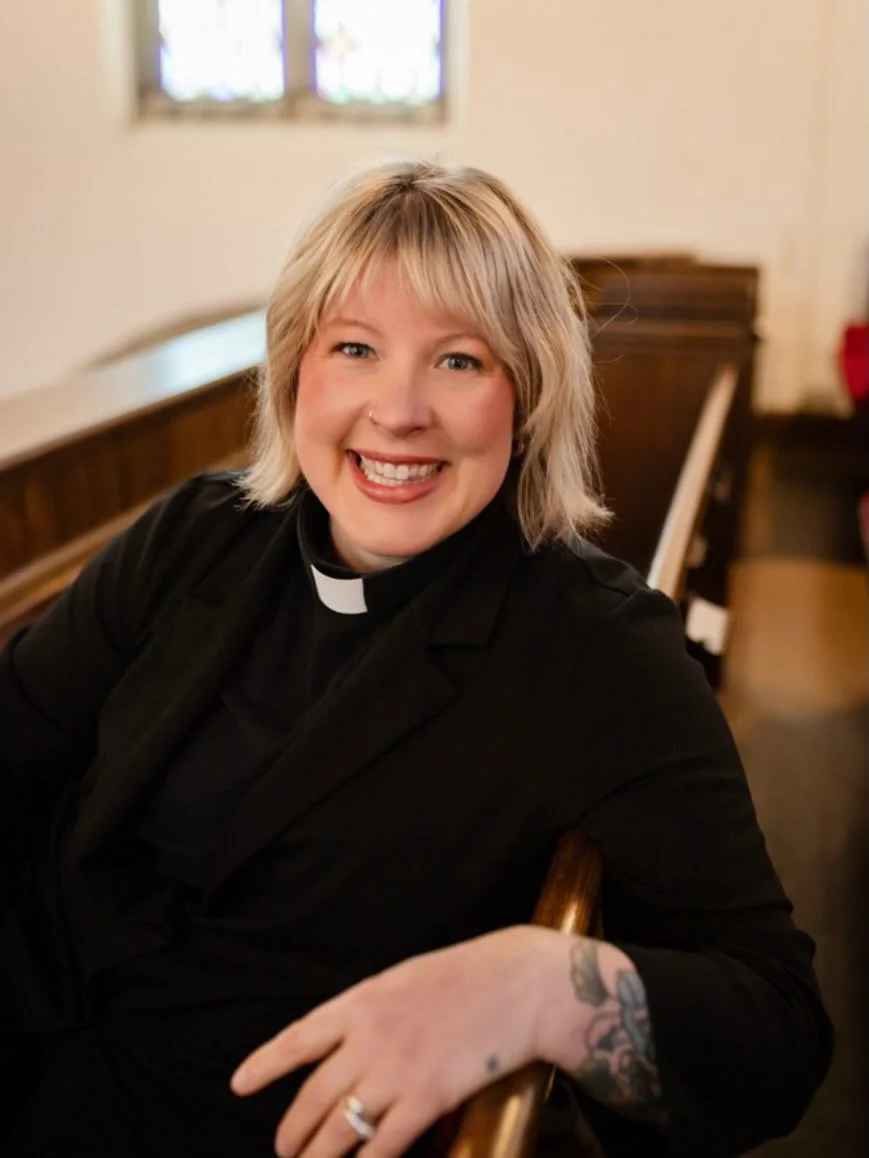
What if rebuilding our communities starts with something as simple as becoming better neighbors? Reverend Jes Kast joins Kara Duffy to explore faith, motherhood, service, and what it means to create the kind of world we actually want to live in.
Together they discuss reclaiming religion in a time when faith is often weaponized, the power of receiving support from our communities, and why true leadership comes from connection rather than control. Jes shares her journey through motherhood, the NICU experience, spirituality, and her belief that small acts of care can become powerful movements of hope.
“The whole point of our world religions and spirituality is: how are we taking care of each other?”
-
-
370_Rev. Jes Kast_
===
[00:00:00]
Kara Duffy: Welcome to the Powerful Ladies podcast.
I'm Kara Duffy, and today's guest is Reverend Jes She is an ordained minister of word and sacrament in the United Church of Christ. She is the lead pastor to a congregation in central Pennsylvania, where she proudly serves the Penn State community, and also where she's building her roots with her wife and her new daughter.
Guys, when I say that within about three minutes of recording this episode, I'd already decided that Jes is one of my new favorite humans, like, I am not kidding. So please get excited for a really incredible conversation about what it means to build the communities we want, how to be a great villager, like, coming back to religion in a world where religion is weaponized, the spirituality of being a parent, and actions to get both out of despair and to be a better citizen. Like, this [00:01:00] episode is so juicy, so delightful, and it's all because of the incredible, Reverend Jes Kast.
Welcome to the Powerful Ladies podcast.
Rev. Jes Kast: Thank you so much, Kara. It's great to be here and among some incredible, powerful ladies that you've already interviewed, so I'm happy to be among them
Kara Duffy: Well, as I mentioned before we kind of sort of hit record Jordan is such a fan of yours. She so loved talking to you when she was working on Query with Cameron Esposito, and you've just left such this impression of d- I don't... I guess the best way to say is just a good human doing good work. She's "We need more. We need more people like her."
Rev. Jes Kast: Thank you, Jordan. Thank you. Yeah
Kara Duffy: so before I go any further please tell everyone your name, where you are in the world, and how you describe what you're up to
Rev. Jes Kast: Yeah. Well again, thank you Kara and thank you Jordan. I know from listening to the [00:02:00] podcast, there's a lot of good humans, good women doing good in this world, so there's many, and we need those stories right now especially. My official name is the Reverend Jess Kass. I'm a ordained minister of Word and Sacrament in the United Church of Christ, but just call me Jess with one S, that's fine.
I am a lead pastor at a congregation in, in Pennsylvania in the Penn State University area. I was also a Ne- a New Yorker for about 12 years, but I grew up in the Midwest, and I was born in New Mexico, so there's a lot of different landscapes that have very much influenced who I am today. My wife is a professor and, of political science in American government, so there's a lot of lively conversations at home.
And we are new moms as well. So we have a brand new baby at home as we're learning the role, of motherhood. I'm mommy and love, love [00:03:00] this new role, particularly in my 40s. I just wanna say, like in my 40s I love being a mom. Middle, mid-career it's just a very good choice. Very good choice for us.
Gardener, reader, friend, community builder and many m- more things I'm sure we'll talk about, but just Jess
Kara Duffy: Well, and the other reason that Jordan really was excited for us to connect is because I also became a mom for the first time in my 40s
Rev. Jes Kast: Congrats. Oh my
Kara Duffy: through IVF
Rev. Jes Kast: Yes
Kara Duffy: and um, doing it on my own. So
Rev. Jes Kast: Amazing
Kara Duffy: guys will have so many other things to talk about."
Rev. Jes Kast: Yeah. How old is your child now, if I may ask?
Kara Duffy: At the
time that we're recording this, she'll be six months next week.
Rev. Jes Kast: Oh my gosh, our babies are around the same age. Oh my gosh, congratulations. I, I hope how, how is motherhood for you in the 40s?
Kara Duffy: I love it. I mean, it's it, it's great. I keep kinda looking around being like I think it's supposed to be [00:04:00] harder than this. Um, Really?" And so I don't know if it's like I have a great baby. She really is fantastic. I don't know if I was overly prepared choosing to do this on my own. I also think there's just an emotional maturity at this age.
I'm good at adding things to my life, like multiple businesses and projects and things. I'm like, "Oh, it's just motherhood's another project that we figure out the logistics and how does it all work, and we get to choose it." So, no it... She's such a great baby, and I'm enjoying it so much that already my subconscious is like, "Should there be more?" And I'm like, "let's calm down. Hold on.
Rev. Jes Kast: Yeah, yeah. I I understand everything that you're saying, and I also think in your 40s there's an e- for at least for us, there is an emotional, spiritual, even physical maturity of you've weathered some things in your life and you know the things that are not majors anymore. And, [00:05:00] and attending to her and our, and my daughter is and being her mom is so life-giving.
I can't even... I like, I, I love it so much. And I think maybe Jordan told you this, but we were in the NICU for about two months, so my, um... Do you wanna hear some
Kara Duffy: Yes, please. Yes.
Yeah
Rev. Jes Kast: our, I know, Being a powerful... I've been thinking about this a lot, but I think creating life is very powerful. And we went through the fertility process for about five years, and we thought that I was gonna carry.
And that didn't happen for a variety of reasons, one being that I have PCOS, which is a very common thing that women have, so I just wanna keep normalizing it, and that made it really difficult for me. And so Jesse, my wife, was the carrier for us. I don't think that my more masculine-of-center wife thought that she was gonna carry but she's "I have the parts, so let's try."[00:06:00]
And it, and it worked well in the IVF first transfer. And then on September 17th, my, two months before my daughter was her due date, Jesse's water broke. And Central PA, there, you have to, you have to go to different areas for the major hospitals. So we went to our local hospital.
but they had to airlift her to the larger hospital. Per- one of the scariest days of my life, 'cause I didn't know if I would see both of them. And and then we lived at the, hospital for two months after that at the, the charity Ronald McDonald House, which I'm so thankful for. I've like... It's such an interest- I could write a book just about that experience.
And this NICU, I will forever sing their praises wherever I go. I just baptized my daughter this weekend, and a lot of the NICU was there. I mean, the family that we created. But she just came early. She's healthy. All doing well [00:07:00] now and, and meeting all the metrics, just came early. But really changed our life.
It's a very... If you h- if or have had a NICU baby, it really is a life-transforming experience. And I'm, I'm grateful for our incredible NICU that has my fidelity. I would go on the picket line for them. I love them.
Kara Duffy: Yeah. Well, and, and it sounds like our daughters had similar due dates, 'cause my daughter was originally November 19th
Rev. Jes Kast: Yeah. I mean- Yeah, November 8th was her original... Oh my gosh, yeah. They're, we're like in a similar... Because with a NICU, even though you're born early, you go by the due date for the development and corrected age. It's kind of a, it, it's amaz- yeah, really amazing. Congratulations. Yeah. And I, I, I wish you the very best in your process too
Kara Duffy: Yeah, same. And I'm glad that you guys are, are through and out of the NICU process and into all the, the fun parts of being a parent.
Rev. Jes Kast: When they discharged us though, I [00:08:00] was like, "Wait, aren't, aren't all these machines coming home with us? Aren't you all supposed to come home with us?" Because we've been watching all these numbers for two months, and now it's us. But it, it is us, and we're doing it, and, and she's incredible.
I love being her, her mom so much
Kara Duffy: How has becoming a mom and the experience of your daughter, and maybe even the experience of your wife now, how has that changed your
relationship with God and your spirituality?
Rev. Jes Kast: Yeah, I have always had... Okay, so something about me is that I have always wanted to be a minister. When I was in kindergarten, I would line up my stuffed animals and like the little pews, and then I'd get grape juice and bread from the kitchen and give, in the Christian,
Kara Duffy: Give communion?
Rev. Jes Kast: give them communion.
Yeah. And I've always, like this is, my mom will say to me, [00:09:00] she goes, I never knew what a calling was until I met you. And like I've watched you be about God and spirituality your whole life." Which, it, and I went to public school, loved it, and it has, it is a calling. And I've always been very comfortable with God as mother and fa- like I'm comfortable with all these languages.
They're all metaphors to describe something bigger than ourselves that we were, have such limited language around. But becoming a mother, I understand that image of this life, life-giving force of a mother god, m- fiercely protective of the vulnerable. I mean I have, I have, I, I think I've watched myself.
I've always thought I was passionately for supporting children and caring for the vulnerable, but particularly going through the NICU, I have a even stronger image of, "Oh my gosh, why are our policies in this [00:10:00] world not caring about kids more?" Like I'm just, like I'm like, you, you say you're so family-friendly, you say you're so pro k- you're not. Like our kids need to be protected more like. And I'm, and I'm, and I think about this in my theology too of oh my gosh, how much love and mercy and benevolence and like desire to be with us, whatever your concept of God is. Mine is very benevolent, and that only has increased I think b- as becoming a mom. For you, I'm is there a concept or an idea that has resonated for you with motherhood and spirituality?
Kara Duffy: I mean, I think the moment that's popping into my head right now is actually not about my daughter, but when she was three months old, I, I went into the hospital for four days from mastitis that was turning into sepsis.
Rev. Jes Kast: Oh my gosh. Yeah
Kara Duffy: And so I hadn't been away from her. She couldn't come to the hospital. I luckily, Jordan and other members of my village were [00:11:00] able to step in and the nanny and, like, all these things.
So the logistics system we had set up had to-- got to prove itself. But initially, 'cause I went to the ER, I was, like, in a random room in the ER before they admit you into the hospital for the first 24 hours. And for some reason that day, they had multiple men coming in having, drug-induced breakdowns through withdrawal.
And so I'm in-- I'm feeling like complete garbage. I'm barely awake going in and out. There's also issues where I wasn't getting the pumping equipment I needed, which is so opposite of what you need in that moment, but fine. So, I'm in a barely functioning state, but there was this man in the room next to me who was having a breakdown, yelling, screaming police were, like, trying to hold him down so they could give him medicine to re- have him relax.
And I reacted in a way that I wasn't expecting to [00:12:00] because I think prior to being a, a mother, I would've been, like... felt bad for this person, but maybe been more annoyed about the insane commotion that was happening. And it just so happened I woke up because of it. I had to pee really bad, and I couldn't.
There's all these things that should've made me even more irritated if I go to my lowest level of humanity. But I sat there and just started crying because I just felt how much they wanted their mother.
Rev. Jes Kast: Yeah. Yes
Kara Duffy: and it was, like, a weirdest it'll make me teary-eyed now. It was the weirdest feeling where I felt connected to humanity in a way I haven't before of this craving we have for love and accept-- Like, in his deepest moment, I could, I just felt immediately how much love he needed, and I'm like: How do we give it to him?
Rev. Jes Kast: Yeah. Yeah.
Kara Duffy: And I, I think that kinda goes back to what you're saying about, like, how are we taking care of each other? How are we taking care of people? And I'm very [00:13:00] confused right now in the, the state of the world of, like, when did we stop choosing
Rev. Jes Kast: Hmm.
Kara Duffy: take care of each other?
Rev. Jes Kast: Yes. Yeah, yeah
Kara Duffy: And like we can go sociopolitically, we can bring in your wife and she'll probably point to an exact date in the history whenever we decided to start fracturing in this direction.
A- and I'm, I'm caught off guard by it based on what I was fed growing up in the the '80s through now of like what we're supposed to do and like when we grew up going to church and like how we take care of each other. And I, I'm just baffled right now, and I have to keep putting my bafflement aside to take actions to change it,
Rev. Jes Kast: Yes. Yeah
Kara Duffy: and I think we're all kind of collectively going through that right now
Rev. Jes Kast: Oh, I 100% think that is an accurate representation of so many people that I know. I... In one of the sermons I just preached, there was this new [00:14:00] research that just came out about out of 25 countries, how well do they trust their neighbors the country that's most trusting of their neighbors is Canada, and I love Canada.
We went there on sabbatical. Our friends up north are wonderful. But the country that doesn't trust each other the most, and it's more than half the population, and right now it's the United States of America. And I think it's 53 or 58% of neighbors, like literal people, like if you look out on your street, over half of the population from this stat would say, "Oh, I don't trust people."
That is, for someone who is in the field of people and spiritual care, that is a very discouraging and frightening number to me because the whole point of our world religions and spirituality is how are we taking care of each other? Do to others as you would have one do to you. Love one another. [00:15:00] charity.
And so I do think, and I've been listening to some political commentators lately about religion and there's religion gone awry right now with Christian nationalism that's like, putting wedges between neighbors. But there are resurgence of healthy forms of religion reminding people both of beauty and goodness and altruism and charity and justice, and I do feel hopeful that those forms will continue to exist.
I do feel hopeful that those forms... I mean, I'm watching it in my own church, people wanting something bigger than themselves and a sense of hopefulness and kindness. I mean, just the basics that Mr. Rogers taught us, how to be a neighbor. I kind of feel like that's the entirety of my work right now is helping remind people how to be neighbors to each other.
I mean, the tangible things. And Kara, it also if I m- can bring it back [00:16:00] to the NICU, it also is about receiving neighborliness. So, so many times when we talk about powerful people, it's I think it tends to be a more masculine understanding of power, of power over. We have many examples of that right now.
But I understand power as power with- and power from a community, and with- and working within, within a communal understanding. So when we were in the NICU, one of... I'm still processing this, but the amount of people that cared for us, that took care of our dog, our cats, our house painted our nursery, we weren't ready the mom squad in my church organizing things in our house.
I mean, the amount of ways that people took care of us is very humbling, 'cause I'm usually in the position of rallying people together. "Let's go and help this and care for this, and let's go protest this." But I've [00:17:00] started to believe that if you want authentic, transformative, powerful leadership today, one of the questions I ask people now is, "Tell me about a time when you were down and out.
How did you receive help from others during that time?" If people can answer that, then I'm most likely gonna give them my ear and my respect. But if you can't answer that, that tells me, oh, you don't know how to receive, which is a very important thing in community. 'Cause that, to me, s- that's the authority that you're giving to care for your community then as, as the people, "Well, yeah, we wanna show up for her."
And they, and they really did. It was very humbling. I just baptized my daughter this weekend, and it was Full of our community, like church folks and non-church folks, I, I, I always joke it is an interesting thing to be a friend to a pastor and her wife. Even that sentence is interesting, I know.
But they were all there, and I, and I said, "You have made sure that we don't leave this community for a [00:18:00] while." And I don't want to, too. There, there's That social capital, I don't even think that's the right word, but that, the root system is so life-sustaining in a world that is scary right now.
And there is despair vying for our attention everywhere we go, and I'm in the anti-despair business.
Kara Duffy: No, it's, it's true. I mean, the-- it's-- I've taken it on myself for 2026 of, like, how can I be a better villager? Because it's, it does, it has to go both ways. You-- I think there, there's so many people who might have all these followers, all these connections, all these people in their contact list. You might know a lot of people, a lot of people might know you but the list of people who you call at 2:00 a.m.,
the list of people who you're willing to bother is a [00:19:00] smaller list. And I think also the-- who's, who's the list of people who are willing to bother you at those times also? We don't realize how often we're signaling to people our availability in different ways, and most of us are craving this deeper supportive system.
Like the loneliness epidemic I think is a very real thing, and I also think that there's a lot of self-responsibility we can be taking in it for what are we doing to make sure other people aren't lonely. Like, whenever I'm stuck, I'm like, "Okay, I have to go be of service because we're making this way too much about me right now, so I need to s- I need to flip it around."
Rev. Jes Kast: Yeah, a- amen. I mean, to a T what you just said is what I tell... i'm looking out and the university's right across the street, and I, and it's a joy to walk with these young [00:20:00] folks as they are on the precipice and, of life and trying to figure out how we're gonna do life. And I always say, "Whatever your career is, whatever is gonna pay the bills, that's one thing, and it may or may not be your calling."
Okay? You, you, you gotta, there's a realism there, too. But make sure, your calling has to be in contribution to society. Go volunteer at PAWS. Go r- go walk the dogs. Go volunteer at your shelter. Go to the the retirement home. Just do something that's totally not about money, that's totally not about building your influence or capital, and just be with people or nature or whatever and give back.
And I, and like you, Kara, when I get in the, the cloudier moments in my head, I f- I, two, two responses: I need to go do something of service to others or to my community, or I also need to get my hands dirty and, and garden. and that's, for me, that's a, I need to garden. [00:21:00] But both things, and sometimes sometimes I'm working and serving with earthy type things.
But get out and serve. That's something completely not connected to your follower count, not connected to influencer, whatever. Just go be with and serve. It's so important. So amen, amen, amen to what you just said. Yes.
Kara Duffy: And what's, what's also I think really interesting, I'm curious how this is showing up in your world. I'm talking a lot more with my clients. I've also been reached out to, to do some workshops on this about networking feels like it's something that people have forgotten what to do. And I, I do a lot of equating dating and business because I really think that it's how we connect with people, so it's really the same steps.
and I even will joke that the best way to find a date today is through LinkedIn or by volunteering because we have to like, do the same systems. There's this gap of, of how do we actually [00:22:00] connect with people? How do we make friends? And I'm like, guys for people who are, are in our generation, I'm like, we all knew how to leave the house. What, what's happened to everyone?
Rev. Jes Kast: Yeah, yeah. I, I... Kara, did you grow up was there value in your household or in your school or somewhere that you saw intergenerational or that you were with other people? Or they, we were taught, we didn't grow up with screens, and I'm not gonna, I'm not, I don't wanna have this be an, a screen bash, but there is this, a, an honest conversation around that.
But I grew up with talking with people that were older and, and younger. I don't know, did, was that you two, or?
Kara Duffy: I mean, yes, but I think it was also... I don't even think that it was something enforced, it was just the reality of our community and our and our... And not community and the chosen we weren't... My dad worked, a lot, sometimes multiple jobs. [00:23:00] There was a bunch of us kids. We weren't a family that was, like, participating in a lot of stuff because we were just kind of trying to manage the day.
Rev. Jes Kast: Yeah
Kara Duffy: but we went to school, and my mom would volunteer as much as she could with the school events, and we did t- know our neighbors on our street, and we would, go to their house to go swimming, or they would come over for something. We were still active with what was in proximity to us.
And I, I have the, I was, a thing that you can tease me about. I thought when I was, like, eight or nine, at whatever the Winter Olympics was around that time, that I would become a speed skater.
Rev. Jes Kast: Oh my gosh, I love this
Kara Duffy: And so I, for Christmas or my birthday, I got inline skates 'cause that was very, the cool thing. And we were across the street from our elementary school that had a circular driveway, so a perfect lap.
It-- And this guy named Chich, who was the old Italian man who lived four houses down, would come and pretend to be my coach. And while I would [00:24:00] do 1,000 laps around this, grassy driveway he would tell me when I could put my arm behind my back to save energy or I should use both.
Rev. Jes Kast: Oh my gosh
Kara Duffy: Just that's a- an intergenerational example of like, we didn't do it.
He was just bored walking by and was like, "What is this crazy girl doing? I'll, I'll participate. I'll play because this is hilarious."
Rev. Jes Kast: I think that's al- also a beautiful picture in my mind, and I'm, I'm like, "Go Kara." I see the little blonde Kara saying "Whoa." There's two things you said in there that stick out to me. First, you used the word, well, he was bored. I, I think people have forgotten the value of being bored.
And so I've been thinking about that a lot. I think about that now as a new mom All the choices that you can make and how there were definitely times growing up I felt bored, but me and my imaginary [00:25:00] friends would party and make mud pies or go
Kara Duffy: communion.
Rev. Jes Kast: an imagination. Exactly. Like I, there was a value in being bored.
My parents, I was raised by an older generation too, which I actually am really grateful for now. But there is a value of we don't have to fill up our time with all these activities. Also, how I grew up, if it wasn't offered by the school, we couldn't afford it. And so this idea of all, like we pay for this sport, we pay for this, we pay...
That still feels foreign to me because if the public school didn't offer it, we didn't have the money to do it, and so then you would find me out in the playground with my neighbors or it, it, it's just really... Yeah, I'm, I'm thinking about it differently now as a new mom and the value of sitting on the front [00:26:00] porch talking with people. when I lived in New York City, which I loved so much, I- it was a very important part of my life a lot of defining moments of coming into who I am. But when my, at the time girlfriend, now wife, and I met and we moved here, there was something about the middle of Pennsylvania. It's definitely not like the epicenter of progressive culture.
It's definitely different than New York City. But you know, every Sunday after church I'm sent home with fresh eggs from one of my parishioners. I am watching the college students and my older matriarchs learn how to knit together, and they keep talking about the analog revolutions happening here in our church.
I l- love it. It's so cute. Like I'm watching time be valued differently than the fun of the hustle that I was definitely in in New York. But it's, [00:27:00] it's a different value here. And of course, a- an institution like a church community, that's some built-in community building. But you're right, Kara, it still takes- your own self to put out, "Hey, can I help with this?
Can I do this?" It does take some initiative on an individual. It doesn't just happen, but you take- that's practice. That's what I tell people every Sunday. We're practicing. We're practicing how to be humans together and trying to do it better with one another. But it, I do, I have a lot of compassion for pa- I'm like, "I have a lot of compassion for parents today."
Oh, I am one of those parents raising kids in a society, that has different values than what, what we had in the '80s growing up. Again, not that it was all great, but there are certain things that I think, "Oh, I, I wanna bring that into my parenting today." And I guess that's another bonus of being a mom in your 40s.
You, you see, oh, these are some of the choices I made in [00:28:00] my 20s and 30s. This is actually not what I wanna do.
Kara Duffy: Mm-hmm. like,
I really wonder if, When we look at the people who are around us, and like going back to not trusting who our neighbors are this is the, the part that also adds a layer of confusion to me because everyone that I talk to, we're all on the same page.
Rev. Jes Kast: Mm-hmm. Mm-hmm
Kara Duffy: And I'm like, "Okay, so why are we being held hostage by these ideas that we don't agree to?" I think we've forgotten the power of being like, "No."
Rev. Jes Kast: Yes
Kara Duffy: Nope, I'm not participating in that. Nope, I don't agree." And I'm excited to see more people using their no to, to, to do what's right and to do what they believe in. But I, I also think that we're... Our generation is in this very interesting place of having to course-correct things that weren't [00:29:00] necessarily bad of origin, but we didn't put boundaries around protecting what we wanted to protect. Even the controversial statement of we weren't responsible when all mothers started working.
Rev. Jes Kast: Yeah,
Kara Duffy: We're like, "Wait, who's gonna take care of kids? Who's gonna take care of grandparents? Who's gonna do..." Like in, in my community, there's been a, a huge shortfall of volunteers at school because all the moms have to work now.
And so should moms work? Yes, if they want to, absolutely. And as a community, we forgot that we have all the unpaid labor we forgot to account for in this equation. So there's so many things like that where I think we got very excited about some stuff,
Rev. Jes Kast: Mm-hmm.
Kara Duffy: and we need to kinda c- calm down and be like, "Okay, hold on.
How are we gonna reset this so we can get the best of all of these things and, and have workability?" I- I... 'Cause [00:30:00] that's ultimately what it comes down to. What does workability look like for us and each other, us and the planet, us and prosperity? Like none of it works right now at a large scale, but on the smaller scale, like with the...
I'm probably in your church, in the neighborhood, I'm seeing people be like first disappointed that we have to do it individually, and second being like, "Okay, fine. Now we're just gonna change it from the bottom up 'cause we have to."
Rev. Jes Kast: Yeah, I, and I think you used the word proximity earlier, and I like that word because when I was in... And this is a shift for me, I think from 20s, 30s to 40s, too. In New York, I definitely valued, "Oh, yes, I'll say yes to this thing and this thing." And there is a certain appropriate developmental age to your career.
You're exposing yourself And doing these things. And I felt like I was mimicking the skyscrapers. Oh, the next thing, the next thing, the next thing." That is [00:31:00] exhausting. And it becomes a burden after a while, even as it is a privilege, too. And I've said my life in moving from New York to Pennsylvania has gone from idolizing the skyscrapers to now my role models are Pennsylvania native plants.
How can my root system get deeper? How do I live within the ecosystem of my community? So the proximity, I mean, I tell people I, I closed my Twitter account a couple years ago 'cause I was like, "I can't, I can't keep up with this." This is what is mine to do? Mine is my family, my health, my mind, physical, spiritual mental wellbeing, my family, my, my, my own calling here, and then maybe my neigh- literal neighbors, which we really do have a wonderful neighborhood that takes care of each other, and my county.
And then I [00:32:00] care deeply about what's going on in Pennsylvania, but I'm not Philly or Pitt. That's still a few hours away, so I'm, I'm right here. And yes, I'm deeply aware federally what's going on and how hard things are, and I'm deeply aware what's going on with wars and bombs, yes. But what, what is mine to do?
Well, mine is the person across the street from me whose wife died at an old age. Okay, I can bring the Easter flowers from church to him and come say hi to him. I know my other neighbor is a manager at one of my favorite gas stations and I can go and I can give him a great review on there. Like, That is both humbling because it's like, on one hand it's small scale, but on the other hand, it is truly life-changing 'cause it's this, this is the ecosystem that I find myself in.
So my life has gotten [00:33:00] You know, I, I don't I'm online obviously, but I've, it's, it's a, it's a more pulled back online than what I was maybe a few years ago. It's a tool for my local community in many ways, and also the people I'm trying to be in conversation with, like sliding into DMs of "Oh my gosh, this." is a great book.
I wanna talk to you about this." So it's it's trying to find the right balance the pulling back, like you're saying, the things that need to be pulled back on a little bit more and refocusing, which so much of my focus is the proximity of where I'm actually living, eating, breathing the farmers that I l- adore, my ecosystem here which impacts the larger ecosystem that we find ourselves in.
But yeah
Kara Duffy: You're so, right. 'Cause I think when people-- even the name of this podcast intimidates people because they think it has to be this global phenomenon. And I'm like, "Guys, like Oprah is Oprah."
Rev. Jes Kast: Yeah,
Kara Duffy: Like we-- that is a unique path,
Rev. Jes Kast: [00:34:00] Yes. Yes
Kara Duffy: and I would even think it'd be really interesting to look at her village.
Rev. Jes Kast: Yes
Kara Duffy: What is her actual village? Like we all know that she's got like Stedman and Gayle, right?
Rev. Jes Kast: Yeah. Yeah.
Kara Duffy: That's two people, and I'm sure she has a, a loving community around her. But we don't have to be trying to be Oprah and ha- be a, have a global scale. If we step over the work we have to do in our own house, we're not being response...
Like we can't make-- our light can't get as big as we want it to if we're not dealing with that. There's an integrity component of the proximity factor. And yeah, it's okay, do I need everyone to go to a protest? It'd be great, but it'd also be really great if everyone just knew who lived next door to them.
Rev. Jes Kast: Yes,
Kara Duffy: it, it's a revolutionary act right now to to invite someone over for lemonade or check on them. And I, I just, it's, it's a little... It's inspiring to me that [00:35:00] we can have these micro connections, these micro hope moments that I really do believe can change the world if we even revere them in a way that we could. I sponsor and go to Mountain Film festival every Memorial Day in Telluride. Have you heard of this event?
Rev. Jes Kast: I have. I mean, I know about it a little bit, but tell me more.
I want, I'm excited
Kara Duffy: you have to go. I would love you to come as a guest when you're that works for you. But the reason why I'm bringing this up is because you find people from all over the world who are here that scientists, naturopathic explorers, there's social justice issues, all these people telling documentaries in short and long format.
And there is it's basically a whole group of people who are like, "I'm here to do something." Like, how can we come together? How can we channel this energy? I love it 'cause it's like kinda like going to school for a long weekend, all these like... And it's very, there's no bougieness about it. You can be randomly at a picnic table eating your lunch, [00:36:00] and you suddenly realize who you're sitting next to. But we had this great conversation there 'cause they do a lot of talks as well, and one was about finding enchantment in the world again.
Rev. Jes Kast: Oh, I love this
Kara Duffy: I wanna get your perspective on this because when I think about adding enchantment back into our world, to me, that's like such a spiritual act.
Rev. Jes Kast: Yeah
Kara Duffy: And to give context to this conversation, it was like, if we can enchant the tree again, we're gonna have reverence for the tree and respect it and protect it, and that can ripple on. When we bring up the word enchantment what does that mean to you, and how does that, again, layer into how you're leading your, your life and your congregation?
Rev. Jes Kast: What a great word, by the way, enchantment. I just, I, I love that. I would've loved to listen to that talk and be part of those conversations. I I- a word I use probably a lot is wonder and awe. And I think it's the same s- energy as enchantment. it's ... A great [00:37:00] example of this is, so I'm in Pennsylvania, one of our most purply states, in the, in these 50 states, and that was an intentional choice that I made.
When I was in New York City in 2016 the day after the election, I began to feel a call of I can't stay in New York. I was raised in Michigan, a very another purply state. I'm, I have specific skills on how to both hold the integrity of my positions, but I, I know how to talk to people that think differently than me.
And I, and one of the local businesswomen said, she goes, I actually think you enjoy it." And I'm like, "I do. I actually do." Because partly, partly it's it's a powerful choice to say, "Oh, you have these stories of what someone like me might be, but I'm going to go claim that narrative for myself and put myself in your vicinity and proximity and talk with you so you're, you can say, 'Oh, but I know Jess, and I [00:38:00] know her fa- and I know
Oh, but I ... This is what they're like.'" And it's a powerful reclamation of my own being in this world. And so the enchantment or wonder is one of my neighbors who I know is politically we, we probably digress on many issues, but we're both are gardeners and and we both are sharing plants with each other in the middle of the street.
"Oh, I have grew this. Do you want this?" Or, "Here's this plant." And I love that. Gardeners make good neighbors. We just, we love helping. If you find another gardener, that's another person who wants to help things grow, and that's the spirit that you want right now in, in life. Or another thing that stood out to me is at the peak of all the, the h- horrible hard things happening in Minneapolis this, this winter there was a big snowfall in my area afterwards, and i- and, and the c- everybody, everybody was [00:39:00] just feeling, "What's going on?"
I mean, truly of across political perspectives. And all of my neighbors and I were out shoveling each other out from the snow, and I just thought, "This is the most glorious," I mean, a glorious enchanting moment of we are all out here being good neighbors to each other, taking care of each other, getting the snow out.
I mean, hours digging each other out. That's, that's enchanting your neighborhood again. That's, that's the reconnecting again of, of, "Okay, but we gotta ground each other here. I know you. You are my neighbor. We're gonna help each other." Those are some of those enchanting moments. I think people think it has to be these incan- all these spells or something, and that's fine.
That's great. That, that's wonderful. But it's just what's bringing you back to your humanity, [00:40:00] back to your story, the r- the grounded-ness, the earthiness of being neighbors with each other. It's so foundational to who I am in this stage of my life. And it's so powerful, I think, in this world that really wants to keep pulling us apart from each other.
But I think that's a beautiful word, enchantment. I would be curious if others who are listening, if they would write their thoughts on that. I would've, I would love to read that
Kara Duffy: Well, and I, I also like that it allows us permission because there's like a tinge of magic with the word en- enchantment that we're allowed to like layer in the magic and the mystery and be youthful in our approach to things sometimes. Like we're-- it's, it's okay that we don't have all the answers.
It's okay that something's mysterious. It's okay to look at where are the lines, like where does science and spirituality and mystery and ma- like where do they all [00:41:00] intersect? Because the cool part is like we're able to find more and more things scientifically that align back to biblical or ancient wisdom that we've had.
So like why can't we believe it? But I also... allowing everything to have spirit within it, I think we miss sometimes. Like it's, it's-- people would blame it, it's a, it's the patriarchy who took away it all, and colonialism took it all away. And sure, we can argue those things, but we've also allowed ourselves in the progress from going from children to adults to surrender that out as well too.
And I just, I don't know. I'm, I'm big on personal responsibility and
Rev. Jes Kast: I'll-- bye-bye
Kara Duffy: so how, how are we bringing back the things we want? 'Cause we can, and maybe, maybe we can because we're as old as we are, and maybe we can just 'cause we decided no matter what's going
on
Rev. Jes Kast: Yeah, I, I, [00:42:00] I think about that. I love... Like yesterday I came home from the office and put my baby down for a nap. My wife had a grade, end of semester grading paper, so had the monitor in my pocket and I went out to my garden. Again, that's like my sanctuary out there. And I was just barefoot and it, it just felt magic.
And then there was a worm coming up. I'm like, "Oh, thanks little worm for being here." And I know, I don't, I don't mean to sound woo woo about it, but it was, it was enchant- like, this is a fricking miracle, and I don't, like I don't wanna miss it. And I don't wanna miss my own life. This is amazing.
And I want to incarnate all of, all of this and, and, and, and enjoy the morrow of my life. And the g- the joy, the sadness, the h- the NICU and then the coming home, like that's living. I don't wanna miss the living of it. And so that felt [00:43:00] defini- Anytime I'm out in the dirt feels magical to me. And I, I like that helping people however they identify in spirituality and religion and faith, like to, to enchant their lives again with the, this little, oh, the mystery of divinity in this moment.
I love that. My, my... If I can get, can I get real nerdy for a minute? I one of my heroes, it's, she's gonna come out at any interview. One of my heroes is a 12th century nun named Hildegard von Bingen. And she's so badass. She is a powerful lady. And interestingly, and interesting enough, my wife's water broke on Saint Hildegard's feast day, so it's just wild to me.
Kara Duffy: Just giving you a little wink like,
Rev. Jes Kast: Yeah. Yeah. We've got a powerful little one here. But she was a nun in the 12th century in Germany and, and my wife and I go to Germany about annual- annually, and I, I did a little [00:44:00] pilgrimage of where she was. And I mean, she was so badass, spoke up to the patriarchy, and wrote, and was very like green witchery, and medicinal, and doctor, and writer.
And she has this, this phrase viriditas. Viriditas means this greening power of life. Let us... You know that the divinity is around, or you know that there's an enchantment here when there's this vir- expression of viriditas, like this greening power to your life. So, I think about that in this conversation of may our souls, our bodies, our minds be seasoned with a, a viridity of, of a green- like a plant, greening and growing and, and learning.
So I could talk about Hildegard for a while, but I... Yeah. She's, she is my powerful lady.
Kara Duffy: Oh, I know. I love this. Where in Germany do you go and why?
Rev. Jes Kast: The my denomination, the United Church of Christ, has a historic relationship with the [00:45:00] Protestant church in Germany, and I really value global relations in, in general. And, and so I will do go over there to their church meetings and do some speaking. We're heading to Berlin, all three of us which I've never been in a plane with a baby yet, so I'm l- looking forward to figuring that out.
But we'll be in Berlin this summer. I'll be doing some teaching on... They want a teaching on religion, politics, and identity. Real calm topics in the US. And then I'm gonna be preaching at a, a church there. But there's a historic relationship with particularly the Pennsylvania German tradition And our churches over there, and I, I l- I love it.
And I love- I fell in love with this nun of the 12th century before I started doing this work. And when we were there, I went to her old monasteries and that was enchantment. Talk about that. [00:46:00] That was so magical to me
Kara Duffy: Yeah. No, I, I ask 'cause I used to live in Germany. I was in Nuremberg.
Rev. Jes Kast: Oh, where?
Kara Duffy: Nuremberg, just
Rev. Jes Kast: Yeah.
Kara Duffy: Munich. Mm-hmm.
Rev. Jes Kast: my gosh. Okay. So I haven't been in that area. Dusseldorf Hei- a lot of the Rhineland. a lot of the Rhineland. How long were you in Germany for?
Kara Duffy: Four years. Mm-hmm.
Rev. Jes Kast: Oh my gosh. Did, did you enjoy it or did you,
Kara Duffy: Oh, I know. I loved it. I, yeah, I loved it. I got... I was living in Europe and traveling the world and hanging out with a bunch of people from all over the world and making cool things. It was great.
Mm-hmm.
Rev. Jes Kast: speak German?
Kara Duffy: Ein bisschen, a little, yeah.
Rev. Jes Kast: Good. You're better than me already.
Kara Duffy: No, it's, it's, I know, for, I love the fun fact, right?
People think Pennsylvania Dutch. It's no, it's from Deutschland. And I also think there's all these really interesting anthropological origins for immigration. So many people emigrated to what looked like home. They kinda wandered the US and were like, "This feels like Germany," and plop. [00:47:00] And Pennsylvania does. I remember landing in Germany for the first time being like did we just take a really long trip to Pennsylvania or Indiana? Because this looks the same."
Rev. Jes Kast: Well, that's it's very, Jesse, my wife and I, we're, we're, we're not moving. We're here. We're, we're, we are with this country through thick and thin. We are gonna love it into this new era, whatever it is. But when we always say, "If we were to ever move," Germany's always the place in our mind.
It feels so familiar to us here in the farmland and the rivers, and it makes a lot of sense why both of our German ancestors immigrated here. What a cool thing that you lived there for f- for, for four years. That's very cool
Kara Duffy: Thank you. It
was great. I highly recommend it. Everyone should get abroad for a little bit
anyway.
Rev. Jes Kast: Oh, oh, I love that Is there any, particular food that you really liked or beer or anything like that?
Kara Duffy: I mean, I'm a big fan of the Glühwein, the mulled [00:48:00] wine. The Christmas markets are just so magical, and the Christmas ornaments and I have so many things I brought back that I just really treasure from that holiday time. And the way they open the Christmas markets with the Christmas angel who kinda does this announcement.
And the first Christmas season I was there, 'cause I would go home for the actual holidays, but it starts around our Thanksgiving. And I remember being, like, the Christmas angel's on this little balcony at the main church in the main square, and it's filled with people that have candles.
And everyone starts singing "Silent Night" in German, but because it's the same song we could all participate. And when I, m- went away from Christianity for a long time in my, I don't know, 16 to 36 probably, what brought me back into religion at all was the Holy Spirit.
Rev. Jes Kast: I love that
Kara Duffy: Knowing how I'd be in a yoga [00:49:00] class, and I would feel it, and the, the level of Holy Spirit felt in that moment, and it really ends up being collective humanity, like, all showing up. That little moment was, like, really magical.
Rev. Jes Kast: Oh, or like when you're singing, Silent Night in German and it, like you're, there's something enchanting, bigger than yourself happening in that moment. I have never been to the German Christmas markets in Germany. That's on my list. But because of the history of German PA, there's these little German Christmas markets around here with the angel and the tree and so it's the, the ancestors here carrying on the traditions and I, I, I love it.
Oh, that's so beautiful, Kara. I love that
Kara Duffy: Thank you. So, I think there's a lot of people today who are just feeling really stuck, right? We're at a place in time when economically things are harder for most people than ever before. a lot of people are [00:50:00] not living the life they maybe expected for various reasons. Our country is not operating the way we expected it to.
There's just a lot of things that I think are disappointing people,
Rev. Jes Kast: Yes
Kara Duffy: and I'm really wondering what advice do you have for people to transform that for themselves and to start moving from hanging out in this frustration and disappointment? I know that you can't, wave a magic wand and suddenly give someone the money that they need, but, like, how can we move people from that mindset into one that's maybe more full of, of possibility and, and opportunity to come back to, what they need: joy, community, et cetera?
Rev. Jes Kast: Yeah. I think one of the things is t- truly a basic of just be really mindful of how much you are doom scrolling and how much of the fear narratives one is c- [00:51:00] is consuming. I, I say it's important to be aware of what's going on, but, it- there are a lot of fear narratives that want to buy, literally buy our attention. And I'm, I'm really interested in the, the conversations happening around the, the attention economy right now. And
Kara Duffy: Yes
Rev. Jes Kast: what are w- you giving your attention to? And is that thing or people or objects you're giving your attention to, is it bringing life and joy and hope? Or is it bringing fear and worry and not love in your life?
So I think that is a really Basic question to start. Basic but hard too. Important question is, what are you giving your attention to, and what are these things that you're giving your attention to, what are they bringing into your life? And then the next thing I think about, [00:52:00] again, is going back to our earlier conversation, is the proximity and the local community.
Okay. So you ... Maybe you live in an apartment building. Is it possible to get to know the people on the floor of that apartment building? Or maybe you see somebody on the stairs in your apartment building and you think, "Oh my gosh, we always like clock each other. Maybe we can introduce each other." Or at work.
Is there somebody at work that this is a, a ... There's energy there beyond just we're doing the same project. We could go do something together. "Hey, do you wanna go to this bookstore?" I really think the doing the things together in person is really important, and I think like we both said, if, if despair is really prevalent, which I think it's vying for our attention a lot these days, finding things to do for common service to humanity.
Find an organization of something that you're passionate about. helping people in, [00:53:00] in rehab or helping those who are coming out of living on the street or animals or maybe nature. I mean, people are constantly needing some volunteer capacity. Find those things that you like doing. Maybe, maybe you're a mom and you are so tired and you have very little time but you take your kid to the playground.
Well, maybe that's the place that you wanna volunteer. Like just start picking up trash at the playground or maybe there's a park center that you're like, "Yeah, can I help, help here?" You don't have to add another thing. What are the things that are in your life that you give your attention to already that you can then give back to and push back on the despair and, and enchant the world again?
and then I think of an inspira- inspiring quote by my Hildegard again. In the t- in the... This helped me, like history, long perspective. She-- And I wrote it down just to make sure I said it correctly. She [00:54:00] said, "In the 12th century, even in a world that is being shipwrecked, remain brave and strong." I love that.
It's actually on my wind chimes out in my garden 'cause I'm an 80-year-old at my heart. But I, I thought, I've thought about that a lot. If she thought the world was being shipwrecked in the 12th century, well, surely we can like navigate. Like we can do this. Remain brave and strong and, and take care of yourself and that, that means not everyone deserves your attention too, and that doesn't mean you have to be available for everything.
But where, what is, what are you giving your attention to and is it giving life to you? I think is a really important question right now
Kara Duffy: Currently, I'm making a list of people who,
men in particular, that I really admire because I feel like they're getting beat down and that's not fair. And there's some men doing incredible things, and on that list is Pope Leo
Rev. Jes Kast: Yeah. Oh, yeah. I think he's doing Incredible things.
Kara Duffy: Incredible things. And you opened up talking a little bit at [00:55:00] the beginning of how there's a resurgence in people finding different forms of religion, and I believe Gen Z has a 20-something percent increase in Catholicism ' cause there's such a craving for just tell me what to do and give me... I want the built-in things. Give me the order, the structure, the community. I wanna plug in and not have to think more about it.
Rev. Jes Kast: Yes. Yeah
Kara Duffy: And I, and I'm really proud of some influencers on social media who are, have left maybe the, evangelical side of Christianity, and they're pulling back the curtain and trying and reclaiming Christianity in a way that makes sense for them.
Rev. Jes Kast: Yes
Kara Duffy: How are you creating space for people who are looking to either come back to their Christian roots or to find it new when it feels dangerous to want to be Christian or religious because of how humans are using it to their advantage right now?[00:56:00]
Rev. Jes Kast: Yes. Yeah. Oh, I love this question. one of the things a wise person in my life recently was writing about that if, if your form of Christianity does not have a Jesus who has wounds in him, but it's, it's a shiny, bigger, better Jesus, that might not actually be Jesus then. The Jesus that I know was crucified on a cross, and when he was resurrected, there were wounds left in his body, and he had hunger, and he ate with fish with the, the team when he came back, and it's a very human Jesus. And When I'm looking at all these different hues of Christianity right now, the hues that promote a bigger dominating but [00:57:00] flashy that don't make room for our humanness and our wounds, to me that's farther away from Jesus.
Um, people like Pope Leo who make room for our humanness where there's humility, where there's conversation, to me that's closer to Jesus 'cause that makes room for the hunger, the wounds, the, the actual humanity.
So I think when people are looking for something bigger than themselves, I think making room for the very humans that we are, the very complex humans that we are that requires a certain form of gentleness, that requires a certain form of humility. I think that's also a marker right now, of testing what type of Christianity is out there right now, how the humility that people lead with.
I, I crave humble leaders. And I think I think one of the reasons why people are hungry for [00:58:00] religion right now and Catholicism is seeing a, a resurgence is does it bring beauty? There's a lot of beauty in these rituals. I serve in a old cathedral-like building with stained glass, and I, I've always I always ask my younger college students, I'm like, "Oh, do do you wish it was, like, not this?"
They're like, "No, it brings beauty and transcendence," and that matters. It's different than the rest of their world in that it says that transcendence enchantment is is here, so we practice that. But I think people need discerning hearts right now because there's a lot of loud voices speaking on behalf of Christianity, and not all of them look like the biblical Christianity that I know.
Kara Duffy: Yep. And then, how can people support you? How can they get involved? What do you need people to do? Like, how can they contact you, support you? People who are listening to this and they're like, "Okay, we're on Team Jes, [00:59:00] so what do you need us to do and how can we do it?"
Rev. Jes Kast: That's so lovely. Well, and, and I, I say this every time, I covet people's prayers, so let me just start there. I, I... However, whatever those prayers look like, I value people's prayers deep- deeply, and anybody who is of spirit and truth, that is of the same voice, and so I would value that. If you're coming through Pennsylvania, you're always welcome to come to my church at any time.
That- it's a sweet, humble, joyful group of people. And I, I'll, I'll put this out there. I do think I'm getting closer to writing a book, and I don't know what that means, but I'm just gonna put that out there. I think those are the next steps, and I'll just pay attention to that as it unfolds to, to how that happens.
I don't wanna contrive that or control that, but I think I'm just gonna put that out there. I think those are the next steps here. And, and then I would put, say, keep showing up in your own community. [01:00:00] Keep, keep being present in your own life and giving attention to the very words that Christ said, "Love one another." And so may, may we all ... Small expressions of love change our world deeply
Kara Duffy: Well, I wanna say thank you so much for being a yes to Powerful Ladies and this conversation today. And I just, I thank you so much for the work you're doing who you are on a regular basis, what you represent, the space you're holding for people. It's so overwhelming at times right now to, to find the people that are, holding that good space.
And it always enlivens me to know that someone like you is in your corner holding up your space, and together we can really start to make things shift. So thank you for the work you're doing and who you are for people. I, it, I really admire it and it's inspiring, and thank you
Rev. Jes Kast: Thank you so much, Kara, and thanks for bringing all of these powerful ladies together. It's, it was really inspiring listening to people's stories and their [01:01:00] passion and my prayers of deep blessings to every person listening. May your heart sing with hope.
Kara Duffy: Thanks for listening to the Powerful Ladies Podcast. If you enjoyed this conversation, please subscribe, leave us a review, or share it with a friend. Head to thepowerfulladies.com where you can find all the links to connect with today's guest, show notes, discover like episodes, enjoy bonus content, and more.
We'll be back next week with a brand-new episode and new amazing guest. Make sure you're following us on Instagram or Substack @powerfulladies to get the first preview of next week's episode. You can find me on all my socials @karaduffy.com. Until then, I hope you're taking on being powerful in your life.
Go be awesome and up to something you love
Related Episodes

Episode 57: Why We Need Rituals in a Rational World | Sasha Sagan | Author of For Small Creatures Such as We

Episode 196: The Revolution She Couldn’t Stay Silent About | Sara Seyed | Iranian Actor & Human Rights Advocate
Episode 319: Parenting Through Transition and Leading with Empathy | Amber Hollowell | TransParents Podcast & Advocate for Trans Rights
SUPPORT OUR GUEST:
INSTA: @RevJesKast
Created and hosted by Kara Duffy
Audio Engineering & Editing by Jordan Duffy
Production by Jordan Duffy
Graphic design by Jordan Duffy
Music by Joakim Karud