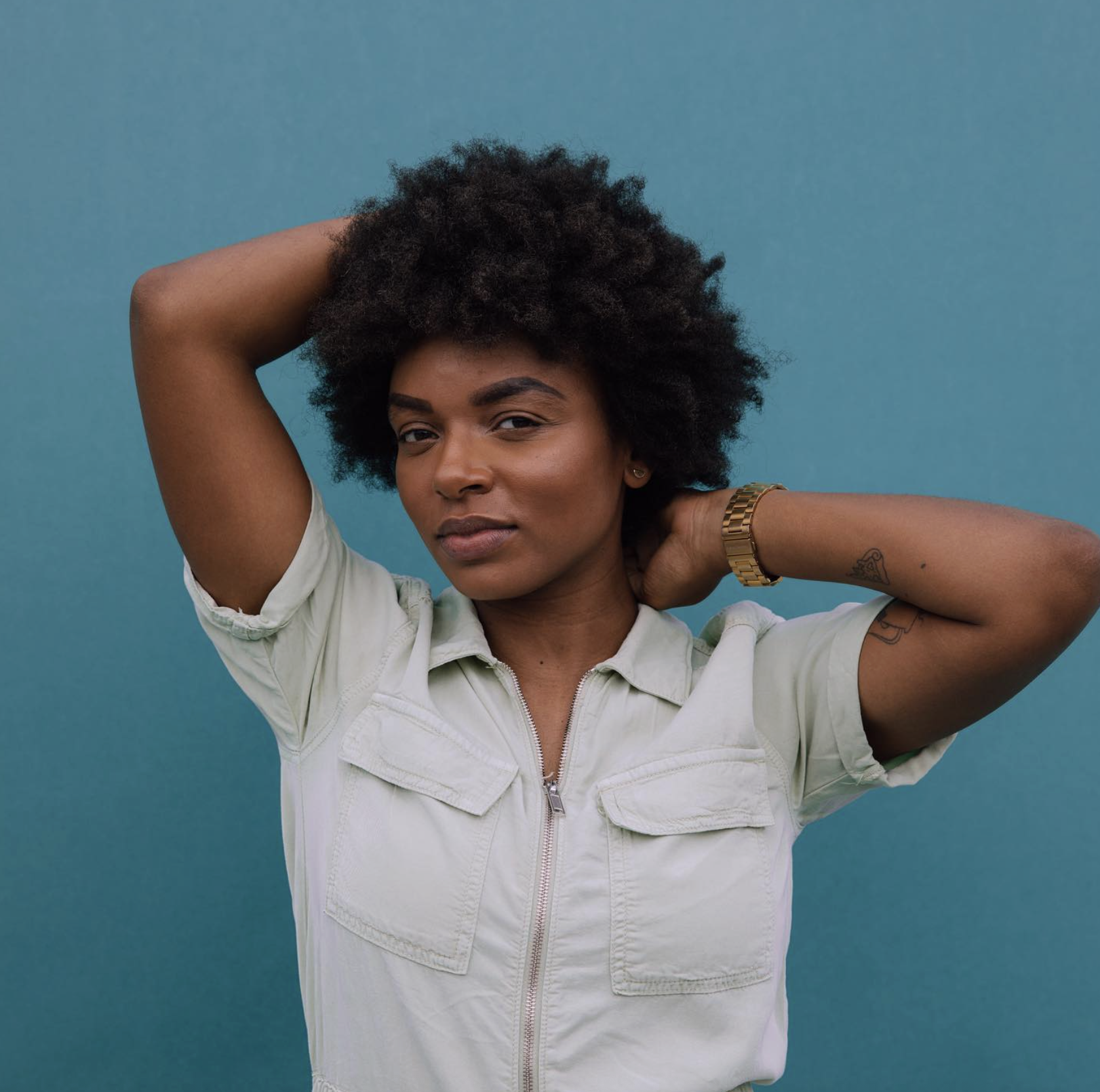
What happens when you stop waiting for permission and start building the creative life that's already calling you?
Podcast producer, host, comedian, storyteller, and creative coach (& Catfish) Tribble joins Kara Duffy for an inspiring conversation about designing a life rooted in purpose instead of expectation. Together they explore building an authentic creative career, why podcasting is so much more than hitting record, embracing intuition over perfection, and how courage, curiosity, and community can create opportunities that traditional career paths never could.
“It’s the easiest thing you can do is tell a little lie [just like a catfish], and then become the person who’s telling the truth.”
-
-
374_Tribble_
===
[00:00:00]
Kara Duffy: Welcome to the Powerful Ladies podcast. I'm Kara Duffy, and today's guest is Tribble. She is very cool. A comedian, a storyteller, a podcast producer, a podcast coach and consultant, and she's doing her best to design her own life and listen to the yeses that come her way. Get ready to hear about the realities of podcasting, the importance of creating an authentic, aligned business, and why building a business and a life around intentionality matters, not just for our creative selves, but to have fun and to listen to the unique path that we're supposed to be on.
I love this conversation. There is so much honesty about how we're designing and building creative lives as we go. And it was just great to meet Tribble. So I hope you enjoy this conversation too
Welcome to the Powerful Ladies Podcast.
Tribble: Thank you. Thank you for having me
Kara Duffy: I [00:01:00] love getting referrals from Jordan because she knows some of the most interesting, coolest people that I may not cross path with otherwise. And I love that in the summary she wrote about why you would be a great podcast guest, it simply said, "One day I hope I can be as cool as her."
Tribble: That's so funny.
Kara Duffy: And I, it was like, she's like, "She just has this aura about her where like she's just cool. Like she could stand there and just be cool, and then she talks and she does things. You're like, 'Damn, you're even cooler.'" And it was just so sweet. And I'm like, yeah, there's so many people who you see taking big swings, you know, getting brave, doing the next thing that they have on their crazy wish list, and they're just kinda doing it and figuring out along the way. And when I look at what you've done already, and like how you're stepping into bigger spaces, and how you're encouraging [00:02:00] other people to do that too, I'm like, "Yeah, Jordan, she is cool. Let's get her on here as soon as possible."
Tribble: Yeah. Thank you, Jordan. That is so sweet, 'cause I think Jordan is really cool too. And I get this comment a lot actually. Like, it is, it must be, like, an aura thing, 'cause I don't necessarily consider myself cool, even though my Instagram handle is tribzthecool, but that was a suggestion from somebody. That's how common that, uh, comment is, so thank you, Jordan. Thank you for affirming and validating my coolness.
Kara Duffy: Well, let's just go back to, like, your name. Um, and where did that come from? Does it relate to your birth name at all? Like, I, I have so many questions about it.
Tribble: it's not as cool of a story. Tribble is my last name, and growing up, my dad's family is from a neighborhood in Cincinnati called Madisonville, and from what I [00:03:00] can tell, they've been there since emancipation. So generations and generations of Tribbles have been in Madisonville, and people call my dad Trib.
They always called him Trib, and then my older brothers, people would call him Trib, my older male cousins, people called them Trib. And my dad, when I went to middle school, he had grown up with some of my friends who I was now going to middle school with, with their parents, so they knew him as Trib, so people just started calling me Trib or calling me Tribbs. And I was like, "Okay, I kinda like that." And as a queer person, like, coming into my queerness, I, my, my first name is a very feminine, very common name. Um, if you ever seen the cartoon Recess, I am Spinelli, basically. When I moved away to Chicago after college, I also wanted to, like, shed some of this, like, straight edge [00:04:00] femininity, like, identity and just kind of come into my own, but without, like, losing myself.
So going by my last name kind of felt like home for me, and it felt more... It just felt more like me than my first name. My first name is something my grandmother picked out of a baby book in 1988, and it's a very 1988 name. So Tribble is, like, the essence of who I am. It is my family line. My dad just passed away in, uh, February,
Kara Duffy: I'm so... sorry
Tribble: Thank you. It's, it's, uh, a part of me. You know, me and my dad were a lot alike. It just feels more like me than my first name does. However, a couple months ago, my therapist asked me, "What's the difference between my first name and Tribble?" And I was like, "You just blew my mind, lady." So, so now I... even though I, like... i'm even feeling, [00:05:00] like, uncomfortable saying what my first name is right now,
Kara Duffy: to. Yeah
Tribble: but I'm trying to get more comfortable with letting everyone call me my first name if they want to, instead of just, like, my family
Kara Duffy: Hmm
Tribble: and people who have known me since, before college. But it's, it's...
I'm getting there, but I'm not there yet.
Kara Duffy: Why are you trying to take that on? Like, why, why bother?
Tribble: You know what? Because I've split myself into so many identities for so long, um, being a Black woman, being a queer woman, being college-educated, being a pod- podcast producer, being a performer,
Kara Duffy: Mm-hmm.
Tribble: a lot of times I have to, like, compartmentalize my personas for different people to be able to digest. And especially the Black and queerness, the femaleness and Blackness, you know?
Um, those are parts of myself that need to be able to live together, I have to almost, like, [00:06:00] demand the same kind of acceptance, respect from everyone for all of who I am and not just who they want me to be or who they know me as or what they're comfortable with. So that's why I'm taking it on, 'cause I, I take on other people's discomfort if not, you know?
Kara Duffy: What an interesting exercise also in realizing you have the same power in all those places. Um, it's, I, my daughter is, at the time of this recording, she's six months,
Tribble: Oh
Kara Duffy: I went into the hospital, uh, I should say actually a week before the hospital, I had 200 names on a list. Like, we were not narrowed down at all because I know the power of a name, and I knew I also wanted her to have multiple middle names and I k- feel like I landed in a place where I feel really comfortable with it because her first name is technically hyphenated, so [00:07:00] one name is a little bit more, easy to say by a lot of people, and the other name is just cooler.
And so I'm like, we, I call her both or all three, you know, the first one, the second one, the hyphenated version, and I'm like, "You can choose." Like, I think, you know, and it's interesting to see what people are calling her naturally as they go through it, and I haven't been telling people her middle names because you gotta know to know, and it's fun that way. But there's, there is, there's so much, um, we put a lot of significance on names,
Tribble: Mm-hmm
Kara Duffy: and I don't know that we need to, but I, but I still buy into how important it is
Tribble: Yeah. It is, it is. And I, thinking about it, I've been trying to change my name since I was in first grade. I just saw somebody posted on Threads about how their daughter is going to first grade and that they had to fill out this form, and the teacher asked, "What do [00:08:00] you wanna be called?" And the little girl's name is, like, Devon or some- or, like, Al- Alexandra, and she goes, "I wanna be called Greg."
So they're calling her Greg. And I had the same, um, experience in first grade. My teacher actually came to the house, which I don't think they do that anymore, but, um, I went to a Montessori school, so we had three grades in, in each class. So there was another person with my same first name in the class already, and so I was like, "Okay, I'll go by Nikki."
Nicole is my middle name, and I was just like, "Call me Nikki." So there are people in Cincinnati who still know me as Nikki.
Kara Duffy: Yeah.
Tribble: So yeah. Yeah, yeah
Kara Duffy: Well, and it's, um, there's a friend of mine, her, her daughter's about s- six, and she got obsessed with the Wednesday Addams TV show, and in particular, Wolf Girl, her roommate. And she decided to wear an all, only all black. She's six. Like, this is, [00:09:00] to me, hilarious. She lives in Southern California, and she's wearing all black, long sleeves, long pants.
I'm like, "You're gonna, you're just gonna have a heart attack from heat exhaustion." And she goes to school, same kind of thing, and they're like, "Don't call me..." Her name's Cora. She's like, "Don't call me Cora anymore. My name is now Wolf Girl."
Tribble: Yes, Wolf Girl. I know that's
Kara Duffy: Wolf Girl. That's fine." And they're like, "We're just gonna go with it 'cause, like, you're six, and chances are you're gonna change your mind in, like, a month."
And she even was, like, only howling. She wouldn't talk for a while.
Tribble: Oh my goodness
Kara Duffy: and, like, the fact that everyone around her is like, "Fine, do your thing," even her mother, who when I saw them in this full black, long sleeve, long pants outfit, it was, like, layers too, like a dress on top, and she's, like, wearing shorts and a T-shirt.
She's like, "I told her I'm not bringing extra clothes, so if this is what you're committed to, you're in it.
Tribble: That's right.
Kara Duffy: Oh.
Tribble: so funny how kids are, at the same time they don't know [00:10:00] anything, but they know, like, the most important thing, that all of this shit is made up and you can just, you can just change it at any time. Yeah.
Kara Duffy: This is why I, I'm pro switching the voting policy where you have to be like under 18 to vote because I would trust five-year-olds to make smarter electoral decisions than I would 50-year-olds. So like I don't, I don't... We don't need to convince a five-year-old like, "Yes, everyone should have food, and yes, I do wanna share."
Tribble: Yeah. We don't. We don't. Yeah. Yeah
Kara Duffy: Well, we have gone off on quite the tangent from the list I had to discuss with you. Um, so before we go any further, let's tell everyone where you are in the world and the assortment of things that you are up to right now.
Tribble: I am in Atlanta, Georgia, and I'm working as a podcast producer. I work for iHeartMedia, and I work on a show called Ellis [00:11:00] Ever After, where I'm also a co-host. And I work on a couple other shows at iHeart, and then I also work on some shows independently for my production company, Ask Tribble, which is really exciting.
I work with some really amazing Black women podcasters who talk about a lot of different things from psychology, but, from a spiritual, ancestral lens. I just ... I'm working on a launch that's about to come out, The Rolling Archives, that talks about, Black girlhood and returning to ourselves and storytelling.
Also a podcast called Patient and You. We're working on season two right now. It is hosted by Victoria Reese, who is the founder of a nonprofit called We Are Ill, which started as an advocacy group for Black women living with multiple sclerosis. They're moving into, also supporting women living with lupus, which is really exciting.
In that podcast, she talks to different people who either are living [00:12:00] with autoimmune diseases or some type of illness or have been caregivers or just, like, really involved in the patient care, patient system. So that's much more interesting than I originally thought it would be. I was excited to work on that show, particularly because my sister, my older sister, had MS, and I just always... and one of my best friends also lives with MS, so I always want to try to support, that cause as much as I can. What else am I working on? Sometimes I do comedy, sometimes I write.
Kara Duffy: Well, I think even your entire Ask Tribble is like a whole other... You're sharing everything you've learned as a podcaster to help other people. And I, you know, what I thought was so interesting i- in that space in particular is you're, you're crossing over into the space I live in all day of, like, helping people make their dreams happen.
And I'm like, "Yes, this is juicy." Because you have so many... Your resume as a producer, and host, and creator, and [00:13:00] storyteller, like, you have so many things in that space. Like, you know how to do that. You put, get a mic in front of you, whether it's in person or on a screen or in a studio, and you're ready. I am curious about your process of being ready.
Um, but what I think is really unique is that you've seen this niche where, uh, and you talk about it in one of your videos on the Ask Tribble, uh, Instagram page, where there's this perceived huge gap right now. Podcasting started in a place where like, oh, everyone has access to it. There's a democratization of what's happening in the podcasting space.
And we've seen the last 10 years how all the money has moved so radically to the top 1% of shows.
Tribble: Mm-hmm.
Kara Duffy: Um, so what is your opinion on that first before I move on to my f- like, multi-part question?
Tribble: I, ugh, I hate it because I work with some really good [00:14:00] shows who have nice, committed audiences, and I want them to be able to monetize what they're doing without having to, like, do so many things and work so hard, and those audiences are still valuable customers that these advertisers are looking for. And we just have to do a lot more work to find money for these shows to exist which makes it, it makes it really hard.
And then it also makes it hard for people who are capable and have a good idea, but don't have a really built-in audience coming with them. I think that's been the big thing. Uh, one, head of development told me that they, to acquire a podcast for their network, they want shows that have one million downloads per month.
And I was like, "It used to be that 50,000 downloads per month was a lot," you know? And I remember the first show at the network that got a million downloads in a month. So it's, it's just moving so fast, which is great. And I [00:15:00] think podcasting is tough. It's something that's hard. It's hard to create.
It seems easy because the barrier to entry is so low. But I think, the numbers part of it really discourages people, but I don't think that that's the only thing that you can get out of creating a podcast. So I'm kind of like, I'm kinda torn between the two. Like, when I talk to people about starting their podcast and what their goals are, I'm always like, "What are your goals beyond monetizing and beyond, like, going viral?"
Because those two things are less likely to happen, but something amazing can happen from you telling your story, building your skillset, and creating something good. So I'm kinda torn. I hate it 'cause I wanna make more money for my clients, but there's other things to be gotten, you know?
Kara Duffy: Well, and I just think it's such a miss for so many of the people who want to use podcasts to advertise. If I call people directly and say, "Do you [00:16:00] wanna have an ad for, uh, three months on the Power For Ladies podcast?" Me doing that, I can get a thousand times more money. We also work with a company that will do kind of the fill-in spots we have, but, like, the checks we get from them are, like, almost not worth the paper they're printed on, even though they're digital.
But me calling people and getting things in is, like, so much more effective, 'cause they're like, "Yeah, of course we want an audience who cares about women's stories. Like, yes, we wanna, we want that relationship." And I don't think that the people who are investing in podcast advertising realize how diluted it's getting in those spaces when, just like influencers, working with a micro-influencer, you're gonna get a higher level of engagement and loyalty than, you know, if Kim K. Does a post. Like, no one... Okay, cool, but no one's really cares what she's posting about. Um, and so I, I think there's a [00:17:00] miss in, like, how it's currently set up.
Tribble: Mm-hmm.
Kara Duffy: I also think there's a lot of room, and I've been plotting about this, so maybe we should talk about this offline too. But I've been plotting about how podcasts who share more values can come together to be, be offering package things and also supporting each other, et cetera, because there's so many people who have a podcast that are doing it for the right reasons and are doing the work and have the quality, and it's just...
It's, like, right on this tipping point of just shifting one thing up, and it would radically change. But, like, coming back down to the world of 30,000 to 50,000 downloads
Tribble: Mm-hmm.
Kara Duffy: an achievement would be... I, I think that's an unreasonable space for people,
Tribble: Yeah.
Kara Duffy: alone 10,000. Yeah.
Tribble: yeah. 10,000 is even tough to get, and it's funny that you said that 'cause that's one of my goals for [00:18:00] my business is to create, like, packaged shows that I can take out to advertisers so that our audiences are the same, these audiences match what you're looking for, let's package these because they have smaller downloads per month, but they're maybe unique listeners, you know? So, great idea.
Kara Duffy: Um, the, you know, the other thing I wanted to discuss with you is a lot of people think that they want a podcast because it looks like fun, and it is fun. This is the most selfish thing that I do in all of my businesses. I get to invite interesting people to have a conversation.
I get to make new friends. I get to have this incredible network, and sh- you know, and that's the selfish side. And then I'm sharing these great stories that I really value. Um, but there is so much work that's gone into, sound quality, that's now going into the video components, that's going into the format, the structure, the music that's [00:19:00] included.
Like, there's so many components to it. It's a true production. And usually on our side, we're like, like it varies, but we're looking at for every one hour someone hears, there's like at least eight hours of work that went into it. And this math, I'm like, people don't understand the math of just making it happen in a quality way. What do you wish people knew?
Tribble: Yeah, I do wish people knew the time that it takes to just put out one quality episode. I, in my coaching sessions that I do with new podcasters, I often explain to them how my workflow went when I first started and was a solo podcaster. I would go to work, and my episodes came out on Wednesday, so I would do an interview some point, with...
And it was a w- a woman-focused storytelling podcast with, and I would weave in, like, a history lesson between the interviews. So I would get off work. I worked in the [00:20:00] suburbs of Chicago at the time. It would take me an hour and a half to get home. I'd eat a little dinner, get started on my edit at 7:00 PM, take a shower at 5:00 AM, and go back to work, because it took me that long just to edit one episode to make sure that it got out to people that I had recruited to review it the day before it came out.
So I do wish that people knew how much time it takes. And even just working as a producer, working with independent hosts, I love that my host can just show up to the microphone and just be talent. I love that for them because it takes a lot of stress off them, it makes them a better host, they're able to engage better in the conversation, and they can really focus on the topic at hand and know that I'm gonna handle the rest.
But I'm like, "Listen." I have to create my own timeline because it takes so much time and I'm working on so many shows at once. So that is one big thing. Another big thing that I wish that people knew is [00:21:00] that something that I used to always hear from hosts is, like, they would tell me their podcast idea, and they're like, " it's a podcast, but I, I really just want it to sound like a conversation."
And I want people to understand that the definition o- of a conversation is two or more people talking to each other, so of course it's gonna sound like a conversation. Like, what else would it be? And I understand there's a difference between scripted and storytelling podcasts, and you wanna have a chat show.
Yeah, I understand that. But even when you're having a conversation with somebody, if you're gonna record it for people to listen to, you want people to be able to get something out of it. You want to be able to give them a part of yourself, because listening to podcasts, consuming podcasts is a really intimate experience.
You know? We usually listen in our AirPods and our earbuds. We have someone's voice, like, in our ears, inside our head, and I don't know about you, but when I'm listening to my favorite podcast, I'm talking back. You [00:22:00] know? I'm laughing out loud. I'm having a good old time, and it feels like I'm a part of their community.
I'm a part of their space. I'm in their friendship or in whatever relationship they may be talking about. And so vulnerability is so important, and really knowing yourself and knowing what's at the center of the story that you're trying to tell is super important because you wanna know exactly how you wanna relate to people.
You, you're not an expert on everything. Your friends tell you give great advice, but those are your friends. You aren't you are not an advice expert. You don't need to do that. What you need to do, though, is know what is important for your audience to know about you, because they wanna relate to you with, in that, in the moments that they're listening to your voice. So I think those are my two biggest things.
Kara Duffy: I love that you brought up the conversation part because The conversations that sound natural and feel natural have so much prep behind
them.
Tribble: yes
Kara Duffy: If you just show up and you don't know anything about the person you're [00:23:00] talking to, you don't have any direction you wanna take the conversation, like...
Tribble: Mm-hmm.
Kara Duffy: And people try this all the time, like, "We'll just sit down, talk, and record." And you're like, "Great." And then you just recorded a bunch of nonsense that nobody wants to hear. So, you know, n- understanding the hero's journey and a story arc, that part matters.
Tribble: Mm-hmm.
Kara Duffy: And one thing that Jordan and I have gone back and forth quite a bit about is how long the episode should be.
Because there's some conversations where I'm like, "No, we need 15 more minutes to, like, make this wrap up powerfully," because we're already in this big space. I don't wanna cut it off. And there's other conversations that we can get done in 35 minutes. And I used to just record longer and we'd edit more, and I'm like, "No, I can...
Just like I can close a client in 20 minutes, I need to be able to close this story in an hour max," because we're gonna end up getting to, 40-ish, 5 minutes, right? The perfect commute time.
Tribble: Yeah.
Kara Duffy: And so [00:24:00] we've gone back and forth a lot about it, and there's some I'm really glad that are longer because I think that it, the story works in that longer format.
But, um, do you have an opinion about how someone should choose the length, or if there's some science behind the length that you recommend?
Tribble: I would normally tell people if you're gonna do a solo podcast, there's no guest, there's no co-host, you should be doing a podcast that's no longer than 35 minutes. You don't have anything to talk about for longer than that . And it's awkward who are you talking to? For chat shows, I usually say 45 to 75 minutes because I want the conversations to have as much context as possible so that the audience can really get to know who's on the show, and so that everything we want the audience to know about whatever topic is at hand is addressed in that moment.
But I think 60 minutes is usually the max. Somewhere between 50 and 60 minutes is a perfect sweet spot, [00:25:00] and you usually don't need to talk more than that, especially if you've prepared for the conversation. And I know that I hate the, "Let's just sit down and talk. Let's shoot the shit." Let's actually not do that because you're just gonna ramble.
You're gonna go on and on and on forever. There's not gonna be any end points. And also, even if you're talking about a specific topic with somebody, you even have to get more specific so that you can fit it into 60 minutes. I don't wanna know everything about the place that you're from, but I wanna know about your specific experience in the house that you grew up in the place that you're from, you know?
So, that really helps to be able to make your your time tight in podcasts and those conversations really tight and make more sense. And I think you're gonna get more engagement that way because when your audience leaves with more questions, with a genuine interest now, but with more questions, they're gonna engage with your guests, with the host, with the content more
Kara Duffy: Gotta leave 'em wanting a little bit more.
Tribble: That's right.
[00:26:00] That's right
Kara Duffy: I look at my life as a bunch of projects. I have these different businesses that are projects. There's projects in those projects. My daughter, I think of as a project. I'm always constantly trying to design and create what's next, and I try to be very intentional and strategic, but also leaving room for what's fun.
If it's not fun, I don't wanna do it. So when I look at the kind of the choices you've been making from outside, it looks like you're also in this project space of, "That looks fun. Let's try that." Like, how are you choosing what you say yes to, and how are you choosing when you decide to start something on your own versus support another podcast or another person and what they're doing?
Tribble: Mm-hmm. Okay, before I answer the question, I have to ask you a question. Do you have a birthday in the spring?
Kara Duffy: No
Tribble: Are you a Capricorn?
Kara Duffy: No, my dad is. I'm, I'm a, y- my... You want my entire, um...
Tribble: Yes.
Kara Duffy: so I'm, [00:27:00] I'm a, I'm a Libra sun, I'm a, I'm a Virgo rising, and I'm a Leo moon
Tribble: Okay. I knew that you had to be an air sign, but I knew that there was some earth in there, so I'm like, you're, you could be a Gemini. But then you're like, you have multiple businesses. Capricorns love to work, so that was my second, but Libra makes so much sense. Okay.
Kara Duffy: Yes. No, and, and I, I bring all this in. Like, I'm glad you asked this question, 'cause all of my clients, I'm like, "What is your horoscope? What is your human design? What is your Enneagram?" All of these things help me know what I can have you do, because the number of projectors, like human design projectors, who are like, " I can't do sales 'cause I need to receive it," I'm like, "That's not how it works."
Tribble: Yeah, yeah.
Kara Duffy: still need to do sales, just in a different way.
Tribble: Yeah, I am a Leo sun, an Aries moon, and a Sagittarius rising.
Kara Duffy: Ooh,
Tribble: so s- I have a grand fire trine, which [00:28:00] means that I have a lot of energy to, like, go after the things that I want and go after my dreams, but I burn out quickly, or I downplay so much that I don't really get everything that I want out of it. So, um, that is my affliction. Okay, back to your question. How do I choose projects?
Kara Duffy: Or I think even, based on what you just shared, like, what... When you look at your life, how are you choosing to design it? Are you being intentional with it? Do you feel like things just fall in your lap? Who- who's driving your ship and how are you doing it?
Tribble: Yeah. I'm a very spirit-led person, and so I would say spirit drives a lot of what I do. I read The Alchemist once, and I'm like, "The universe is conspiring in my favor," you know?
Kara Duffy: Yeah.
Tribble: Um, I will say how I started in podcasting is, um really, like, indicative of, of how this [00:29:00] works. So I used to host bar trivia when I was living in Chicago, and I was working in logistics. I hated it, and I wanted to leave, but I didn't know what I wanted to do. I'm a first-generation college student. I didn't know what kind of job I could even have after college. So while I was hosting bar trivia, people would always be like, "You have a great voice. You should be on the radio." And I was like, "Oh, I actually would like to be on the radio," 'cause I've always been a performer. Um, you asked, like, how do I get ready to be comfortable on the mic? I was born that way,
Kara Duffy: Yeah. Especially as a Leo, yes.
Tribble: yes. Um, I've always been a performer. I've always been funny. I love to talk. I love music. So I'm like, "Oh, I would like that." But I realized quickly that I needed some experience. And so I was like, "Okay, I'll start a podcast," and then I started listening to podcasts and learning about podcasts, and I realized podcast producer was a job that I could do. So I'm like, "Oh, I actually would enjoy that." And I [00:30:00] did enjoy making my show, so I started helping other people make their shows. And then when I was making my show, people were like, " Oh, you're funny. Do you wanna perform at this live event?" And then I started doing stand-up because I've always loved comedy.
And then doing stand-up, people would be like, "Oh, you're funny. Have you ever acted? Do you wanna audition for this web series?" "Okay, yeah." And then people would see me do a web series. They know I'm doing my podcast. I was a monthly contributor on a radio station, radio host. And then people are like, "Oh, do you write screenplays?"
I can, you know? I you know,
Kara Duffy: Google it, yes.
Tribble: can Google it. I used to wanna be a, an author and a movie star when I was a kid. So I would, I always go back to my most innocent desires. Before I knew what a career was, before I knew what money meant, before I knew the price of fame, what did I do?
What did I feel like I did naturally? What did I love to do? And so I always go back to those things and try to incorporate them into my life. I also had a job [00:31:00] in sales when I first graduated from college, and people would always be like, "Oh, you're gonna be so good at it," because I'm good at with people.
But I was horrible at it. I couldn't I just couldn't do it, 'cause I realized that in order for me to make money, I have to make it so that this other person doesn't make as much money. And I just couldn't. That wasn't something I was into. And so since then, I have been like, I won't do a job that I don't enjoy.
I won't do a job that I'm not passionate about. Just because I have the skill to talk to people, it doesn't mean that I need to get paid for it, you know? Um, and if I do, it has to be something that I believe in and that I enjoy. So that's kinda what steers the ship for me. Back in 2015 when I first started my podcasting journey, I did a goal map where it was like, "If money wasn't an object, what would be your big dream?"
And then I mapped out little goals and tasks that I could do from five years, three years, one year, [00:32:00] monthly, weekly, daily tasks. And I've accomplished everything on that goal map except that big dream, which I'm in a, I'm in kind of a lull. Since the pandemic I've been like, ugh, comedy has been kind of on the bottom of the shelf for me, 'cause I've just been working to kind of survive capitalism.
But, um, I'm, so I'm like, "Can I still reach that big goal?" And I'm trying to renew my faith in that. But yeah, just, like, knowing that who I am is on purpose, you know? Who I came here as is absolutely on purpose. It's not a mistake that I... My mom would say, "You would be crying, throwing a fit," and I would say, "Hey, the camera's on," and you would smile and go, "Ah," and stop crying, you know?
That is not an accident. That didn't happen by accident. I used to tell jokes in front of my family all the time as a three, [00:33:00] four-year-old. It's not a, it's not an accident. So I always go back to who I am at my core if I didn't have to pay bills if I wasn't afraid of what people thought of me, you know? And that, yeah, that really drives it, the soul, the spirit of who I am. Yeah
Kara Duffy: I love that you're saying this because there's so much work I end up doing with clients where I'm taking away all these things they've put in their business that they were doing because they thought they had to. And I'm like, "No, like the fastest way to make money is doing what occurs to you as so easy, why is someone paying you for it?"
Tribble: Yes
Kara Duffy: there's so much power in businesses aligned to you. It doesn't have to be... Well, I do believe everyone should have an LLC for tax purposes. However you wanna make money, like whatever your income generation is, a business, a job, freelancing gigs, the closer it is to what you do without thinking, the faster it just like sets on fire and goes. [00:34:00] And that's when you're like, "Some people just get lucky." I'm like, "Some people are just taking the easy path, which is actually the powerful path." Like, we make it so hard
Tribble: Mm-hmm. Yeah, the path of least resistance. And I feel like, yeah, I don't wanna get too woo-woo,
Kara Duffy: Well, you're welcome to here.
Tribble: but I feel like the universe puts the easy path in front of you so that you will take it. Yeah, it's there for you. It's not because, oh, you know, you just have this thing that you're g- no.
Like, it's because that's your purpose. Like, that is how you will be aligned. When you're most aligned, that's when things feel easiest, and that's always what you should do
Kara Duffy: Well, and there's so much power, I think, of like really looking at your life and how can I be a magnet?
Tribble: Mm-hmm.
Kara Duffy: can I be a magnet for what I want? Because even for myself, I've been, there's been so much of my life where I've been in this masculine energy of causing, creating, like I can make shit happen. Like I know how to do that. [00:35:00] And at some point you're like, "This is exhausting." So I'm like, I'm really trying to come into this more feminine energy side of like, no, uh, it will come to me. I j- like how... And it changes how I think about showing up and what I'm saying yes to. Like how can I stand right here, not take one step forward, and bring it to me in a different way? And it's also really interesting I think too, if you are someone who is like push, push, push, push, push, if you just stop pushing,
Tribble: Mm-hmm.
Kara Duffy: does anything actually change?
Tribble: Yeah
Kara Duffy: 'Cause so, again, so much of it is us so like generating out of scarcity.
Tribble: Mm-hmm.
Kara Duffy: And at, to your point about capitalism, like there is some laws of physics that we have to adhere to because we're on planet Earth.
Tribble: Right, exactly
Kara Duffy: know, and clients are like, "Oh, I, I'm manifesting it." I'm like, "Cool, but what unplanned actions have we taken to, to make it happen?" Or to be safe or to make sure we're checking off Maslow's hierarchy of needs. 'Cause [00:36:00] we cannot be at our highest self and be that magnet if we don't have a place to sleep, and we don't have any food, and we don't feel safe. And you know with our friends, all of our friends in therapy, there's so many parts of that bottom of Maslow's hierarchy of needs that we don't realize that we've caused ourselves or we're clinging to. Freedom's one of my favorite words.
Tribble: Oh, yes. Oh my God, I value freedom. I learned in therapy, when I was in my 20s, I ha- I was having a, just a identity crisis. I was like, "I wanna be successful. I wanna, you know, make money. I wanna do what I love, and I feel like I'm not doing it." And, um, I was, like, so depressed. I've never been that depressed in my life. And my therapist at the time, she gave me an exercise for me to just write down, what are your values? You know. And I, I was, like, so resistant [00:37:00] to naming fun as, like, my number one value, but I value fun. I value play. If it's not fun, like you said, I don't wanna do it. And I have ADHD, so I'm probably not gonna do it.
Kara Duffy: Or you might start it and walk away.
Tribble: Exactly. It's gonna take me a very long time to get it done if it, you know. But, um, that is valid, you know. Having fun while you're doing something is valid. Like, what you value and what means the most to you, no matter how, like, trivial it may sound, it's so valid. You know, your life is yours. It's, it's not for anybody else to define what makes it important
Kara Duffy: Well, and I think the kind of spiritual revolution that's happening across millennials is because there is so much ancient wisdom, inner knowing. We don't need so much of this external stuff that we're told we do to get the clarity that we [00:38:00] need. And when I look at people who are following their own path and making things happen and looking cool, right, as Jordan knows you do, like, it's because there's an authentically choosing yourself and listening to yourself over and over again that has to happen.
And having a podcast is having a business. And when you are in an entrepreneurial space, I think people underestimate how much of a deep, deep, like, personal development exercise it is. There's a quote from one of our first in-person events for Powerful Ladies, we would do, like, conversations in circle, which I still really love, and we'd pick a word.
And the word I did was intuition, 'cause it was in October. And this girl had this great response, and she goes, um, "If I'm going to let the world see me, I first have to go deeper to meet her, because who, who am I really gonna show up as? I don't even know, [00:39:00] 'cause I don't know myself enough." And you're like, damn, okay, now we all have 5,000 hours of work to do. But yes.
Tribble: Yeah, yeah. Yeah, it's, it's so important to trust yourself too, you know? Know yourself and trust yourself. It took me a while to understand that, you know, after I had been podcasting for 10 years and had worked, had been a podcast host, had, like, taught myself all the things that it takes to make a podcast on my own, had produced for other people, had produced for a network, it still took me some time with coaching to understand I'm actually good at this, you know?
And sometimes I have to just sit back and listen to myself and just witness myself in this space to be like, "No, you, you know what you're talking about, you know what you're doing. You're good at it. Keep doing it."
Kara Duffy: Mm-hmm.
Tribble: Yeah
Kara Duffy: One of the things that I heard you, uh, discuss in one of your videos was, um, calling yourself a catfish.
Tribble: Yes
Kara Duffy: Can you explain that to us?
Tribble: [00:40:00] Absolutely. This is my favorite thing in the world. Catfish is life. So, when I was first starting my journey to live off of my creativity, I read this story about it's like a old, like religious parable kind of. And the story is that a group of fishermen, they were transporting bass from, let's say like California to China, so they had to take a boat.
This is before airplanes. In the boat they would put the bass like in a vat in the middle of the boat so that they can swim around while they're sailing. But the bass somehow knew that they were on their way to their death, so they would be depressed and they wouldn't swim, so by the time they would reach their destination, they would be all slimy and they wouldn't have any muscle mass, and they would be just not good enough to sell.
They had to think of a solution, and someone [00:41:00] suggested dropping a catfish in with them, and a catfish is a bass' natural predator. The catfish on the journey would chase them around and kind of force them to swim. And so when they got there, they would be good and firm and perfect to sell, and uneaten because they kept swimming.
They survived the journey. And I thought this was such a perfect like play on one, the Catfish that we all know, the MTV show. The phenomenon where you pretend to be somebody you're not for the affection of someone. And also this idea of manifesting. I started to do this thing where I was like, "I'm gonna present myself as who I want to be versus who I am."
Now, that's the catfish that we know. So I would say, I would put in my profile, "Producer, comedian, catfish," because I had not yet been paid to [00:42:00] produce. I had maybe done a couple open mics or a show here or there of comedy, but I wasn't really a stand-up. And but I was truly a catfish because I'm telling you this, and I'm not really.
But in terms of the parable side, I was actually working toward it the whole time, so I'm producing my own show, producing for free. I'm talking to people, networking, trying to get a job in podcasting, doing everything that I can. I'm going out to mics. I'm writing constantly. I'm taking, I took a few comedy classes during this time.
So, the catfish is not only how I'm presenting, but the catfish is also my desire. Right? So my desire is chasing me so that I continue to exercise and build my skill and build my identity capital and work toward what I want to arrive as, because one thing you're not gonna do is call me a liar. Okay? So when I get there, I wanna be fit and ready.
[00:43:00] So that's the idea of the catfish, and I love teaching people about this thing that changed my life. It really changed my life to just think of it this way, because it's the easiest thing you can do is tell a little lie. I am a producer, and I'm not technically, but I can be and I will be because I'm working on it, and when I get there, you will never have known me as anything other than that. I love it. It's the best thing in the world.
Kara Duffy: and this so aligns with so much statistical data. I think it's, uh, James Caldwell, I think, in his book, talks about how he does this coaching program, and at the end of it, he invites everyone to show up as themselves in 5 or 10 years. And the percentage of people who in 5 to 10 years are those things is at like, 90%.
Tribble: Yeah.
Kara Duffy: There's so much power in just being the thing you're going to be now. Like, the be, do, have works. Be it, take the actions to get there, and you will have [00:44:00] it. It doesn't matter what the thing is. Because again, to your point, when we open this up, we are making it up. Like,
Tribble: Yes, we are
Kara Duffy: so I, I hate pl- like, playing by rules that are dumb and other people have made up that don't work for me. Now, this is not about, like, not wearing my seatbelt. I do that. But there's so many constructs in life and how we in- interact with each other. This is why I love traveling internationally so much because you step out of the construct of Atlanta or Chicago or LA or just the US, and you're like, "Wait a second. The rules over here are different, and this seems to work for everybody in a totally different way.
Tribble: Yeah
Kara Duffy: So, like, why are we playing by these? Like, why did we make this the decision?" And we see with capitalism, we see what's happening, like, when women are respected and empowered and are treated equal versus when they're not.
Like,
Tribble: Yeah
Kara Duffy: we all get to decide this stuff. And so why not be delulu for yourself?
Tribble: Exactly. Delulu is [00:45:00] indeed the solulu. It really is. It really is, and the rules are different even just within, like I've lived in Ohio, Chicago, LA, Atlanta, Rhode Island. The rules are different everywhere. Everywhere you go, people are making shit up, and you can either go with the flow or you can learn from what they're doing.
I think Chicago taught me a lot about how to just create for yourself and to do what you want to do without worrying about any of the constrictions or the constructs that people have created. People in Chicago are living the way they want to live. They're living off their art. They're creating constantly.
They're supportive in community. They're creating the exact communities they want to be a part of. Chicago is very much that, and it taught me how to do that for myself and everywhere that I go
Kara Duffy: When you learn when you're not in a major city, you have to create everything you want from kind of together and from the ground up. It's not just there. And I [00:46:00] think there's so much power in that, and that's why sometimes the richness and the village feeling can be so much stronger in a smaller place. I have a lot of friends who are moving to Austin because it's such a hub for entrepreneurials, entrepreneurs right now.
They're working together. They're supporting. There's collaboration. There's trading going on. It's really interesting to find these pockets. And I know Tulsa is trying really hard to make that happen there, too. And I think it is for the local community, but they're doing a lot of grants. They'll give you money to move there to be a part of their creative community. So it's interesting to see it becomes this whirlwind of good, cool things happening together versus, sure, you can live in New York or LA and then just be on your own trying to swim upstream the whole time, and that's the worst.
Tribble: Yeah.
Kara Duffy: You mentioned how, we can't write it down if it, we weren't paid for it.
Tribble: Mm-hmm
Kara Duffy: I wanna, like... That's another thing I just wanna break people free of. It's not real unless we get paid for it, even though we've done all this work. And it's like, [00:47:00] no, like, you are a producer. Like, you know... If you know how to do the work, if you've done the reps, it just, it's for you.
And I think in this world where we're kinda shifting back to our value is not about our job, our value's more than how we're being paid, I think it's, it should give us permission to, if we've done the work and we know how to do it enough, then, like, yeah, we can claim that title. And, like, there's author and then there's published author. It's a difference, but all authors. Everyone's writing.
Tribble: Yep
Kara Duffy: I wanna encourage everyone listening to, if you're doing the work, claim it because all those stats about men in particular who just say they are things or go after jobs that they're 1% qualified for, chances are you're way more qualified, so claim it.
Tribble: Yeah. I will say even when I was producing without getting paid, I was trying to get a a job as a producer at a network, and the [00:48:00] thing that I kept hearing was, "Well, you have never produced for a network. You've produced, but you've never produced for a network." And somehow that never made me think that I wasn't a good producer.
I still was like, "My podcast is the best podcast I've ever heard in my life. It's so good. I did such a great job. I'm so good at it, and I, you know, somebody will recognize that I have enough, um, talent at some point," and they did
Kara Duffy: They sure did. No, and I think that goes back to the insanity, right, of some of the imbalance in the industry. What do you mean you want someone to have 20 years in podcasting? It hasn't existed that long. Not from a career perspective. So the idea... And I think this is true across a lot of industries right now, where they want the level of coming in experience that they're expecting is basically for a board member and not for [00:49:00] anyone who's not on the executive committee. Like, give me a break
Tribble: It is, it is exactly like that. And that's why people, social media has boomed so much. Like, social media journalists and, pretty much broadcasters of all kinds just doing it on their own because they're like, "I know that I am capable of doing this and I don't have to wait for somebody else to give me an opportunity."
And that's the same thing with podcasting. Nobody's waiting for you to give them an opportunity. If I could buy a microphone and plug it in, I'm gonna start a podcast, you know?
Kara Duffy: Yeah. And there's so much power to just starting because if you don't start, you can't get your reps in. You don't know if you're even gonna like it. And that's to me where the project thing gives me freedom. It's like it's just a project. Just start. See where it goes. Let it unravel versus force yourself. Um, or, and get, like get stuck in things that you said you wanted to do and then realize that you didn't like it. Like that's the worst.
Tribble: Exactly.
Kara Duffy: Well, for everyone who wants to hire [00:50:00] you to help them with their podcast, who wants to have you come produce, host, just have you be a voice in their spaces, where can they find, follow, and support you?
Tribble: You can find me on social media @tribbsthecool. It is T-R-I-B-B-Z the cool, and that's also my website. You can go to tribbsthecool.com. You can send me a message through my website or send me a DM on social. You can also go to Ask Tribble on Instagram and find out more about the work that I do
Kara Duffy: I have a few more rapid-fire questions. Are you ready?
Tribble: I'm ready
Kara Duffy: How do you define a powerful lady?
Tribble: A powerful lady is a, a lady who defines herself That's it.
Kara Duffy: done. Thank you. Excellent, fast response. When you look at what you've done so far, what are you most proud of?
Tribble: Ah, what am I most proud of? I am [00:51:00] honestly, when I look at what I've done so far, I am most proud of my bravery. You know? I've moved so many places by myself and just gone after it, and I feel very brave when I look back and witness myself doing that
Kara Duffy: When, um, people meet you in real life and they're real-life friends with you, what is something that surprises them?
Tribble: When people meet me in real life for the first time, they're surprised that I'm short. Um, and people who are already friends with me, what surprise? I don't think anything surprises them. I, I'm a ball of surprises. I think they're waiting to be surprised at all times.
Kara Duffy: What are you optimistic about right now?
Tribble: Hmm. Right now I'm optimistic about today. I'm really living in the present, [00:52:00] really living with my grief right now after losing my dad. So each day I'm just trying to get to the end of it, you know? So I'm very optimistic that today I'm gonna finish all the things on my to-do list.
Kara Duffy: Yeah. This is a powerful community. What is on your to-do list, to-manifest list that you can share with us that we can help you make happen?
Tribble: I really want to buy my first home this year. That is a huge thing for me, and I am... I love to spend money, you know? Love it. I'll do it
Kara Duffy: Mm-hmm.
Tribble: at the drop of a dime. So that's probably my biggest challenge, um, in the way of that goal, but that is something that I'm really hoping to do this year
Kara Duffy: Okay. All right. We've put it out into the universe, to the Powerful Ladies universe, so we're ready. Um, it has been such a delight to talk to you today.
Tribble: Yes, you too. Thank you
Kara Duffy: thank you for sharing your [00:53:00] time and your story with Powerful Ladies, and thank you for doing the work you're doing out there. The women who are on this podcast give me better sleep because the to-do list that we have to fix collectively right now, I remember I'm not doing it by myself 'cause there's badasses like you doing your little part too.
So thank you for who you are, for all the podcasts you work on. Thank you for putting so much intentionality and, like, there's a lot to be said about weaving in current and history and changing things and l- creating spaces for people. It's a big deal to be someone who knows how powerful you are on the mic yourself, and yet is so committed to making sure other people are getting that too. So thank you for that. Mm-hmm.
Tribble: you. Thank you for that piece. I appreciate that.
Kara Duffy: Thanks for listening to the Powerful Ladies Podcast. If you enjoyed this [00:54:00] conversation, please subscribe, leave us a review, or share it with a friend. Head to thepowerfulladies.com where you can find all the links to connect with today's guest, show notes, discover like episodes, enjoy bonus content, and more.
We'll be back next week with a brand-new episode and new amazing guest. Make sure you're following us on Instagram or Substack @powerfulladies to get the first preview of next week's episode. You can find me on all my socials @karaduffy.com. Until then, I hope you're taking on being powerful in your life.
Go be awesome and up to something you love
Related Episodes
Episode 70: From Priesthood Dreams to Comedy Spotlight | Cameron Esposito | Stand-Up, Author & Host of Queery

Episode 77: Breaking Barriers in Comedy | Sierra Katow | Stand-Up Comic, TV Writer & Producer
Episode 367: The Vulnerability of Music, Freedom of Comedy & Doing It Your Own Way | Jordan Duffy | Singer, Songwriter, Audio Engineer, & Performer
Created and hosted by Kara Duffy
Audio Engineering & Editing by Jordan Duffy
Production by Jordan Duffy
Graphic design by Jordan Duffy
Music by Joakim Karud