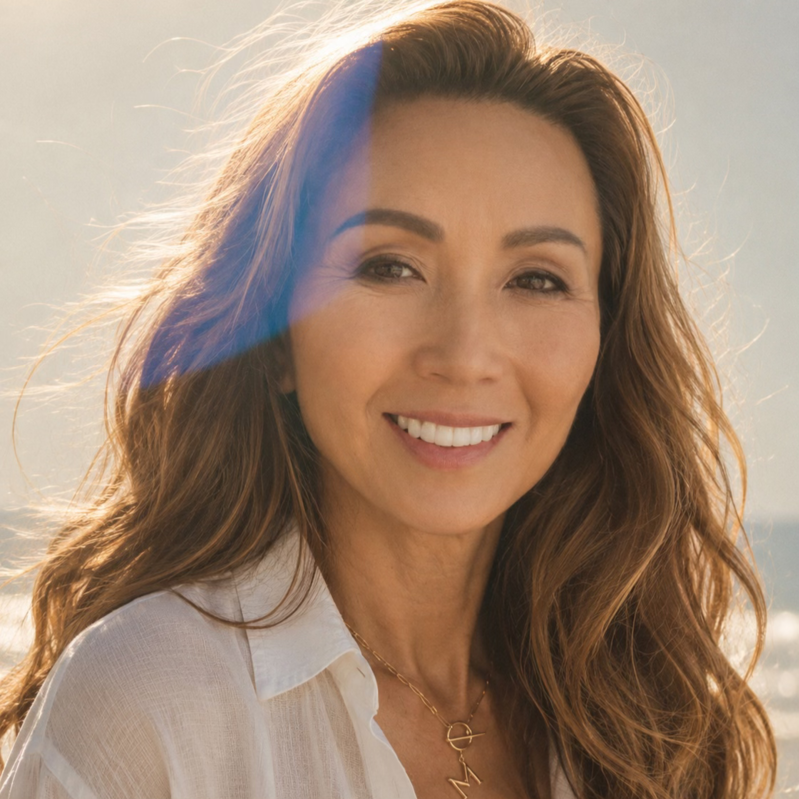
What if healthier skin starts with simplifying your routine, understanding your body, and finding peace within yourself? Michelle Doan, founder of Emani Vegan Cosmetics, joins Kara Duffy to explore the science behind skincare, the pressure to look a certain way, and how to make choices that support your skin through every stage of life.
Together, they discuss what vegan and Korean skincare really mean, how to evaluate ingredients, why Michelle believes in skin longevity over quick fixes, and how hormonal changes can reshape our skincare needs. Michelle also shares her journey from leaving Vietnam as a refugee to building a self-funded beauty business, the lessons hardship has taught her, and why slowing down, living in alignment, and finding your own version of beauty matter more than following every trend.
“There is a science and intelligence intentionality. Beauty is actually about good living. If you get a really good night’s sleep, if you’re having great hydration, if you’re getting enough fresh air, if you’re getting enough movement. They are all really important for your health and beauty.”
-
-
387_Michelle Doan
===
[00:00:00]
Speaker 2: Welcome to the Powerful Ladies Podcast. I'm Kara Duffy, and today's guest is Emani Vegan Cosmetics founder, Michelle Doan. She refers to her brand as a skincare sanctuary, which if you've had or currently have skin challenges, you know how appealing that sounds.
In this episode, we dive into all things skincare. What do we actually need in our routine? What does vegan or Korean truly mean when we see it on a label? How do we choose the best skincare or even self-care routines for ourselves based on our age and what's happening to us, let alone in comparison to what we're finding all over the internet and Instagram and TikTok in particular?
Every day, it feels like there's something we should or shouldn't be doing that requires us to rethink our routine. We also dive into some kinda niche topics about her experience as a refugee and an immigrant, the challenges of [00:01:00] building a beauty business, and why finding your peace really is everything.
Kara Duffy: let's dive in by telling everyone your name, where you are in the world, and what you're up to
Michelle Doan: my name is Michelle Doan. I am based in Laguna Hills, California, and I run a company called Emani vegan Cosmetics
Kara Duffy: Korean skincare is all the rage, and your bio says that that's how you define the skincare that you're working in. Is that true today, or do you prefer the Vegan moniker?
Michelle Doan: So, uh, there's an evolution of who we are as a brand. We started in 1998 because I had cystic acne. Like I had horrible cystic acne, and back then there was not a lot of clean products for people with skin conditions. And so 2010 we became vegan, and then when we did skincare about 10 years ago, Korean beauty was coming up. [00:02:00] But it has a lot of ingredients. So we're kind of like your clean Korean beauty made for acne and sensitive skin
Kara Duffy: I mean, you speak to so many of the questions I already had about like it feels so overwhelming nowadays to find skincare that's first going to work, 'cause that's always the top priority, and then not be causing you long-term damage at a cellular level, and then not be, you know, hurting animals, the planet, et cetera.
There's a lot of demands on products today, and because the labeling isn't all overseen, it feels... Like even going to a Sephora, you're like, all these different options to filter these products. I don't know if I can trust them, and I don't know what these mean and how it applies to myself
Michelle Doan: Yeah. I feel sorry for the consumer because as a skincare expert, I get really overwhelmed when I go into Sephora or when I go to Ulta, [00:03:00] and because there are so many options, and they're all speaking the same language. So for me, it was very concerning. At the end of the day education is really important.
Understanding your skin is really important. So we created a three P in skincare, so whether you're looking at Emani or you're looking at different products that's gonna be suitable for your skin, the first P is potency. If they're recommending a certain kind of ingredients or highlighting an ingredient, you wanna make sure that the percentages is enough to really help your skin 'cause they can put it in for vanity.
If you're putting in 1% vitamin C in a cream, it's not gonna really do anything for your skin. But if you put in 20% vitamin C, it's gonna cause your skin to irritate. So we talk about the pH of your skin and what is balanced. So for people with sensitive skin like myself, 9 to 10% is probably the max. It's gonna give you [00:04:00] enough lift and changes without irritating your skin.
Of course, the second P is penetration. How are they getting these ingredients into your skin where the magic really happens? Because they don't really explain about the science, and it's all about the molecule size, and that's why fermentation is really important. And that's why they love the Korean skincare.
They're like, "I love it, but I don't know why it works so well." Because of fermentation process. And the third is, has it been proven clinically and through authentic consumer reviews? So those are the three things that you wanna look for when you're gonna fork out anywhere from 50 to $300 for a skin cream
Kara Duffy: I'm at an age where keeping as whatever youth we have left is like the new game. But at the same time, So many of those products feel like... I feel like I'm trading looking younger for ruining my endocrine system, [00:05:00] and I don't wanna have to choose between those two things.
And we're both based in Orange County, and this has always been known as the hub of what are the new things that we're doing to look younger and just the n- you-- If you want a treatment, we can find it here for sure, and if not here, up the road in LA. And it's really overwhelming to kinda choose your personal skin path of what are we altering, what are we not, what are we letting age gracefully? What does that even mean today? How are you guiding the women in your life to choose the best path for themselves?
Michelle Doan: Oh, I love this question because I think beauty there, there are three kind of beauty, right? The one that's inside that is the most important is how we feel about ourselves, right? And I think social media give us a, such an unrealistic, uh, view of how we should look at 40, at 50, at 60. Because what social media is displaying is not what [00:06:00] real life really is.
So I think it's having that interpersonal feel that you are enough. You are enough. And then the second thing is that it's difficult when you are living in a world of Botox and fillers. And now I feel like everyone start looking the same, and we look at the immediate impact. We're not looking at the long-term impact.
So I think there is a science and intelligence intentionality. Beauty is actually about good living. If you get a really good night's sleep, if you're having great hydration, if you're getting enough fresh air, if you're getting enough movement... And I'm 56, so for me, mobility is really important.
And then, you know, they say lifting. I lift very little, but for me, mobility and stretch and flexibility is important. And when you're getting your system into a [00:07:00] healthy state, you just feel better. You just feel better, and then I think I feel like I wear less makeup. I feel like I need less makeup, and then my skin is just healthier because it's a 360. It's not a one fast solution. A matter of fact, I avoid the fast solution.
Kara Duffy: You have to. I mean, I think it's the same when I'm coaching businesses. They're like, "How do I make money in my sleep?" I'm like, "That's not gonna be a plan that actually sustains you." We, we have to be patient. We have to do the work. We have to let things kinda simmer. The journey to g- become an entrepreneur, did you expect that you would have your own brand?
Michelle Doan: of course not. I didn't wake up one day and say, "Oh, I'm gonna run a cosmetic company." So, you know, I'm an immigrant. We left Vietnam in '79. I lived a year in refugee camp. I was what they call the boat refugee. And we ended up in Canada through a Catholic sponsorship and which I'm forever grateful.
I was so lucky that I got to move to [00:08:00] Southern California in 1985, and I fell in love with it. And the same time is all young girls at 13, 14, 16, in your teens, your hormones starting to spike, and with the cystic acne and everything else. I was kind of a tomboy, so, for me to think about running a cosmetic company was not even in my peripheral.
But what happened is that because my acne was so severe, that I had to go to dermatologists for injections, for drainage. I was on Accutane. I was on topicals. I was doing all of these things, and it felt really hopeless, and if... And I was really frustrated. So if I'm 15 to 27, I'm like, "I'm cursed," and I feel like my skin is cursed.
I am ugly, and I- it's- I'm not normal. And yeah. And that was the beginning until I found a esthetician who changed my [00:09:00] life. And sometimes we think about all these big figures that we see, but it sometimes is this person that I met at salon that taught me about skincare, that taught me about comedones, that a- absolutely changed my life. And through that journey, Emani was born
Kara Duffy: you mentioned comedones. What are Those for people who have no idea what that means?
Michelle Doan: Those are the ingredients clog your pores. Pores. Because... And I'm like, how insane is that cosmetic company putting ingredients that would clog people pores? Absolutely insanity. And I was watching something this morning about three major brand shampoos with ingredients that are making women's hair fall out. And I'm like, "Why is this happening? This is like 2026." And I get very upset when I think about how irresponsible some of the consumer brands are doing
Kara Duffy: Yeah, I I feel the same way. [00:10:00] There are so many cleaner, healthier, safe ways that we could be doing things, and I don't know why more of the companies aren't doing it internally themselves. There's always the debate, right? Like, why does EU allow, not allow these chemicals, but we do in the US? Our list is microscopic compared to their list of banned ingredients. And especially I think for women and the evolution of our bodies throughout our lifetime, not only is there not enough research past the age of 20 of what's happening to us but we, I think we need to be prepared of shifting things, shifting our self-care, shifting our skincare. How is your brand working with women at different times to accommodate what might be changing for their skin?
Michelle Doan: Kara, I was going through all these changes because since ... I've had the company for 28 years, right? I was 28 when I started the company, and and I, I thought the [00:11:00] years of me breaking out were done with, right? Accutane really actually messed up my system, so like the way that my body processed nutrients is really different.
I take a lot of enzyme for it. Then I had my daughter at 35. Then I had hormonal pregnancy acne. I was like, "Gosh, I thought I was done with this." And then in my early 40s, I start having perimenopause, and then hot flashes come in, and I started developing products that would work for me because when you're going through a hot flash, everything feels like it's melting off your face.
And that's when we start diving into okay, how do we get about, like absorption? and then that's when we work with a lab that owns 13 patents on processing raw materials. What that means to you is that, to the everyday consumer, is that smaller molecules is gonna absorb much faster, it's more bioavailable, so [00:12:00] meaning that it's absorbed.
So when these hot flash are coming, it's already into your skin. It's already helped to work. And I think that makes such a huge difference. And then I hit menopause. And then once again I'm like, "Okay, my skin is not the same. It's starting to sag. It's starting to do everything. It's drier."
So then hydration become really important. So we develop products for no matter where you are, at what stage of life, we design products for the skin that you have now, not the skin you had 20 years ago
Kara Duffy: Or it's to get to the skin you wish you had. Yeah.
Michelle Doan: And I think beauty is really is about mindset. You know? Beauty is really is about mindset because I don't like social media very much because I, I think we get so bombarded with all these things we're supposed to be doing, and then we do them because everyone else is doing it, and then they're showing these results, which I think it's okay, but I find it that we have to figure out what to do, [00:13:00] what is right for us.
And then that's why ingredients is really important. And then one of the things that is one of my favorite one of the favorite things I wanna talk about is fragrances. Like fragrances in skincare, home scents, and all these things. It's actually poison to our system, and it's everywhere.
Kara Duffy: No, I, My daughter's 10 months old now at the time of this recording, and it's even more important to me than ever before to not have the things. I, I'm looking at everything at a deeper level. I already was a little OCD about it for myself, but even before her, I'd be like, "You know what?
A cozy candle sounds like a good idea. I'm gonna skip the diffuser and have a candle." I have not burned a candle in my house since she was born. And we're gonna be coming into the fall and winter seasons, and I know I'm gonna have the temptation to put a little candle on the island while I'm cooking or something.
And I'm just like, "We can't." It's so risky. It's one of the things that [00:14:00] increases the chance of SIDS in children, which is terrifying. And I'm like, if it does that for them, what is it doing for us for the rest of our lives? Even the fact that I have a, a gas stove versus electric, I'm f- that's also stressing me out.
So it, it messes with... Not that it doesn't also impact men's bodies, 'cause we're, there's more and more studies showing that. But the volume of fragrances and products that women consume from infancy to death is 100 times more than men ever do. And there's reasons why we have so many different endocrine system issues today
Michelle Doan: I think it also has to do with society, because women are perceived to be a certain way, and we're supposed to look nice, and we're supposed to smell nice, right? And I think that it really damaged our system. One thing is that I used to live with a lot of worry, but when I start editing, right, when you start thinking about home cleaning solution, there's like [00:15:00] baking soda, vinegar, things like that you can actually use instead of using chemical-based instead of doing bleach-based products and things like that.
And the best thing you can do for your house is airing it out. In the morning, I just open all my windows for 10 minutes, and then I do it at night for 10 minutes, and I think that's the best way to get air circulation, to get fresh air, because fresh air is amazing for our system.
Kara Duffy: Well, and even, you know, I g- had the pleasure of getting to go to the beach the other day in the afternoon, and I love local summer. It's the best part of living here. But just being, sitting in the sea and floating for a little bit, just my whole... Th- talk about a 360 change for your body. It, it changed the rest of the week
Michelle Doan: Our connection to nature is so important, and I know we're talking about beauty and everything else, but I talk a lot about ... I've been working what I call my zen garden, and my zen garden is actually the space [00:16:00] between my ears. All right? And we have we have a lot of critical thoughts about ourselves and about the world, and there are
I call it the roommate that keep narrating your life for you, and in that roommate, it's not always positive. And once I start living with a lot m- more awareness, I find a calmness, and there's nothing better. You don't have to travel to somewhere exotic to find this incredible peace. I just go in the backyard and sit outside for five minutes.
When your mind is happy, your body's happy, and your skin is happy, but having great skincare with hydration is also phenomenal.
Kara Duffy: Well, no, it like, there are days you wake up and you can... Your skin, you can feel it being thirsty. I've been, like, jumping between different natural products, and I was us- I was very loyal to one brand for a very long time, [00:17:00] and then I was like, "You know what? I'm just looking tired." My skin feels good, but I don't think it's doing anything to preserve things anymore.
So I had switched. I've been trying some different ones. This conversation's coming at such a perfect time for me personally because I am looking for a little bit of that Goldilocks product, and it sounds like you were too, and that's why you've made it this way.
Michelle Doan: Yeah. I am a total geek. I'm a nerd, and I love to cook, and I love to mix things up, and I love to think outside of the box. And I think about the key ingredients. I remember somebody was asking me a few years ago "Oh, what are the, some of the trendy ingredients you're putting in your products that you're gonna do?"
And I'm like, "Oh, I'm really not into trends." And she looked at me very judgmentally, and I'm like, "No, I don't do based on trends. I do things that actually mattered." And people talk about the microbiome layer, but not everyone really understand, 'cause it's "Oh, it's microbiome healthy." What does that [00:18:00] mean?
What is a microbiome layer, and what does it do for your skin? So microbiomes, the way I explain it, they're like the bodyguards of your skin, right? And when you put things that really strips it, Retin A, if you overuse Retin A, you're gonna thin that microbiome layer, and although they'll give you immediate results, but in the long term without post-care and your skin can actually break down quite fast.
So I always think slow progress is always better. So we think about the microbiome layer, and it has everything to do with the pH balance. So the pH of your skin, the really healthy pH is between 5 and 5.5. Sometimes when you use Retin A and it's kind of peely to your skin because it's like a lower pH, it cause the skin to exfoliate, right?
Not always great long-term wise, so I think like proper hydration is really important. And a lot of the skincare has like [00:19:00] high water concentration, and I'm like, "Why is that?" Like, why are we paying so much money for like 80%, 90% water? And so I was like, "Let's do something different." So I create something called the Sleep & Renew.
I'm obsessed with sleep. I have a tracker that tells me like how, how much I sleep, and it's not Wi-Fi or anything, it's not 5G because it just track my body system, right? and I'm like, when you sleep, your body regenerate. I'm like, how cool would it be if we create like a product that's like a super serum, and let's like do a high concentration, like almost 0% water.
But what are we gonna put in it? So we put in what we call probiotics. It's a lactobacillus, and what that does is that when you put it on your skin, it absorb right away. You don't even feel like you're wearing any kind of skincare 'cause you put it on, it's just absorb, and there's no fragrance in it.
And every customer that have [00:20:00] tried it is like, "I cannot believe it. With a good night rest, my skin actually looks smoother like literally the next day" right? Good cleansing, you can just do the probiotics, and then I layer with the Halo collagen. Now, when I say collagen, Collagen ingredients are too big, the molecules are too big to go into your skin, so we put things in like Saccharomyces, actually promotes collagen building, so it's a collagen builder.
And when you start layering Sleep & Renew and the Halo and you put it in, it's like a super collagen builder, so your skin is gonna look smoother, brighter, like tinier pores 'cause I had really large pores, I had ... 'cause I had acne. Sometimes that's all you need, a good cleanser and a couple of good products. You don't need that's 10 steps.
Kara Duffy: How often do the women who have your cellphone text you skincare questions?
Michelle Doan: Well, they, they reach out to [00:21:00] our customer service and I think it's really wonderful 'cause I was like, "How do I use this best?" And it was like, "This is how you use it," but we always talk about lifestyle because lifestyle at the end of the day really determines our health. That's why, you know, we have Skin Academy, which is a blog website.
It's all about information that our team put together, and we talk about color, skin tone, lifestyle. We talk about... beef tallow. Everyone was raving a beef- about beef tallow. That's our number one blog, and we're like, "Beef tallow clog your pores." If you have sensitive skin, it's not gonna be good for you. Plus, our company is vegan, so we're like... It's our number one blog, and we're like, "These are the pros and cons before you go out and you buy some beef tallow and then stick it on your face."
Kara Duffy: Mm-hmm. Well, and a lot of people when they see vegan, they now, they get a little nervous now of is it vegan and natural based, or is it vegan and a bunch of chemicals that you're using? Obviously skincare [00:22:00] can't exist without chemistry being a part of things. So how are you guys finding the line between, uh, like a organic natural product that's vegan versus a synthetic vegan product?
Michelle Doan: Excellent question. So we're not vegan and full of synthetics. What we do is we look at the science then we use ingredients actually that make sense, right? Some of these ingredients, we look at it as long-term impact, and I believe in skin longevity because everything we put on our skin accumulates in our body, right?
So we think about the beginning of the product life, how it goes onto your skin, and how you grow with the products and what remains on the skin. So when you look at lactobacillus as a probiotics, it comes from a kimchi lactobacillus. So it's actually really kind of like a natural base with super science.
And then we take a ginseng compound, like ginseng, and then we break it down to this super [00:23:00] compound. But you do need a really good preserve system, preservative system because if you don't, then it's going to mold. It's gonna do all these different things because guess what? I'll bet you go into your skincare your bathroom, you probably have products from five years ago.
And so we wanna make sure that it is sustainable, it's actually healthy. We're also sold in 17 countries in Europe we are EU compliant. And to be EU compliant in beauty is really challenging because we have to have an office who is a responsible party for the products that we produce. Comes to what you were saying earlier about how European are so much more stricter than america
Kara Duffy: Well, and you bring up so many points just now about the challenges of having a beauty or skincare business. I've helped some clients create and launch them, and If you're making a shoe, for example, a shoe's still very complicated. [00:24:00] It might have 1,000 things in the checklist from idea to launch. Skincare has 10,000 things you have to check off. It's not cheap. It takes a long time. There's so many approval processes. Depending on what it is, the FDA has to sign off on everything. It's so common to launch in this space and have to redo your packaging because you forgot a key word that has to be included. It must have been so daunting at 28 to just jump into this industry. Like, how have you kept your sanity and been able to focus on building an incredible business versus drowning in all of the regulations and hoops to jump through?
Michelle Doan: Kara, I am living in alignment with what I'm meant to do. I have such a deep passion and, and this drive keeps me going, and I've been called hard-headed and stubborn and intense. And in, in some ways I always [00:25:00] thought that those were negative, but those are the traits that makes me who I am, right?
And I've gotten softer, right? I can be stubborn because I can stick up for my conviction and what I believe in, but still be open to listen to others. Because when I was younger, I was very kind of like close-minded. I'm, was tunnel vision. And as I age, I'm like, "Okay, me- I'm gonna listen to things that sound that it could work."
I'm open, and I always have this saying is like, always have your cup half full because you can't fill a cup that's already full. So for me, it's all about the passion. I'm deeply passionate about it, and then it's what fuels me because I love the creative part of it, and I love solving problems. I'm like, "How can we make that bigger, better?"
"How can we make it more efficient? How can we make these things great?" And what drives me too is that when we have [00:26:00] customers that say, " my skin has never looked better," or, "I have lupus and I can't believe I can actually wear your products without irritation. I have rosacea." So for me, that is so fulfilling
Kara Duffy: I get it. I think no matter what you start as an entrepreneur, being stubborn and determined and thriving off of serving the people that you do it for is so key because it's always easier to do something else
Michelle Doan: I have so many people said, "Hey, I wanna start a beauty brand." I said, "Don't." And I said, "Because the world does not need another beauty brand." I can tell you probably in the last 10 to 15 years, There were a lot of celebrities that launched their beauty brands and have failed, right?
The one that you're seeing, like Fenty and Rare and some of, you know Gwyneth Paltrow, you know, those are the rare exceptions. But there are so many [00:27:00] celebrities that started their own skincare and didn't make it. And so it is a really interesting business, but then you have to stand for something.
For us, I was very specific. I don't make products for everybody. I make products for women who are over 35, right? Who have skin issues, And also looking for something a little bit different that is so not traditional that's already in the market, and that's going through hormone changes, that is, like, looking for something for her hot flash or for something that actually doesn't require 10 steps. I believe in simplicity. It should be two, three steps, and it should make you look great. And that's the kind of life, that's how I live, and that's what I wanna share
Kara Duffy: When you look back at the evolution of your life from Vietnam to Thai refugee camp to Canada to Southern California, what do you think about that, those specific touch points in your life changed you or left a mark that people might [00:28:00] not expect?
Michelle Doan: hardships and obstacles are opportunities. And I used to think "Why is this happening to me?" And, "Why am I struggling so much?" And when I start changing my mindset, I'm like, "Okay, what is this teaching me? And how is this sharpen me?" And it's only through those hard times and challenges and surviving two divorces from narcissists that I realized that, oh, I was...
There was a pattern that I need to break, and now I'm in a relationship with an amazing person. Sometimes choices that we make every single day, we don't think it has any impact, but it's actually the small choices that has the largest impact accumulatively. Like I said, lifestyle and skincare and trying to really simplify my life and really lean into the present moment.
Because as women, we either live in the past, not forgiving ourselves for the mistake we [00:29:00] made, or we live in the future, which we worry about things that we have no control over.
Kara Duffy: I mean, a huge cornerstone to how I coach people is with my Have Your All method. And I'm just such a big believer, which it sounds like you are too, of what do we remove that we don't care about, is not values aligned, is not serving us? It's just we allow so many things to take up our space and take up our resources that aren't our zone of genius, aren't why we're here, et cetera.
And so it's amazing how light and easy and in flow things can be when we're not dealing with all that junk anymore. And for me, a big part of that has been like, okay, How can I care about myself and prioritize my wellbeing without it being 5,000 steps?
Michelle Doan: Yeah
Kara Duffy: as mothers and entrepreneurs and having social circles and having to take care of [00:30:00] ourselves. I'm like, I have an hour, maybe an hour and a half, that I can spread around the day that I'm allowed to focus 100% on myself. So how are we gonna make that time work?
Michelle Doan: I think morning routine's really important, and it starts, My morning routine starts in bed. So instead of grabbing my phone and things like that, I just kinda wake up and I learned this from Vishen, which is from Mindvalley. I ask myself really lofty questions, right? 'Cause the mind is brilliant.
If you ask and you think about certain things, you'll find evidence in your day. I would ask "Oh, why is my life so wonderful? Why is, like... Why am I such a good leader? Why am I surrounded by these incredible people?" And my mind all day would look for like, oh, why am I such a great? You know? So whatever the question is.
So how you start your morning is going to affect your day, affect your life. But I do happy baby in bed. When you're [00:31:00] over 50, things are kind of, crunchy. Your bones, everything is kinda crickety. And so start with that and hydration. And then the two minutes for my teeth, then three minutes for skincare, and then my coffee.
And then 10 minutes in the afternoon where I'm just in stillness. And stillness is where you find your alignment, for me.
Kara Duffy: Have you been able to go back to Vietnam since you left?
Michelle Doan: Oh, yes.
Kara Duffy: Yeah.
I used to go, two to four times a year with work, and it's one of my favorite countries that I've been to
Michelle Doan: Oh my gosh, how lucky you are.
So we've been back, I've been back to Vietnam about four times. And then we're, we have a trip coming up in November. I take two and a half weeks, and I plan it way ahead. And I'm from Soc Trang, which is like the south, deep south M- Me- Mekong Delta, right? And so it's really interesting.
And my, my partner, he's my life partner, i- [00:32:00] goes with me. My girlfriend said, "Oh, he's your boy band." I'm like, "What do you mean?" "He's more than a boyfriend, but you're, you're more like a husband because you guys are not..." And he's like, "You're a boy band." I'm like, "Oh, okay, he is my boy band." But yeah, I love going back to Vietnam.
Not the same Vietnam that I left in '79. It's so beautiful. The food is incredible. My people is super friendly.
Kara Duffy: Yeah. It's really it's a pretty magical place. Like I I moved to Germany for a while, and that was a little shocking to my grandparents because they were fighting in World War II. And then I used to travel to Vietnam all the time, and that was shocking to my parents' generation because they knew people who had fought in the war, and they were like, "What?
We're-- You're going there for, you know, not because you have to?" I'm like, "Yes." So it's been interesting to see the evolution, and I had no idea how late it was, even in my own lifetime, that Americans were allowed to have visas to go to Vietnam. It wasn't until the Clinton administration where the, that [00:33:00] relationship changed. And Yeah I just... It's such a great country, and I've had nothing but good experiences, and I'm very proud that I can cross a street full of scooters. Um, And have you gone back to thailand too?
Michelle Doan: Yes. Yeah. Yeah. I'm thinking maybe next time I'm going to stop by in Lemsing, is where we the camp was. And I'm in EO, which is Entrepreneur Organization, and I was at in Ireland and I I met somebody, and she's from Thailand. And then I'm like, "Hey, do you know this town?"
And she's "Oh yeah, it's two hours north of Bangkok." And I'm like, "Okay." 'Cause, like I, I would like to go back to see where I call home in a camp for a whole year
Kara Duffy: How does your personal experience shape just like immigration of people around the world, not even just to the US? What's your perspective on it? Because I've been an immigrant. I came back to my home [00:34:00] country. I know so many people who see themselves as global citizens more than maybe even the country that they have a passport from
Michelle Doan: Yeah. I think to uproot yourself and to go into a country that you don't even speak the language and you don't know how things work takes a lot of courage.
Kara Duffy: Mm-hmm.
Michelle Doan: and of course, with that being said I think you should live in this country legally, right? You should go through the proper channel. But I think if you look at the world, we are one people.
Kara Duffy: Mm-hmm.
Michelle Doan: Yeah, we are one people, like one human being, and we're part of this cosmos, right? And we're all interconnected, and this is like we're connected in this energy, and I think it's so sad sometimes to think that we have such division
Kara Duffy: Yes. I agree. I mean, the incredible women who come on this podcast from all over the US, all over the world, we're all saying the same things. It, it really is a place of wanting [00:35:00] to make an impact and be of service and just find serenity for ourselves so we can help other people find that serenity too.
It's what makes me have faith in our fellow human beings is that there's all these incredible women like yourself who are doing your part in your world to make the biggest impact that you can without losing yourself in the process, 'cause I think that's, that happens too. Have you ever seen the documentary "The Donut King"?
Michelle Doan: No, I have not
Kara Duffy: it's about the Cambodian immigration population to the US and why so many donut shops are owned by Cambodians. But it does a great job of telling the whole story of, of the fall of the in Cambodia and why, how the US helped so many refugee families come in. And I'm always curious why we don't have a similar documentary for what happened with Vietnam, and especially the Vietnamese population in California, because it's a huge part of Southern California Northern as well, [00:36:00] but in where we are here, that it's such a beautiful story that I think we have so much room to tell at a, a bigger level.
Michelle Doan: Yeah, absolutely. We can talk about donuts for Cambodians and nail shops for the Vietnamese and the pho shops. And any documentary makers out there, that's a great opportunity because I think they did one for uh, Korean, you know, like this whole phenomenon with Koreans and everything else.
And it's interesting. This is why people ask me, "You've traveled all over the world. Where would you live?" I'm like, "Right here." Like right here in Orange County, because There's nothing like it, and I feel really blessed
Kara Duffy: Yeah. Orange County does not get enough credit for the level of diversity that it, has and the level of entrepreneurship. So many people here have started their own businesses, whether it's the gal who has her own hair chair, right, in the salon that's running her own business there, up to people who have [00:37:00] multi-million, billion-dollar companies.
So there's a level of believing that you can create something from nothing here if you want to. There's the network of people who know how that you can kinda tap into. But it's really so many people see the Laguna Beach or the OC TV shows, and it's oh, everyone is rich and white, and you're like, "No."
Spend one, one afternoon at Irvine Spectrum, and you're gonna. It's a very different picture.
Michelle Doan: It's a melting pot
Kara Duffy: yes, it really is. So, I'm proud that this is where I've landed. It seems like you are as well.
Powerful Ladies is a powerful and wanting-to-pay-it-forward community. What is something on your to-manifest or to-do list that myself or anyone listening can help you with?
Michelle Doan: Oh, wow. Okay. That's an interesting question. Matter of fact, when you were talking about entrepreneurship, right? As I mentioned earlier, [00:38:00] entrepreneurship, when you own your own business, it's kind of like lonely because maybe you have friends that can't really connect with what you're saying.
So when I found EOC so it's a nonprofit for entrepreneurs, and that's the part that I'm in. So if you're listening to this and you own a business, definitely check us out because we have like different programs, and it's about empowering other women. Now, we have 181 members in our chapters, and we have chapters all over the world, makes over 25,000 entrepreneur all over the world.
But if you look at it, only about 10 to 15%, are part of the community, and I know that there are a lot of more entrepreneurs, women out there. So I just wanna make that resources available. And I'm not sure what I would want and help to manifest. I'm just hoping that everyone live their best life and find out what works for them, and I can be a part of it.
[00:39:00] And like Emani started in Huntington Beach, California, and my mission is simple. It's like my mission is to have everyone feel their best.
Kara Duffy: Well, I love it. Well, for everybody who is a fan of yours now and wants to try your products, where can they find, follow, and purchase?
Michelle Doan: Okay. emani.com, E-M-A-N-I.com. We're also available on Amazon. So we started selling on Amazon because I love Prime and I'm like, "Okay, that's where the customers are." And then if you are in Orange County, you can find at Mother's, Organic Roots, some of the natural organic stores actually carry our products as well
Kara Duffy: And I know that Amazon's super convenient and friendly but I'm willing to bet that if they buy from your website, you'll appreciate the few extra margin dollars that you get.
Michelle Doan: Yeah, ' cause Amazon does take a huge margin out of everybody. Yeah. So it's always great to go direct. And by the way, you guys, like I'm self-funded. I'm not owned by a VC. Like my family is in this business, and our [00:40:00] team is all ran by women, so powerful ladies. Like my team is fantastic. Yeah.
Kara Duffy: It's an important distinction, right? Because there's little simple shift if you can wait two more days to get your products, it really goes a long way to make an impact on you having more funds to pay people and give people extra things and develop a new product. As much as I try to avoid Amazon as a mother, I feel like it's sort of impossible. But I'm willing to wait two more days for your products to come down the road.
Michelle Doan: Thank you so much Kara.
thank you so much.
Kara Duffy: Thank you. This has been great. And yeah, I can't wait to get my own products and try them out. Thank you.
Michelle Doan: Thank you for having me.
Kara Duffy: Thanks for listening to the Powerful Ladies Podcast. If you enjoyed this conversation, please subscribe, leave us a review, or share it with a friend. Head to thepowerfulladies.com where you can find all the links to connect with today's guest, show notes, discover like episodes, enjoy bonus [00:41:00] content, and more.
We'll be back next week with a brand-new episode and new amazing guest. Make sure you're following us on Instagram or Substack, @powerfulladies, to get the first preview of next week's episode. You can find me on all my socials @karaduffy.com. Until then, I hope you're taking on being powerful in your life.
Go be awesome and up to something you love
Related Episodes
Episode 15: From Curiosity to Clean Beauty | Lacey Haegen | Founder of Beaute Nouveau
Episode 277: Creativity Is My Lifeline | Tobey Lynn on Music, Identity, and Breaking the Rules

Episode 286: She Sailed Across Oceans and Then Built a Skincare Brand | Maddie Chapman | Founder of Live Sunny
SUPPORT OUR GUEST:
INSTA: @emanicosmetics
WEBSITE: emani.com
LINKEDIN: https://www.linkedin.com/in/michelle-doan-emani/
TIKTOK: @emanivegan
Created and hosted by Kara Duffy
Senior Producer: Jordan Duffy
Music by Joakim Karud