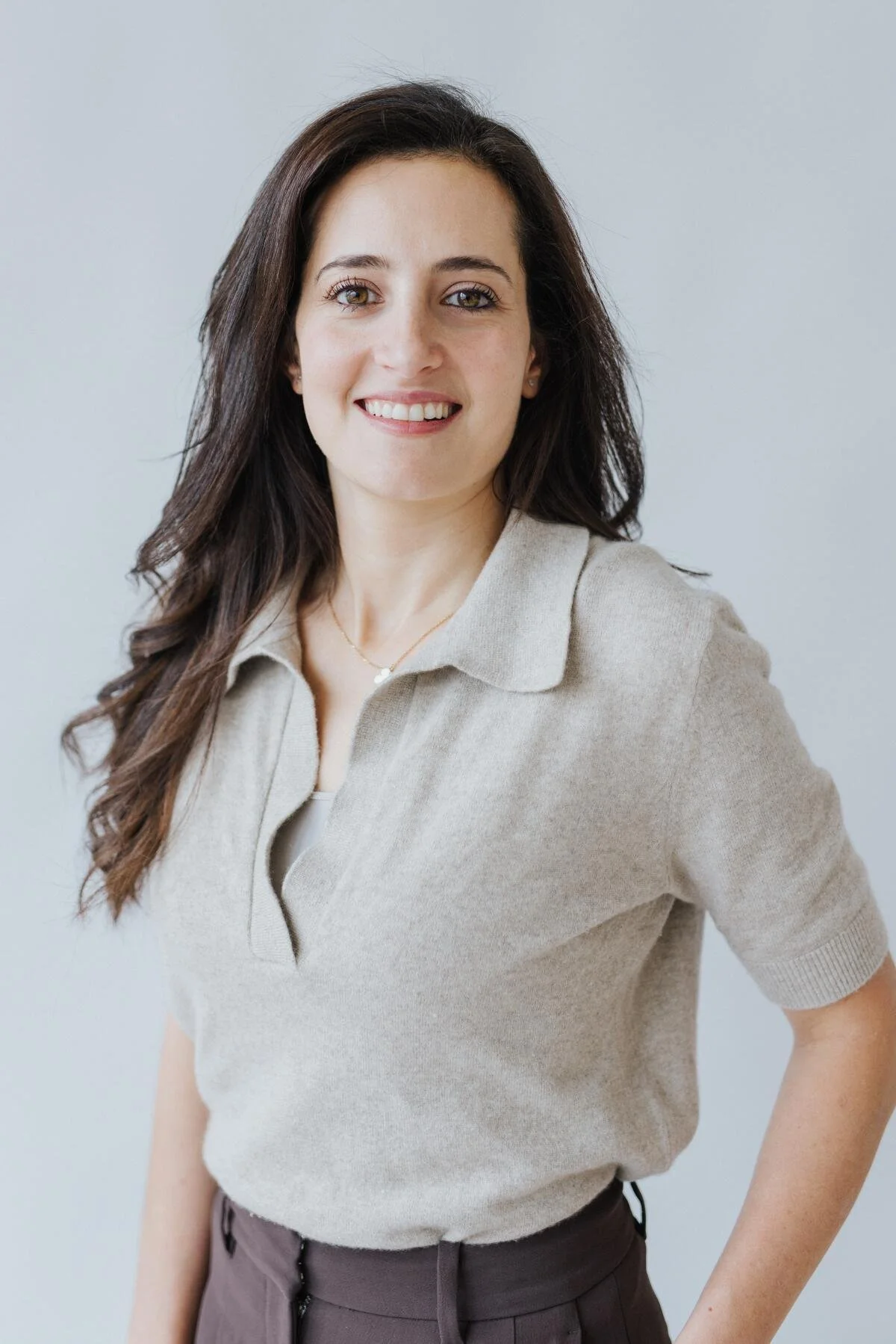
What if women no longer had to fight for answers about their own health? Madge Rumman, co-founder and CEO of Blair Health, joins Kara Duffy to discuss the urgent need for better women's healthcare and how technology can help close the gap between primary care and specialist knowledge.
Together, they explore the often-misunderstood symptoms of perimenopause, why women are too frequently dismissed by healthcare providers, and how access to information and validation can transform the patient experience. Madge also shares her journey from leading product and operations at successful tech companies to building a healthcare platform designed to make specialist-level care more accessible.
“We [Blair Health] always say that it’s a journey to get to an answer for women and your story is basically a prime example of that because you really shouldn’t have to have five stops before you get to an answer, and with Blair Health you get to an answer.”
-
-
386_Madge Rumman
===
[00:00:00]
Kara Duffy: Welcome to the Powerful Ladies podcast. I'm Kara Duffy, and today's guest is Madge Rumman.
After more than a decade of leading product and operations at successful tech companies, including PayBright, acquired by Affirm, and Cadre, acquired by Yieldstreet, she decided to go out on her own and address an issue that hit close to home, the severe lack of specialist care in women's health.
She started Blair Health with the goal of using AI technology to put specialist knowledge in the hands of generalists. In this episode, we discuss everything from what symptoms are actually perimenopause, to why employers should care that women are feeling their best, to knowing how to navigate fundraising for her business, and what simple elements business owners are missing to entice buyers.
Kara Duffy: I'm really glad that you're here today because the work that you're doing, I think is so important, [00:01:00] partially because I'm right about in that zone where it starts to matter. I'm also in the unique position where I am postpartum and maybe also perimenopausal at the same time. And that adds a whole layer of fun and complexity. But before we dive in, let's tell everyone your name, where you are in the world, and what you're up to.
Madge Rumman: Absolutely. Well, first of all, thank you so much for having me here. My name is Madge Rumman, and I'm the co-founder and CEO of a company called Blair Health. I'm based in Toronto, and our company operates in both the United States and Canada, so global from day one. Blair Health is a clinical infrastructure company.
We are closing the specialist gap in women's health. Women wait to see somebody in conditions that disproportionately impact women for a very long time. So we have built a platform that allows a generalist provider to provide specialist level care
Kara Duffy: [00:02:00] And so just to be clear for everyone listening, your Blair Health is to give help to doctors. It's not for us as individuals to log on and ask Blair Health what's wrong with us
Madge Rumman: So that's a great question, and the answer is it's both. And that's where this really big kinda tech word come, comes from, infrastructure. So we believe that the way to solve the women's health crisis isn't by building a solution just for the patient. So we are not just information and navigation.
And we also believe that the problem cannot be solved by putting the provider in the middle of all of it. The reason for this is basically because of how the medical systems are structured. So in medical school some of these conditions that disproportionately impact women the knowledge is concentrated in specialists.
The problem is the first line of defense is always primary care providers. But primary care providers, they are absolutely trying their best, but they receive very little to no education about women's health, so they end up referring them [00:03:00] back into the system. And during that time you're confused your symptoms are getting worse it's starting to impact your personal life, it's starting to impact your work life.
So our solution puts that specialist knowledge in the hands of primary care providers, but it also connects them directly with the patients. So you're able to see somebody that can help you, and the person that's helping you on the other side is somebody who has access to super technology and has governance by a specialist and is able to help you at the first point of contact
Kara Duffy: what you're talking about, as I mentioned when we opened, is so much of what I've been dealing with the past couple of months. I was feeling great after my daughter was born, and then I end up in the hospital with mastitis, and even there, like, the ER was not prepared for, like, how to handle that.
I got great care, but silly things like not having a pump available so I could pump every two to three hours the thing that is critical for [00:04:00] that type of an illness was missing or delayed. And then at about the six-month mark I started just having weird symptoms, and I've done so much blood work and
We're now getting solutions, but it's been me having to advocate for myself, having to keep pushing, having to email my different doctors updates from the other doctors. But I've seen, I think, five different doctors and done all different tests for each of them in the past couple of months, and it's infuriating that there isn't someone looking at me holistically and isn't looking at me holistically in this phase of life and stage of life simultaneously.
Madge Rumman: Absolutely. I'm very sorry to hear about your experience. Unfortunately, it's very common because what we see in our healthcare system is that we say this to employers a lot because we offer Blair Health as a benefit. [00:05:00] We always say that it's a journey to get to an answer for women and your story is basically prime example of that because you really shouldn't have to have five stops before you get to an answer, and hopefully you got to an answer. What we do is we instantly diagnose, for example, the stage of menopause that you are in. So we see a lot of people who have kids in their mid-30s, which is very common, and then your hormone levels are still fluctuating, and then symptoms show up. And they approach their family care or their primary care provider or family doctor, and basically the first thing that they do is a blood draw that will probably show that your hormones are gonna be all over the place.
But the reality is that for perimenopause, those symptoms are really what dictates if you have started that. Blood draws aren't really what's used to diagnose it because your hormones are gonna be all over the place. And in our assessment, you're able to go to blairhealth.com, create an account.
You're able to complete an assessment, and you're gonna get that [00:06:00] instant diagnosis right away. So when you go and you have a conversation with one of the providers on the platform, you already know and you already feel validated that, yeah, something is up. And that really helps get to an answer in most cases right away with us.
Kara Duffy: they're currently looking at some additional funding for women's health and menopause health in the US, and the senator who's pushed it onto the floor said, "If men were dealing with this, it'd be treated like Viagra. It would've been solved in five minutes." And like, why are women being ignored?
And the number of women that I have spoken to who talk about that they have anxiety kinda all the time, and I'm like: Have you had your thyroid checked? Because I didn't realize that mine stopped working, and It was showing up just as anxiety or other things. And it's just an example of how many women I have anecdotally spoken with who are dealing with [00:07:00] things that they're ca- almost like it's so low level they can't be bothered to go through all the steps, but yet all these low-level things are adding up to really taking away quality of life.
It's making life harder, which, I don't know, to me, that's not good enough. That's my entire, like, life philosophy is if I don't feel great, we should be changing something.
Madge Rumman: Absolutely. And you basically just described Blairs Health's mission. And, and really the core of it is like democratizing information. And if you have this information readily available in your pocket through an app that you love using, technology can really give you that answer, but it can also connect you to somebody that can give you the right kind of support and help.
We've even talked to women who use our app, and then they go back and they take their information to their family doctor and they say, "Hey, I just did this assessment, and Blair told me that I am in fact in perimenopause." And then those night sweats are probably the reason, right? I think technology has an incredible ability [00:08:00] to really be able to close that knowledge gap, but it's likely not enough.
And it's great to see that there's more funding and support being dedicated to women's health and especially midlife, because I think fertility is a little bit-- it's miles ahead. I think 10 years ago, you saw all of those dollars go into fertility, and I think we've made really incredible progress in things like IVF and even postpartum care.
Still a long way to go. Maternity leave policies a lot to work on. But it's really great to see that more of that support and funding is now going through the later stages of life.
Kara Duffy: Mm-hmm.
Madge Rumman: And truly, it's also specifically for perimenopause and menopause, it's the only medical condition that impacts 100% to 50% of the population, which makes sense why it's creating a lot of these backlogs in the system because everybody's going through it will go through it at the same time, and they're going through it without having the clinical infrastructure ready to be able to service that that population.
Another [00:09:00] interesting stat in that in the US, there's one specialist, one menopause specialist for every 32,000 women. And you really, you see those ratios across other areas of health that we also cover at Blair. So urology is another one, so bladder issues, which also tend to pop up in the postpartum period.
Very severely underserved. Women are told, "Yeah, you can live with this. It'll get better as you recover." But there's a lot that you can do, and early intervention helps
Kara Duffy: Well, that's what enraged me, in the beginning, all the specialists I was talking to were like, "Well, you're just postpartum." And I'm like, "That's not an answer. That's a general category of... You're just telling me that I had a baby. That's it. You're not telling me what's happening."
And I was like, "Even if I am, like, why is that a reason to not do more, not more research on myself to figure out what's happening, and instead just send me home?" Like, it's like, yes, and? That's not an answer
Madge Rumman: And, and that's really what you see most women are searching for are, uh, answers and also [00:10:00] validation
Kara Duffy: Yeah
Madge Rumman: that, you know, what, what I have is, is real and it's impacting my sleep, it's impacting my quality of life, it's impacting my ability to do well at work. And really the first step is information and validation.
Kara Duffy: Well, yeah, 'cause it also helps us stop freaking out about like worst case scenarios. For, I think for better or worse, we're good at going multiple steps down the path, which is can serve us really when we're building businesses and avoiding children from getting hurt and just like making sure life works the way we want it to. We don't need to spend time spinning out on what might be wrong with us when nothing is.
Madge Rumman: Yeah, absolutely. That's a fair point
Kara Duffy: If we go back to eight-year-old you, would she have imagined that this is your life today?
Madge Rumman: some aspects of it, yes. Some aspects, no. I've always wanted to be an entrepreneur, and I, I think I knew that fairly early on in my career. I was always really interested in business and in building and in, in creating. I [00:11:00] don't think at eight years old I would've imagined what the world could have looked like especially the whole startup world the, the speed of acceleration for technology.
Certainly things like AI, could not have predicted where it would go and how you can build sort of a career around all of those things. But probably at eight years old, I also knew that I wanted a family. I knew that I wanted to be a mom. I probably would've predicted that in my 30s that, I have kids and that it's like a big part of my life.
So there are some aspects of it that I think were predictable and I'm very lucky that some of those early childhood views of the world ended up becoming a reality for me
Kara Duffy: You also had a very lustrous career in tech before you brought that tech knowledge to Blair. And I think a lot of women who aren't in tech, who are seeing AI accelerating so quickly and are kind of amazed, they're like: how are these apps and platforms happening so quickly? How are they [00:12:00] scaling so quickly?
It can seem really confusing from the outside looking in. What's your perspective, having been on the inside, about the complexities and the growth of what's happening, and how would you describe kind of the A to Z for a tech-based product versus maybe a more tangible product that a person's more familiar with?
Madge Rumman: that's a great question. There's a lot to unpack first. So yeah, I've been in the startup world my entire career, even as a child, I was always very interested in building things. So, you would never see me playing with Barbies. I was always, you know, building something, and it was, like, a tangible thing, whether it's, like, Lego or building structures.
And I think those same skill sets carry over no matter what you're building. So if you're building a tech product it's very software oriented. It's often the virtual world, but the lessons in terms of how you build carry over from a physical product. [00:13:00] And in fact, sometimes it's really good to go back to the fundamentals.
Build something on a piece of paper and map it out and see how it could work end to end, because technology will basically follow the same process, but has the ability to do it much, much faster. Especially with all of the advancements in AI now, it's very easy to go from zero to one.
I think from one to two probably becomes a little bit more challenging. But if you have access to a computer, you can get Claude up and even if you have never built before, you can write your ideas and get them structured and then try to build a a prototype even if you've never coded before.
There's a lot of tools and the pace of change in technology is always gonna be faster than the physical world, but in a surprising way, the fundament- the fundamentals essentially stay the same.
Kara Duffy: it's what I'm often telling clients because it, it doesn't almost matter what product or service you're creating, like we need to know what I call it your [00:14:00] lemonade stand. What is, what are the core fundamentals of this business? Who are your customers? Where are you selling? How are you doing it?
Like, do we have the basics covered before we start going down, I feel like a lot of people are jumping to like going down marketing strategies before we're like, "Hold on. Does it work? Does it function? Can it stand up by itself?"
Madge Rumman: exactly. Can it function? Can it stand up by itself? But I think the other really important part is how quickly can you get it in the hands of customers. 'Cause you can build something and say it's great, but until you get people using it and giving you feedback on it's not really anything.
And that's what we've done at Blair is that in healthcare you really have to be practicing things safely. We're delivering care here. So we can move fast, we can move really, really, really fast, but you really have to build all of the right steps to get people to use it. But even with all of the kind of changes in the regulatory environment and what we really had to do from the regulatory perspective to stand up the business, we moved very fast and we built an early [00:15:00] prototype.
We got it out to customers and we were right about a lot of things, but we were also wrong about a lot of things. So we always say that the customers built Blair. So the quicker you can ship and get the product out there and start collecting user feedback, the better that your product is gonna be because you are using that feedback to get the product from an MVP to the next version and the next version and so on.
And I think a lot of people they're sort of like tinkering in the background trying to make it perfect and then taking many months to get something out is hopefully a tech practice that most organizations can move away from
Kara Duffy: I agree, and I think it's very common, especially in a, a small or micro business, that you get stuck in thinking that giving it to customers, engaging with customers means that you go into a full, like, sales mode. I'm like, "No, no, no, just start by sharing it." Like, we just, we even need to make sure does your initial message or pitch make sense to anybody?
Like, where to your point of building things [00:16:00] in a vacuum doesn't give us anything. It's like, cool, you built a hobby in your garage, but it's not a business. It's not interacting with other humans. You've also done a lot of work in scaling businesses to get sold or acquired. What do you think people are missing maybe in their own business to...
that needs to be included if you want to be considered to be purchased or acquired?
Madge Rumman: Yeah. That's a great question. It really goes back to business fundamentals and then being able to understand the M&A landscape and the types of opportunities that are there. In the first exit that I was involved in where I was the head of product at a company called PayBright so it was the leading Canadian buy now, pay later provider.
The company that bought it was Affirm based in SF. The businesses were effectively identical in the product offering, so they did the same buy now, pay later where you pay over time for, let's say, a [00:17:00] Peloton. There were a lot of shared philosophies, but the acquisition made a lot of sense because Affirm was American-based and PayBright was the leading Canadian buy now, pay later provider.
So it was a geographical expansion play ahead of Affirm going through their IPO journey, and it made a lot of sense. A lot of shared values, the same business product PayBright bought Canada. A firm had a similar stack and then the values also aligned in terms of teams. So i-in that case, it's understanding where is the market opportunity and what are the objectives of the seller, and what could that look like?
And those are very common transactions. Canada is a bit more complex on the regulatory front so for a lot of buyers of businesses, they sort of rather not figure out the intricacies of the banking system. It's a bit more risk-averse than the US. We also have Quebec, which is [00:18:00] French-speaking, but it's always probably the first country on a global expansion path for a company that launches in Canada.
A lot of companies don't wanna figure that out, so it, it makes a lot of sense for them to go ahead and buy it. The second opportunity, which was Cadre, so Cadre did commercial real estate private equity. Ryan Williams was the founder. It was really an incredible business and they were two businesses that complemented each other.
So YieldStreet had a more diversified product line where they did broader alternative investments, whereas Cadre specialized in commercial real estate private equity. So the M&A made sense because a-at that time, in a high interest rate environment real estate doesn't do as well and it's really good to have a company that has very diverse revenue streams so that when you go through the ebbs and flows of the economy, you can have very diversified revenue streams.
So it was also an acquisition [00:19:00] that made sense, and it was a, a product line expansion. So I think the key learning from that one is also understanding market dynamics, and a lot of times you're friendly with competitors. Nobody can do everything very well, so it's figuring out where do you play and how do you win?
And if you combine businesses, can you do a better job together is what it comes down to. But M&As are very messy. You always walk into them thinking it's gonna be very aligned, but a lot of that tedious work really happens post-close. How do you integrate two systems together? How do you keep people motivated?
You see a lot of churn, especially at the executive level, and it's usually a time for people to also take a step back and sort of think or rethink about their career goals and what makes sense for them. So you go through all of the motions of you grow a business you go through the deal, and then you exit, and then you still have to go in and integrate all of that, which is a really complex process.
Kara Duffy: I've been surprised that in the past two years, [00:20:00] I've had more clients reaching out to me who are thinking about selling their businesses and just not knowing how to navigate it. And I'm not working necessarily with... they still have a business broker, they still have the lawyer, like the actual M&A process I'm not getting very involved in.
But I'm helping them how do they want to leave, w- how, like what are their wishes for how the team stays. It's almost like I'm doing estate planning for the owner of like how do and then what does their life look like after, and are they gonna stay for three years or do they wanna leave right away?
Like helping them navigate all those choices because there's so much that comes up about, to your point, the soul of the company, the team are our values coming, going. It's a lot to consider and it's, and so often pe- there's like such an exciting moment that somebody wants to acquire you 'cause that's like sometimes the pinnacle for building a business.
But then you realize [00:21:00] there's so many layers to it, and sometimes it's even a, just a grieving process for the p- the team who built it.
Madge Rumman: Yeah. I completely relate to that, and I find that I think it's incredible that you're helping founders sort through that because it's almost always an emotional experience. It's like selling your baby. You grew this thing from infancy, and you've seen it grown and people have different incentives for wanting to sell a business, but it's always it's always gonna be a very emotional journey.
And sometimes it's not the financial outcome doesn't always live up to what you thought it was gonna be. And a lot of people that love startups are builders by nature. They're not necessarily driven by the dollar value of an exit. So, you sort of see them happy for a little bit, and then they go off, and then a few months down the line, they're building something else because they're really chasing the journey and not the outcome of an exit.
And sometimes the exit is not even financially great for the founders. It could be a deal that carries a lot of risk or a lot of [00:22:00] uncertainty. And there's also been a lot of distress sales where you're selling something at a bit of a discount
Kara Duffy: Yeah. Now that you're in the shoes of CEO where do you find yourself, like, having to come back? Are you wanting to iterate too often? Where are you getting, I guess, distracted or pulled where you have to come back to your center?
Madge Rumman: That's a great question. So it changes a lot. So I'm a product person at heart, so I'm always fighting, like staying too much in the weeds with the product side, and really focusing my goals on commercials and expansions. So we sell directly to employers, and that's really my biggest focus, is continuing to build those relationships figuring out the early stages of some of our commercial models across the, the US especially.
So that's where I spend a lot of my time. And then something that's always pulling me is just the investment in new people that we are onboarding. So we recently closed a financing round, and we have the [00:23:00] capital, and now we have to deploy it into hiring a great team. And that process takes time.
All of the interviews and finding people who are aligned, who are so great at what they love doing, but then it takes time to teach them the business and onboarding them. So that is one of my biggest areas of focus, is making sure that I'm building the next generation of talent and that I'm transitioning from early-stage founder mode to building the next generation of leadership in the company and removing myselves from some of the day-to-day decisions that I don't need to be involved in.
But I'm finding that it takes a lot of diligence and practice and unlearning a lot of behaviors because the company has operated for so long as a super scrappy early-stage startup, and now we're a seed business that's deploying the capital that we raised, and then our volumes and our revenue are accelerating.
So it's like managing the complexity of, okay, like what area of the business do I need to build next? So I hop into [00:24:00] product and, hey, that's moving really well. And then the next day oh, there's staffing and operational support for some of our providers on the platform. And then the next day it's like we're doing this big rebrand and we're about to launch a new website and getting pulled back into the weeds with that. So it's a constant push and pull across many competing priorities.
Kara Duffy: I also think that there's always a challenge when you are fundraising. Most people who own businesses are not natural fundraisers. That's not your zone of genius. Like you mentioned, like you're a product person. Me too. That's like the background I come from. It's like, let's build things, let's make things, let's get them out, go to market.
How did you have to prepare yourself for the fundraising components, and did you bring in other experts to kinda help you? Did you have a fundraising coach, for example, or were you just, "I'm gonna figure it out, and we're gonna do it, even if every day I'd rather be doing something else"?
Madge Rumman: So yeah, I mean, like fundraising is like one of those things where like you [00:25:00] almost... It's just like a job that you have to do. Nobody can really teach you how to do it, and for us it was a lot of trial and error. So how we talked about the business in the very early stages did not really communicate how the business could be a venture-backed business, for example.
So we really had to go back and iterate and figure out a way to tell the story in a really compelling way. I had some exposure supporting, the last CEO that I worked with in fundraising as a member of the senior leadership team, and I would always walk in and do the product pitches.
So that was really helpful training to have in the last opportunity that I worked at in New York. But being able to teach myself how to do this in a way that's not very product-focused was probably the biggest area of opportunity for me. But people saw the vision. They saw that it was a problem worth solving.
And also once we had the revenue and the numbers and the metric the story started to come together a lot
more, [00:26:00] because the challenge with early stage is that you're sort of selling a vision that doesn't yet have the proof point. So you can sell people that you have a problem, you can sell people that maybe you're the best team to solve that problem, but as you spend more time on the court and like you get more data points, the dots kinda start to emerge, and then you're able to connect the dots better.
So instead of telling VCs a story around, "Hey this is a problem" The story's become we've had early traction. We've sold this to employers. This is the feedback that they have given us. We think that this is a model that can be really big. And I think that really helped put the story together.
So being able to bring in feedback back into our pitch decks and conversations. And then the other thing that helped it is really the first investor that took a, a chance on us. So we secured a lead. And they gave me and other people on the team feedback on our pitch deck, and they really helped me sort of finesse the story.
So as we went and syndicated the rest of the round we had that [00:27:00] investor insight, so we were talking like investors by the end of it. And you do get a lot better at it, I would say, with more practice. And we got to a point, or I got to a point maybe where I was starting to actually enjoy the process. But I found it hugely distracting for the business because every kind of pitch conversation and then also all the paperwork that actually goes into closing a deal takes time away from a business that is not well-capitalized and well-funded, where you don't have the key seats filled in.
So if you pause marketing to do fundraising there's no marketing happening, right? So it was really navigating the push and pull between working on the business and being an operator on the g- ground building the business, and then getting capital to keep the business alive. We came out of it, and it's really nice to have that time on the ground now where I can just go back to building.
And then the next time we'll do it, we'll also be in a much more experienced level, and we'll also have more data points that will help us get to the next round.
Kara Duffy: And I mean, you just [00:28:00] must be so proud because data points now vary between 2% and 4% are female-owned businesses are getting funding today. And so to be part of that small percentage of a group, you must be so relieved and excited.
Madge Rumman: We're really excited, and I think we need to see more big exits and outcomes from those women-led companies. We always tell people, we're a woman's health platform solving one of the biggest and most pressing woman's health issues. We almost never want somebody to invest in us just because we're women.
And all of our investors, they have done incredible due diligence. The bar was really high, and they invested in us because they believe that we are the best to lead the business. It's also because we had very strong business fundamentals. Like most female founders we found the process very challenging, and we're lucky to be in the minority.
But we think that the pie should be bigger and should accommodate more female founders. And the best way to do that is really to invite more females and more [00:29:00] women into startup culture and get them even earlier on in their career excited about working for something that's higher risk and developing those fundamental skills that you need whether it's business, technology hiring and working with people with really diverse backgrounds. Those are all skill sets that bring women into entrepreneurship
Kara Duffy: Why is it named Blair?
Madge Rumman: That's a great name. So Blair means, uh, green field and prosperity and it's very easy. So we wanted the message to be positive, and our company uses AI for a lot of like the backend processes. So whether it's LLM for our clinical models or some of the auto scribe features that our providers use on the platform.
So Blair, like the AI is like in there and it's not very prominent in the brand. But it's something that we could showcase later. And then we're a women's health platform, but Blair is a bit gender neutral. So if we ever decide, because we're solving for [00:30:00] that specialist problem, to look at some of the areas of opportunity in men's health then the name won't need to change. So that's sort of how we thought about it.
Kara Duffy: A few more questions bringing us back to women's midlife and, and menopause. There's a lot of myths about what menopause is and what it means. What are some that you just want to be able to delete from the internet?
Madge Rumman: So one really big misconception is you need blood draws to diagnose it. So the reason is it causes a lot of women, especially in the perimenopause phase, to be dismissed, because you can do a blood draw and your estrogen levels may be high, and then the next day they may be low, and it's not really gonna give you a good indication.
In most cases, it's gonna be fine. So then you're gonna go to your family doctor, and then you might just be dismissed and told it, it's just anxiety, it's just age. But the reality is that if you have symptoms, chances are you could be in perimenopause, and there are [00:31:00] treatment plans that are available f-for that.
So that is one that I think is important. Another one that gets dismissed, it's not a medical one, but it's more of the interaction with your life and your world. So this is something that impacts your ability to perform your job. So at Blair, we sell this as a health benefit to employers, and we're raising a lot of awareness about why they should support it.
Think of everything that's happening to women in midlife. So starting as early as late 30s a lot of people are maybe having a baby still, and then they go from that straight into perimenopause. And it's a time of life where you're caring for children if you have children, but you're also sort of in the middle management or the more advanced part of your career.
So you have really a lot of workplace and busy jobs and a lot of people also have aging parents and they're taking care of children, but they're also taking care of their aging parents [00:32:00] and it's a really, really, really busy stretch of time. So one thing that we would really like to raise awareness on is just the impact of this stage of life going undiagnosed at the busiest stretch of your life.
That gets dismissed quite a bit and outside of the medical ways and there's so many ways to that you could solve the problem medically. It's really raising that awareness about the role that employers can play by offering comprehensive health benefits. So that is something that we really hope employers across the US start to pay a bit more attention to.
Kara Duffy: And what are some of those symptoms that often get dismissed that really are indicators of perimenopause?
Madge Rumman: Mood changes, trouble sleeping. We've had a lot of people where it gets misdiagnosed for like anxiety. Sometimes there is anxiety, but a lot of times, if your estrogen levels are low and it's impacting your sleep, it's also impacting your mood. Relationships with your spouse or your loved ones in your [00:33:00] lives, those are all things that could get dismissed.
Sometimes, if you're getting a period you might get dismissed because how menopause is defined is that you've had 12 months without a period. So if you're still having periods, sometimes you can be, like, dismissed that, oh, you know, it's... Because your cycles do change as well in perimenopause.
They could get closer and shorter together, or the, the bleeding patterns could change. We always encourage and we actually have a period tracker in our app. And I don't know if you use Oura. I use Oura, but they also launched a menopause or a perimenopause one where if you're tracking your cycles, you're able to spot those trends a little bit easier and be able to speak to them when you meet with your primary care provider.
Kara Duffy: when we're using the Blair app and we're tracking things and how is our information protected? And what confidence can we have in that it's not being sold on the black market, for example?
Madge Rumman: We use no third-party, so your information is always secure. It's various steps in the process. So in the US, we follow HIPAA compliance, which is the gold standard for hospitals, [00:34:00] health systems, and it really starts from the sign-up process.
So when you sign up with Glare, we use 2FAQ auth. Everything is tokenized and stored in a very secure way. And we even have things where if you haven't been using the app for 30 minutes plus, it's gonna automatically log you out. And then we also use a new password for every time you sign up, which is the most stringent form of security that you can have.
And then on the back end, we have a very complex database that stores information securely, and then we follow state-level regulation with where the data is stored. And then whenever we do learnings in the back end, the data's always a- anonymized because we produce a lot of trend data to be able to deli- deliver that longitudinal care model.
The same thing with we do prescriptions on the platform, so when you go in and you talk to one of our MDs or nurse practitioners, everything gets securely sent to your pharmacy of choice. And then on the employer side as well we don't share individual data.
It's just the high-level [00:35:00] anonymized data. And we've gone through various layers of security audits and verifications to get the platform up and running, but that was our starting point when we built the platform.
Kara Duffy: I think it's great 'cause there's so many... Women in the US are so nervous right now about their information being used against them for different political ambitions. And it's so frustrating because you want the simplicity of things being in one location and having a comprehensive view, but then you get so worried it, it gets used against you.
And especially when we look at the history of women across time of being dismissed, and, "Oh, you're crazy," and, "Oh, You can't handle things." There's so many layers to it, and I'm glad that you're bringing up the conversation of like, hey, if women are getting the healthcare that they need, they're actually gonna be coming back and supporting the workplace and the economy and our GDP and everything else [00:36:00] because women are carrying a lot of that already.
So why wouldn't we want them optimized? Like, even from a fully selfish economic perspective, we should want women healthy. I'm glad that you guys exist. I'm... so frustrated about hearing the stories from other women, and I'm just so thankful that I'm privileged with the information to know that I should be fighting for my health, and I know that so many women don't have the time or access or ability to do that.
I'm really thankful that you guys have created Blair Health and that you care so much to make this difference for women and for the doctors who care about them too.
Madge Rumman: Absolutely. Well, thank you so much for having us. And we appreciate that you're fighting, but I think you really shouldn't have to fight. It should be a basic necessity. And that's where we think that technology has that incredible ability to give you the answers that you need right away.
Many people either don't have the baseline level of knowledge or the time or the resources to [00:37:00] even advocate for themselves. We're trying to raise awareness as much as we can that people shouldn't even fight. It should be something that's available to everybody. Access is very important
Kara Duffy: So for people who are ready to run and get their own Blair Health right now where can they find support, follow you, and download?
Madge Rumman: Absolutely. So, uh, it's very easy. You can find us on the Apple Store. So you can s- search for Blaire Health, or you can just find us on our website, so blairehealth.com. You can create an account for free, and we actually offer three verticals. So urology, which is bladder health menopause, perimenopause, and nutrition with weight management coming soon, including GLP support.
And if you're particularly interested in perimenopause we welcome everybody to try our free menopause stage assessment. So you can go to our website and create an account, and you can get an instant diagnosis of the stage of menopause that you are in, and we'd be happy to see you on our platform.
Kara Duffy: thank you [00:38:00] so much for your time today and for the work that you're doing. I'm just, I'm glad you're out there doing, making our lives easier.
Madge Rumman: Amazing. Well, thank you so much for having me.
Kara Duffy: Thanks for listening to the Powerful Ladies Podcast. If you enjoyed this conversation, please subscribe, leave us a review, or share it with a friend. Head to thepowerfulladies.com where you can find all the links to connect with today's guest, show notes, discover like episodes, enjoy bonus content, and more.
We'll be back next week with a brand-new episode and new amazing guest. Make sure you're following us on Instagram or Substack, @powerfulladies, to get the first preview of next week's episode. You can find me on all my socials @karaduffy.com. Until then, I hope you're taking on being powerful in your life.
Go be awesome and up to something you love.
Related Episodes

Episode 108: Why You Need to Train Your Mind and Body for Your Lifestyle | Leah Drew | Founder of Mind Body with Leah

Episode 93: Transforming Brain Health and Human Optimization | Dee O’Neill | Neurocognitive Fitness Founder & Brain Expert
Episode 31: Healing Beyond Symptoms | Lynsi Lewis | Doctor of Chinese Medicine & Wellness Expert
SUPPORT OUR GUEST:
LINKEDIN: https://www.linkedin.com/in/madgerumman/
WEBSITE: https://blairhealth.com/
INSTA: @blair_health
Created and hosted by Kara Duffy
Senior Producer: Jordan Duffy
Music by Joakim Karud