Episode 365: Grief, Rituals & Raising Emotionally Literate Humans | Korie Leigh, PhD | Thanatologist & Childhood Bereavement Expert
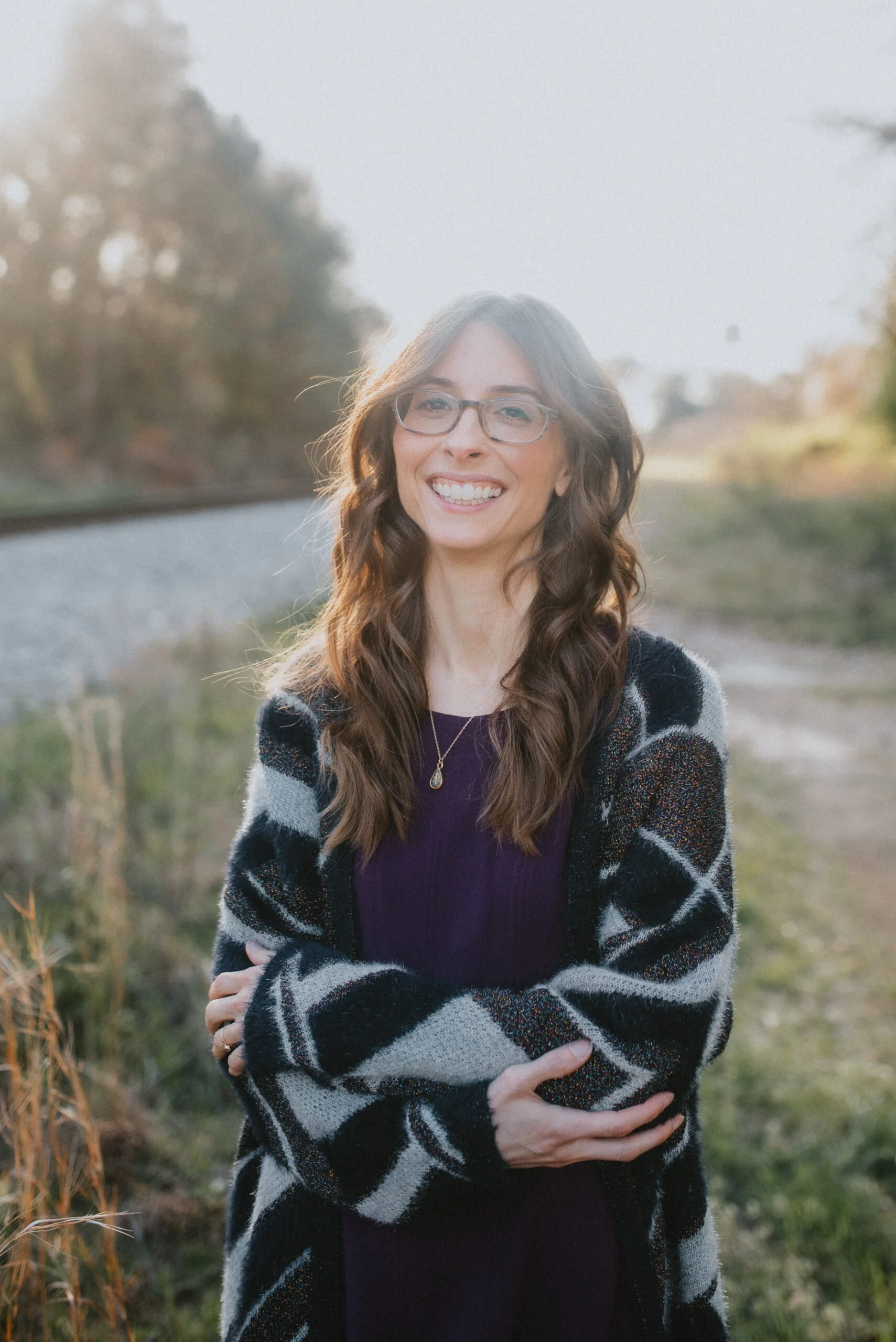
Why are we so uncomfortable talking about death, and what is that avoidance costing us?
In this episode, Kara Duffy sits down with grief educator and thanatologist Korie Leigh to unpack how Western culture became disconnected from death, ritual, and communal grieving. From childhood development and emotional regulation to collective trauma and meaning-making, this conversation offers practical tools for navigating grief at every age.
Korie shares insights from her work with children and families, explains why euphemisms around death can create confusion for kids, and opens up about the personal loss that reshaped her understanding of grief, resilience, and community care.
“Grief is a very active cognitive process that we have to engage with - the closer you are to death, the less scary it becomes”
-
-
365_Korie Leigh
===
[00:00:00]
Kara Duffy: Welcome to the Powerful Ladies podcast. I'm Kara Duffy, and today's guest is Dr. Corey Lee, certified child life specialist, thanatologist, and nationally recognized expert in childhood bereavement, pediatric palliative care, and trauma-informed support. She's a grief expert for families and children who has written three books to describe and support children through grief and loss at different ages.
In this episode, we dive into the Western relationship with death, what kids need to understand about death and grief, how culturally we are all right now processing losses, and the power of rituals to process grief powerfully and find joy. I am including a trigger warning in this episode because we are discussing death, the loss of children, the loss of parents and family members, as well as childhood sickness.
And I want you to [00:01:00] know that this episode is much more educational and logical than story time and emotional-oriented. I really enjoyed this conversation, and it gave me so many tools to use in everyday life. I hope you enjoy it as well.
Kara Duffy: welcome to the Powerful Ladies podcast.
Korie Leigh: Thank you for having me.
Kara Duffy: Let's begin by tell-telling everyone your name, where you are in the world, and what you're up to.
Korie Leigh: Yeah, so I'm Korie Leigh. I currently live in Santa Fe, New Mexico. I have been here for about five years, but I've also kinda lived all over the country: East Coast, West Coast did a stint in Georgia for a little bit. And I do a lot of things. It's always really interesting, how do you, how do I answer this question?
But I'm an academic, so I run a graduate program in a field called thanatology, which we'll get to. I'm sure we'll talk about that in a little bit. I am also a clinician, and so I do a lot of work [00:02:00] with kids and families who are experiencing different types of losses. It can be death of a person. It could be a divorce, an incarcerated parent.
So really looking at the way that loss impacts families. I write books about those topics. I speak about those topics, and pretty much everything I do in my world has to do with helping people and families and communities to address really hard topics.
Kara Duffy: Well, you mentioned what your focus is in the graduate program, and am I saying it correctly, thanatology? Okay, amazing. Which, so I had to Google this when I was preparing for this episode. So, could you define what that is for people who, like me, had no idea?
Korie Leigh: Yeah. So my little party trick, and depending on how much time I have when I'm out and about, and people ask, I'll follow that up with: "Well, do you know your Greek mythology?" And some people will be like, "Well, no, not really." And then I'll say, "Well, have [00:03:00] you seen Guard- ''Guardians of the Galaxy?' Do you remember who Thanos is?" And nine times out of 10, people get it right. But Thanos is the god of death, right? And whenever we see "-ology," that is the study of. So thanatology is the multidisciplinary study of death, dying, grief, and loss.
Kara Duffy: So this is, this, we will have a trigger warning in the intro for anyone who just wants to not even step a toe into this area. But I think it's actually really important to be having conversations about these spaces, death, grieving, loss. And I wanted to begin our conversation by asking you about the different ways that indigenous cultures, Eastern cultures, Western cultures look at these topics.
' Cause often I feel like the Western view is really limiting in our ability to powerfully process these spaces. Like, it's why we wanna [00:04:00] be like, "Ugh, let's not talk about that. Let's not make a will or trust. Let's not make a plan." And you're like no." Like, these are... It's an inevitable process of life, so why do we make it a scary thing that we don't talk about?
Korie Leigh: Yeah. There's a-- Oh, goodness, we could probably spend the next hour just addressing this one topic because it is so complicated. It's very layered. And, in the work that I do with kids and families, and when I talk about why I write my books and how I work, there's this phrase that I've used over and over again in my academic work and clinical work, and it's essentially, "When something remains nameless and shapeless, it has power over you.
But when you can name it and become the narrator of this story, you have power over it." And if we look at the way that Western society -- And I'm using that term Western society in a very global... And I understand that there's a lot of cultures within that, and a lot of languages and everything. But generally speaking, in America, [00:05:00] we have been devoid.
We have been stripped away from the practices of dying, from the cultural communal spaces that we used to gather In the classes that I teach, we talk about the history of dying. And in America, we used to have something called a wake. It wasn't just something that folks in Catholicism did. And a wake, meaning a wake, meant that a person stayed awake with the deceased for a period of anywhere from 24 to 72 hours, mostly in the home. And a lot of homes had like a parlor
Kara Duffy: Mm-hmm.
Korie Leigh: windows, and so there would be a viewing. People would come to your home. They would bring food. They would help look after the kids, and they would sit with you, with the deceased person as a way of remembering, as a way of collectively grieving.
Kara Duffy: a
Christian kinda equivalent to [00:06:00] sitting shiva.
Korie Leigh: Exactly. Yeah. In every culture around the world, there are customs like this, right? And oftentimes religion will help give us a little bit of a guidebook or culture will give us a bit of a guidebook. What do you wear? What do you eat? What do you say? What do you don't say? And for a lot of people, particularly when I was talking with a journalist recently about the differences in generations and how millennials are one of the first generations to be this separated from death.
There are colleagues and friends of mine in our mid-40s who have yet to have someone close to them die. Their grandparents are still alive. They haven't had a close friend die. Their parents are still alive, right? And so when we think about the intersection of the way that people used to live very close to death, and it might feel like a bit of a brain teaser that the closer you are to death, the less scary it becomes, right?
Kind of going back [00:07:00] to that concept, if we can name it and talk about it, if we can, in the work I do, give color and texture and play about it, it can help take the scariness away from it, And so we-- I mean, we could continue to talk about this for a very long time, but that's a little bit of my perspective on how from an American perspective, we have just...
We've really come a long way from being able to acknowledge and talk about these topics.
Kara Duffy: Well, and there's so many, other layers of, like, the participation in religion and not, like where it's focusing now versus maybe where it used to. I even know for myself, I lived in Europe for a couple of years, and when I did, I moved to Europe and I had two grandparents, and I came back and I had none left.
And I was only able to go to one-- the funeral for one, and I realized, it... I was surprised in my [00:08:00] adulthood even that there... I was missing a closure component. One of it, one felt complete, one felt real. I saw the casket, I saw the burial. I could- It was very complete feeling.
It's the only other word I can think of. The other one was like this mythical idea of like, yeah, she's gone, but is she coming back? Where is she going? And this is me as an adult processing this. I can only imagine how this happens for children when they're not included in that process, when we so often probably want to protect them from it instead.
Korie Leigh: Yeah, absolutely. And you're speaking to really important principles here, not just when talking with children about death, but death in general and being able to process it and to take that understanding that a death has happened and then let that lead the way that we grieve. We have come a really long way from stage theory, the concept that there are stages, and you start in one place, and you end in one place.
And [00:09:00] there's a predominant model called the tasks of grieving, which it's, it is very task-based. It requires work. It takes this idea of grief as this passive thing that just happens to you, and you just have to give it time, turns it on its head, and it says like, well, grief is a very active cognitive process that we have to engage with, and the first task is to accept the reality of the loss.
And for adults, that, might also require being able to talk about it with people, reminiscing on the person's life, and asking those hard questions. And for children, a part of accepting the reality of the loss is understanding that a loss has happened. And so, for young children especially, using direct, concrete, appropriate language about what it means for someone to die is really important.
For the adults in that child's life, it might feel [00:10:00] like a scary conversation because of the relationship that we have to that word death, and, a current loss will bring us back to past losses, and, it'll bring up a lot of stuff. But for children, especially their first death experience, it's really important that we can help scaffold that experience so that it isn't something scary, that it is something that they can understand, and that we can help build resilience and tools because other hard things are going to happen in a child's life. And so this can be the first of many experiences that children can understand that they can get through hard things.
Kara Duffy: I often ask guests if w- we go back to when they were eight years old, would you have imagined that this is the area of study you're in? Would you imagine this is your life today? So I'll start by asking you that question, and then I have a follow-up based on your expertise. But yeah, would eight-year-old you imagine that this is your life today?
Korie Leigh: [00:11:00] Yes. And I s- and I say Yes. for a few reasons. People ask me often, "How did you get into this work?" Or, "Was there a pivotal loss that happened in your childhood?" And it wasn't a singular event. It was a lot of very quiet moments that happened from the time I was born until the time that I entered college.
And when I was seven or eight years old, I can go back into, like, the pile of papers that my parents have, and there's a little journal entry, and it says, "When I grow up, I'm going to work in the hospital with sick kids." Now, for myself, I wasn't a sick kid. I didn't have a sibling or any family member who was hospitalized often. I just knew at that young age that I wanted to help people, that I wanted to help sick people, and that I wanted to use music and art to do that. So in my head, I thought I was inventing this whole new career. little did I know that there was a career that already existed [00:12:00] called child life, and that's, that was, like, the first step into the career that I have now. But it's, it is really interesting when I think back on seven, eight-year-old little me. I don't think I understood fully what it meant to work with sick kids, and I certainly didn't have the intention to work specifically in end-of-life care, w- you know, or have that lead into the grief and bereavement work that I do. But that, I think that's just a natural byproduct of the work that I was doing.
Kara Duffy: so my follow-up question about this kind of timeline, I choose eight-year-old because to me it's always been the point when you're able to have your one foot in each world, one foot in the anything is possible world and one foot in the I'm sort of I can do adult things world. You can make your own breakfast. Depending on when you grew up, you're allowed to leave the house and go somewhere yourself. So there's this interesting time of seven, eight, nine when you can play in both [00:13:00] spaces. You have, with your expertise, clarity on what's happening to our brain shift then. Could you explain that a little bit?
Korie Leigh: Yeah. And those early school year ages seven, eight, nine are quite remarkable. I mean, from a child development perspective, every stage is remarkable. It's wild to see children be able to understand a concept for the first time and then revisit that concept once they're a little older. And so when kids are in the preschool years, from a child development perspective, we call that pre-operational thought.
But in kind of normal everyday speak, it's magical thinking. It's this world and way of understanding the world around them that is filled with mystery and magic. If their perspective, if they are doing something it isn't that they're egocentric and th- they're narcissistic and they can't understand someone else.
It's that their world is what they see and what they experience, [00:14:00] and they are very literal, right? So when we use euphemistic language like, "Grandma passed away," or, "We lost Grandma," for a four or five-year-old, "Well, why don't we go find Grandma? What do you mean we lost her? Let's go look." Right? Or, "The dog went to sleep."
Well, then that four-year-old may develop fears of sleeping and get confused about the finality and the irreversibility of when someone dies versus the euphemistic language we use, right? So for that young age, particularly preschools four, five, six, it's really important that we use that concrete specific language.
What happens, and it isn't like magically a child hits the age of seven and they enter this new phase, but it is around seven or eight years old that kids exit out of pre-operational thinking and enter into concrete operations, which is their ability to [00:15:00] look in the past, look in the future, and recognize that those things impact and influence each other, that there's cause and effect.
So they're able to think a little bit more abstractly about things. They're able to also recognize the social cues. So this is where a lot of kids are gonna start noticing differences, not just differences, in I like Mario and you like Luigi, but differences in like, well, I have two homes and my friends have one home, or I take this medicine and my other friends don't take this medicine So they start to really recognize and pay c- close attention to difference. And when you have a grieving child who is experiencing grief at that age, you also can see kids at this age become really guilty and think that maybe the loss or [00:16:00] the death was their fault that they somehow caused it. There's still misconceptions that can happen, particularly in seven, eight, nine.
This is also the age when kids get really preoccupied with the body, with functions of the body, right? So if we use a very common term like, "Daddy died of a heart attack," well, what does heart attack... Someone attacked him? Somebody hurt his heart? People get attacked in movies, right? As opposed to, "Daddy's heart stopped working." Right? So s- we're talking about the same thing, but we're using different words to help younger kids understand the reality of what is happening.
Kara Duffy: I used to work in kids' products, footwear in particular, and it was always so interesting to me how girls, stereotypically, wanted you to ask about their shoes, their shirt, their something, and boys didn't want you to notice. They wanted to blend in, [00:17:00] and it was such an interesting concept. But as you're talking about what starts happening with these differences in the noticing, what we saw at the time, in the early 2000s, of this gender split of, "Don't notice I'm different," and then, "Please notice I'm different," was really interesting in product creation.
Korie Leigh: Yes, and then also, to take it a step further, once they become, 10, 11, 12, 13 "please notice I'm different, but not too different. Not so different that I'm out of the circle, but different enough so that I'm unique, but I'm like you", right? So then you come into this really, oh, goodness, like, those tween years are so hard because the identity development is really kicking into drive.
Kara Duffy: I mean, it's why middle school is maybe the roughest three years of most people's lives.
Korie Leigh: Couldn't pay me
enough to go back there.
Kara Duffy: So you're the author of three books. What led you to wanting to [00:18:00] write about these topics, and specifically for the age groups that you have?
Korie Leigh: Yeah. So these books came directly out of my clinical work. And to pull it apart a little bit, so I was working with grieving kids, with children that had medical complex conditions. I worked in pediatric palliative and hospice care, and would oftentimes use bibliotherapy, and that is the therapeutic use of books to help children develop new coping skills, help them see their story in someone else's story, and help them emotionally process what's going on with them.
And at the time, this was in the early 2000s mid- mid-2000s, I started to make a collection of these books. And I noticed that my collection was very small, because looking at literature from a child development lens, you start to notice things in books that you wouldn't if you're just picking up a book to read a nice story, right?
[00:19:00] So if I wanted to use these books in my practice, they needed to be-- The language had to be developmentally appropriate, concrete, avoid the u- the use of euphemisms, and the illustrations had to at the very bare minimum, not be scary. So you would think that those things would be easy to come by, but they were very hard.
So e- eventually, what I started thinking about is, "Gosh, like I should write my own book." And I thought about it for several years, four or five years, and then I experienced my own loss. And at about like the one-year mark of my grief, I sat down at the kitchen table. This was at the height of COVID, so everyone was social distanced, locked inside their houses.
I had a lot of time on my hands. And I wrote what became the first book, "What Does Grief Feel Like?" The intention of all of my books is to be a resource and a tool for families to use in the home, but also s- so [00:20:00] that clinicians could use it, so that school teachers and counselors and anybody that had a child in their life could use this as an opening. Oftentimes, parents will come to me and ask: How do I start the conversation? What do I say? How do I answer their questions? And so in the first book that I wrote, it-- there are questions embedded throughout the pages so that parents don't have to find the questions. They're very specific to what's happening in the story.
And the other thing about my first book is at the time there were no books about grief. There were books about death, and there were books- In a very broad view about coping when someone died, but nothing that described what it is, used its name, talked about all the different ways it shows up, not just what we feel, but in our bodies too.
So that opened the door. It opened the floodgates for the next three-- the next two books to come [00:21:00] out. And we were just talking about those middle school years. If there were, like, a few books for kids, there were no books for the tweens and teens that w- that weren't, like, a workbook. Between you and me, I mean, I don't know any 12-year-old who's gonna sit down and, like, cover to cover go through a workbook on grief by themselves.
I mean, maybe they exist, but I certainly haven't worked with them. So the second book that I wrote It Won't Ever Be the Same: A Teen's Guide to Grief and Grieving, it has bite-sized information, so it gives facts and information, and it gives it in a way that these young people can relate to. What's happening?
Why are my friends acting weird? Why can't I concentrate in school? Why d-d- do Mom and Dad not wanna talk anymore? And it helps provide tips and tools and strategies, and then opportunities for expression. So that was the second book. And then the third book that just came out is a parenting book. It's m- meant to be almost like a field guide [00:22:00] so that when a loss experience happens, you can just open up to that part, get the questions kids will ask, have scripts for what to say, bits of information for how to cope as a family.
Kara Duffy: it's such an area where I feel because of the cultural gaps that we were discussing earlier, like we need guides like this because they're-- we don't have scripts that we maybe used to rely on, and the scripts we used to rely on weren't great ones because, to your point, they used a lot of use of euphemisms and other just terminology that kids don't understand. I think even saying the phrase like, "So and so's gone to heaven," if that's what you believe, is so... You're like, "Where is that? Can we go? Can we visit?"
Korie Leigh: Yeah. "
Kara Duffy: Do we drive there?"
Korie Leigh: And I've had many families come to me really concerned for their child's wellbeing because all of a sudden, a month or two aft- after the loss happened, they're talking about wanting to go to heaven all the time. "Well, I wanna die, too. I miss Grandma." And if you think [00:23:00] about it, right, when we talk about heaven, we talk about it as this really cool place that's
Kara Duffy: It's like Disneyland.
Korie Leigh: like Disneyland. All your favorite people are there. You get to do all your favorite things for all of eternity. There's no pain. Like, sign me up. How do I get there? Right? From the mind of a four-year-old. And so when I work with families whatever their belief system is, I try to use their language, but I try to take these really abstract topics and make them, distill them into the simplest terms.
And so, for example, if a family believes in heaven or believes in the idea of a spirit or a soul, we talk about the spirit or the soul, as being the invisible part that makes us special. We can't see it, we can't feel it, but when the body dies, the body stays here on Earth, and the soul, the part that we can't see or touch, that part goes to heaven. And heaven isn't a place, it's an idea. And so that can be the [00:24:00] opening of a much longer conversation that happens over the course of a child's life, but it's helpful to start small.
Kara Duffy: a random question, but when I'm thinking about there's so many things on TV now, like the "Long Island Medium" and other people who exist in this space where, in theory, we can talk to people who have died. There's all sorts of other woo-woo practices of like speaking to the dead, Some people encourage people to, keep talking to family members as if they're not here, more adults. How do those concepts impact kids? I would imagine it makes it much more confusing than not having them.
Korie Leigh: Well, and I think everything that I do and every family that I work with, I really honor their beliefs, and I honor
their coping mechanisms if it's working.
Kara Duffy: Yeah.
Key
Korie Leigh: yeah, if it's working, right? And so what... [00:25:00] when I was doing my doctoral dissertation, I was interviewing bereaved parents and siblings after a child died, and one of the most fascinating findings that I wasn't expecting to find was this idea of after-death communication.
Across every family, they engaged in it in some meaningful way. And if you look at the literature, what does the research, what does science say about this? There's a concept in the grief literature and in thanatology that is called continuing bonds theory. So for a really long time, the idea that we had about grief came from psychoanalytic thought or Freud. I do have a whole lecture series on this. I won't do that. I won't bore your listeners with this. But the I share this because back then, what Freud and many other people believed was that the purpose of grief, why do we feel this thing, is to sever the tie, is to [00:26:00] cut the connection. And once you can do that, you can recover or be restored or whatever kind of language w- was used at the time. What we now know from decades of clinical work, decades of research, is that continuing that relationship is not only healthy, it can be adaptive and meaningful. But it has to be done in a way that is developmentally appropriate, right?
And so having that conversation like, "Even though Papa died, and his body is here on Earth, dead is dead forever, he's still a part of our family. And so in our family, when someone dies, we like to still talk to them, even though they might not answer back," right? "In our family, every Friday we light a candle, and we remember that person.
our family every time we see a cardinal, we believe [00:27:00] that's Grandma's soul." Right? So helping to frame these things in a way that keeps the understanding that dead means dead forever, that they're not coming back, but that soul or that concept of the person and the relationship we had with them, that doesn't end, right?
So death ends a life, not a relationship. And that's a lot of the work I do with bereaved parents, particularly those whose only child have died, is what does it mean to parent a child who isn't living? Am I still a mother if my only child has died? How do I keep them in the family in a healthy, meaningful way? And that question evolves over time as that person's grief evolves.
Kara Duffy: You mentioned that you had a a loss that impacted your books. Is that something that you are open to [00:28:00] telling us a little bit about? And how did it change how you view the work that you do?
Korie Leigh: Yeah, I'm very open with it. And it's one of those things that Once it happened to me, it completely turned not just my personal life, but my professional life upside down. So I experienced a pregnancy loss in which I had to terminate a very wanted pregnancy,
Kara Duffy: I'm so
Korie Leigh: due to medical complications. And for, and again, like we could probably talk about this for the whole duration, but for, a lot of reasons, one of it social stigma the political nature of the type of loss and the state that I was living in, I had to make a medical decision for my family at an abortion clinic with bulletproof glass and security guards walking me in, as opposed to being able to make that medical decision and have that happen with my medical team in, a hospital [00:29:00] surrounded by people that I cared about and that understood, me. And so experiencing that in and of itself was deeply traumatic. It was a very wanted pregnancy, and it happened at a time, like it was a week before I started a new position at a new h- at a new teaching hosp- at a new teaching university. And so there were so many aspects of my grief that had to be minimized. I had to hide parts of my grief. And what we know from the literature and from research is when we have to minimize or hide or when society doesn't make space for our grief, it can become stuck and internalized, and that is exactly what happened. I was really surprised with how I was grieving. I always kind of assumed that I was an emotional feeler.
I would wanna talk about it and go to support groups [00:30:00] and be very open with it, and I wasn't. I was very task-oriented, so I was what we call an instrumental griever. So I was grieving by doing. Washing the baseboards of my home, doing checklists and making sure everything in the house was where it needed to be, and then COVID happened, and then I was stuck in the home like a lot of us, right, with my own grief.
And as I was contending with all of this, I also, concurrent to my own grieving, was propelled back to the dozens of families that I had worked with, and I was second-guessing. Was I the right clinician? Did I say the right thing? How could I have worked with grieving parents when I'd never experienced a loss?
Now that I know the depths and the intensity of this grief, was I a fraud? I really, went through such turmoil [00:31:00] over this. And about a year later, I was at a conference. I was speaking on a panel about legacy building, and I ran into a bereaved mom that I had worked with 10 years prior, and she was on a panel. And on her panel, she talked about the interactions that her and I had, and the deeply meaningful conversations that we had, the things that I said that helped her to grieve the loss of her daughter.
Kara Duffy: How
incredible.
Korie Leigh: that, that very serendipitous, reconnection helped give me permission.
It helped me forgive myself for, not knowing or feeling like I wasn't the type of person that I thought I needed to be at the time. And because of that, it has fundamentally changed how I show up in the world, the work that I do, why I write the books that I write.
Kara Duffy: That-- It just makes me so grateful for how the universe shows up sometimes. And it's also a [00:32:00] reminder to say out loud, like, how people have impacted you, because often the people need to hear it. I think so often we're used to getting confirmation from our boss or our colleagues or our parents, and in our adult world, there's often not a lot of feedback given. So I'm so grateful that she shared and that you happened to be there right when you needed to.
Korie Leigh: me too. And on that point as well, I mean, in the clinical work that I do, especially in the hospital setting, I would be a momentary character in these families' stories, in their lives. There are dozens and dozens of families that I worked with that I will never know what happened. Was the work that I did, Was it meaningful?
Did it make a positive impact? What was it that they took away? And that's another thing that I'm always so surprised at. I was [00:33:00] reflecting on one of the first private practice clients that I started working with several years ago. I worked with this little girl for about two years. Her father was on hospice.
He was dying of a brain tumor, and I started working with her while he was alive on hospice and after he died and into her grief. And there was one session that she asked for puffy paints because she wanted to make a little coping kit with a canvas bag, and she had a really specific image in her head of what she wanted to make.
Well, puffy paints are puffy. They're messy. They're not exact. And so as soon as she started to use them, they got everywhere, and she became very dysregulated. She was hyperventilating and crying and screaming like, "This isn't what I want. This isn't working. This is not right." Yeah
I sat with her through it and I validated her frustration.
I didn't try and fix anything, didn't try to clean things up and offer anything, else. I just sat with her. A year later, when we were finishing our work together, [00:34:00] I asked her to talk about what were your favorite times that you and I had together? What were the favorite activities? And her favorite activity, I almost fell off my chair when she said it was, "Remember when you brought the puffy paints?"
In my head, I thought the session went horribly, like nothing went right. This child is crying. The family's paying me to work with him. Oh my goodness, what is happening? But from her perspective, being able to express all of those feelings, 'cause it wasn't about the puffy paints, right? It was about every-- It was about her dad and her grief and not having control over things, so many things. But I was able to sit there with her and acknowledge the frustration, give it space to come out, and that's what she remembered as being a fun activity.
Kara Duffy: Well, and this brings up what I'm seeing a lot of videos about in regards to parenting in the, not gaslighting. Like, the current generation of parents are, at least some of them, are aware that so often our feelings were invalidated. [00:35:00] And there's a great example of a dad who was, like, in his head, picked up his daughter from school, not really talking, and she said, "Dad, what's wrong?"
He's like, "Nothing's wrong." And then five minutes later, he caught himself and he's like, "Whoa, her intuition was right and I just totally canceled it out." And so there's so much interesting- New ways of being, like an emotionally present parent of j- just sitting with them, like you mentioned, and not trying to fix it.
And when they, be... Like we don't realize, I s- I teach this often in one of my communication workshops I do, 'cause it shows up in work as well, that we don't realize how often our language is lying, even if we're not intending to. And even just how often people say, "It's okay." Anytime you say that out loud, it's not.
And like we're so, so like training ourselves as parents and training ourselves in a workplace or whatever [00:36:00] relationship it is to say the honest, and to your point, direct specific thing, is like a revolutionary communication period we're in right now. But it makes such a difference. And one of the books that I listened to and then bought a copy of was Brené Brown's "Atlas of the Heart," because it so nicely defined so many words that we need when we're trying to explain how we're feeling.
And so it's like having these tools to say what we're actually feeling and thinking, I, it kind of boggles my mind that we're this far along as a human species, and we still haven't figured this part out yet.
Korie Leigh: Yeah. Yeah. And one of the things that I that I recommend every family, not just the families that I'm working with, but every family out there, is to get an emotion chart, stick it on your fridge, and use it every day. Not just for the big emotions, for the [00:37:00] everyday emotions. For silly, for content, for playful, for confused, right?
And use that as a map to start to integrate this emotional literacy into our vocabulary as a family, right? Because we have to be able to identify what we're feeling, name it, describe it. And then the hard part that a lot of the families I work with need help with is, what do you do with that feeling? Where do you place it? Where do you put it? How do you take it outside of you and give it a home?
Kara Duffy: It's also why I'm really grateful for movies like "Inside Out," because
Korie Leigh: Oh my
Kara Duffy: adults needed it as much as kids needed it.
Korie Leigh: Yeah, when I taught childhood development, I would show clips of that. Because also f- I mean, just from like a neurobiological perspective, it is spot on. It's so well done. And especially that idea of like core beliefs and core emotions, core [00:38:00] memories connected to emotions, right?
And that's the thing, like when you think back to pivotal experiences you had as a child, it isn't the thing that you're remembering, it's the emotion. Because emotions are the thing that connects us to memory. Emotions build memories. And so when I talk with parents that are, feeling conflicted or guilty, like, "Oh, I didn't give my child this big, grand Easter or the big grand birthday," or, "We didn't do the thing as big as I wanted," it's not about the thing.
It's about the feeling. It's about your child being seen and being witnessed, being validated for them having agency over doing something. That's what they remember.
Kara Duffy: When I was preparing for this episode I started to realize that people who work in the grief [00:39:00] spaces might be some of the most humorous people. I saw that you attended something called a Grief-tastic Book Fair, and they had sad snacks, and I just started giggling. So what is the Grief-tastic Book Fair, and what are the grief-oriented industry community events and your colleagues like? Like, how would you describe this industry?
Korie Leigh: Oh, we are the most vivacious, present kind of embodying work hard, play harder group of folks, and the most fiercely compassionate and fiercely supportive group of people that I have had the honor of working with. The Grief-Tastic event is the child the baby of Megan Jarvis, and she created this as a space for grief authors to come together to create a space that was open to discussing these really taboo [00:40:00] topics.
Especially in the last five years, grief memoirs, books about grief and loss, death and dying, those topics have taken center stage on literary shelves. I think it's, we, it-- we would be remiss if we were like, "Ooh, what happened a few years ago?" COVID is continuing to shape and change our societal lens of grief and loss.
We collectively went through a trauma that we are still, as humanity, going through, and we are seeing the ripple effects of that. And so, the Grief-Tastic Book Fair was an opportunity for people from all walks of life, but authors in particular, to come together to share our work, have these really rich, meaningful conversations.
And yeah, have humor. I'm looking at my sad sack right now. And I actually, I bring that on my sessions that I do with my teens and tweens, and they love it. They love being able to talk openly about death and [00:41:00] loss, not sugarcoat it, not silver lining it, but being real and authentic about it, and that's what these spaces are about. I think we talked earlier in our conversation about how being closer to death in, in a lot of ways makes it less scary. And also working in these spaces, it's it creates a way of living and showing up in the world where you have to embody being present, finding beauty and joy in everyday moments Being able to sit and watch a sunset, being able to full body belly laugh at the craziest, weirdest shit. It's important so that we can show up for the families and the people we work with fully. And a way that I do that too is as a musician. So I write music and my first EP came out this year. And music and art and [00:42:00] dancing you will find me on the dance floor anytime there's a good beat. That is how I live and how I cope and process.
Kara Duffy: S- we had Sasha Sagan on the podcast a while ago, the daughter of Carl Sagan, and she grew up in a non-religious home because of her f- father being embedded in science. But she wrote a book about why we need rituals as humanity, and, we were speaking to how so many of the death rituals have been lost in the American culture, at least.
but I'm still hearing that so much of the-- there's power in the rituals, both for it sounds like you to m- to g- stay connected to joy and happiness and gratitude, but also for there's no way to grieve, it sounds like, without some sort of ritual. How would you talk about ritual in both your life and what you're often recommending for the people you're working with?
Korie Leigh: Yeah, and ritual is so powerful, so important. In my [00:43:00] academic life when I'm teaching students about this, whenever I introduce a new concept I say, "Well, let's go to the operational definition." Right? And what that means is there's one way of describing something so that we can collectively understand it.
Ritual has no operational definition. I believe there are over 33 different definitions for ritual. And so that in of itself opens a really interesting conversation across culture, across religion, we have ritual, but what is it? And so my academic, science brain is like, "Well, what are the themes? What are the threads?" And so in my life, my personal life, my clinical life, and when I'm teaching students, the definition I use is a ritual is any act that is repeated, infused with meaning, built on intention. So it's an intentional, repeated, meaningful act that can be [00:44:00] external or internal. It can be with and for other people, or it can be 100% with and for yourself, that no one else has the ability to see or witness.
And an internal act can be anything from For myself, hawks and seeing hawks are really meaningful. And so sometimes when I'm really deep in my grief or just having a hard day, I will, in my mind, ask to see a hawk, and without fail, I will see one. And then externally, I have a tattoo of a hawk, so this is a conversation starter.
Other people can see it. It's a way that I'm connected. And externally, we can do everything from lighting candles to creating, physical spaces, altars, places out in nature that we go to with the intention and the purpose to create meaning, that idea of meaning [00:45:00] is something that is a, it's a big buzzword now. A lot of people are talking about meaning-making, and meaning is something that you find. We don't find meaning like a treasure. We make it, we make it through intention, and we make it through repetition, and it changes over time.
Kara Duffy: And I think that's the... That distinction's really important because when we're intentionally making meaning that adds value to us, there's all the subconscious meanings or unintentional meanings that we make that we often have to strip back when we're talking to our therapist as well. So, one of the things I'm a recently new parent. You can maybe hear her in the other room with the nanny. But I've been really having to sit and think. I'm like, "What does it look like to be, to design an intentional life as a family now?" Because, the... I know what lights me up. I know what I find joy in, but, like, how are we being intentional about those moments?
And it was so funny. I had a situation where I was like [00:46:00] They were talking about-- I was watching different moms doing different things on social media, and this mom's like, "We bake every Sunday." I'm like, "Huh, am I a baking mom?" And then there's, like, someone else who's like, "We're doing these crafts every Friday night."
I'm like, "Huh, am I a crafting mom?" And I really felt I'm also reading so many children's books right now that, like, I'm thinking in this very simplistic, rhythmic sense where I'm like, there needs to be this book for parents where you're like, "What type of parent am I?" And like, not that we can't be multiple things, but really the selective process of am I a '90s butter mom? Am I a this? Like, we don't know yet. And so it's interesting to kinda see how that all shows up.
Korie Leigh: what you're talking about too is this sense of identity and how identity shifts at pivotal moments. And just like when a big loss happens, that fundamentally fractures our sense of self. And making meaning is interconnected with rebuilding [00:47:00] a sense of self. And so even if it is a positive, beautiful, meaningful growth experience, who you were before being a mother not the same as who you are now. There are parts of you that will always be you, but at your core, you're shifting, you're moving all those parts around, and that's a part of rebuilding the self, f- building meaning, creating meaning with intention. And like, yeah, maybe you are gonna be a crafty mom for a week, and then you're gonna be a cooking mom for a week, and then you're gonna be an adventure mom for a week, right? So like trying on these different parts, keeping what works, shedding what doesn't, without, and this is the hard part too, without comparing or feeling guilty for not being wh- who- whoever it is that we think that we need to be.
Kara Duffy: Yeah, like accepting when the clothes don't fit and being like, "Oh, those aren't my [00:48:00] clothes." In my business coaching practice, we are often doing similar exercises of have you tried on different things lately? I'm such a believer that life is a bunch of projects, and if we are truly in a product prototyping way of living, one, we're allowed to fail, which is such a nice relief. But also, we're allowed to try things and not, to your point, adopt them. We don't need to complete them. We don't need to launch them. There's this elem- Oh, go
Korie Leigh: and you just reminded me. So when I turned 40, I jokingly told all of my friends and family like, "This is my year of no fucks. I have no fucks to give. No, like I have nothing to prove to anyone, and I'm going to try all the things that I haven't tried." And that is the name of my EP, Try the Things You Haven't Tried. And so I took a welding class. I like learned how to like TIG weld. Am I ever gonna do that again? I don't know, but I know how to, right? I'm gonna do like a metalsmithing class. Why? [00:49:00] Because I want to, right? So that idea of al- and also like this trying new things on is also connected to the sense of playfulness, right? And how play is an inherent right of- Every person, regardless of age. But societally, right? We're stripped away from believing that, we can't play as adults. We have to. And that's another part of how the work that I've done has changed how I show up in the world. I have to play. And my play looks different all the time but it's required.
Kara Duffy: without having to share your opinions if you don't want to, how has the work you've done shifted how you, Did it like either reinforce or change how you feel about like politics and how we should take care of each other?
Korie Leigh: I mean, if anything, it's deepened my resolve and my belief and my fire for the importance of community-based [00:50:00] work. Regard- the world around us is burning down, and a lot of people feel so helpless, understandably. What do you do when there is a war and people suffering and people being deported inhumanely?
What do you do? You show up in your home and in your community. That's what you do. And it doesn't require money. It requires presence and a commitment to understanding that you can meaningful make change with one person, with a single person, and that person could be you, that person could be your child, that person could be a neighbor. But showing up and trying to make a difference every day is what I try to do.
Kara Duffy: There was a book I read a while ago when I was still in corporate life, and it gave you the challenge of how can you wake up every day and [00:51:00] ask who you can serve or help.
Korie Leigh: Yeah.
Kara Duffy: And so my team and I took it on for 30 days, and it was radical in how it changed how we were operating because you spend the whole day looking for the person you're gonna help.
Korie Leigh: Yeah. I, there was a period of time I, also did-- had that kind of internal ritual where I would ask, like, in the shower, I would say, "Please put the people that need my presence or need me in my life today. Let them show up." And I would see someone in a coffee shop, on the street, someone would walk into my office, make a phone call, and being able to show up in those micro ways have ripple effects.
Kara Duffy: Yeah. Yeah. And I think you mentioned it briefly before, but as a collective, we're dealing with a lot of deaths that many of us in the millennial generation in particular never thought we'd have to deal with. We're dealing with the potential death of democracy. We're dealing with the [00:52:00] death of, like, middle class, the American dream, who...
what America is in the global positioning. Like, there's so many things that we thought we could rely on that just don't anymore. And so it doesn't surprise me that there's such a huge Gen Z movement into Catholicism, which I, who would have guessed that 20 years ago? There's a s- this huge moment into all of us asking ourselves, to your points before, of what are we doing to be good villagers? 'Cause we know that we have to come back to the village kinda space. And it's a really interesting time to be in, I think, because while so many things are evaporating, it really means that we have so much to create. And
Korie Leigh: that creation starts individually, but it also, like, to that point, right, of watching things become dismantled and crumble and fall apart. When the world around us becomes [00:53:00] unstable, we have to be our safe place. we have to be our sense of safety. And for a lot of people, for lots of reasons, that's really hard.
And so having somebody else in their life, maybe you can be that person, right? You can be and help them create that sense of self and that sense of safety from a communal space. And when we're talking about ritual, right, like religion gives us scripts. It tells us what to do and how to do it. And when there is instability, people want consistency.
They wanna know what to do, when to do it, how to do it. Maybe not why even, but just what and when and where. And that consistency and that routine helps to create stability within us.
Kara Duffy: Well, this has been such a fascinating conversation. We could probably talk for hours about any of these topics. For everybody who wants [00:54:00] to work with you, have you come speak, get your books, get your music, where can they do and find all of those things?
Korie Leigh: Yeah. So my website is KorieLeighPHD.com. So that's where I kind of-- It's a repository for everything that I do. I am on social media, so you can follow me at @drkorieleigh, and you can reach out either of those two ways. I'm actually going to Italy in May to be a, a keynote speaker at a conference there, and I've been doing a lot more speaking engagements for organizations nonprofits hospital systems, school systems.
And so, if that's something that folks are interested in, you can reach out. And my books are sold anywhere books are sold. You can get it on Amazon, Barnes & Noble. You can-- My preference is go to your local indie bookstore and ask them to order copies and carry my titles. I publish with Free Spirit Publications, and so if your listeners work for a nonprofit, school district, hospital, and wanna order in bulk, we [00:55:00] offer a very deep discount and can, personalize and do the whole, bulk thing for kind of, big number sales. So if folks are interested in that, you can also just reach out at my website or just DM me on Instagram.
Kara Duffy: thank you so much for the work that you do and the space that you hold, and for allowing people to remember that these topics can be deepening and enriching and safe and not what Western society has determined they are in the past couple of years. But really thank you for the work you're doing. It means so much, and thank you for being a yes to myself and the Powerful Ladies.
Korie Leigh: Thank you for holding space for this and having these conversations, and I hope that this was helpful for your listeners today.
Kara Duffy: Thanks for listening to the Powerful Ladies podcast. If you enjoyed this conversation, please subscribe, leave us a review, or share it with a friend. Head to thepowerfulladies.com, where you can find all the links to connect with today's guest, [00:56:00] show notes, discover like episodes, enjoy bonus content, and more.
We'll be back next week with a brand-new episode and new amazing guest. Make sure you're following us on Instagram or Substack @powerfulladies to get the first preview of next week's episode. You can find me on all my socials @karaduffy.com. Until then, I hope you're taking on being powerful in your life.
Go be awesome and up to something you love.
Related Episodes
Episode 354: Pink Zones, Menopause & the Midlife Power Shift | Dr. Heidi Lescanec | Naturopathic Doctor & Women’s Health Advocate
Episode 250: Turning Grief Into Growth | Anne Watson | Watson Ranch Vineyard, Wellness & Creativity
Episode 32: What it Really Takes to Help Students Succeed | Lauren Bond | Educator
SUPPORT OUR GUEST:
INSTA: @drkorieleigh
WEBSITE: korieleighphd.com
TIK TOK: @drkorieleigh
LINKEDIN: https://www.linkedin.com/in/korie-leigh-phd-ccls-ft-99a5073a/
Created and hosted by Kara Duffy
Audio Engineering & Editing by Jordan Duffy
Production by Jordan Duffy
Graphic design by Jordan Duffy
Music by Joakim Karud