Episode 355: Demanding Excellence, Designing Romance & Building the Impossible | Ashley Pigott | Luxury Wedding Producer & Founder of Ashley Pigott Events
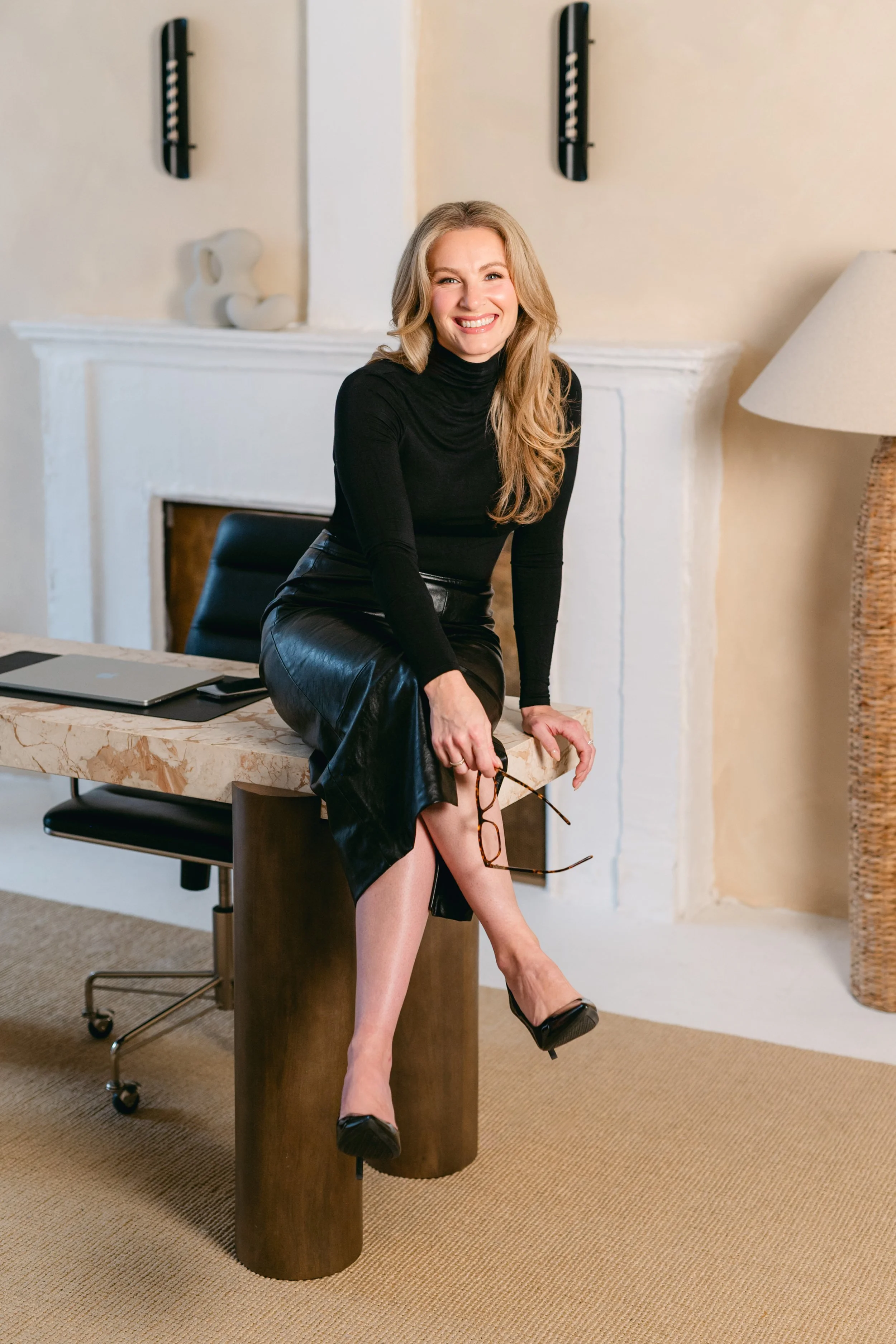
Romance is being reclaimed at a moment when culture feels rushed, transactional, and increasingly disconnected. As social media accelerates trends and weddings risk becoming aesthetic checklists, many couples are left wondering whether they’re planning a meaningful experience or performing one. In this episode, Kara Duffy sits down with Ashley Pigott luxury wedding producer and founder of Ashley Pigott Events, to explore why excellence, intentionality, and human connection are the true foundations of unforgettable celebrations.
Together, they unpack the difference between a planner and a producer, the psychology of guest experience, the invisible infrastructure that makes magic possible, and why labor, lighting, and logistics matter just as much as flowers and fashion. Ashley shares how her humble beginnings shaped her leadership style, why listening is her most important creative tool, and how she’s raising daughters to use their voices in rooms that once asked women to shrink.
“Striving for excellence and just striving to do the best that you can in each moment — that’s always the ultimate goal.”
-
-
355 - Ashley Piggot
===
[00:00:00]
Kara: Welcome to The Powerful Ladies Podcast. I'm Kara Duffy, and today's guest is the producer of so many incredible luxury and destination weddings. Ashley Pickett of Ashley Pickett Events In a world that often seems to be lacking, a demand for excellence is really craving romance, and the window of possibility seems smaller than it used to be.
Ashley is making so many of us, me included believers again. She and her team create the most magical, spectacular, beautiful wedding experiences from celebrity brides to building venues from the ground up in remote destinations. Ashley proves that anything is possible. In this episode, we discuss why romance matters, why we should demand excellence for ourselves and from those around us, how to attract high profile clients and how we can properly delegate our high expectations to others on our team.
Kara: Welcome to The Powerful [00:01:00] Ladies podcast.
Ashley: Thank you so much for having me. I'm so happy to be
Kara: here
Ashley: here
Kara: We have been connected because you have worked a couple of weddings with my business partner and friend Olivia. And she just said, sent me a raving email about the quality of work you do, you as a human, and when you're working these high profile, very important weddings. There's a lot of, could be a lot of stress and anxiety, a lot of things could go wrong. And she was just so impressed at how calm you appeared to stay, whether you actually were or not.
Ashley: That's so nice of her. I mean, we have a, a mutual love for Olivia. She's incredible. We actually met many years ago, I actually planned one of her best friend's weddings and she was a bridesmaid and that's actually how we met. And so we've stayed in touch for many, many years and I've watched her and her business grow and, we, we adore her, so any time we can work together, we're always thrilled to do so. And it is so nice of her [00:02:00] to share that. I mean, you need to be calm on a wedding day as the planner, as the producer, you are who everyone's looking to. So if you show stress, if you look off every, the trickle effect of that, , hits everyone, um, on the project.
So we do try to maintain that calm. I usually tell people it's very much like watching a, a duck. Float on a pond, it looks so serene and so calm, but underwater, those little legs are just going like crazy. Um, just trying to keep them afloat and keep them moving. So it's very, very similar to how it feels for us on site on a wedding day.
Kara: Before I go any further, let's tell everyone your name, where you are in the world, and a little bit more about your business.
Ashley: Okay. Um, well, I am Ashley Pickett and I own Ashley Pickett events. I am based in Toronto. However, we don't do that much work in Toronto. We're typically outside of the city. We do a lot of stuff outside of Toronto and now internationally, which has been a wonderful, [00:03:00] uh, new, new part of our business over the last couple of years.
Uh, we focus on logistically challenging. Environment. So the weddings that we plan and produce are typically multi-day. They typically have multiple events, guest activities, a travel component. They're usually in remote areas or other countries. So, we're typically dealing with a significant set of logistical challenges, and that's, what we love so much.
So those are the kinds of projects that we really like to be
Kara: You also were the producer of a previous podcast guest wedding, Lauren, Kyle. And she's also so lovely and the pictures are just stunning from her wedding.
Ashley: It was so beautiful. It was one of our favorites. She obviously is like the most ideal client as well. She's a designer. She has incredible style. She was also incredibly trusting of the teams that [00:04:00] she hired. So, that's sort of the, the perfect storm for an incredible event. Um, not only was she a collaborative partner with.
The design team in creating just the most incredible environment with us. But she really put a lot of trust into me. My team, the design team , all of the partners that were brought in to execute the wedding, which really just made that wedding like one of everyone's favorites. It's still, to this day, even almost, a year and a half later is still on everyone's mind as one of the favorites that we've all been able to work together on is really special.
Kara: when you, you mentioned something I think is so important. So often people hire experts like yourself and they don't allow the expert to do their magic. They're trying, they're like, wanna change things, they wanna control it. They're not, they don't have that level of trust of like, I hired you. I know you do great work.
Can you explain to people listening the difference of what you and your team are able to produce for somebody [00:05:00] when they let you run free versus when they're all up in your business?
Ashley: Oh, it's such a difference. And it's really hard because, we really value that this is their wedding. This is their one day, and not every personality is made to give people that free reign or at least the longer leash. But when they do the most incredible things come together. Like it. There's just.
It's really even hard to articulate the difference between the weddings that we've done, like Lauren and Connor's or, many others that we've produced over the years where we have been able to like really do what we do, within the parameters of what they want and what they're looking for and, budget and style and all those good things, but.
The weddings where we're really bound and really on a tight leash and, really constricted. We're giving them exactly what they want. They're still gonna have a wedding that they want and that they're happy with, but they don't really know how much better it could have been. And unfortunately, they'll never know what they don't [00:06:00] know.
And, if there's one thing that I can say to any bride, uh, or family who is about to embark on planning a wedding or is planning a wedding, do your research up. At the beginning, spend the time, interview the major players that you're gonna bring on the dream team, if you will, and pick people that you trust and that you can feel comfortable putting your trust in.
And then let them do their job because you actually won't even know the difference of how incredible your experience. The end product, like everybody just feels inspired and creative and excited and will come to the table with ideas that you may never have even thought of because they know that they're in a safe place to be able to bring those forward.
Where if you're like really just micromanaging everything, they're not gonna bring you new ideas. They're just gonna give you what you want because they don't even think that you want to know what they have to offer outside of, what you think you want.
Kara: One of my clients just had their wedding featured [00:07:00] in Vogue Weddings. And I know that you've had quite a few weddings featured there over the moon and other places. How rewarding is it when you get to check that box of the world now gets to see what incredible work we did?
Ashley: Yeah, it's nice to have the recognition. For me, it's really more about, the recognition for me is great. It's not a love language that I anchor, uh, my life on. However, it's great for the other teams. Like the unsung heroes of the industry are most of the people that nobody ever really gets to see.
The crew that pushed crates uphill for four days to build a wedding on a tennis court that happened to be on an island. And like all of those things, it feels really good for those teams to see their projects published. There aren't that many places to have our work published anymore.
Print isn't a thing as much as it used to be. The online blogs are amazing, but there's so many of them and, the politics behind a lot of them definitely play into what. [00:08:00] Gets put online and what doesn't. So yeah, it feels really good. And obviously everyone wants their work to be seen and to shout it from the rooftops when we're able to, we have a lot of clients that we're not able to do that with.
So when we do have one, it's, it's wonderful. I like it for my team. I think it's great recognition and I love that, everyone can feel really proud and share their work and it's, it's a wonderful
Kara: I imagine it makes it, it's an easy touch point for clients who are considering working with you because it's a standard that people understand without having to know your entire portfolio of work.
Ashley: Mm-hmm. It's like street cred, it's a nice little bullet to put on the resume for sure. It, it's definitely not something that we take lightly. We certainly appreciate every, every bit of recognition. It's how small businesses grow. Um, and it's, it is a, a really nice extra, but for me, the most important thing is.
A client walking away feeling like they've just had the most incredible experience and a team that feels so proud of the work that they've done, and, to be able to share that afterwards is just such a [00:09:00] wonderful addition to the overall, uh, project.
Kara: you have such a beautiful, uh, line on your website, which I'm gonna read it, uh, completely. Weddings are both creative and architectural. A steady and balance, timing and atmosphere. That's such a one, a juicy sentence in general, but I, but I also think it really makes you and your business stand apart from what people think of as a wedding planner.
Many people, their only ex exposure is Jennifer Lopez in the wedding planner, and they don't really know, like most people aren't working with a wedding planner like yourself, who you use the word producer intentionally.
Ashley: I do
Kara: Because you're not like booking a venue and coordinating catering like truthfully, anyone can do that.
You're, you mentioned it about the tennis court on the island on top of a hill, like you are creating spaces that didn't [00:10:00] exist before or transforming ones into something totally new. How else would you, go deeper into that quote from your website about some of the things you're doing and the difference between a producer and a planner in this space.
Ashley: We definitely would frame ourselves as producers because we just, again, that level of logistics, the operations that we're really involved in creating spaces. part of that sort of architectural notation is really just speaking to building something that feels like it's always been there, right?
Like it's really, yeah, you can have a tent and you can create a beautiful space and, and those things can be true, but to make it feel like it existed beyond. But it doesn't, two days later it's gone, it disappeared. And the people who were underneath that tent, those few hundred people, they're experiencing something that nobody else will ever get to experience.
And that's why we really love those types of projects. Like a tented wedding is a really [00:11:00] special wedding for us. You know, it's part of why we then moved into destinations. You're really immersing everybody into an experience. And so when I say balance, I mean the balance of obviously the build and the logistics and the timing and that.
Tetris of getting everybody in and out on a, usually a very tight timeline and building something that feels like it always lived there. But then also the balance of guests arriving and being greeted and their experience and having them like effortlessly float through an evening feeling that. Every need was anticipated, every move was thought through and their path and how human nature was gonna navigate through that overall experience is something that we put a lot of time and thought into.
And, there's nothing I love more than once everything's happening and, dinner is set and everyone's in the tent and look back and think. We nailed that human nature, like we really did. [00:12:00] Think about what they were going to do and which path they were gonna take. Were they gonna go left?
Were they gonna go right? What were they gonna need? Was there a touch point there? Is there a, is there a lull? Is there a pocket that needed something, a cocktail, a musician, a pathway? How far was it from the washroom? Like all of those things are, are really thoughtfully curated and it, um. It really allows us to like flex that skillset when we're in the environments of these kinds of weddings that we're so lucky to be able to do.
And yeah, that's really our intention is to build something from start to finish for the guests, for the clients, for their families. For our creative partners and our vendor partners and everyone in between. So that it was a really great experience. We don't all leave our families at home to go to work and not enjoy ourselves, right?
Like we really, hospitality is a special breed of people. We really work hard, really, really hard, um, to do what we do. And the satisfaction of being able to see that from start to finish [00:13:00] over, like what could be a 10 day build is really satisfying.
Kara: There is a hunger it seems right now for nostalgia and romance.
Ashley: Mm-hmm. Mm-hmm.
Kara: seeing that, public culture, desire for it showing up in the types of weddings that you're, you're working on the mood boards that are coming to you. Like how is the cultural craving for it shifting your work right now?
Ashley: I mean, I'm
Kara: Yeah.
Ashley: it myself, so I feel like I'm also like embedding it into everything that we do because I do think culturally it is something that people are craving. It's something that I am looking for in my day-to-day life as well. I think we've gotten so far to the other side that everyone's just really looking to come back, and for me, I would say.
The best way to do that is creating human connection. Um, so these opportunities where we are, hosting an event, again, we're typically doing multi-day, we're doing [00:14:00] a weekend, we're in Europe, we're traveling somewhere, we're, somewhere in the US and, and everyone has this sort of on campus feel.
We're staying on one resort or we bought out a hotel and we're immersing them in something to have human connection. And, that's something that. I think we've gotten really far away from, like social media's a wonderful thing. We all use it. It's such a wonderful tool, but sometimes we spend too much time behind a screen or, on Zoom versus being in person now.
And we are so lucky to create these environments where we are bringing people together and they're coming together for such a joyful reason. To celebrate two people, two families, this love story in an incredible place. And I do think that when you create a wedding weekend. And especially when you're able to take all of your guests somewhere in the world, that's really an incredible destination.
They do immerse themselves in it. People aren't on their phone. S they really aren't, they're very communicative with their friends and their family. They're spending [00:15:00] time together. They're, we curate activities and, and movement for people so you can get off the resort, go, hot air balloon rides, boat rides, like whatever, wine tastings, things like that.
Cooking classes where. People are actually spending time together. And I think that that's the biggest movement we've seen over the last couple of years is this wave of more immersive wedding weekends. And really I think the root of that is that people are looking to create more connection. And spend more time with their guests.
The day wedding day goes by so fast. It's a, it's so fast. It's like just a blink and it's gone. And so if you can extend that to two or three or four days, um, and have the opportunity to take people out of their day-to-day lives like they really do. They really lean in. And so, it's a beautiful part of what we're able to do and truly something that I really love, which is why we're, we really go after those kinds of, of weddings because there's something that, something about it that just feels so unique and so special.
And again, it's that like once that weekend's gone.
Kara: Mm-hmm.[00:16:00]
Ashley: It's gone, right? And, and it's over. And there's sort of a bittersweet feeling to that, but it really, we were able to be a part of something really incredible and those guests, their takeaway of it is, wow, what a special weekend. We got to spend so much time with these people.
So I'd say that's probably the biggest piece of that nostalgia that we're really seeing. And, and just overall human connection being more valued than maybe, maybe it used to
Kara: If we would look at your personal mood board right now, where, what are some things that you're loving or places that you're getting your inspiration from?
Ashley: oh, that's a great question. I mean, I often go to my homepage of Pinterest and sometimes I'm like, wow, Pinterest is really nailing my vibe right now. So, I would say, I mean, I truthfully find most of my inspiration in like the mundane day to day. Like to me, the ordinary is really inspiring because that's actually where we live.
So the aspirational stuff, yes. Do I have a few places I'd love to travel to? Yeah, absolutely. Do they probably combine myself with where I'd love to plan a destination wedding? Absolutely. So that plays in. But [00:17:00] for me, my inspiration really comes from my day to day. You know, there's nothing more inspiring to me than looking forward to a Saturday morning with my coffee and quiet and in my own home and not away traveling for work.
So I would say that's a big part of what my mood board is, is really that balance of my own lifestyle. Um, I get really inspired by the women in my life, the people in my life. I have so many incredible brides who are doing so many incredible things. Like Lauren for example. And, you look at Olivia like they're just.
Doing so many amazing things and it really is inspiring to, to know that you really can do anything. I have two girls, so setting that example of like, you can truly do anything you, you put your mind to is a really inspiring sort of, common thread in my life. Um, and then when it comes to sort of like the design side of things, I would say like travel and home interiors and architecture and beautiful restaurants and, those kinds of things are what we take and translate into beautiful [00:18:00] spaces. Inspiration can come from anywhere and, uh, but truly I would say for me, most of my inspiration comes from like day to day, like the ordinary, the things that people might not look at as like the lavish instagrammable moment, but more the like, quiet, thoughtful moment that could actually translate into something just really beautiful in your own day-to-day
Kara: I hear a lot of intentionality and I think as a woman who has this, small business, high profile, lots of demands, lots of travel. And two daughters and the rest of your life, that, that makes you up. The needing to be intentional and appreciate finding the beauty in all of the spaces because you mentioned the humanity when you, when you put together an event and what we all are craving are very consistent things.
I personally have been on a journey of trying to, I've been forced to slow down, be being a new mom and.
Ashley: That'll do it.
Kara: I spend way more time at home [00:19:00] than I ever have, and I've been shuffling things and being like, okay, how do I make, how do I bring some romance or whimsy into this wall? I now stare at every day because it's next to the rocking chair.
Ashley: Exactly. Exactly. Yeah. I, I definitely think that balancing my time and my efforts and where my energy goes is really important. My kids are older, so I definitely, I've been there. Uh, so you'll, you'll get through it. And it'll be amazing. Every stage is amazing. My kids are older now, seven and 12, almost 13.
So, with that comes sort of a different demand of your time. You know, now it's activities, it's, they're really aware of me being away. So when I am home, I have to spend time with them. I'm about to go away for 10 days, so we're going to get Manny's and Petties tonight. You know, those kinds of things are really important and truthfully, the most important to me of every hat that I wear.
Being a mom is the most important job that I have, and so I do. I focus a lot of my energies in thinking about how I [00:20:00] can balance everything else out to make sure that that always stays the top priority. It's always a balance. It's never perfect, but, and, and perfection is an unattainable goal, but, striving for excellence and just striving to do the best that you can in each sort of moment that you're in is always, top of mind for me and, and always the ultimate goal.
Kara: A lot of people who are in your business would love to have the client assortment and the projects that you've had, and so many people who want to be working in a luxury high profile space feel so stuck and intimidated about how to be attracting and landing. The clients that allow that work to happen.
What has that journey been like for you, and is there any tips you could share for people about just being in a space where you're able to be a magnet for the, the quality of clients that you're looking for?
Ashley: That's a great question. I mean, I think that there's a combination [00:21:00] of luck being in the right room, having wonderful people share my name, people who enjoyed working with us, who really, you know. Shout our name in a room full of, important people. Like all of that is true. I am a big believer in manifesting.
Kara: Mm-hmm.
Ashley: So, I've, I've talked about this a lot on a, a number of different podcasts that I've done. But I really do think that you are what you tell yourself and you can achieve what you put your mind to if you really wanna get there. So, when I think about myself 10 years ago or 15 years ago I was manifesting all of the things and they didn't all happen overnight and it wasn't easy. And, you do have to grind and you do have to work really hard. If you're always thinking about the kind of stuff that you wanna do, the kind of projects that you wanna be on, the types of weddings that you might wanna do, and you're telling yourself that you'll be able to get there one day, like you will get there, and it's, you just have to be patient with [00:22:00] yourself, but you also have to give yourself the opportunity to get there. So when you are, meeting new people, you just never know where a lead's gonna come from.
You never know how one relationship with a vendor that maybe you just hit it off really, really well. They loved working with you. You did an amazing job together. They're gonna be so happy to share your name because they wanna work with you again because you made their life easy and you were thoughtful about their process and respected their part of the project.
So. think networking and relationships are super, super important. There's a lot, there's a lot of people that you interact with on site on a wedding, so everyone from, the people who get like, all the, all the spotlight, the more well-known teams. And then there's the ones that really get absolutely no light at all.
You know, like I'm talking like the techs, like the, the washroom cleaners, the servers, the people who, the, who are in the clearing station, in the dish pit and like. Those are the people that really make us all look good, because without them, like it just wouldn't [00:23:00] all come together. And so I think that there's a lot of value in acknowledging those people.
And they're gonna work really hard for you. Your events are gonna be 10 times better because you knew what that valet driver's name was and that he had a daughter and that she was, graduating from college or something. And, the next time you saw him, you asked him about her or.
Those kinds of things really do go a long way, and I think that it's a really incredible opportunity to make. A lot of people feel really good, and then all of those people are gonna wanna work with you again. So, it, it really, it trickles from the top all the way down. So I do think that that's a really important piece of advice that anybody, whether they've been around for 10 or 20 years or they're just getting started, every single person on your project site throughout the process.
They're all important and they all matter, and how you make them feel will be a direct reflection of sort of how your, wedding will transpire. It really truly is, is everything.
Kara: Well, and, and you [00:24:00] made some great points also, which I think go across industry. I have so many client inquiries asking me about like, how do I increase sales with digital marketing and how do I. Stop having to sell the way that I've been selling, and I think people forget the, that the, for most small businesses who don't need thousands of clients a year, so much of it is coming from a more direct sales pipeline.
It's so much about relationships, it's so much about networking and managing that those relationships stay top of mind. And I hate to break it to some people that there isn't like this. Quick fix to like have your next five years fully booked?
Ashley: Right. Yeah. There's no secret sauce for that.
Kara: can we use digital marketing to make things smoother, easier, faster?
Sure. But we still have to do our sales pipeline and we still need to have that human element. And I think I've frustrated a couple people [00:25:00] lately who, when I've said like, you have to leave your house, you have to get out from behind the computer and because it can feel heavy and exhausting to do that.
What are some tips or techniques when you're like, okay, I need to get out and be in the world? How are you making it more fun or easier than it might feel?
Ashley: The, honestly, I have a hard time with this one, I'll be honest. And any of my friends that are listening to this will say like, Ashley does not like to leave her house. But I, I'm like an introverted extrovert. I'm really, really good when I'm out and when I'm put into the situations. But I do have a lot of anxiety to get there.
I will be honest, and most people, if they don't know me, are surprised to hear that. But if they do know me, they definitely know. Like I'll say yes to every event, but like my bail. Factor is like pretty high. Like I'm, I gotta really wanna go to go. Um, and I think part of that plays into the fact that I am, I do travel a lot for work, so I do prioritize being home.
I don't like to miss bedtime with my kids. Those kinds of things [00:26:00] are to me, more important than going to like an industry event, for example. Um, so when I go, I go and I immerse myself in it. And, my friends will laugh 'cause they'll say like, you didn't even wanna come and now we can't even pull you out of it.
Um. So I think, it's balancing where you wanna invest your time, but the things that are important and that I know. Will help provide a lot of value for me. I, I definitely will go, but I'm not gonna lie and say like, I get really excited to go. Sometimes I do, but like most of the time I'm like, oh, I like, I'd so much rather be at home snuggling with my girls on the couch watching a movie.
So yeah, I balance that out. Um, I don't know that I'm very good at it, but I do, I pick and choose and the things that I think are the most valuable, that I will gain the most out of, I will go if it is. For a celebration, let's say it's like a networking event, but it actually is like an opening showroom for one of our partners or something like that.
I show up. Those people do a lot of work for me. I'm gonna show up. For the most part, unless I have a scheduling conflict. If [00:27:00] it's just like a cocktail party, just come and, and schmooze, like, I may not necessarily choose to go to that one, but I do. It's all about really just seeing like what's the most value you're gonna get, what's the ROI on your evening out, getting dressed up and going out and, using that social battery.
And if, if it's good, like I will definitely go, but I do. Prioritize the ones that make the most sense, and then, I might say no to the ones that don't necessarily provide the same
Kara: I think we have to, right? Like our, our time is our biggest currency to be mindful of, and. There's, I was talking to some PR clients the other day and they do a lot of events. They're in the home interior space and the pressure to make events worth people's time is very real, partly because we're all exhausted and worn out, and partly because there's 15 other things that we'd rather do than work another work thing.
Um,
Ashley: Well, and there could be a [00:28:00] work thing every single night of the week. Like you could, you can fill your calendar with social engagements related to, especially 'cause we're in the event industry, so they're always, people are always throwing something or wanna go for dinner or wanna meet for coffee or wanna go for lunch, or those kinds of things.
And just, it just ultimately comes down to time. And like I said from the beginning, like I'm always prioritizing my time at home over anything else.
Kara: and it also brings up why it's so important to be nurturing the relationships you already have, because it's so much effort to get a new one.
Ashley: Yeah. It really is.
Kara: It's like, no, I'd rather stay in touch and keep those other ones warm to hot than go fight the cold lead battle.
Back to 8-year-old you, where was she and would she have imagined that this is her life today?
Ashley: Not even close. Not even close. I come from very humble [00:29:00] beginnings. I, was raised by a single mom. We didn't have much and no, I definitely not even close. Definitely would never have Pictured. Would've hoped for. Would've hoped for all the things, you would've at that age.
That's when you start to compare, you know? I think it's that's when you start to look at other people's lives and go like, oh, well they have two parents and they have a big house and they go on vacations every year. And you start to think about those things. And those would be things that I certainly would've imagined.
I would've hoped for, but certainly would never have guessed that I would've landed, um, in the place that I am now. But again, back to my manifesting, , you get to an age where you start to go like, yeah, I can do that and to me, the manifesting of where I am now wouldn't necessarily be the.
Lavish weddings and the travel and the wonderful roster of clients that we've worked with, but it would be the. I have a, a wonderful husband. I have a great marriage. I have two beautiful healthy kids who are, very well adjusted and doing great in school. And, you know, all of those things to me are, [00:30:00] would've been the biggest manifesting goal.
And, what I'm most proud of and then, just being able to support myself, like my mom. I watch my mom struggle. It's hard to be a single mom and to be able to support my kids and take them on vacation and, pay for kids. Sick activities are expensive. Like kids are really expensive.
So being able to provide all of that is a really big part of what I would say. You know, an 8-year-old me would've felt, would've been very hard to do, but would've, would've really hoped for. Um. But no, I definitely, she definitely wasn't thinking about planning weddings. She definitely wasn't thinking about planning parties, at that age.
No, not even close. I think when I was eight, actually, I think I wanted to be a lawyer. I think for whatever reason, to me, being a lawyer was like, you would've made it, you would've been on top in terms of a profession. I grew up in an era where like, you were a doctor, you were a lawyer, you were a teacher.
Like, it was very much like there was a pretty. Small group of paths that you could take or, or what, what have you, but, uh, wedding planner wouldn't have been on the radar.
Kara: [00:31:00] There's a, a lot of people, I think, when they go from feeling like they're an outsider to being part of. The circle that you are now a part of, a lot of people would have a lot of fraud feelings and self-doubt, and do I belong in these rooms? Is that something that you've had to work through or has it been like, has that not a, not been an issue for you in your journey to where you are today?
Ashley: I mean, one side of me still feels like an outsider. One side of me still feels like, am I really here? Is this real? Like, am I, you start to think about, wow, like, am I, am I really? At this table have I really been invited to be a part of this team? And then the other side of me goes, of course, like I deserve to be here.
I'm really good at what I do, and I have no doubt that what I bring to the table is super valuable. I try to balance that out. I think that's part of like my social anxiety to get to the party. And then once I'm at the party, I'm like, enthralled by the, by the environment and being there.
I think that's a really sort of. Clear way to, to define where I sit in terms [00:32:00] of those circles. I think it's, Instagram versus reality is a real thing, and I've done so many amazing things, but I'm still
Kara: Yeah.
Ashley: me and I still just think about like, I'm, I'm just me. And, again, I just, I, we do great work and at the end of the day, I will always come back to, I know that we produce incredible stuff.
We have done. Impossible a number of times and I live in a world if there's nothing we can't do obviously at cost, at time, at all those things, but there, there really truly isn't anything that I don't think that me and my
Kara: Whenever someone's asking me about that component, I'm always telling people, you might not feel like you fit in, but you always belong. Like just you as a human, you belong. And
Ashley: Yeah. Yeah, exactly.
Kara: especially when it's more in the realm of like, can I talk to that CEO? Can I talk to that executive? I'm always like, guys, I don't, there is not a correlation between success in business and being nice or being [00:33:00] smart.
They just, there's not a a correlation. So chances are you're gonna be. More prepared, more engaging, nicer than whoever you think you're afraid to talk to. So just go,
Ashley: Because at the end of the day,
Kara: they're just humans. Yeah.
Ashley: And they probably feel the same way. Right. They're probably like, oh, but I, they have a title. So you know, you sort of look to like, oh, they have this title and they must be so much more important than me. And sometimes that's true, but most of the time
Kara: I mean, it's, I don't know that they're more important and than like a. Uh, they're not more important than whomever as like human to human. They might have more power that they can throw around. But it's, yeah, no, there's amazing things that can happen with the power of integrity and kindness and consistency and just listening.
If nothing else. How much of your job do you think is simply listening?
Ashley: I mean, we, it's everything I need to know, [00:34:00] everything about that couple to make that wedding feel like theirs. And that's, we only take on a few projects a year. So one of the things that's so important to us is that each and every single wedding feels so unique and authentic to the couple that we're working with, or their families, or, you know.
Whoever the committee is that we're working with for that wedding. And so I need to know everything about them. I need to listen. I need to see what they're up to, where'd they go for date night? Where do they travel, what kind of cocktail did they order? Like even the unspoken absorption of information is really important.
But we listen to everything. We are trying to service them and we are trying to bring. Their perfect wedding to life. So while, yes, there's so many things that we have to do that they'll never know anything about without knowing who they are and what's important to them, and listening to those values and those priorities and understanding them, it's just gonna feel like every other wedding.
And that's like my
Kara: Yeah.
Ashley: nightmare. Like I don't want somebody [00:35:00] to come to that wedding and go, yeah, it was nice, but like, it was kind of like the one that we went to three weeks ago. 'cause a lot of the clients that we work with are in. That age where they're sort of in a wedding circuit, they're going to weddings more often than than others.
So yeah, it's, it's really important to listen. Um, and not even just the clients, again, our partners, the people that we're working with. I need to understand your workflow, your process, so that we can serve you like we are the hub for everybody. So if we don't know everything and we haven't absorbed everybody's priorities, it's really just not gonna come together the right way.
It's not gonna be exceptional and we want exceptional.
Kara: There's also a, a lot of conversations I'm having with clients about being okay, demanding, extraordinary,
Ashley: Mm-hmm.
Kara: how there's lots of reasons to allow things to. Not be extraordinary and just be good enough. And of course, in the world of business, every day we're choosing do we push for [00:36:00] extraordinary?
Is this okay the way it is? Like where's a good enough extraordinary balance? How do you sit in the value of extraordinary? And how do you roll it out to your team and your partner so that it can be meeting the expectation that you have for what you deliver as well as your clients.
Ashley: I mean, my expectations are really high, so like really, really high. So for me it is aligning with teams that also have incredibly high expectations. So we are all operating at the same level. You know, some things I would say in the world of like, it's just, okay. Honestly, I take the client's lead.
If they don't prioritize something, if something doesn't really matter to them, then I'm not gonna impose my feelings of how important it is unless I feel very strongly about it. So, you know, for example, a client may say. You know what? I don't really care about the lighting. Like to me that would be a huge fail.
And I would speak up and I would say, I actually just need to educate you on why lighting is so important and I'll [00:37:00] walk them through it and choose your own. Adventure is my favorite line. At the end of the day, it's their money, it's their choice. And that I would be something that I would say, we need to have a call, like we, I just need to be able to frame it out for you and let you know.
'cause people don't know what they don't know. But if, for example, someone says I don't care about, I mean, I, I never wanna throw this out there 'cause I wouldn't want another vendor to feel like their, their category isn't important, but if someone's like, I don't care about a cake, for example, I'm not gonna oppose on them that I think a celebration cake is important because that might be my own feeling.
I would say like, if you wanna invest your funds elsewhere, that's not the hill I'm gonna die on. So that to me might be like, okay. And then I would say, well, let's do an amazing selection of desserts. Let's think about what you guys love. If you've got a sweet tooth, you guys go for like an ice cream.
Every Friday night is a date night. Let's bring in an ice cream truck. Something like that. I might throw out something else as an alternative for them so that they're still getting, the sweet treat or they're still getting the element or an experiential item out of it. But they didn't care about the cake, so I'm not gonna push the cake.
So that's where I [00:38:00] would say like I bridge the, some things are just okay. Versus it needs to be exceptional. The production, the lighting, the sound, the infrastructure to build a kitchen, to serve a good meal, uh, a proper tent structure, for example. Like all of the things that honestly, sometimes are very unsexy.
Things to prioritize, you know, wash rooms, power, water sources, things that like.
Kara: the cables.
Ashley: Nobody really wants to. Yeah, nobody really wants to spend, or honestly, labor is probably the hardest one for people to understand, and to me, that's an area that is exceptional. You need to invest in labor. Because everybody will feel it.
If you don't, your team will feel it. Your guests will feel it, you will feel it. Everybody will feel it. So, there's sort of a pick your battles, um, when it comes to that, in terms of sort of curating an entire collection of categories and vendors and experiences that we need to bring together. For me, I will always strive for the best. There's just no world where I do [00:39:00] anything half-assed. I don't operate that way in my business, however. It is really a choose your own adventure.
I'm not paying the bill. So at the end of the day, if a guest really doesn't value something or a client doesn't value something and they really do not wanna invest their funds, I will do my job. I will educate them on what that decision means, how the trickle effect of that will impact other areas of their wedding.
Hopefully they see the light, especially when it comes to lighting and, and those kinds of things. But honestly, if not, you know, again, I've done my due diligence. I've let them know how it will impact and if they're okay with it just being okay or eliminating altogether, then you know, that's for them to do.
Kara: Whenever we're talking about how do we delegate excellence into our teams. I think the best example of this is from the TV show, the Bear and I, it's I season two or episode four or seven. It's called Forks and it's the episode where the cousin has to learn how to clean the forks over and over again at the super high end, Mitchelin [00:40:00] Star Restaurant.
And the coaching he gets from like the head of the restaurant is perfect in why the small things matter. And why the integrity at every step matters so much. Do you find it easy to be making sure that you're, the team that you're working with understands that excellence? Or is it something that, like, do you have a ritual, like you bring on someone new and they go through like a whole conversation about the extraordinary expectations you have?
Like how are you preparing and coaching your teams to meet you at your level of expectation?
Ashley: I mean, I'm so grateful that I have had the same right hand for about 10 years. His name is Chris. He's incredible. Couldn't do it without and luckily he operates at the same level as I do. So we're both always pushing for excellence all the time. And for me it is curating a group of people to be around you who are, again, all at that same level.
[00:41:00] So yes, we bring on a new. Team member or a new partner, like we do love to make new friends.
Kara: Yeah.
Ashley: that we only work with the same people all the time, but sometimes we're in an environment where we have to make, a new friend, a new production team, a new caterer, a new floral and design team, and a lot of effort goes into those initial conversations to make sure that they are going to operate at that level.
Because if they don't, they're just dragging everybody else. Down. So sometimes it's worth the effort and they come to the table and they exceed our expectations. And that has happened so many times with so many incredible vendors who are now people that are sort of always on our list. And we have had experiences where we have worked with a vendor or we've needed to work with a vendor, whether it's a client connection or a venue requirement or you know what have you.
And they drag everybody down. And it's a really brutal experience for everybody. Like again, you talk about, um, we talked about at the beginning, the difference of what happens [00:42:00] when everyone is coming to the table excited about a project, putting in their best effort, like those weddings, those wedding weekends.
We just never want them to end. And when you have someone who's dragging you down, like it really impacts the overall experience for everyone there. So it's worth the effort. Always. Training is so important. I spend a lot of time doing mentoring calls. People reach out to me all the time. I'm always happy to take the call.
We do a lot of student interviews when they're doing projects and things like that because. It is important that people have somebody to guide them and to give them information and share. I'm not a gatekeeper. I never have been. I'm always happy to chat. And for the most part, I will say that that effort.
Whether it is a student interviewing me or whether it is a new partner that we're interviewing for a client, it's for the most part, always worth the effort for me to chat through, understand their process, our process, how do, how are they gonna integrate together? How are we gonna work together?
How are we gonna make it [00:43:00] amazing? And then sometimes it's. You put in all this effort and it's just a fail and you just kind of have to cut your losses and say okay, well we tried and not everybody is made for this. I have to say not everybody is made for hospitality industry. The wedding industry, like it is not easy.
We put in a lot of hours. We are the punching bag. Sometimes we are the therapist, sometimes we are, you know, the cheerleader sometimes like we wear so many hats and we really are the hub of. Everyone that we're working with. It's not an easy job. And for those that survive it, who thrive in it, it is amazing.
And I think, I always give kudos to people for trying, and then maybe understanding that it wasn't the right fit for them, or maybe that project was outside their scope. Maybe they bit off more than they could chew, or maybe they didn't come to the table as a team player the way that they could have, which would've made everything so much.
Better. Um, but, training and mentoring is just, it's always important. It's always worth the effort. Um, one way or another.
Kara: When [00:44:00] you think of the words powerful in ladies, how would you define them? And do their definitions change when they're next to each other?
Ashley: yes, I would say, I mean, powerful ladies to me. As soon as I hear it, I think of all the incredible women. That I get to work with, whether they're my brides. The wedding industry is built up on many women owned small businesses. There are so many of them, you couldn't even count them. The majority of the wedding industry like it falls on the back of mostly women.
Uh, there are a lot of men, there are a lot of amazing men, but there's a lot of women in this industry. And the first thing I think of when I hear of Powerful Ladies is all of those incredible. Women that I get to work with, that I look up to, those who came before me, those who are coming up, who I see just doing incredible work and watching their careers thrive over the years. So I would say it's an inspiring combination of two words together. Um, and putting them together, I think makes them both more powerful.[00:45:00]
Kara: When you're thinking about your daughters and what you want them to know is available and possible to them. How would you describe that? Besides saying everything?
Ashley: I mean, everything is the first word that comes to my mind. My husband and I are both alphas, like, we're very strong, um, personalities, which most people would say like, well, how does that work? But 25 years in and we're, we're still doing it. So I've got some really strong minded girls.
They're very strong and I can see that they will do incredible things and both in different ways. They're very unique, they're very different from each other, but they both share this common thread of strength and resilience and I can see them being really powerful women in, whatever path they decide to take.
And one of the things that we talk about a lot, especially with my oldest, because she's 12 going on 13, so she's definitely in. This is the world of like, that social dynamic is important. Finding [00:46:00] your voice, knowing when to speak your voice, knowing when maybe to restrain your voice, that's a big part of the conversations that we're having with her.
And you know what? She's usually the loudest one in the room. As was I, and I always explain to her like I was definitely that kid that spoke up. I spoke up for myself, I spoke up for other people. I got myself into situations that, maybe my mom would've said like, you definitely shouldn't have done that.
But I knew that it was the right thing to do and whether it was for myself or advocating for somebody else, and so. I think that's a big part of, what we communicate, especially with my oldest, is making sure she knows that no one should silence you. If you feel strongly about something, speak up.
You know, use your voice. Don't let anybody, um, overshadow you and don't ever feel bad about being the loudest one in the room, especially if that volume is advocating for something that you believe in. And [00:47:00] that's a really powerful thing to be able to tell a 12, almost 13-year-old now, because when I was 12 or 13-year-old, the narrative was still, you gotta be the nice girl.
You gotta choose. When you sort of speak, you gotta, um, sort of fall in line a little bit more. I was still of that. Age, um, yeah, the good girl syndrome and I never fit into that syndrome. You know, I was the loud one, I was the one, speaking up. I was the one getting called into the office being, she was in whatever, whatever it was.
I was never in like major trouble, but, I definitely was that kid. And so now it's nice to be in a social climate where. We can tell young girls to like you, go, do you. And like, don't be afraid to stand up for yourself and don't be afraid to stand up for your friends or what you believe in, and don't feel that you can't be loud if it's something that you know really matters to you. So I think that's a really important thing that we now can do, when we're raising young [00:48:00] girls. And it's important 'cause it's gonna set them up for massive amounts of success.
Kara: One of my favorite cities, and I have some of my favorite people live in it is
Toronto. What makes Toronto a great place for building a small business and for centering your business from?
Ashley: Yeah, I mean, I grew up just outside of the city and my husband grew up a couple of hours away, so we both came here for school. We met in college and we've been together ever since. So, it's, it's been home for a long time. It is a great city. Canada's an amazing country. We're so blessed to have so many wonderful things available to us.
And for me as a small business, the market, the wedding market here, which is obviously I work internationally now, but when I started I was working in Toronto and I was working in venues here more often than anywhere else. And there's an incredible community of people here.
There are amazing businesses, small businesses, women founded businesses, there's incredible creatives. There's a lot of just really hardworking people here. I [00:49:00] actually don't think Canada. Gets enough of a spotlight, in the wedding world as it should. And there's a lot of incredible people here that deserve that kudos.
And so I feel really lucky to be a part of that community and to have gotten my start here and to do my best to help mentor and foster growth in this community with young planners, young hospitality sort of event management students. Anytime I get those emails, I feel really grateful for an opportunity to chat with them and share, where I started and where I am now. And, everyone's path will be different, but I think, I'm really, yeah, I just feel really lucky to be a part of this community.
Kara: we've been asking everyone as well, like, what do you need? How can we help? What's something on your to manifest list? To to-do list big, small, what can we put out to the powerful ladies community and, and how can we make something off your to-do list?
Ashley: well, I mean, if you could build a couple more hours into every day, that would be amazing. Um, if there were, if it could all of a [00:50:00] sudden be like a 30 hour day, that would just be so wonderful. 'Cause there just never seems to be enough time. Ever in my days, I'm just, jam packed from start to finish.
But no, I, I mean, I feel really blessed with where I am right now and, the more opportunity I have to showcase our work to work with, people. We're really blessed to now be working a lot in the US and internationally in Europe. We love being in Europe. So anyone who wants to create something really magical, really special, who wants to lean into a team who feel.
So confident in what they can provide for you and bring together a team that will service you in a way that truly you probably could never even imagine. Like call us like that. That's the world that we live in. That's the world that we wanna be in. And the more we get to do that, the more it fills our bucket, to be honest.
And like I said from the beginning, I don't like to leave my kids at home to not enjoy what I do every day. So for us it's about great clients, incredible opportunities to do something super [00:51:00] special. And, not the ones that are trying to check a bunch of boxes, not the, like, I'm doing this 'cause TikTok said I'm supposed to, or, that kind of stuff.
Like we're really about curating an experience, servicing a client in, we sort of refer to it as more of a concierge like approach to planning your wedding and really doing something that feels authentic. So that's, that's our vibe. That's our jam. We want more of
Kara: and I think the best part of being an entrepreneur is that every day we get to create the entire version of the life that we're having. Like everything in front of us, we get to choose who we're doing it with, where we're doing it. We wanna dial up romance, we can control that. We want to make more money, we can control that.
We want to have more space and freedom. We can do it as well. And there's. Obviously I love converting people to the, the good side of, of being, leaving corporate life for entrepreneurship, but there's something, so for people who haven't experienced it, [00:52:00] the level of freedom you have to design a life and a business and create experiences for you and the people you're serving that seeing like they would've been impossible before, but they're just part of what we're doing every day. I think it's just such a magical, fun place to be existing in and I don't know why we would choose otherwise.
Ashley: I agree. I mean, I've been in the hospitality industry my entire career. I started off in like restaurants and hotels and so the service industry is something that's just like ingrained into me and, being of service to people. Like that's my love language. So that's, that's what's important to me.
And, to create something. That fills my bucket every day. Um, so yeah, leaving the corporate world of, corporate hotel life and starting my business and, seeing what I've been able to accomplish in, over a decade, I think almost 15 years now, it's definitely satisfying.
I feel really proud. I know Chris and my team, [00:53:00] we feel very proud of what we've been able to accomplish and. Yeah, it's not easy. Being an entrepreneur is very hard. There's a grind, but it is very satisfying for sure, and you can build, , a life that, that you love. And again, it's all about that choice. You really do need to make sure that you have your priorities and make the choices that feel like they're the right
Kara: Absolutely. So for everyone who now wants to follow you, hire you, all the things, how can they reach out and connect?
Ashley: Instagram's probably best. It's at Ashley Pickett events. That's probably the best place for everyone to find us or ashleypiggot.com
Kara: Perfect. Thank you for the level of excellence that you're providing your clients and creating these dreamy, at least from all the photos I get to see, it's so dreamy and so magical. It like reminds me that it is possible to have dreamy and magical and romantic still. But the level of excellence that you're serving people out and the integrity, the intentionality, we need more entrepreneurs focusing there. So thank you. Thank you for your hard [00:54:00] work and all the effort that no one ever sees.
Ashley: Thank you so much. I really appreciate it.
Thank you so much for having
Kara: Thanks for listening to The Powerful Ladies Podcast. If you enjoyed this conversation, please subscribe. Leave us a review or share it with a friend. Head to the powerful ladies.com. We can find all the links to connect with today's guest show notes, discover like episodes, enjoy bonus content and more.
We'll be back next week with a brand new episode and new amazing guest. Make sure you're following us on Instagram or substack at powerful ladies to get the first preview of next week's episode. You can find me and all my socials@karaduffy.com. Until then, I hope you're taking on being powerful in your life.
Go be awesome and up to something you love.
Related Episodes
Episode 287: The Systems That Help You Build a Life That Scales | Staci Gray | Founder, Organize to Scale
Episode 347: How Whimsy & Self-Expression Build Stronger Brands | Danielle McWaters | Founder of Designsake Studio & Co-Founder of Sardine

Episode 131: Building a Creative Career From Scratch | Jess Goldsmith | Founder of Chick of All Trades & Women of Type
SUPPORT OUR GUEST:
Instagram: @ashleypigottevents
Website: ashleypigott.com
Created and hosted by Kara Duffy
Audio Engineering & Editing by Jordan Duffy
Production by Jordan Duffy
Graphic design by Jordan Duffy
Music by Joakim Karud