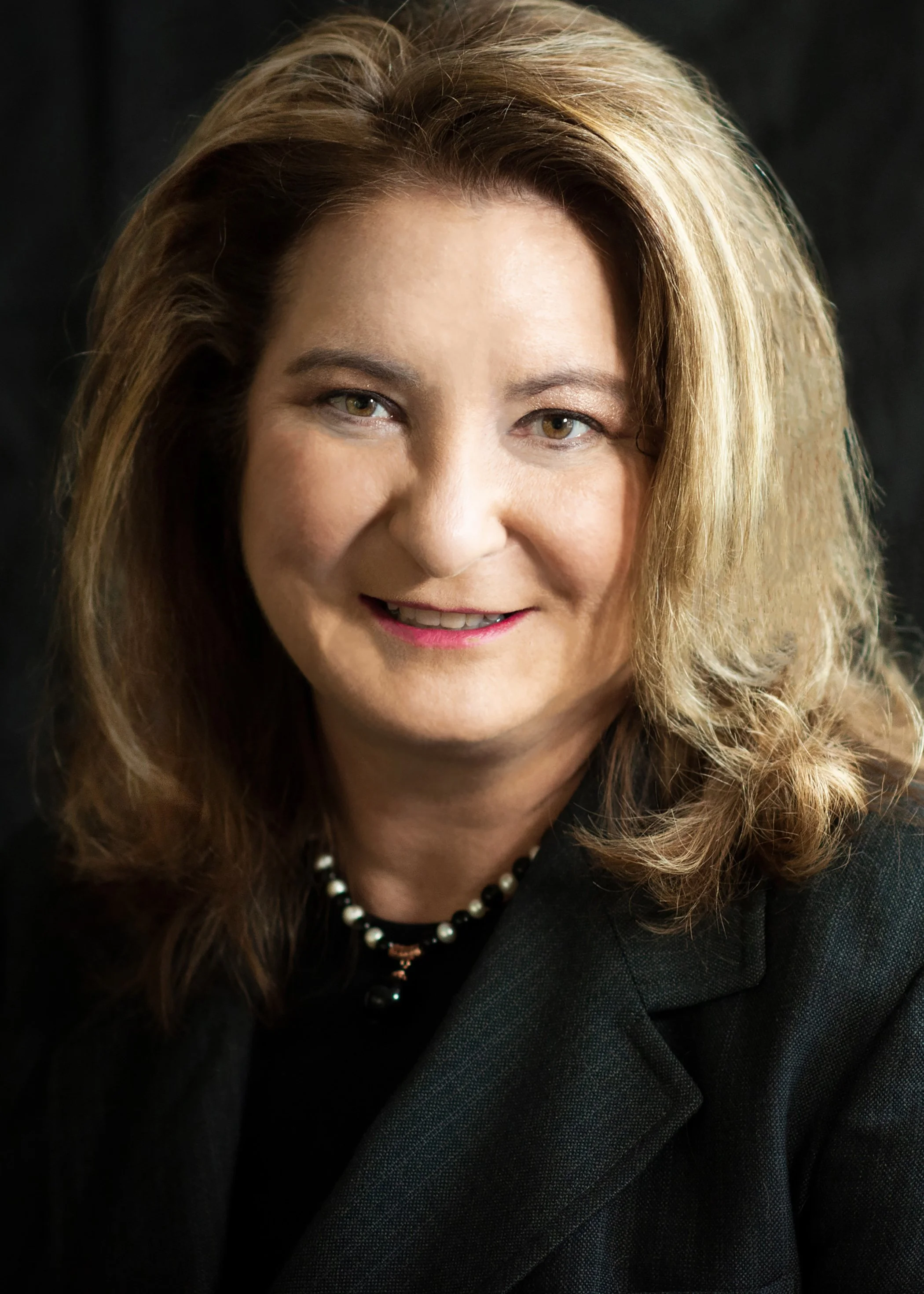
What happens when the law extends beyond Earth? In this fascinating episode of the Powerful Ladies Podcast, Kara Duffy sits down with appellate lawyer, professor, and podcast host Mary-Christine (MC) Sungaila to explore how the law is evolving to meet the challenges of the modern world - from Holocaust art recovery to women’s human rights and even the emerging field of space law.
Mary Christine shares how her career in appellate litigation has allowed her to help shape legal precedent in cases that impact women and girls, international human rights, and global justice. She explains how to solve complex legal puzzles, from the U.S. Supreme Court cases to international courts, can influence how laws are interpreted for generations.
“You never know where curiosity will take you. I never imagined I’d be discussing the future of space law at the United Nations.”
-
-
356 - Mary Christine Sungaila
===
[00:00:00]
Kara Duffy: We are finding guests for the Powerful Ladies podcast in so many different places. One of them is reading the Orange County Business Journal, my local kind of business journal and news source, and I came across this woman who is being interviewed, who is a professor of space law. Instantly, I was curious.
I'm like, we have to talk. She said, yes. And when we were doing research for our episode. I could not believe how many accolades this woman had, how revered she was in the legal community, how many interesting cases she's gotten to work on from, , recovering lost art to the rights for women and girls in other countries, to just everyday things that are happening in our country.
And when we're in a time and place where. So many citizens don't understand the laws that impact our day-to-day. You can imagine the huge gap in understanding the law when it comes to [00:01:00] space. It is truly a new frontier where everything is getting built from the ground up, and that includes treaties, laws, and how we're working together as a planet earth, to create what it looks like for humans to be in space.
So in this conversation we talk about so many different juicy topics. I imagine we'll have her back. We could have talked about any one of the topics for a whole episode on their own, but I really think that you'll love this episode if you're curious how space law is impacting what's happening on planet earth.
If you want to really hear what an appellate lawyer works on and how there is so much. Commonality across very different topics. She's so interesting. She's so nice. This is just one of the most fascinating conversations I've had so far this year, so I hope you enjoy it.
Kara: Welcome to the Powerful Ladies Podcast.
Mary Christine Sungaila: Thank you so much, Kara, for having me. I'm really excited to talk to you.
Kara: I had to ~ha~ pause our [00:02:00] conversation before I hit record just now, because what I wanted to share and what I waited to share until now is I. You know, love having this podcast because I love getting to speak to women who are so intersectional, who have so many things that they are interested, have been a part of, ~uh,~ participate in.
And we found you from the Orange County Business Journal because you're the only one of the few people teaching space law, which is so fascinating and I can't wait to nerd, nerd out about it. And as we were preparing for this show and doing all of our research. The list of interesting things to talk to you about was getting so big.
I was like, guys, we're gonna need to do a multi-part series. Like this woman needs her own show. Just talking about her, not even all the, all the people she's working with. And so I'm so excited that we have so many juicy things to discuss today. Thank you for being here.
Mary Christine Sungaila: ~Yeah.~ Thank you. Well, I'm, I'm excited to, to talk about, you know, whatever you think will be interesting [00:03:00] or helpful to your listeners.
Kara: Well, let's begin by telling everyone your name, where you are in the world, and what you're currently up to.
Mary Christine Sungaila: Okay, great. ~Yeah. Um,~ my name is Mary Christine Sungaila and I go by MC for my nickname. And I'm in Orange County, California where I grew up, and I am, I think, many slashes to what I'm doing right now, right. So, so I'm a partner with the Complex Appellate Litigation Group, which is a, national appellate law boutique.
~Um,~ I'm also teach at Leila Law School in Los Angeles. I teach several classes there. I teach in their appellate clinics. So I help students take cases actually to court, ~uh,~ during law school. And also I teach space law and policy there. And that, ~um,~ when I started it last year, it was the only, ~uh,~ space law and policy class in all of Southern California.
And, ~um, yeah,~ so that there's that. And then I'm, I also host my own podcast called the Porsche Project, which is, ~um,~ one of the top women in the law, ~uh,~ [00:04:00] podcasts in the world. But it's also grown and matured as my interests have grown and I've met more interesting women that I want to feature. We've branched out into things.
We have our own like separate space series of space leaders, and I also am very interested in interviewing. Women who are leading, who don't necessarily need to be lawyers in order to , share some great knowledge with, ~uh,~ with women lawyers and students who, who might wanna learn about leadership from them.
Kara: I love it. ~Um,~ confession before we dive into things is there are days when I think it would be a good idea for me to go to law school. It it's because I love the logic based. ~Uh,~ approach to it. I, I also love reading, and maybe I'm also, ~uh,~ appreciate punishing myself because no one ever is like, Ooh, law school's fun.
Like, no one ever says that. But there's so much that I value in, whether it's constitutional law or what's happening in business law, that, that, that you're teaching space law. There's things that are [00:05:00] impacting our every day. That most of society does not understand or have access to because they haven't taken a single law class or let alone civics class.
And so things are happening around us every day that we can't translate and understand. And often the media who's doing that for us often doesn't have the skills to do it. So it's like the law in general, something I think is so juicy because it is. A toolkit that when you have it, it gives you this whole other language that you can speak and understand.
And, I just so admire it from a place of a resource to understand how our world works. And, I'm also very justice oriented. Like I love. Doing the right thing. I love, correcting people who are not, not personally, but like, I like the justice component and space law is an area that if we [00:06:00] can't comprehend basic law of everyday functioning in society, space law is like, okay, now the top of our brains explode.
Because, I'd love you to dive into like just the origins of how we think we can create space law. When. No, like we're not even up there and we don't have any control over it.
Mary Christine Sungaila: So, ~yeah,~ so I mean, there's a few things in there. It sort of resonates with me too. I would like to make a difference. I think that law is a, a tool to be able to do that in a, a number of realms. And, ~um,~ and I tend to wanna do the right thing. So all, all of those things sort of, it's nice to have that tool to do that.
~Um,~ I think most people would say, ~uh,~ like, what a strange combination of appellate law and space law. ~Um,~ and that's fair. But, ~uh,~ I do think, I mean, there's sort of family historical value in, in it, in that, ~um,~ my, my dad, ~uh,~ we moved here to Orange County 'cause my dad was working for some of the aerospace firms that were, you know, quite, ~uh,~ replete [00:07:00] throughout, ~uh, ~Orange County and, and southern California at the time.
And, ~um, ~he was a, you know, aerospace engineer. And also worked on, ~um,~ some of the, ~um,~ Apollo, ~um,~ missions. So it's sort of in my blood, but I never in a million years would imagine that I would be doing anything with space. 'cause I'm very far from being an engineer. So that, that would be a surprise.
So I'd say like, let's run, like never know where things are gonna go. So don't, don't say never. And then, ~um,~ and then to me, I think that how I see it, I, I see appellate law and space law at this point in time. As being requiring highly similar skills. So in appellate law, we're setting a case in the stream of the law.
So we're explaining why it makes sense that our client's case should be decided a certain way. And when we explain that to an appellate court, we're explaining why it makes sense, not just for this case, but for the direction of the law generally. So it's like putting a pebble in the stream and we need to explain why the stream should, you know, go to the left or it should continue flowing the way it always [00:08:00] has.
And so that's sort of big picture view that we have as appellate lawyers. And , ~uh,~ space law this juncture is kind of in the same realm. So you, you have some things, you know, and a lot that you don't. And so you're trying to create a governance framework. You're, you're trying to, ~um,~ you know, fit things together.
And of course, space law doesn't exist entirely in its own realm. It also incorporates other international treaties and of course, domestic law. So to me, I think we're trying to solve a puzzle in the same way that we're trying to solve a puzzle on appeal. And, ~uh,~ I like to solve puzzles. So I, I see that connection between the two of them and that the skills of being , an appellate lawyer, which I've done now for 30 years, are gonna be highly valuable to this project of framing, you know, where we go with the law, where it is now, and, and why it should go that way.
So that's to me my, the appeal to me of, of this [00:09:00] space law.
Kara: Well, and I see a lot of similarities with, ~um,~ I don't know the category officially, what it's called, but. How we negotiate and manage the ocean as well. There's a lot of deep ocean mining. I know that mining is a big thing in the space, law side as well. Like whose resources are they, who's allowed to explore it?
And it's, it's a tricky space. ~Uh, ~pun, not intended of. We need to give room for some of the people doing the research and the technology because there's things that we don't even know if they're possible yet. But once they prove it's possible, who does that mean? That they get to own it? ~Um,~ there was a fantastic documentary I saw at Mountain Film two years ago.
~Um,~ about mining in the deep ocean. And I didn't even know that there was like an ocean council of world leaders who were deciding what we do or don't do in the ocean. And it's like, what? Why are we not talking about this at a bigger level? Like, I didn't even recognize half the countries who were on the board of this.
~Um,~ [00:10:00] and so there's so much, ~um,~ battling, especially between China, U.S. and Russia in deep ocean. I imagine it's the same.
Mary Christine Sungaila: Similar. ~Yeah.~ I mean that space is a, ~um,~ geopolitical power, ~um.~ The question as well as a legal question and a social and cultural and scientific question. So there are a lot of layers to it.
Kara: Yeah.
Mary Christine Sungaila: Yeah,
Kara: You know, I, you mentioned the appellate and then the space, and then we look at all of the things you've done from like employment to class, action to constitutional, like is there a part of law that you haven't worked in?
Mary Christine Sungaila: probably some. ~Um,~ and that's good because, ~uh, um,~ I like new adventures, so, so that would be good. ~Yeah,~ I mean, one of the skills I, I think, I don't honestly know if I would have remained a lawyer for as long as I have, if. I weren't doing this kind of work. Everybody kind of finds the thing that they enjoy and that, you know, kind of is their jam.
And for me, if I were doing exactly the same kind of substantive law every day, that would [00:11:00] be not as fun. I might have found something else to do because like I said, I like to solve puzzles. And so, ~um,~ so what we do as appellate lawyers is we follow where the law is changing. So the reason I have so many different subject areas is because that's sort of the clients who come to me. Are, hey, we don't know about this area of the law, or we, we think the answer should be this. The other side thinks it should be that we need to go to a higher court to kind of work this out and will you take us there and, and help us through that. So if you're doing that, then you are subject matter of the work you're doing is going to go with wherever the law is changing, meandering like the stream.
So that's why the topics change, but that's also why I enjoy it, because it's the same. Process of explaining it to the court. It's just a different subject area. And the judges in most cases are generalists. So they're like us. They're moving from one topic to another. ~Uh, ~the brief and the case they [00:12:00] just heard from could be a family law case, and now they're, hearing a class action.
I mean, it could be like a range. Of things that they're deciding and so helping explain things to them who are basically in the same boat as you are. Like, I keep moving to different subject matters. Also, I, I think, helps frame the arguments better.
Kara: It is why I love what I do as well as a business strategist and coach 'cause. Every client has a different need. And then there's so many subsegments of business that we can talk about. ~Um,~ I had to leave the corporate track because I'm like this, I'm doing the same thing every year. I can't. My brain is melting.
~Um,~ and ~yeah,~ the curiosity of, of figuring out new things and getting to see how things match and can fit together that normally wouldn't. So fun. So fun.
Mary Christine Sungaila: Yeah, exactly.
Kara: So one of the things I thought was super interesting that you have done is some Holocaust art recovery. Could you explain whatever you're allowed to about that?
And, ~um,~ what [00:13:00] results did you guys get?
Mary Christine Sungaila: Sure. So I, I, ~um,~ like several things in life, sometimes things happen upon you and then you find that, , you were glad that they did. So, ~um,~ Holocaust art recovery cases are kind of that scenario. ~Um. Uh,~ there's a movie called Woman in Gold, ~um,~ that was made about the return of, ~, um,~ some clamped paintings to Maria Altman here in Southern California.
And her lawyer, ~um,~ Randy Schoenberg, ~uh,~ was preparing for his US Supreme Court argument, and we knew people in common and they said, oh, MC should be a boot court judge for you, ~um, ~for that argument. And so it was, ~um, ~Erwin Chesky and me. And Lori Levinson and I, I think one or two other people, ~um,~ you know, grilling him, ~uh,~ to prepare him for his argument.
And, ~uh,~ and that's really how it sort of got started was that I was a, a moot court judge for Randy. ~Um,~ he prevailed in that case, which is highly unusual in Holocaust art recovery cases, which is a lot more Holocaust art than actual recovery in most of those cases. So, ~um,~ so he won at the US Supreme Court was allowed to bring [00:14:00] his case here for the return of the paintings in US courts.
But he made, ~um,~ the decision to instead arbitrate in Austria. And because he made that decision, he was able to get a decision much more quickly. And it was sort of a gamble. Do you think that a country that prizes these paintings, their arbitrators are gonna return a painting to the US seemed very unlikely, but actually they did most of the paintings.
So, ~um,~ so anyway, so it was really fun, obviously to be. A very small part of that result. And then of course, as a result of that, when Brandi got a lot of calls from other people who wanted to get their paintings back. And so we, we ended up, teaming up in various ways on those subsequent cases, in large part writing amicus briefs or helping with strategy , and the various appellate courts.
And then since that time, ~uh,~ a lot of other people with cases have come to me, whether it's, ~um. s~ seeking direct, ~um,~ assert review from the US Supreme Court in cases, or again, helping shape [00:15:00] the argument as in amicus briefs. So, ~yeah,~ that, that's, that's kind of how it started many years ago. ~Um,~ and I, I hate to say that it continues, right?
Because you would hope that by now, ~um,~ after that, that more art would've been returned. But that is unfortunately not the case. So, the cases continue.
Kara: Well, and, and again, it's a very interesting and layered. Category of law, whether it's returning art to ~um, ~if it's Holocaust art recovery, if it's countries asking for relics and artifacts back, there's so much movement of. Things we normally put in museums of, should it be in a museum where sh what country should it be in?
Should it be in display at all? Which I know is a big conversation in the indigenous community about what's been put in museums. ~Um,~ it's a very interesting time for what we learning about it, where it should go, et cetera. So I[00:16:00]
Mary Christine Sungaila: Yeah,~ Yeah,~ you would tie it into space law, which would be totally, ~uh,~ unexpected, but nonetheless. So, ~um, ~there's ~uh, uh,~ open questions and discussions about. A cultural heritage on the moon. And when we're talking about cultural heritage in, in large part we're talking about, historical, like the Apollo moon landings, other sort of firsts of other countries that have, ~um,~ done some extraordinary feats.
And maintaining that evidence of human ingenuity. And, ~um,~ and so those questions of like, how much does this, terrestrial law, well it doesn't directly apply in space. There is no such, ~um.~ Designation. You can't call it a, UNESCO World Heritage Site or anything like that. So, ~um,~
Kara: least not yet.
Mary Christine Sungaila: not yet, but, ~um,~ but there's, but this, debating the, the need or value of, of protecting it, how we would protect them, what, how that would limit new activities potentially on the moon.
And, ~um, ~to that, I brought my, ~um,~ Holocaust art experience. And, ~um,~ [00:17:00] proposed, ~uh,~ hey, look, I know how it's gone in this area, and it hasn't been really great. And part of the problem that we can trace it to is the original idea that we, that the US and the allies had for the return of such art. So we had our monument men and ~uh,~ women who went in and rescued these paintings and saved them from being destroyed in the war and then returned them back to the countries where they.
They came from, but they didn't return them to the people from which they came. They said, well, we're gonna leave this to each country to decide how to essentially return them to their rightful owners and figure that out for themselves because we're, we believe in sovereignty and we're gonna let each country figure that out.
We're just gonna get bake, get it to the doorway, and then they can decide what to do with it. And so that decision not to set up a commission from the very beginning, an international commission. Some place to go, ~um,~ to litigate. These ended up, ~um, ~in an unfortunate circumstance [00:18:00] where the individual families essentially have to bear the cost of litigating cases.
And they definitely do have to litigate them for many years because, ~um,~ these are valuable paintings which have now in other works of art, which have now become. ~Uh, ~a sense of ownership by the country or the state museums or any museum where they might be shown. And so it's really hard for them to just go, oh, we're so sorry.
We'll just hand that right back to you, ~uh,~ and so it could be years of time in court where you still haven't gotten to the merits of whether something should be returned. It's whether the claim was brought too late, it's whether you can sue Austria or not. Which was the question in, ~um,~ the Maria Altman case.
And so even getting these cases to a sense of like satisfaction where a decision maker is able to actually get to the merits is very rare. And, ~um, ~setting up some kind of commission would help in having a central place to go. Some of the jurisdictional [00:19:00] questions would go away, and so a lot of the threshold issues that we've seen in ~h ~Augusta Art wouldn't, would not be there.
And it also might allow some, speedy action before someone ruins something that really can't be replaced. So, ~um,~ so anyway, so that's one of the things sort of, we'll say interdisciplinary, right? ~Yeah.~ Bringing like that thinking and understanding and experience in one area and translating it. And you were talking about some of that too, right?
Some, a lot of the discussions in, in space law, we have our out of space treaty. We have our five major, ~um,~ international treaties. But they also incorporate other parts of international law. And also we have these, ~um,~ potential analogies of other treaties and other laws, the law of the sea as, as you've mentioned, and other, ~um, ~things like that, that we might look to and consider whether some or all of that might be a good formula for different activities in space.
Kara: ~H~ how much of the space law is about ownership and rights [00:20:00] versus like, I imagine there's going to be an entire category at some point of. Like human rights in space, but right now, like,
Mary Christine Sungaila: that's actually, that's a really good question because right now the, the treaties really envisioned and, and were built for a time when it was really just a few governments that were in space, and so it's really treaties. Governed countries, not individuals generally, it just sort of flows down from there.
So directly responsible are the countries, not even the, the, the companies necessarily who might be acting. But the United States even then in 1967, envisioned a time when there would be commercial space, perhaps not as robust as it's about to be, but that they envisioned that there would be private and non-governmental actors in space and they wanted the outer space treaty to accommodate that potential.
And Russia really didn't want that because Russia's like, no, only governments should be doing this. I would say China's kind of been the same way, right? Like we, everything runs through the [00:21:00] government anyway, so only the government should be doing this. But, ~um,~ but ultimately the Outer Space Treaty was negotiated and includes a recognition that there could be non-governmental actors and solves, tries to solve the concerns of Russia at the time by saying the states are responsible for the conduct of their, ~um.~
Non-governmental actors, in other words, they have to authorize them and they have to have some kind of continuing supervision of them. They can't just like disavow them once they've started to do things in space. So that was an effort to, solve the concerns that I had and allow this opening.
~Um,~ but it's also created the framework and the tie between international law and domestic law, which is highly unusual, usually most. Lawyers in the US are like, that's nice to think about international law, but it really doesn't really affect me very much
Kara: Mm-hmm.
Mary Christine Sungaila: or my company. But, ~uh,~ but domestic law, like the, ~um,~ legislation, the licensing and the regulations not only [00:22:00] are things that our government thinks would be helpful in some of these activities, but the outer space treaty requires the, ~um,~ the United States to authorize, which is usually licensing.
And then have some level of continuing supervision over their non-governmental actors. So that's, ~um,~ it's like flows down from the international law
Kara: Mm-hmm.
Mary Christine Sungaila: obligations.
Kara: There's the environmental space law component 'cause there's so much space junk. I like, I don't know of any stories, ~uh,~ currently partly 'cause there haven't really been women in space, but I could imagine a world where there is a sexual harassment in space issue or ~uh,~ a privilege issue or like, just the whole, I was reading an article about, what they do justify that women couldn't go into space 'cause they didn't know how they would pee in space. And the answer for everyone is a diaper anyway. But they were really trying to do different things and like we, so far, we've [00:23:00] only allowed, as far as my understanding, able-bodied people to go into space.
So like, like every layer of law on planet Earth, I feel like just gets 10 times more complicated when it. Will someday in the future be implied to space? ~Um,~
Mary Christine Sungaila: ~Yeah, ~I mean blue Origin is trying to expand that, sense of who has access or should have access to space. They've had, ~um, ~a range of people who are not the people you would traditionally think , of being, ~uh,~ up in space. So they're trying to open that people's minds about that.
~Um,~ and I, I think also there's sort of legal questions from all of this that we haven't answered yet when so far. We've really just had, we've had some private astronauts, but largely it's been astronauts from the space agencies from various countries. And actually there's even a question under the tree language, whether you would say.
Anyone who isn't a government ~um,~ representative are they or a [00:24:00] civil space agency member, are they even astronauts under the treaty? So there are certain requirements that you have to do, ~um,~ to, be kind to astronauts as representatives of all mankind or humankind. And if they land in your territory, you have to quickly take care of them.
Basically don't capture them and imprison them like you're going to take care of them. And you also have to like basically ~re~ rescue them in space. So, ~um,~ the more astronauts you have, the more rescue responsibilities you have, so you know, how broadly is that going to be interpreted as more and more people go to space and many of them are tourists.
Kara: Mm-hmm. No, it's like my dad. I grew up with a, and still have my dad, who is love sci-fi, loves the comic book worlds, and I just, so much of our technology has been inspired from that, and I'm just seeing. So many of those things just cont it's a, it's a Pandora's box of, of what it all is [00:25:00] opening up. ~Um, ~being someone who's lived abroad has traveled, ~um,~ extensively. I am also curious if like, space law is consolidating law. ~Um, ~I think of the, ~um,~ analogy of the electric sockets and plugs. They're all different. But USB became universal, or , C-ports have become universal. Are there ways that individual countries might be able to uplevel law or citizen expectations because of what's being applied space down?
I don't know if that's a future, you see?
Mary Christine Sungaila: ~Yeah,~ that's an interesting question. I think when I think of what you're talking about, more of a technical interoperability question. How are you gonna rescue someone in a different spaceship, basically if you, if your connectors are different, you're not gonna be able to do it.
So just those fundamentals of we need some basic fundamental things that are the same. If we're going to have gas stations in space, essentially, if we're going to [00:26:00] refuel things or fix things in space, which we're gonna need to do because it's just too expensive to bring things up and back all the time.
It all needs to work. It can't be like, I only have the plug for this one thing. So that interoperability is like essential to having all of this work and to there being cooperation. Is there something that kind of flows from that as well as from the consensus building, which is how principles are still continued to be made at the UN level?
~Yeah. ~You hope so, right? You hope that people are working together and building consensus on things that. That gives them a bridge to continue to, have working relationships with each other so,~ yeah.~
Kara: and I would hope that we would be choosing the best version for mankind, like even looking at chemical laws between the US and European standards. So many businesses now just choose the highest standard. I'm also thinking about even right now in the us, women's rights are different state to state, so I would hope, like I would [00:27:00] hope that the bigger group would choose the higher option, but I think it's gonna be very interesting of what are women's rights in space and who's deciding and. It stinks when you get a lot of freedom and then you go back to a place and don't have it. So like the triple the trickle down effect culturally I think would be very interesting too.
Mary Christine Sungaila: ~Yeah, ~there's a lot of open questions as we go towards actually having a permanent presence on other planets here, really talking about communities and cultures being set up. They're not just visiting, so. Mm-hmm.~ yeah.~
Kara: You've also been accredited for securing new rights for women and girls. Tell us about that.
Mary Christine Sungaila: ~Yeah, ~I've done a lot of pro bono work throughout my career probably at least a couple cases a year where I've done it my time in, in cases of, substantial importance to development of the law. And I I owe my entire career of appellate law towards a case that I [00:28:00] worked on in the US Supreme Court involving, exactly that rights of women and girls.
There was a judge in Tennessee, in a small town. His brother was the local da, and if he was doing anything un toured, it was very unlikely that he would be prosecuted locally. And and and the federal authorities were investigating both of them for other crimes, for corruption and other things.
And along the way they heard these stories of these women who had, pretty horrific stories of how the judge had threatened to take their kids away if they, he didn't, sexually engage with them. He. Also harass people who worked in this courtroom. And and so it, it was not pretty, and it really appeared to be a significant abuse of power.
And the government decided to prosecute him for those criminal civil rights prosecution, and he was convicted. And and then his conviction was overturned on appeal. And the reasoning of the circuit court was that it was not clearly [00:29:00] established at the time that he committed all of these acts that they were in fact, violations of bodily integrity, which is the standard for the constitutional violation.
And you just scratched your head at that. You're like rape is not a violation of bodily integrity. All these various things that it was very puzzling. So at that point, the case got a lot of notoriety in various circles, civil rights circles, as well as women's rights circles. And so I was asked to write an amicus brief in that case to help the sister general get review, and then also on the merits once the court accepted and the court reversed.
So it was very satisfying my first appellate case essentially with my own strategy and, working on this with my team and then winning. So that's great. That's always good. And helping develop the law and the way that you're like, this kind of we started with this doesn't seem right.
We need to fix this. And so I started because of that, much like the Holocaust art cases, I got a reputation for anything involving women and girls. That just doesn't [00:30:00] seem right. We call Lexi. so after that, which was from 1996 was my first case. Every year since then, I've been involved in various cases at the US Supreme Court or in our California Supreme Court or California courts, or even the international courts.
I've done a few cases, which I would say I'm most proud of in my career against Mexico, the Inter-American Court of Human Rights. For the murders and disappearances of women and young girls in Siad Juarez, which continued for decades without any prosecutions, at least valid prosecutions and and no investigation.
So that case that decision helped create international law interpreting women's rights treaties for the first time in the entire world. And then other, ~yeah.~ Other treaty bodies started looking to that interpretation and applying it to their women's.
I've worked on several cases in the US Supreme Court as well and also the in American court as I mentioned,
Kara: [00:31:00] can you explain a little bit more about what that means of like, how do international treaties protect. Women and girls, and is it something that's protecting citizens in their countries? Is it protecting tourists in different countries? Like how does that war as case in particular, like change what rights we have?
Mary Christine Sungaila: ~Yeah ~so the Inner American system, which is, north and South America, that organization of American states is what it's called. That membership in that group has a unique feature to it that you do not need to actually domesticate the treaties into your domestic law like you might need to do in other scenarios here.
Just being a member of the organization of American States means that you you cannot go against the treaties and standards that organization has adopted. but if you are a signatory to the various treaties, then you can, you have a claim directly brought against you. So I guess the best sort of contrast of that is I worked on two cases involving the inner [00:32:00] American system.
One of them was against Mexico, which is a signatory, which means you can go to the court in Costa Rica and bring a case. Individual families, in this case in Mexico, brought a case against Mexico in the inner American court. And, pled their case. And it's this quasi diplomatic plus appellate courty plus a little bit of witness statement kind of court.
And that court issued the decision against Mexico. There were human rights treaties, there's women's rights treaties. Both of them were invoked. But the the important part of that decision was, what do we mean by respecting and ensuring women's rights. That was the question in this case because the government it wasn't shown, it couldn't be shown that the government, nobody knew who was doing this stuff.
And so how could the government be responsible if the government itself or their agents weren't directly doing things? How do you interpret the state's responsibility of respecting and insuring when you're not [00:33:00] talking? You're talking about rogue private actors that they don't have direct control over.
So in this case. Figuring that out. What does that mean? And there are a lot of women's rights treaties that had that language, but nobody had really worked it out. So in this case, the court said, okay you may not have done anything directly. We don't know that anyone who did this was a government agent when they were doing it.
But you are inaction for so long of not prosecuting, not investigating, and essentially turning a blind eye to this itself. Allowed further bad conduct to happen. So by not enforcing your laws by not prosecuting by doing all of this, the impunity that allowed, you created that government and you're responsible for that.
And so from that comes all of these requirements of, your law. You can't just have something on the books, a law that looks pretty, you have to actually enforce it. And so here. Over time maybe there were some like pretty sounding things, but no one was [00:34:00] actually doing anything about it.
So that is the standard from the Juarez case. And then our cotton field cases is what it's called 'cause that's where the girls' bodies were found. But, and then around the same time, there was an action brought in the Inter-American Commission in Washington, DC against the United States because the us, unlike Mexico, had not signed on to these particular treaties.
But they were still member of OAS. So in that case, the commission can provide suggestions to the member states about how they can comply better with the treaties. So the question in the case against the United States is domestic violence laws. So we have very strong domestic violence laws.
We have. Restraining orders that are available. We have courts issuing restraining orders. We have state laws that say there's a mandatory arrest if there's a violation of the restraining order. And then the last piece of the puzzle is, do the police actually enforce that mandatory arrest part? And so a woman in Colorado had, all of [00:35:00] these things asked the police to, intervene and they did not.
And as a result, terrible things happened to her children. And her ex-husband also was was killed in a police shootout, in a suicide by cop situation. So it's pretty horrible. And so the question was, in under US law and the US Supreme Court, what is the answer to this?
And under our domestic law and cases. No there is no action against the police for their inaction precisely because there was inaction. So it's it's they did nothing. If they'd done something and done it poorly, then there would be a claim, but it, but they did nothing. And so that kind of insulates them.
So that seemed to be counter to how the treaty talks about respecting and ensuring, especially after Juarez. And so the commission citing the Juarez case says, okay this is all very nice, but you cannot have things that are just on paper. You have to execute on them. [00:36:00] And so the failure to do that is a failure part of your legal system, and you really need to make sure that you're actually doing what the courts and the legislature have said is supposed to be done down the line.
~Yeah.~ So
Kara: and I think also in that same vein, a lot of the things that aren't applied for domestic violence are the taking of weapons or guns away from those who have been accused or have, what's it called? Restraining orders against them and the stats of women being shot by their, partner in the US is a is astronomical
Mary Christine Sungaila: ~Yeah,~ the rate is high, especially upon departure from the relationship, right?
Kara: ~yeah. Yeah. ~So ~yeah,~ just the idea that maybe we do what we said we were gonna do, have integrity with the law, might be nice for women.
Mary Christine Sungaila: ~Yeah,~ exactly. So that all of these things end up coming to fruition. But anyway, but that to me is like all of the, those cases together and the decisions of the commission and the court reflect part of what I'm talking about in terms of solving puzzles, right? You're solving a [00:37:00] question an issue for a particular person or group of people who are in that case.
But you're also trying to set the framework of the law and, and in this case, having first the case against the me Mexico and that flushing out of what we mean by respect an insurer then helped the commission more easily reach a decision advisory decision that in a slightly different context saying, yeah, okay, it, this also applies here.
Kara: that's what I think makes what you do so fun because you are crafting what, how the, like what the law is versus upholding it or just keeping people in line with it. There's the authorship that's coming through and that's also a piece that I think confuses a lot of. everyday citizens of how are the laws actually being made?
And we, there's this notion that it's coming from state or [00:38:00] federal bodies and it's like a, I, sure. I think, I feel like they like put the line in the sand and they're like, okay, you guys figure it out. Bye. And you're one of those people who are like, put me in. I can't wait to figure it out.
Mary Christine Sungaila: ~Yeah,~ there's so many different ways. We're, we have our common law system where the courts, incrementally over time in specific cases, essentially make, build up the law in addition to our legislatures and our policy makers. Quickly, relatively quickly and unilaterally change the law or make a new law.
So there's different timelines and different processes, but it's definitely part of it. And that's unique to the us?
Kara: And with all your free time, you've decided to have a podcast.
Mary Christine Sungaila: Yes.
Kara: Tell us about that and why,
Mary Christine Sungaila: So I originally had been commissioned to write a book of the stories and careers of women judges in the United States [00:39:00] especially appellate judges.
That's my area. So I'm interested in that. Were there fewer women than there are at the, on the trial bench? So I was interested in highlighting the women in their paths, their career paths to how they had become judges, as a means of not only celebrating them, but encouraging others to consider applying or putting their names in for appointment or election to become judges at the appellate level.
And because I've found that, at least among my friends, a lot of the stories are. They never would've put their name in the hat themselves, but somebody recommended that they do it, or something about somebody else's story or career path made them realize that they could do it too. Like sometimes you have this image of there's this perfect path and I don't have it.
And so I could never even put my name in the hat for that. So I wanted to demystify that as well. So the original idea was a book. I started working on the book and doing interviews with judges, and I just found like [00:40:00] the, the conversations we had that led to the written product were much more compelling than I'll say the actual written product, right?
It's just much more polished when you could actually hear their voices and hear their stories. It resonated differently. So over time I concluded that I had the wrong medium for what I wanted to do, and I couldn't really figure out what to do with it. And along came the pandemic and everybody started listening to podcasts.
And I thought, Hey, some people who might otherwise be very reticent about being on this kind of platform might be comfortable with it now. And maybe I'll just ask, a few people if they're willing to do this grand experiment. And and it basically had a life of its own. So I asked I don't know, 10 people, a dozen people to start with.
I'm like it'll just be a short run podcast. And. After each of those, the people I had the conversations with said, oh, you should also talk to this person and that person. And [00:41:00] each of those people said yes. So by the time the podcast aired when I thought I'll just have a nice little group of 12 or 16 interviews, I had the 38 recorded interviews before the podcast actually even aired.
So I'm I'm here to say the interest in that was truly organic because it wasn't like people were. So pleased to hear their own voices that they thought somebody else would like. Have that ego about it. No, it was like a project that we were all involved in in this collective history of women in the law and and the encouragement that could come from that.
So it, it basically is a project that wanted to be, and I'm just a conduit for it.
Kara: No, I love it. Clearly I'm also obsessed with sharing women's stories, and there's so many examples and there's so many people who are doing incredible things every day that you've never heard of. I look at the list of what you've been a part of and achieved and changed in the world. And I'm like, why do, why does everyone not know your name at [00:42:00] this point?
And there's so many women who fit into that category and it's so fun to get to in such an honor to be like, look you, everyone needs to know who this is. This is what we need to be talking about. 'cause there's so much distraction and noise and. Negative stories being told when we look at some of these incredible things that are happening.
So thank you for creating that space for women.
Mary Christine Sungaila: ~Yeah,~ it's been really neat.
Kara: Yes. When you hear the words powerful and ladies, how would you define them? And when those words are next to each other, do your definitions change?
Mary Christine Sungaila: Oh, that's an interesting question. Okay. ~Yeah ~are they incompatible or are they compatible? And what does it mean and does power in the context of female powers, is that somehow different? ~Yeah. Yeah, I think~ I think about the, when I think of power and powerful, I think a couple of things.
I think of titles and positions, that's the obvious. But I also think that power comes [00:43:00] from, being confident in yourself and also the many ways in which you can exercise that power. Whether it's, being kind to someone when they're having a bad day. Or, on the very like, individual level of how you can contribute to the world one person at a time, or, just one creature at a time.
And and then also just more broadly, how can broader impact on the world. And none of those require titles or positions, so that I think of it in different power in different ways. ~Yeah.~ And then it is, I don't think it's incompatible, but I, you know, powerful ladies.
No, I think I think that there is a difference when you put those two together in, in a kind of like intangible way. I think about different ways of exercise in power. I think of power more broadly, but then as women with power, I think we sometimes use it differently and we operate differently.
I think of it as a little bit like one [00:44:00] of the judges that I worked for, judge Dorothy Nelson on the ninth Circuit, she has always been very good at convening and getting consensus and getting people to sign on to projects that they might never have imagined they would pay us to. And she's like, well, I bring cookies.
I have, I basically create a comfortable space so that people can be open to having conversations and open to things they might not have otherwise considered. And so it's somewhat of a stereotypical, punch in cookies kind of scenario. But in that process, she's really using it to make people feel comfortable and to reach results that might not be possible without that kind of warmth and openness.
And I think of that as something being a quintessential female power.
Kara: I've been asking everyone who joins us. What do you need? What do you want? What's on your to manifest or your wishlist? How can [00:45:00] myself or this community help make something happen for you?
Mary Christine Sungaila: Oh my gosh. I have tried to not, not think about specific outcomes as I get a little more mature, we used to have here's the list of the exact things that we want to accomplish. And sometimes that means you don't look, at the other store walking down the street that has cool stuff too.
So I don't wanna be like too focused anymore. Definitely decided not to do that. And, but I guess just following your curiosity, like whatever you're curious about is the thing that you should pursue because there's something about it that you, resonates with you and in which you have something special to contribute to it.
So that's how I am now. Space law is one of those things. I'm like, I have no idea where that's gonna go. But I never would've imagined that I would be at the UN having discussions about, the future of space law either. You just never know where [00:46:00] it's gonna go.
So I said, following the curiosity space law is part of that now. And so ~yeah~ helping foster and expand the things we're curious about.
Kara: Love that. Curiosity is one of my core values. For everyone who would love to work with you, hire you, get you into a project just connect with you in general, where are all the things, they can do that for yourself and for the podcast.
Mary Christine Sungaila: sure. My law firm is on the web complex appellate litigation group cal.com and I'm also on LinkedIn. I'm pretty active on LinkedIn, so you can find. You there directly MC Sungaila and the podcast Yes. Has its own website, the Porsche project podcast.com. All of the episodes and the videos are there.
And I do have one other website, which is I published a series of books based on my my mother's inspiring words to me that she would send to me every day, especially when I was a young lawyer. At the office, I would get these missives in the mail [00:47:00] with nice quotes and positive things every day.
And so I, I put those into a book format and we have the two of them and a self-guided journal now. So that website is Mothers thoughts for the day.com.
Kara: I love that. What a sweet mother thing to do.
Mary Christine Sungaila: ~Yeah,~ she's pretty cool.
Kara: I believe it.
Mary Christine Sungaila: Yeah.
Kara: thank you so much for being a yes to, to me and the powerful ladies and sharing so much of your story and wisdom with us today. We really could probably have multiple episodes just talk deep diving into your expertise. But this has been such a delight.
My brain has expanded in many ways and I can't wait to hear what the audience thinks about this as well too. Thank you.
Mary Christine Sungaila: Thank you so much.
Kara Duffy: Thanks for listening to The Powerful Ladies Podcast. If you enjoyed this conversation, please subscribe. Leave us a review or share it with a friend. Head to the powerful ladies.com. [00:48:00] We can find all the links to connect with today's guest show notes, discover like episodes, enjoy bonus content and more.
We'll be back next week with a brand new episode and new amazing guest. Make sure you're following us on Instagram or substack at powerful ladies to get the first preview of next week's episode. You can find me and all my socials@karaduffy.com. Until then, I hope you're taking on being powerful in your life.
Go be awesome and up to something you love.
Related Episodes
Episode 207: The Lawyer Every Entrepreneur Needs In Their Corner | Kelly Galligan | Corporate M&A Partner
Episode 333: Bridging the Legal Gap for Vulnerable Communities | Kate Marr | Executive Director, Community Legal Aid SoCal
Episode 42: Fighting for Justice & Changing Lives | Ashley Telleen & Lauren Butler | Criminal Defense Attorneys
SUPPORT OUR GUEST:
Website: https://calg.com/team/mc-sungaila/
LinkedIn: https://www.linkedin.com/in/mcsungaila
Created and hosted by Kara Duffy
Audio Engineering & Editing by Jordan Duffy
Production by Jordan Duffy
Graphic design by Jordan Duffy
Music by Joakim Karud