Episode 357: Near-Death Awakening, Somatic Healing & the Power of Pleasure | Jill Jordan | Somatic Guide & Founder of Spiritist
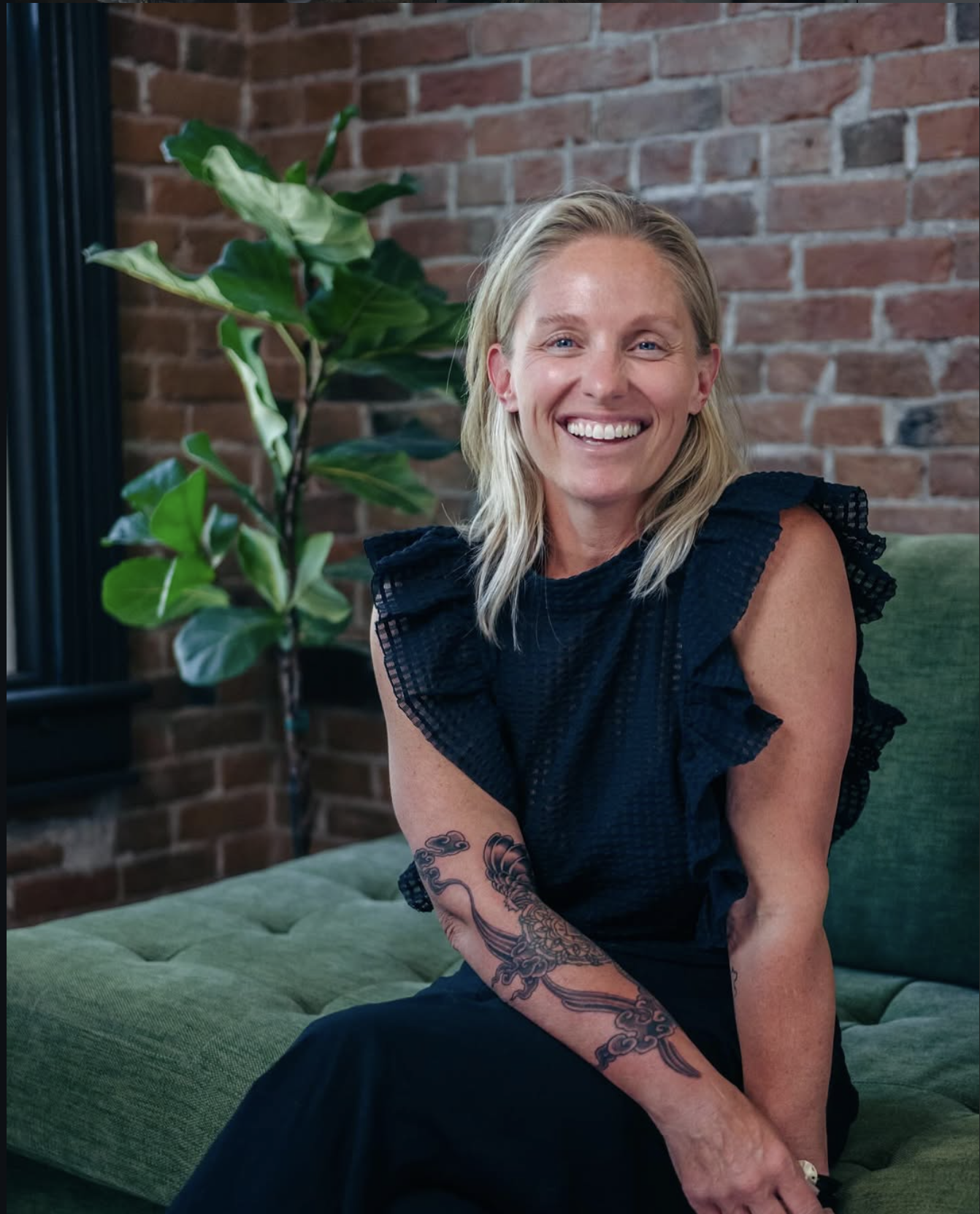
What if the fastest way to transform your life is learning to feel more?
Breathwork guide and embodiment teacher Jill Jordan joins Kara Duffy to explore the journey from living in fear to living in conscious freedom. After surviving a near-drowning accident, Jill began questioning everything she thought she knew about power, safety, and the human experience.
Together they dive into somatic work, the conditioning that disconnects women from their bodies, and why pleasure is not indulgent — it’s life force. Jill shares how reclaiming sensation, curiosity, and self-trust can unlock authenticity, magnetism, and deeper fulfillment.
“When I realized I could welcome rage, grief, fear and joy - that’s when I discovered real power.”
-
-
357 - Jill Jordan
===
[00:00:00]
Kara Duffy: welcome to The Powerful Ladies Podcast. I'm Kara Duffy, and today's guest is Jill Jordan, founder of spiritist. After her near death experience, Jill has been committed to guiding others to what she calls conscious freedom, transforming, and stepping into a life.
That gives up, tolerating and chooses pleasure. We dive into what all of that means. How women have been conditioned to self limit our power. The expanding definition of what pleasure is and why learning to be in our bodies is the fastest way to meet a magnet for everything we want. Discover how her experiences and practices can help you unlock power, joy, and authenticity.
Kara Duffy: Welcome to The Powerful Ladies Podcast.
Jill Jordan: Hi. Thank you. Glad to be here.
Kara Duffy: I am very excited to talk to you because you, we have in common two of my favorite women. ~Um,~ you were recommended [00:01:00] by Shae LaPlace, and you have also done retreats and workshops with the amazing Aaron Kane.
Jill Jordan: Yes, yes, yes. Both amazing women.
Kara Duffy: Both amazing women and, and, ~uh,~ open and grounded and, ~um,~ loving in like their own very unique ways as well.
Jill Jordan: Agreed.
Kara Duffy: ~Um,~ so before we go any further, let's tell everyone what's your name, where are you in the world, and how would you describe what you're up to?
Jill Jordan: Sure. Yes. Happy to. So, I'm Jill Jordan. I'm in the mountains of Southwest Colorado, which I love. ~Um,~ and what I'm up to, I always say. I'm just helping people to embrace their humanity and learn to love themselves all parts of themselves, which, ~uh,~ is a monumental job when you think about like how complex humanity is.
~Uh,~ but it's something I just so passionate about. I love it.
Kara Duffy: And people have [00:02:00] called you transformer of healers, ~uh,~ a guide gurus, breath work expert. Like, there's so many ways that people describe what you do, because I think to your point, the impact you have on people is often in a way that. It's hard to articulate other than I was transformed and I don't really know how or why it happened.
Jill Jordan: Yeah, I think that's fair and I even have a hard time saying who I am or what I do, because I truly believe. What I have to offer is just allowing people to be in that full humanity. And I think it came from my own experience of not growing up with that, not living with that, not being able to be rageful and angry and wanting and desirous and happy and sad.
I just, I lived in fear because the fear kept me safe for so long, and, ~uh,~ it wasn't a way of functioning. It wasn't a way of being at all. And I see so many people still walking around like [00:03:00] that. And once I got that taste of what it felt like to let go of that fear and be in a different place. The world changed for me and all I wanted to do was introduce other people to this opportunity.
Kara Duffy: Well, and I, I'd love to kinda start at, you had a pretty dramatic pivot point that opened you up to this whole world that you now embody.
Jill Jordan: Yeah.
Kara Duffy: ~Um,~ let's tell people what happened.
Jill Jordan: Yeah, for sure. So I had a near drowning accident on, on the River. ~Uh,~ I love sharing that. The name of this rapid is the birth canal.
Kara Duffy: No.
Jill Jordan: It is. Isn't that amazing? ~Um,~ yeah. And we were on a rafting trip. We had rafted a lot with our family. My kids were on the rafting trip, went through the Rapid, and our boat got hung up on this rock and.
My partner and my son were kind of flushed out. I got pushed underneath a big, huge giant rock, and I remember being under the water kind of struggling. You, you just [00:04:00] do that and then you're, you get ready to like pop up.
Kara Duffy: Mm-hmm.
Jill Jordan: ~Uh,~ I realized I wasn't popping up out of the water and I kind of felt around and there was a huge rock above my head, a huge rock at my back.
Some swirling water over here and then just. Absolute blackness to the other side. And I came to this realization of, I'm not just going to pop up. So of course, naturally I'm trying to push against the rock. I'm trying to fight, I'm trying to get out. And I realized that it wasn't going to happen, and I had this very surreal moment of this is it.
This is how it happens. And ~uh,~ it was actually very calm, if I'm honest. It was really just, oh, okay. And then I decided, ~uh,~ maybe not. And I heard this very clear voice that just said they need you. don't know where this voice came from. I don't know who this voice was. I have my own, ~uh, ~guesses, but, ~uh.~ I was able to turn away from the [00:05:00] rock, place my feet on the rock and push my legs out straight.
And I got far enough away that the current was able to grab me and I emerged above water and super powerful in so many ways. I spent the next few months just staying up at night, researching underwater topography, researching near death experiences, ~um,~ having some guilt for surviving. My younger sister had died of brain cancer, not ~um. ~maybe within that year of this happening. So I had some survivor guilt. I had all of this stuff going on and I couldn't even be in my body. I was so just otherworldly honestly. And so someone introduced me to breath work at that point, and I was forced to be in my body and, ~uh,~ have been in love with it ever since.
Kara Duffy: It's, it's such a dramatic pivot point, and I know that many people land in a open space for themselves, spiritually, mentally, that don't require a near death experience. Yours did and. [00:06:00] What an interesting journey that you were put on with that. When we look at you before that incident and you after, like how would you describe yourself before and after for someone trying to grasp how big of a pivot this was for you or how big of a emerging?
Jill Jordan: I love that. I, I think that's a great question. And I think if I were to describe myself before that, I would say I, I was living in fear. ~Um,~ I wasn't in my body. I was always up for the challenge. I was always ready to prove how strong I was and how I could beat it all. And, ~um,~ it was all fear-based, absolutely, 100%.
And I think I came out of that understanding that. I was in this body for a reason. ~Um,~ this body is meant to explore so much. It's meant to feel so much like we as human beings have so much capacity to feel. And I was living with this really , tiny little amount of feeling [00:07:00] and it was all fear and conquering like my version of the powerful me that I was actually fairly sick.
It really was. And so when I learned to look at Power differently when I learned to consider that, whoa, like I can welcome this rage. I can welcome this grief. I can welcome this fear. I can be all of that and still be powerful.
Kara Duffy: Yeah. And to paint the picture at an even bigger level. Were you in, you were in Colorado at the time, and so I imagine that you and your family were doing like what you think of Colorado. You're doing outdoor activities, you're living in a relatively. Healthy lifestyle. You're going to work. You're going to school.
Like is that, was that the pre-life? Is that a good guess? Mm-hmm.
Jill Jordan: Yeah. I would say even more. I was in full on mama mode. I was a partner, I was a mama. I was, ~um,~ I was doing what I thought I should do, what it should look like. ~Um,~
Kara Duffy: Like maybe. [00:08:00] Oriented towards the task and the to-do list versus the feeling and yeah. Mm-hmm.
Jill Jordan: A hundred percent. Yeah.
Kara Duffy: So I, I think the, coming back into your body concept, we're hearing a lot of this. I have been told it myself, I need to work on it more. And I think that a lot of people who maybe aren't in these modalities really can't grasp, like, what do you mean I'm not in my body?
Like I am my body. Like I. I don't know how to not be in my body. And an example I can give for myself is even just doing like a body scan of how am I actually feeling? I'm so programmed to be, ~um,~ brain first, feeling second. That for me, a practice is tapping in and just doing that body scan to actually notice just how does my physical body feel, let alone anything else.
~Um,~ there's a big push now for somatic type of work, so could you explain to everyone [00:09:00] listening what does it mean to be in your body and, and also defining what somatic work does and how it helps maybe make that happen.
Jill Jordan: Yes, for sure. And if I can, I'll preface that with like the reason. We all don't know about that is because we've been conditioned not to, I think that especially women, like, you know, ~um,~ I'm gonna digress a little bit,
Kara Duffy: Please go ahead. Yeah.
Jill Jordan: come back to the somatic piece, but I think especially women, you know, we used to be burned at the stake.
We used to be erased from things. We used to be just omitted from everything. When we were outside of the norm, and while that was horrible, and I definitely don't condone that, what happened was they realized they didn't have to do that. They just had to teach women to hate themselves. And that was so much more powerful because if a woman hated herself, she wouldn't stand in her power.
She wouldn't feel her body, she wouldn't allow that. [00:10:00] And so sadly, mothers taught their daughters. Sisters taught their sisters to hate themselves because it kept them safe. That fear kept them safe. So for so long, generation, after generation, after generation, women didn't know how to feel their body. They didn't know how to be in their body.
They were taught to be polite, to be kind, to be acceptable. So that wasn't. Discovering your body, feeling your body that wasn't feeling pleasure, by all means, that wasn't feeling anything, but being a good girl. And so it doesn't surprise me that so many women are looking towards somatic work and so many women don't know how to be in their bodies.
And I think it's, once you do it, there's no going back from it.
Kara Duffy: Hmm.
Jill Jordan: And you're right, a body scan is a perfect way, but another way is to just come into touch with all those parts of you that are human, not just those parts of you that look pretty and acceptable, but those parts of you that like sad cry and those parts of [00:11:00] you that have that rage.
What does it look like? And not even what does it look like, but. Hey, let's talk to that rage. Let's get curious. Where is that coming from? Where in your body do you feel that? What does it wanna say? What color is it? Like, what do you wanna do with that rage? And that really gets you to feel it because we're so good at analyzing it.
We were taught to do
Kara Duffy: Mm-hmm.
Jill Jordan: So yeah, just taking the time to get really, really curious about all these other ways we can feel.
Kara Duffy: Well, and ~um,~ I was a college athlete and I think anyone who's been in a performance athletic space, we're also taught not from the good girl stance, but from the performance stance of disconnecting brain to body. Because our brain is so powerful, we can force ourselves to do anything and. Just coming back into being like, oh, I am outta breath, and what do I wanna do with that?
Versus we're outta breath. Ignore it.
Jill Jordan: yes, yes. Like you show up, you perform, right? [00:12:00] And that performance piece well. It can do wonderful things. We see athletes doing wonderful things. That performance piece is so in the masculine. It doesn't allow us to be in that feminine at all.
Kara Duffy: Yeah, and it's an interesting thing for me to even comprehend, like, how, what does performance and breaking records and creating new, ~um,~ levels of excellence in an athletic space look like coming from a feminine direction?
Jill Jordan: Yeah. Yeah.
Kara Duffy: Like I genuinely dunno what that looks like.
Jill Jordan: Right. Yeah. Yeah. What if women were allowed to step into a different kind of power to show up in a different way? And I think we're seeing a little bit of it just with those, ~um,~ women that showed up in the Olympics this year. What did that look like for the women who maybe pushed too hard and went too long and too far?
And what did that look like for the women that showed up with a smile? There was that ice skater, and I'm sorry, I don't know her name, but
Kara Duffy: Alyssa Liu. Yeah.
Jill Jordan: there We go. Like maybe that's what it looks like, [00:13:00] Kara.
Kara Duffy: Yeah. Well, 'cause there's, you still have to do the, there's the training and the practice and everything else, but there is the level of joy that she brought to everything was so powerful. Yesterday over my breakfast, I was watching a highlight reel of just like such rewarding Olympic moments, the Dutch has been like running through when his wife won the gold medal.
~Um,~ Alyssa Lou, every people hugging and I was crying over my oatmeal with like such gratitude for humanity and people like being in the good version of humans. ~Um,~ it was such a nice contrast.
Jill Jordan: I think that's what it looks like. I do think that's what it looks like, because I think oftentimes when we are looking at performance or we're driven, I was just having this conversation with my son this morning. It gets so focused on the outcome, and I think it is so possible to be focused on the commitment while completely unattached to the outcome because who you become while you're committed.
[00:14:00] Is the final product, and I think that may be the way that performance looks in the feminine.
Kara Duffy: This is gonna seem like a maybe a strange thing to put in here, but when you define. Performance that way because again, so many athletes do not get to the pinnacle of that athletic endeavor. Most are not gonna be professional athletes. Most are not gonna be Olympians. But there are so many studies that prove if you're part of a, ~um,~ sport of some kind, it changes who you are in resourcefulness and leadership, et cetera.
And that argument, how you just define it to me, is such an argument for allowing trans kids to participate. Because it's the commitment value that we need to express. It's not about the winning, it's not about the record keeping. ~Um,~ so it's small tangent, but I was like, ding, we're gonna put that in for,
Jill Jordan: I love it. Totally committed, fully unattached. I think you could apply that to anywhere there is competition involved, whether it's your own goal or Yeah. Anything you're [00:15:00] striving for, you will be successful.
Kara Duffy: It comes up all the time with clients in business. We can spend weeks, months attached to winning over a specific client, and it is such a waste of our time because there's been no, ~um,~ exchange of equal commitment yet.
Jill Jordan: Mm mm
Kara Duffy: you can completely derail all the things that are in front of you. The things that you know to be to the paths to follow.
'cause you're attached to making that one person say yes to you, dating like it's all the same.
Jill Jordan: Yeah. And if you're totally unattached to that outcome. Then it, doesn't feel like lost time because whatever you learned in that commitment along the way, that it wasn't a good fit, that, whatever you learned, it's a win.
Kara Duffy: Well, and so interestingly, the, ~um,~ last recording I did, I, a question I usually ask is like, what can we do for you? What's on your wishlist, your to-do list? So we will ask you that at the end of this episode. But her response ties into what we're talking about now in, she said, oh, I've decided not to make [00:16:00] checklists. I was like, I'm sorry. What? And I love because, and this woman that we interview was such a high performer, so many accolades. Her resume is ridiculous. ~Um,~ and so just kind and unassuming when you meet her. ~Um,~ but I was taken aback and this is, my weaknesses showing up of how do we create extraordinary things without a plan, without a to-do list? I think I'm, pretty good at the committed versus attached component, but I still need a map and that's how I view a to-do list. So how can we be our full version of humanity or embrace the full human experience and like, does it have to be completely detached from.
Anything performative. Does being a human result in the performance or how do we balance it, like often for [00:17:00] clients to phrase it a different way for people listening, I'm very big into the woo woo side of things. The manifesting and my clients be like, I am manifesting this and it's not happening.
And I'll say. What OnPlan actions are we taking because we have to ground the the woo woo with OnPlan actions. Like we have to meet the universe halfway. And so I think that's what I'm asking you is how do we step into this space you're creating? Where it occurs to me that we're like fully letting go of causing, so how do we let go of causing, if that's the right way to describe it, while still creating.
Jill Jordan: Yeah, I think it's a great question and I think, I mean, all I can speak to is what works for me, how I wake up every day. And I wake, get up every day with two full commitments. The first commitment is I'm committed to pleasure, and it doesn't have to be. Self pleasure. It doesn't have to, it can look at pleasure anyway.
It can be a long [00:18:00] walk. It can be asking somebody else to make my breakfast. It can be, whatever I want it to be. But I'm committed to that first and foremost because if I'm committed to that, I'm going to show up the rest of the day full. I'm going to show up happy. I'm going to show up in that energy of pleasure.
So that's my first commitment, which I think always helps me excel. It always helps me get to where I want to be no matter what that is. And then I think the other part is being okay with whatever is like being willing to be with it. Because I think to the extent that we struggle is the extent that we're not okay with what is.
So if I work really hard that day and I didn't get exactly what I wanted, if I can be with what is. That feels like success to me. So I think changing our idea about what success is, what the final product is, is the true success. I really do. And I hope that doesn't [00:19:00] sound too woo woo, but I
Kara Duffy: No. No, because you know, if we're always measuring success based on external things, if we're always measuring it based on achieving 10 outta 10 or a hundred outta 10, versus, we're not giving yourselves credit for doing the work, for being committed for showing up. I, ~um,~ one of the coaching tools I'll give clients sometimes is a done list.
Like you write down everything you've done that day to remind yourself that like, no, I didn't do, I, I did things like, even if that day we showered and had breakfast and that's where we stopped, we still did two things.
Jill Jordan: ~Uh.~
Kara Duffy: ~Um,~ but most women in particular have a scroll that can go down the street of what they've done every day, and we're still not satisfied with having like, checked the box for the day.
And so I think in that space like that. I really feel, ~um,~ I think it's almost like take, what does that next level look like of, and this is something I'm taking on [00:20:00] this year. So this is becoming like a personal coaching session, but I really wanna step, I've been stepping into being a magnet
Jill Jordan: Mm.
Kara Duffy: Because I'm a very good producer. I'm a very good creator. I'm a very good causer of things, and I instead want to be a magnet for the things that are on my.
Jill Jordan: Yes. Yes, yes, yes. And then when you embody that, that will come to you. Can I share a story
Kara Duffy: Please. Yeah.
Jill Jordan: Okay. So this is my story of what I wanted to be. So I, I was so afraid of being visible, so stink and afraid of being visible. And it was because, yeah, I grew up in a mercurial home. It didn't feel safe. Fear kept me safe.
So that's what I did. ~Um. ~I finally got in some circles that matched what I needed to feel for me. I would go to workshops and retreats, Kara, that didn't work for me. They were very soft. They were very like, I'm like, wait a second. Where's the desire? Where's the rage? Where's like I [00:21:00] that's in me? Where's space for that?
And when I realized that like the term safe space didn't work for me because you can't create my safe space. I can only create that. You can hold brave space for me. And I always say that to people. I'll hold the bravest space possible. So when I got into a space that was able to hold me, all of me, and then I realized like, oh, that feels good.
I like when all of me shows up like this feels really good. So then my wish was. I just wanna be seen. I want to be seen. I wanna be seen for who I am, not who I'm trying to be, not who I want them to think I am, but who I am. And I kid you not like my family can attest to this story. It is to me, it's a miracle.
And I might get choked up because I do every time I share it. But I embrace that fully. Like, let me show up, let people see me for who I am. I would be walking in the grocery store and people would be like, oh my gosh, you're [00:22:00] beautiful. I love your outfit. I'm a woman in my fifties who's not dressing to impress.
Like I'm not, doing that thing. But I would get like, oh, you're just so beautiful. I, everywhere I would go, I was walking down the street. I live in the middle of nowhere, a car pulls over, they're asking me a question and they end the conversation with, wow, you are so beautiful. I was getting it daily, sometimes several times a day.
So I went into my meditation, like being really curious about that, like what is going on? Like I didn't walk around in life being told I was beautiful. I didn't need that. And the message I got immediately was, you get to be a reflection of their beauty.
Kara Duffy: Mm-hmm.
Jill Jordan: Like now that you're showing up. And so I tell that story.
I, I do, I get choked up because it feels so true to me. Like when you show up, when you ask to be that way and you embody that, like, I want to embody. Who I am, like the world saw my beauty for the first time in 50 [00:23:00] years. So I think that's where that somatic embodying piece comes in. Like, I don't need to try to be anything.
I don't need to try to fit in. I belong. And when I allow that sense to be in me as who I am, it just magnifies in the world. You become an absolute mirror of that and you attract that
Kara Duffy: I really get that because I believe, and the, to the deepest of my bones, that every person is such a magical, incredible, light, unicorn, star, whatever we wanna call everybody and you just want people to take away the things that are preventing their light from shining out and. It's so much easier to see the magic in somebody else than to often see in ourselves.
And I don't necessarily think that it's coming from an, I don't like myself space. I think it's coming from, I just haven't, I don't, it's who I am, so why would [00:24:00] it occur as unique or special to me?
Jill Jordan: Yeah. Yeah. I don't even know. I'm not even familiar with it. I don't have a name for it. Because we weren't taught, right? Like, and we were set up with levels of what, what success looks like, what performance looks like, what beauty looks like, and we didn't put ourselves in that
Kara Duffy: Mm-hmm.
Jill Jordan: It's because we don't need to fit in that bucket.
Kara Duffy: Or, or even been get been asked the questions of like, the questions we opt that I think people like yourself and others who are, have a meditation practice to ask. We've never been taught to ask ourselves like, what do you think makes you special? What do you think your gift is? Guarantee, if you ask a 3-year-old, they can tell you,
Jill Jordan: Oh, a hundred percent.
Kara Duffy: The level that we don't believe ourselves as we get older is so heartbreaking.
Jill Jordan: It is. It is. And I will tell you there was a grief process for me when I [00:25:00] did feel my belonging, because I felt so sad for the younger me that didn't get to experience this. It was serious grief process around
Kara Duffy: Mm-hmm. I know. I believe it. ~Um,~ I also wanna, I think it's interesting, I think our audience has probably picked up on it too, when you talked about what your priority is for the day, you said the word pleasure, and I know that you teach some workshops and courses around this. Pleasure is such a loaded word for some people, and often they, like, I'm sure people listening were like, well, why didn't she say joy?
Why didn't she say happiness? So can you explain why you intentionally chose the word pleasure?
Jill Jordan: Yeah. Thank you for picking up on that. It is very intentional. ~Um,~ yeah, my work is definitely moving that way to, ~um.~ Help men and women experience pleasure because I do think it's our life force. Like pleasure overrides pain. It's scientifically proven, but people know pain. They're [00:26:00] familiar with pain, like people will talk to you.
All day long about the pain and the politics and the woes. But you say pleasure, you lose eye contact. Do people get really uncomfortable? And I think when you look at pleasure, not from a performative way, but from a life force way, like how good does it feel to just like tickle my arm or to drink hot tea and feel it go all the way down into my belly Like that is experiencing what we are meant to experience.
I mean, I said it earlier, but as human beings. We have such a capacity to feel and so many people walk around feeling pain, feeling, ~um,~ hurt, feeling not that grief and rage and all that stuff doesn't belong, but they don't make space for like, I feel good. I feel really, really good. And I think you give yourself permission to be on a different level when you allow yourself to be in pleasure.
Kara Duffy: There's a lot of work I do with clients [00:27:00] about, ~um,~ reclaiming the word selfish because I think there's. The fastest access to how we can have abundance in our life is by doing work and having businesses that are in alignment with what we're supposed to be doing. And often, to your point, the things that we don't even realize are our gifts for the world.
And I'm always blown away at how much we are tolerating at all levels. And like some of the stuff we're tolerating, we probably would put in the category of like, it's not a big deal, but when. You're tolerating a thousand, not a big deals. It becomes a lot that we're tolerating.
Jill Jordan: Yes.
Kara Duffy: doesn't have to be we're tolerating, ~uh,~ an abusive relationship.
We're tolerating bad clients. If you are tolerating, sitting in a chair that you don't like that it's a problem.
Jill Jordan: Yes. And do you feel like, Kara, if we taught more young girls and women that they were deserving of [00:28:00] pleasure, that they were deserving and they, that they could be committed to their beingness, to being whole, to being deserving of pleasure? I don't think they would withstand that kind of stuff.
Kara Duffy: No. No,
Jill Jordan: allow it.
Kara Duffy: and I think we're starting to see this shift happening, right? It's like starting with the bigger things and we're starting. Again, it's a levels game. So if, if we have the privilege to be playing and climbing up Maslow's hierarchy of needs, we can get into these spaces, right? Like, this is not a conversation to not, I, we'd have a much different conversation about pleasure for somebody who's just been in Gaza, for example.
~Um,~ but if we're in a place where we have the privilege to change our circumstances that way, and we have the capacity to, the freedom to choose.
Jill Jordan: Yeah.
Kara Duffy: It is almost our responsibility to be choosing what we really want at [00:29:00] in every small space , and I wanna be mindful of people, the limitations that we have, that allow us, that don't allow us to think big enough sometimes.
I do think anything is possible. So big asterisk here. But sometimes we don't have the, like we know our, chair is not working for us, but we don't have the funds to change the chair. And so it's like how do we, how are we teaching people the Jedi mind tricks of solving the problem without money solving the problem?
Like when we don't have the resources, it's like that's the next level. So I think. There's a whole wave of just getting people to notice first, and then it's like, what do you wanna do about it? And then how do we do it when it seems like a completely unreasonable request.
Jill Jordan: Yeah. Yeah, I think that's fair. And I think that when we feel pleasure, it's kind of ourselves recognizing the truth, like what we're met here. Went to explore what we're meant [00:30:00] to feel. And so, yeah, the example of a chair, like maybe the answer isn't buying a new fancy chair. Maybe the answer is figuring out how to prop up pillows or figuring out how to move to a different space or sitting on the floor.
And yeah, I think when we get out of, ~um,~ a little bit of the, the victim mindset and we realize that again, that power , is with us, then we have more options,
Kara Duffy: We have so many, we almost have so many options that once we know what options, the degree of options we have, that can also be
Jill Jordan: So true, so true.
Kara Duffy: And, and I think, you know, to, to, to make this conversation maybe a little bit more tangible. It depending on what your belief system is. Let's just say for this example's sake, we believe that when we are not on this planet, we go somewhere where we aren't feeling pain anymore. I also can't imagine that we go to another place if we can't feel pain. We probably can't feel some other things too. Like are you [00:31:00] going to be mad that you didn't experience the degree of. Pleasure, joy, comfort, love, security that you could have.
Jill Jordan: Rage, grief, sadness, all of it. Yeah.
Kara Duffy: it. The elasticity? Yes. Like are you gonna be mad that you didn't try it out?
Like you don't need to stay there, but like, are you gonna be mad you didn't try it out?
Jill Jordan: Yes. And you explored it. I totally agree with you. I totally agree with you. It's our inherent right to explore all of it. Yeah, you don't have to stay there. Some of it, you don't wanna stay there, but to at least feel it. Ugh. So worth it.
Kara Duffy: Well, and when we do, a lot of people also will ask like, how do I get more confidence? And you can't. Like just choose to be more confident. Like it, even though it's a way of being, you can't like snap your fingers, be like, I am now confident. Like it's only in stepping into those extremes or new [00:32:00] experiences or like it has to be through shifting
Jill Jordan: Yeah,
Kara Duffy: we don't, how do you know how powerful you are if you haven't tried, like it is very similar to the athlete example.
How fast can you go? I don't know. Let's try.
Jill Jordan: yeah,
Kara Duffy: But we're not doing that on a regular basis with the list of things in the human experience.
Jill Jordan: Yeah.
Kara Duffy: ~Um,~ so for somebody who is very much attached in the normal prescription of life in let's say western world,
Jill Jordan: Yeah,
Kara Duffy: how do you start creating a bridge into the expansiveness that you're guiding people to today?
Jill Jordan: you generally, I'll start with a conversation of where, they believe they're at. And then we deconstruct that to figure out where they've been lying to themselves. And it's always such an aha moment when they figure out, oh my gosh, that's right. I'm not limited. Like I am the one [00:33:00] who is giving myself that story.
I am the one who has created that lie. Because it always comes down to as a sovereign being you, don't have limitations. So any limitations you have. You have created for yourself and we figure out where that limitation started. What story did you tell yourself long time ago? And we always have gratitude for that story too, because that story probably kept you safe for a long time.
But then we realize. You don't need it any longer. So we can deconstruct those stories, those lies, and then all of a sudden they have this immense amount of freedom to go explore, to go try that sport, to try to run faster, to try to get a different chair and see what that looks like. And it removes the limitations.
So that gets them out of this kind of limited space in the mind. And then we say, what would that feel like? What would it feel like? Like you're sitting in a chair that you absolutely fucking hate. What would it feel like to be sitting in the most plush chair right now? Like [00:34:00] feel that in your body right now?
Like how good would that feel? And then you help them to realize you didn't go anywhere and you just felt really good. Like, let's look at how powerful you were in that moment.
Kara Duffy: Hmm.
Jill Jordan: And so we, we try to take them out. I say we. working with them. Try to take them outta that mind space and get them into their body and realize how much power they have
Kara Duffy: Mm-hmm.
Jill Jordan: to change.
Kara Duffy: Well, and part of what I love about having this podcast besides meeting incredible guests, is kind of destroying what we think our options are. ~Um.~ I was at a networking coffee and somebody was talking about working in the summer and how they wish they were in their pool. I'm like, you do know you can put your laptop on the edge of the pool and be in the pool and work. That's what I do, especially when I'm in Palm Springs, like
Jill Jordan: Yeah.
Kara Duffy: we don't even like to get rid of the chair, just go in the pool and this guy's face. He looked at me like. I [00:35:00] had just like opened up Willy Wonka's, like doors to the,
Jill Jordan: that
Kara Duffy: he's like, wait, I can do that. I'm like, you, you work from home? Of course you can.
Jill Jordan: Yes, yes.
Kara Duffy: are we following some silly rule of like the worst case, the worst option? Mm-hmm.
Jill Jordan: And you do that for someone who has carried the same story of the worst option since they were five. You blow their freaking mind, like it's incredible. And all of a sudden the world becomes a different place. You're walking around and people are telling you you're beautiful. Like it, it becomes a whole different reality and nothing shifted, but the story you were telling yourself, it's incredible.
Kara Duffy: So what I think is also interesting is like the shift you've been making in how you're sharing this with the world and moving into some of the sensual sides of pleasure and intimacy. What, like how did you make that choice and how are you seeing that kind of. Breaking people free in a different way, because I do wanna caveat this [00:36:00] where I think when people hear about the types of workshops and retreats you're doing, everyone's brain kind of goes to like a example, like, this must be some crazy, ~um,~ I'm not even thinking.
Jill Jordan: performance strip tease like, yeah,
Kara Duffy: and you know, like they, they think that it's, you're entering certain camps at Burning Man and it's like. There's like, this is a big spectrum and you're talking about like level 1000 and some people are at level negative 1000. So can you define that a little bit more so people understand?
So two questions. How did you get there? And then what is it actually versus what people might think it is?
Jill Jordan: yeah, yeah. Thank you for giving me the opportunity to open up that part of the discussion. So how I got there was working with a lot of women and understanding how repressed they were in self-expression. ~Um,~ they felt dead inside. They. Didn't even ever touch themselves. They didn't feel good being touched.
They didn't, ~um,~ [00:37:00] experience love. They didn't wear things that adorned their body. They didn't do anything that felt good. And I understood that it was something that we've been fed for a long time as women. And like I said, when we were taught to hate ourselves, we were taught to be good. We were taught to be polite because. Our mother's, mother's, mother's, mothers thought that that would keep us safe. When in reality if women step into that PLA pleasure and that power and their bigness as women, they're much safer because they're not going to accept that they're not going to tolerate that stuff, and they're going to be a lot more.
Powerful because it is a life force to be able to allow ourselves to feel one of the most amazing things we can feel. So I got into it by slowly introducing women to this. Like, Hey, what would it feel like if you asked your partner to tickle your arm as you're laying in bed that night
Kara Duffy: Mm-hmm.
Jill Jordan: how would that feel?
What you know? Can you ask for
Kara Duffy: Hmm.
Jill Jordan: [00:38:00] What would it take for you to ask for that? ~Um,~ and it started slowly like that. And then I started to realize, whoa, when women step into this power. They are just on fire. Like they become these beautiful beings that are not to be messed with, and things just start happening in their life because they are full of this beautiful, amazing energy.
So it happened kind of in private sessions, and then I started holding more community stuff because as you know, women, women in groups, it's like you can't hold anything back. They're so stinking powerful because healing happens in that connection. So I started holding retreats and workshops where women were able to be witnessed, when they were allowing themselves to.
Be seen, allowing themselves to be happy again, allowing themselves to be en rage, allowing themselves to be sad. Like what did it feel like to be utterly witnessed? And then what did it feel like to witness someone else?
Kara Duffy: Mm-hmm.
Jill Jordan: When they were fully in their pleasure. And again, pleasure is just when your [00:39:00] nervous system recognizes the truth that you are in this body that can feel it all.
That's it. So it's not always, sexual performance. Someone that ~um,~ is coming to my retreat this weekend, ~um,~ before she came. She's like, this isn't like group masturbation, right? So.
Kara Duffy: there are some groups where that's where they're having people
Jill Jordan: totally fine. Totally fine. And I mean that, that is absolutely fine. I have zero judgment and actually really think it's great that women can do that.
~Um,~ but yeah, there are so many levels of it, like you spoke to and for me, where I'm at it with it for women is, Hey, come show up. See what it feels like to embrace that side of pleasure in your body, what it feels like to feel good, to look good, to adorn your body, to dance, to be witnessed. ~Um.~ And it's amazing.
It's amazing what happens in those spaces, and I think women have been denied that, right for so long.
Kara Duffy: Well, and I think when we take back that ownership, the safety [00:40:00] comes in like we're not giving it away.
Jill Jordan: Yeah.
Kara Duffy: So, ~um,~ there's, if we're chasing it, if we're lacking it, if we're giving it away, those are all. Weakness points. And so if we don't have those weakness points and , for lack of a better word, we're able to be whole in a different way.
Jill Jordan: So true. When you trust your body and the signals it's giving you. If we taught our young girls like, Hey, when you get that feeling in your tummy, it's okay to say fuck off. No. And if we teach them that, like, Ooh, when it feels good and I touch it, that's fine. If we taught them that, then we would have women.
They would grow up as women who would say, no dude or no partner, you're not getting that because that doesn't feel good. Or my, my intuition told me right away that, that this isn't a good situation, but we don't teach on girls that we teach them to be good
Kara Duffy: Mm-hmm.
Jill Jordan: or we teach 'em to be boss babes, which honestly can be just as [00:41:00] detrimental.
Kara Duffy: It. Well, and I, I, ~um,~ I'm 44 when we're recording this, and I have grown up in an era where we were given space and the, mentors that we had were usually male, not female. And we were told that we had, that there's masculine attributes that will help us function in this new world. We've never experienced call to work before.
And it's like, well, that's such bs. ~Um.~ And so there's this almost, ~um,~ like swinging from masculine to feminine that I feel like a lot of my generation has been having to navigate. ~Um,~ and the, there were like, the origin of the BofI concept had a good origin point, but it wasn't grounded in being selfish at all.
It wasn't grounded in listening to ourselves. It was, you know, it. I dunno how we would've gotten to this point if we didn't have that push. But the push [00:42:00] was still too masculine. The push was still too to your not body connected.
Jill Jordan: Right. And I, you know what, we almost had to do it because the, the masculine wasn't. Capable of holding safety like the masculine. A long time ago, forgot that holding safety could look different. They equated it with war, with fighting with battle. So they weren't holding safety the way feminine needed it.
So if the feminine held it for themselves, so they stepped majorly, they swung into the masculine. But when they swung into the masculine. Then all of those feminine pieces got pushed aside. All the pleasure, all the beauty, all the softness, all the acceptance, all the forgiveness, honestly. And where I'm at with that now, Kara, is I am learning so deeply on so many levels for so many generations, for so many of my ancestors to forgive.
Masculine [00:43:00] and it's not easy, especially the state of the world today. It is not easy, but I think where they had to go with the masculine, it was very destructive for them as well. And the more I can hold compassion and empathy. Forgive them. I'm hoping it helps them to step into a better combination of their own masculine and feminine and forgive the own masculine in me, you know?
~Um,~ for where I had to hold safety because yeah, women have not felt safe for a very long time.
Kara Duffy: And, and I would argue a lot of men haven't either,
Jill Jordan: No,
Kara Duffy: This, the, the removal of all the feminine energy and attributes has been detrimental to both
Jill Jordan: Nobody was holding safety. It was all about doing and war and fighting and yeah. You see where we're at with that now? Yeah, yeah,
Kara Duffy: Yeah. We, we've made a really cute bed to lion that we now get to, ~uh,~ make and redo.
Jill Jordan: Right.
Kara Duffy: I think the hard thing for a lot of women to own right now is the. [00:44:00] Whether it was us personally or us, ~um,~ as a gender and generationally how we have caused this as well,
Jill Jordan: Mm-hmm. Yes.
Kara Duffy: the, the ownership and the responsibility of, sure, there might be players who are dominant and taking action and making choices that are in front of everyone's view and, causing the biggest ripple, but.
Again, us not stepping into our power, us tolerating stuff allowed that lane to open up and it's really confronting.
Jill Jordan: It is, it's, yeah, a hundred percent. And I mean, to bring in a little glimmer of hope, I have two. ~Um,~ I have a son who is 23 and a daughter who is 20. And I again, just had a conversation with my son this morning and it was so apparent to me how much he has that feminine part of him, and he embraces that. He's birthing this new business and, literally birthing it and [00:45:00] caring for it.
And, he's, embracing that feminine side of bringing something to fruition and he's in partnership in the way he honors her as a beautiful woman. And he has a new girl puppy and watching him do that, like I just see him really embracing it differently and I think this new generation of men, I have a lot of hope.
A lot of hope for them.
Kara Duffy: Yeah. Even, even my own, I have a lot of hope for, ~um,~ we're, starting. To kind of have that reset. And I think it's so important that we're allowing people to evolve and change. We're allowing the shift to happen. ~Um,~ it's a really interesting balance as a community, a cultural community right now of holding accountable, but allowing for transformation.
And I don't know that, ~um,~
Jill Jordan: I think forgiveness is the missing piece.
Kara Duffy: And, and what does that really look like? Like how can you forgive someone so wholly that they're allowed [00:46:00] back in to the community with complete freedom?
Jill Jordan: Yes, yes. That's a lot of work on our end, right? Like, but I, I do believe that's the missing piece right now. And, ~um,~ it's a lot of my own personal work that I'm doing right now because it's not easy.
Kara Duffy: Have you heard of the book Shantaram at all?
Jill Jordan: No.
Kara Duffy: It's a, ~um,~ apparently the true story of a guy who escaped like jail in Australia and ended up in India. But the reason I bring it up is there's a really interesting chapter about forgiveness and how in the slums of India, when someone in that community does something wrong, how the community.
Protects who they wronged and help hold them accountable and then decides when they're allowed back in. And it's really like the community steps up in a way where it's not like, oh, they go to jail. It's like there's a, I think in the book, the example is a, like he cheats on his wife or something and they're like, okay, well here's what that, they like.
The level of [00:47:00] understanding your impact and then healing the people who are impacted as a community and then deciding like, you get it. You're allowed in again. Very interesting way that it's done and I don't, ~uh,~ know enough about the psychology or the community studies of how that happens in real life in Natia, but that chapter of that book is, I think a really good example of what it could be like at a community level.
Jill Jordan: that. Thank you for that recommendation. I will check it out because yeah, it's on the forefront. For me, for sure. And I think when you look at forgiveness, it, you can take some personal responsibility by even saying, ~um,~ how much of this did I curate for my own lesson that I needed to learn?
And how much did earth and Mother Nature and whatever else, curate for the lessons that we were supposed to learn as humanity and can we be grateful for that? ~Um,~ it's not an easy pill to swallow and for me it takes a lot of work.
Kara Duffy: Well, and. Yeah. [00:48:00] Especially when, to your point about the safety component, we're part of our survival has, when we're in a space of what are we not tolerating, we often think first about boundaries against people who don't fit. And it's like, okay, there's a time and a place mm-hmm. Where you need to create that.
And then how do you take that boundary down when you've expanded, even if they haven't. Like, that's why I call it like next level Jedi training, because that's what, how it occurs to me of we've gone beyond Maslow's hierarchy of needs and now we're dealing with how can we coexist?
Jill Jordan: Yeah. And then you move even beyond like forgiveness to like, can I love
Kara Duffy: yeah, yeah.
Jill Jordan: Can I love them? And you think about certain people in the world right now. ~Um.~ I do a lot of work around can I love them? Can, can they be here to serve a purpose that is greater than myself than who they are? Yeah. And can I love them for that?[00:49:00]
Yes, I can. But whew.
Kara Duffy: Yeah, I mean I, there are some people right now in their current form, I do not have the capacity for love, so can I love them if they transform in any way. I'm, I love when people surprise me positively.
Jill Jordan: There you go.
Kara Duffy: ~Um, ~what are some examples of how, besides being called beautiful, on a daily basis, how have you adjusted your lifestyle to have room for this, doing this work for yourself before we can give it to other people? Like I always imagine when we make big lifestyle adjustments, there's a lot more that we're saying no to versus yes.
So how are you creating space to have your own practices? How are you creating space to keep coming back to this? Like, I'm thinking about so many women who, ~um,~ whether they're, new mothers or single moms having multiple, there's so much that we're carrying that it can feel like, oh, Jill, I love what you're talking about. I want this, how do I find [00:50:00] actual space in my day to start to allow it in?
Jill Jordan: Yeah, and I'll go back to, I'm committed to my pleasure first.
Kara Duffy: Mm-hmm.
Jill Jordan: And I don't mean by first, I don't mean like first thing in the morning, but it is a non-negotiable because if I get that, it's like that old, you fill your cup, you can fill others. But if I get that taste of that pleasure in the day, then the rest of my day is.
Kara Duffy: Mm-hmm.
Jill Jordan: it comes from that viewpoint of that. So yeah, I, I make space for that and whatever I want it to look like that day, it is mine , and I do it. ~Um,~ I also have a few other non-negotiables. I, I meditate daily. It's, it's a commitment I have to myself and, ~um, ~everybody that interacts with me, ~um.~ So those, yeah, those are important.
I do a walk every day, rain, sun, snow, shine, mud. Right now we're dealing with like getting outside and I think if I fill my cup in that way, then I can show up as the person I wanna be. I can show up as that [00:51:00] mirror that I, can show up as who I am, not who I think I need to be, because for a lot of years that's who I was. I, would've done the walk because it was on my checklist like you talked about. I would've done it because it was expected and I would've been disappointed or somebody else would've been disappointed. But I do it now because it's who I am. And then again, just my commitment to be with it. Like, yeah, sometimes you hear some really crappy news, but how can you be with that? ~Um,~ so yeah, showing up the way I, want the world to be.
Kara Duffy: How do you define a powerful lady?
Jill Jordan: Mm, I love that. So when I think of powerful, I think about somebody who has like incredible energy, like something amazing about them. So I would say anybody who is willing to show up as who they are, anybody who's willing to create their own safety. be brave enough to show up authentically.
Kara Duffy: Mm-hmm.
Jill Jordan: Yeah.
Kara Duffy: ~Um,~ so I'm coming back to what [00:52:00] I, a little preview I gave you earlier. ~Um.~ What do you want? What do you need? What's on your wishlist, your manifest list? How can we help big, small.
Jill Jordan: I just hope women hear this and they're willing to even visit the idea of being able to be in their own pleasure. I'm having a retreat this weekend, which obviously this will come out before that, but, ~uh,~ I have a lot of other offerings. My next offering coming up will be an eight week commitment.
~Um,~ you can either do it as a woman or you can do it as a couple. ~Um,~ I found that I really love when someone goes in with that commitment because I show up for my people big time and I want them to be just as committed to the work as I am. So it's an eight week kind of embodied journey, either solo or with a partner.
~Um,~ and there's a lot of really fun, juicy stuff we get into. You start pretty basic and ~um,~ yeah end up in a beautiful spot.
Kara Duffy: For [00:53:00] people who want to start consuming things now, ~um,~ are there books you recommend, ~um,~ other people that inspire you? Like where could people start on their own at home too?
Jill Jordan: Yeah, for sure. ~Um,~ I love Mary Magdalene Revealed. That's a wonderful, wonderful, wonderful book. I would say she's probably one of the most powerful women. ~Um.~ That's a great one. There's also, Layla Martin has some really great stuff. Mama Gina has some really great stuff. ~Um,~ yeah, I would probably start there.
Kara Duffy: Okay, great. ~Um,~ well thank you for the space that you are holding for yourself and for so many others. Thank you for being a yes to the powerful ladies and to me in this conversation today. ~Um, ~it's, it's such an act of generosity to take your time to do one of these podcasts and to. Share what you're sharing.
And I know that you would probably scream it from the rooftops every chance you get, but it, really, it's a choice you make that you're not on a walk right now or somewhere else. So I really see that and appreciate that as well too. Thank
Jill Jordan: Thank you Kara. Same [00:54:00] to you. Yeah. Thank you for the space that you give so many. People to be here for women.
Kara Duffy: For everybody that wants to hire you, connect with you, take one of your retreats, where can they find, follow and support you?
Jill Jordan: Oh, thank you. Yeah, they can go to, ~um,~ spiritist.love. I think that's the Instagram. Think Spiritist.Love is, ~uh,~ also my website. So yeah, that'll get them there.
Kara Duffy: Thank you so much for being a Yes and sharing with us today.
Jill Jordan: Of course. Thank you.
Kara Duffy: Thanks for listening to The Powerful Ladies Podcast. If you enjoyed this conversation, please subscribe. Leave us a review or share it with a friend. Head to the powerful ladies.com. We can find all the links to connect with today's guest show notes, discover like episodes, enjoy bonus content and more.
We'll be back next week with a brand new episode and new amazing guest. Make sure you're following us on Instagram or substack at powerful ladies to get the first preview of next week's episode. You can [00:55:00] find me and all my socials@karaduffy.com. Until then, I hope you're taking on being powerful in your life.
Go be awesome and up to something you love.
Related Episodes
Episode 308: Breathwork & Mindfulness For Entrepreneurship and Leadership | Sarah Hutcherson | Founder of Slo Breathworks
Episode 119: Healing Outdoors and Owning Your Story | Grizel Caminas Bien | Therapist, Musician, and Mental Health Advocate
Episode 52: Blending Ancient Wisdom with Modern Healing | Christina Sofia | Therapist, Reiki Practitioner & Transformation Coach
SUPPORT OUR GUEST:
Insta: https://www.instagram.com/spiritus.love/
Website: https://www.spiritus.love/
Created and hosted by Kara Duffy
Audio Engineering & Editing by Jordan Duffy
Production by Jordan Duffy
Graphic design by Jordan Duffy
Music by Joakim Karud